
TL;DR

Get the latest gadgets delivered free with Prime
- Fast, free delivery on millions of items
- Prime Video, Amazon Music and more included
- Member-only deals all year
Google published findings from a 10-week UK math-tutoring trial and a yearlong study in 31 Italian schools. The company says students using AI tutoring performed similarly to students paired with human tutors on platform tasks and quizzes, while Italian teachers reported more collaborative lessons; standardized test gains were not found during the UK trial.
Google published findings October 29 from studies of Gemini in classrooms in the UK and Italy, reporting that AI-supported math tutoring performed similarly to human tutoring on some measures and that teachers in Italy reported more active, collaborative lessons. The results come from Google’s own research; the UK trial found no corresponding gains on standardized STAR test scores over its 10-week period.
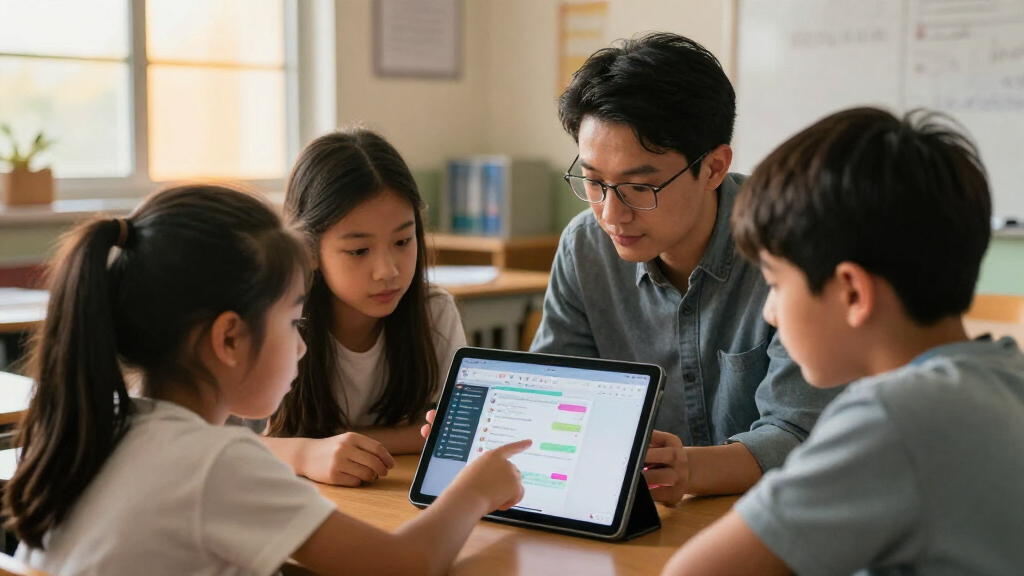
The UK study was a 10-week randomized controlled trial involving more than 1,100 students aged 12 to 15. Researchers worked with education platform Eedi. When students answered a math question incorrectly, they received a static hint, support from a human tutor, or interactive tutoring combining Eedi’s materials with Gemini. Human experts reviewed every AI response before it reached a student, while teachers monitored progress and supported students in class.
Google said students receiving AI tutoring performed similarly to students paired with human tutors on Eedi tasks and intermediate quizzes. Expert reviewers approved 95% of Gemini’s responses in the trial, compared with 76% in a prior study, a nearly 25% improvement in pedagogical quality as reported by Google. The company also said Gemini guided students rather than giving answers in nearly 99% of sessions, and students worked through the math themselves in more than 85% of chats.
Those results did not extend to the independent STAR standardized tests: Google reported no gains there during the trial. Students using AI tutoring solved about 14 problems per session on average, compared with 19 for students receiving static hints. Google said the longer, step-by-step tutoring may have reduced the amount of curriculum covered during the 10 weeks.
Tutoring Gains Have Limits
The findings address a central question for schools considering AI: whether a tool can help students learn without simply supplying answers. In the UK trial, Google’s reported measures suggest that guided problem-solving can match human tutoring on some classroom activities, when paired with expert review and teacher involvement. But the lack of STAR test gains means the results do not establish that the approach improves broader standardized outcomes.
The Italian study points to a different potential effect: changes in how lessons are organized. Google said teachers who used Gemini to co-design lessons reported feeling more creative, while lecture-style teaching declined and collaborative activities increased. If those patterns hold in other settings, AI’s value may include helping teachers prepare lessons that leave more room for student participation. The evidence described so far is based on teacher reports and classroom observations, not a claim that Gemini alone caused better academic achievement.
Products Worth Considering

Samsung Galaxy Tab S10 FE 128GB Wi-Fi Android Tablet, Blue

Bose QuietComfort Headphones (2nd Gen), Wireless Noise-Cancelling Over-Ear Headphones, Black

Samsung 27-Inch Odyssey QD-OLED G8 4K 240Hz Gaming Monitor
As an affiliate, we earn on qualifying purchases.
Two Studies, Different Questions
Google said it spent the past year working with educators and researchers to examine AI in everyday classroom settings. The UK project built on an earlier exploratory study with Eedi. The new randomized trial compared different kinds of help after a student made a math error, with adults retaining oversight of the AI responses and classroom support.
In Italy, Google worked with the Salesians of Don Bosco school network and the Pontifical Salesian University on a yearlong study across 31 schools. It involved 1,600 teachers and represented more than 24,500 students aged 13 to 18, across primary, secondary and vocational education, according to Google. Researchers collected classroom activities and teacher self-reports on planning with and without Gemini for Education. The two studies therefore examine distinct outcomes: tutoring and student performance in the UK, and lesson design, classroom activity and teacher experience in Italy.
“AI tutoring using Gemini capabilities can deliver support on par with human tutors for UK students when used responsibly with human oversight.”
— Google’s research team, in its published report
Test Results Still Unsettled
Google has not shown that the UK trial’s classroom and quiz results translate into improved standardized test performance: the company said STAR scores did not improve over the 10 weeks. Its explanation—that AI tutoring took longer per question, so students covered less material—is the company’s interpretation of the result, not proof that trial duration was the only factor.
The Italian summary reports changes in teaching practices and teacher perceptions, but the supplied findings do not establish whether those changes produced measurable improvements in student learning or persisted after the study. The available report also does not provide enough detail to assess how results varied among schools, subjects or student groups. Both studies were conducted with Google’s involvement, so independent replication would help clarify how broadly the findings apply.
Longer Trials Planned
Google said it is exploring follow-up UK trials spanning a full academic year and plans to broaden its measures of learning and longer-term outcomes. That work could test whether students receiving more detailed AI guidance eventually cover enough material to affect standardized results. The company has not provided a timeline for those trials in the supplied report.
For the Italian findings, the report describes the yearlong study but does not specify a next research milestone. Schools and educators considering Gemini will need further evidence on learning outcomes, differences across settings and the oversight required in practice. For now, the reported results support a limited conclusion: Gemini was associated with particular classroom and tutoring outcomes under the study conditions, not a general finding that AI improves education.
Key Questions
Did Gemini tutoring outperform human tutors?
Not on the measures reported. Google said students using AI tutoring performed similarly to students paired with human tutors on Eedi platform tasks and intermediate quizzes. The report does not claim that AI outperformed human tutors.
Did students’ standardized test scores improve?
No gains were reported on STAR tests during the 10-week UK trial. Google said students using AI tutoring completed fewer problems per session and may have covered less curriculum over that period.
How was AI tutoring supervised?
Google said human experts reviewed every AI response before it was shown to students. Teachers also monitored student progress and provided classroom support.
What did the Italian study find?
Google reported that teachers using Gemini to co-design lessons more often described feeling creative, and that lecture-style instruction declined while collaborative activities increased. These findings concern reported teaching practices and classroom dynamics; the supplied summary does not establish a measured improvement in academic achievement.
Source: blog.google