
TL;DR

Get the latest gadgets delivered free with Prime
- Fast, free delivery on millions of items
- Prime Video, Amazon Music and more included
- Member-only deals all year
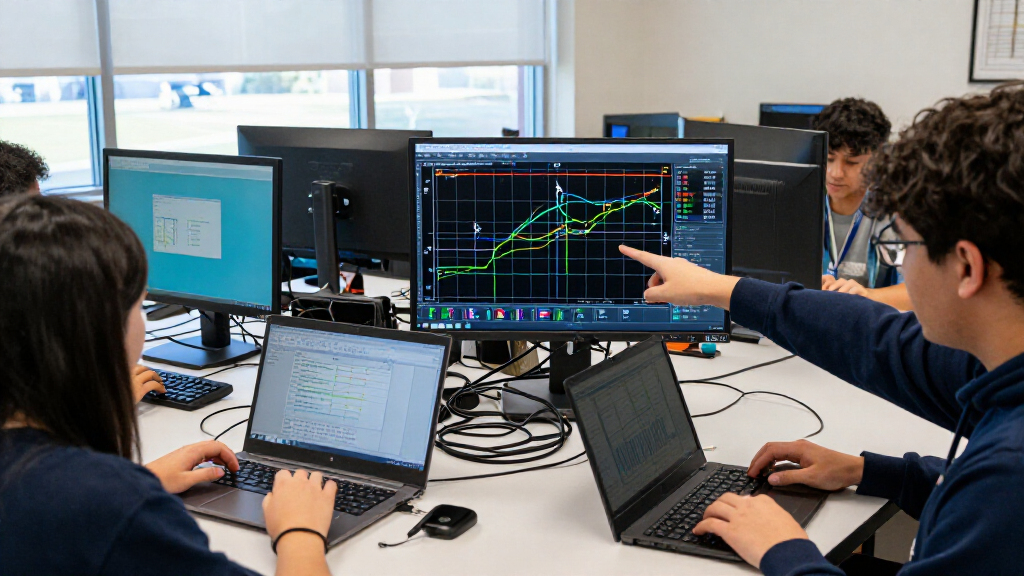
Students from Colorado took part in Google’s second annual Colorado Impact Hackathon at the company’s Boulder offices, working on electric-grid challenges. Google named SolarSnap, Grid Watch and Grid Guard as the first-, second- and third-place projects; details on implementation or follow-up funding were not provided.
Colorado students presented projects for addressing electric-grid challenges at Google’s second annual Colorado Impact Hackathon, held at the company’s Boulder offices in partnership with the University of Colorado Boulder and the Colorado Energy Office. Google identified three winning concepts focused on residential solar, battery storage during wildfire-related shutoffs and predictive grid upgrades.
Google’s account of the Oct. 29 event said participating students took on the question of how to create a clean, secure and resilient electric grid in Colorado. The company did not provide a total number of participants, teams or projects in its report. It described the event as the second annual Colorado Impact Hackathon.
SolarSnap took first place. Google described it as an AI app that uses a homeowner’s phone camera to help identify an ideal solar-panel setup. Grid Watch, the second-place project, was presented as an AI-managed battery network intended to maintain power during wildfire shutoffs while reducing electricity costs. Third-place project Grid Guard was described as offering predictive capabilities for targeted grid hardening.
Google said Colorado Attorney General Phil Weiser and CU Boulder Vice Chancellor for Sustainability Andrew Mayock spoke at the event about innovation and the state’s clean-energy future. The company’s report does not say that the projects have been deployed, independently tested or adopted by utilities or public agencies.
Student Concepts Target Grid Pressures
The projects address different parts of a wider challenge: expanding clean energy while keeping electricity service reliable. Residential solar tools could help homeowners evaluate installations, while battery storage may support customers when wildfire conditions lead to power shutoffs. Predictive grid-hardening tools could help identify where infrastructure work may be targeted.
Those are the projects’ stated aims, not demonstrated outcomes. Google’s report provides no performance data, cost estimates or evidence that any concept is ready for use. The event matters as a venue connecting students, public officials and technology professionals around Colorado energy issues, but its practical impact will depend on whether the ideas receive further development and testing.
Products Worth Considering

Anker SOLIX C1000 Gen 2 Portable Power Station

EcoFlow DELTA 3 Classic Portable Power Station, 1024Wh, 1800W

Samsung 27-Inch Odyssey QD-OLED G8 4K 240Hz Gaming Monitor
As an affiliate, we earn on qualifying purchases.
A Second Boulder Hackathon
Google said the hackathon was its second annual Colorado Impact Hackathon and that CU Boulder and the Colorado Energy Office partnered on the event. Its stated prompt brought together several concerns: clean power, grid security and resilience. The winning concepts ranged from helping individual homeowners consider solar panels to planning for outages and infrastructure upgrades.
Google’s post also referred broadly to wildfire risks and energy backlogs as issues facing Colorado. It did not give specific figures or explain which grid projects or backlogs the teams considered. The report is an account from an event partner, rather than an independent evaluation of the proposals.
“How can we create a clean, secure, and resilient electric grid in Colorado?”
— Google, in its Oct. 29 event report
Project Readiness Remains Unknown
Google’s report does not explain how the projects were developed, what data they used or how judges assessed them. It also does not identify the students or teams, provide technical specifications, or say whether the concepts were prototypes, demonstrations or early proposals.
There is no information about funding, follow-up support, utility partnerships, deployment plans or independent testing. In particular, the intended benefits described for Grid Watch and the predictive capabilities attributed to Grid Guard have not been substantiated with results in the source material. Whether any project will progress beyond the hackathon is unclear.
Follow-Up Could Test Winning Ideas
Google’s report does not announce a next-stage program, a launch date or a commitment from CU Boulder, the Colorado Energy Office or utilities to develop the winners. Any practical next step would require further technical work and evaluation, but the companies and institutions have not described a process for that in the available account.
Readers seeking evidence of impact will need updates on whether the teams continue their projects, secure partners or funding, and test the concepts under real-world conditions. For now, the confirmed development is the hackathon and its three ranked student proposals.
Key Questions
What happened at the Colorado Impact Hackathon?
Students presented concepts for Colorado’s electric grid at Google’s second annual hackathon, held at its Boulder offices with CU Boulder and the Colorado Energy Office.
Which projects won?
Google named SolarSnap first, Grid Watch second and Grid Guard third. The projects focused on residential solar, batteries for wildfire-related shutoffs and predictive grid hardening, respectively.
Are the winning projects being used by utilities?
No deployment or utility adoption was reported. Google’s account does not say whether the concepts will be developed further or tested outside the hackathon.
Who organized the event?
Google held the event at its Boulder offices in partnership with the University of Colorado Boulder and the Colorado Energy Office.
Source: blog.google