
TL;DR

Get the latest gadgets delivered free with Prime
- Fast, free delivery on millions of items
- Prime Video, Amazon Music and more included
- Member-only deals all year
Moving your rig into a closet or small space can drastically cut noise and reflections. Proper placement, treatment, and ventilation are key. You don’t need perfect soundproofing—just smart strategies to control sound inside a tiny room.
Ever tried recording in a small, echoing closet? It’s a love-hate relationship. You want a quiet, controlled sound, but tiny spaces can turn into boomboxes of low frequencies and reflections. The secret isn’t just slapping foam everywhere — it’s about smart placement and understanding what really dampens sound. This guide will show you how to tame reflections, pick the right spot, and keep your rig cool in a tiny, noisy world.
If you’re tired of your voice sounding boxy or your PC noise sneaking through, you’re in the right place. We’ll cover practical, proven strategies to make your closet a professional-sounding booth, or at least a lot less noisy and echoed. Get ready to turn that cramped space into your secret recording weapon — with just a few simple tweaks.
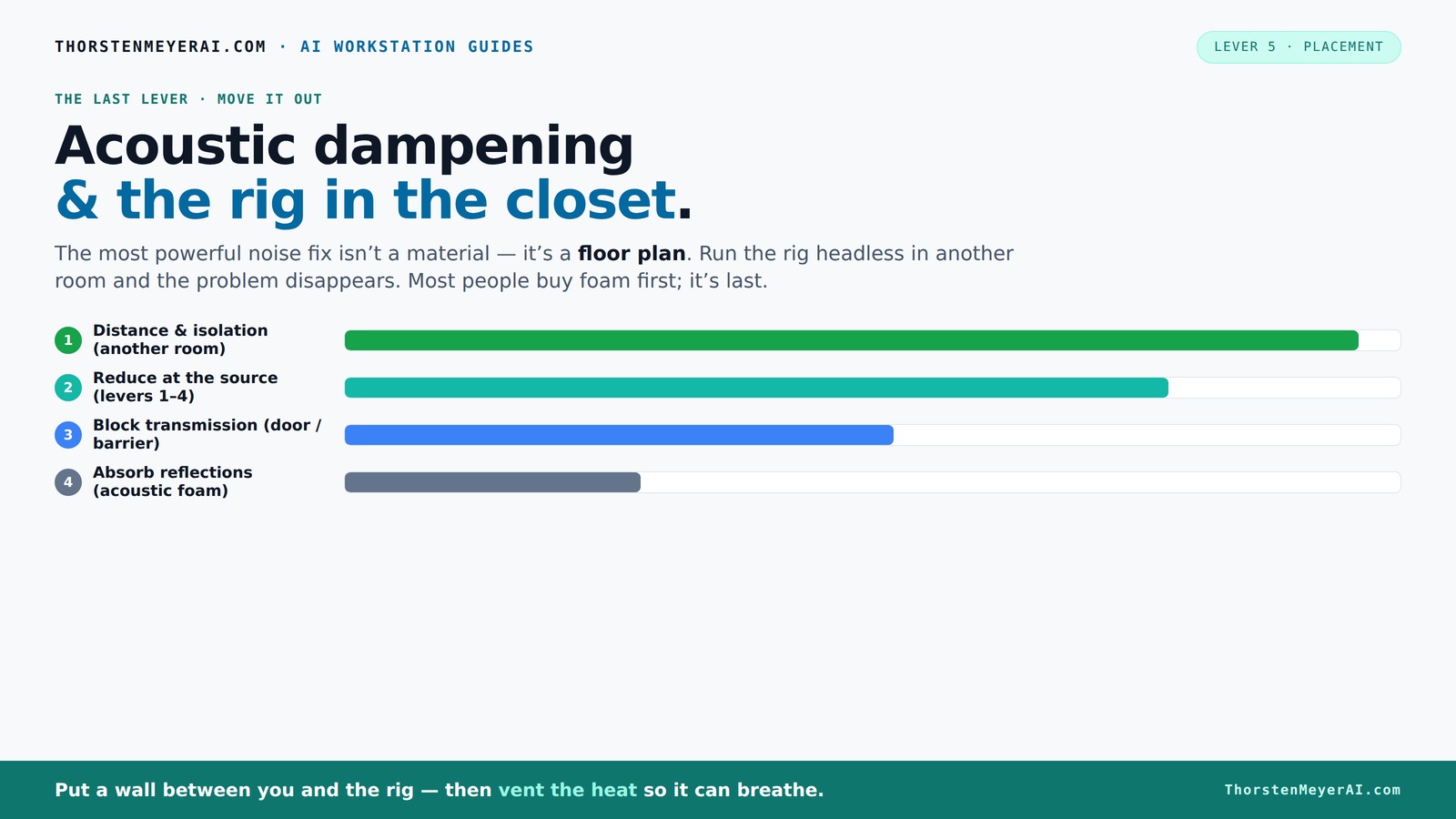
Acoustic dampening
& the rig in the closet.
The most powerful noise fix isn’t a material — it’s a floor plan. A rig you can’t hear because it’s in another room beats any amount of foam. Tap the approaches in Part 1 to see what actually works.
(another room)
(levers 1–4)
(door / barrier)
(acoustic foam)
Contain the noise, not the heat
Key Takeaways
- Control reflections by placing treatment where the mic hears the most — behind it and on side walls.
- Use a closet for your rig if you can separate it from your workspace, drastically reducing noise and echo.
- Ventilation is critical — a sealed closet traps heat and can damage your equipment, so add passive vents or small exhaust fans.
- Bass traps help with low-end buildup but aren’t the only solution — treat all reflective surfaces in tiny spaces.
- Sealing gaps around doors and vents prevents outside noise leaks, making your closet booth more effective.
acoustic foam panels for small rooms
As an affiliate, we earn on qualifying purchases.
As an affiliate, we earn on qualifying purchases.
What’s the real difference between dampening, treatment, and soundproofing?
Understanding the difference is key. Acoustic dampening (or treatment) is about reducing the echo and reflections inside your space. It makes your recordings sound clearer but doesn’t block noise from escaping or coming in. Think of it as softening the room’s sound.
Soundproofing, on the other hand, blocks sound from leaking through walls, doors, or floors. It’s a fortress approach, often costly and complex. You don’t need full soundproofing for a closet — just enough to quiet outside noise and keep your voice in.
For a small booth, focus on dampening reflections with panels and blankets, and seal gaps around doors and vents to cut outside noise. These two tactics work hand-in-hand to give you clean audio without the cost of building a soundproof bunker.
It’s important to realize that while dampening improves the clarity of your recordings by controlling internal reflections, it doesn't reduce the noise that leaks out or comes in from outside. Conversely, soundproofing aims to isolate the space, which is often unnecessary in a closet environment if your goal is to improve sound quality rather than complete isolation. Recognizing this distinction helps you allocate your resources more effectively—focusing on what truly impacts your recordings.
As an affiliate, we earn on qualifying purchases.
Where to place foam and panels for the biggest sound improvement?
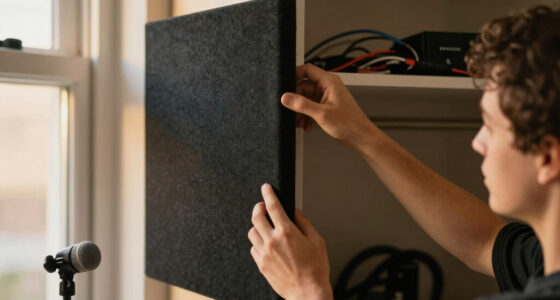
Place your acoustic panels where reflections hit hardest, especially behind the microphone and on the side walls. In a tiny closet, the first step is mic placement — keep it at least 6-12 inches away from walls to avoid sharp reflections.
Focus on the wall behind the mic because it’s the primary reflection point for vocals. Use foam or blankets to cover this area, and add panels at ear level on the side walls where sound bounces back.
Don’t forget the ceiling — a panel or two above the mic can soak up overhead reflections. The goal is to prevent sound waves from bouncing straight back into the mic’s capsule, which causes that hollow, boxy tone.
Why does placement matter so much? Because reflections that bounce directly into the mic create phase issues, muddiness, and a less natural sound. Properly placed panels absorb these reflections before they reach the mic, resulting in clearer, more professional recordings. But over-treating or misplacing panels can deaden the sound unnaturally, so understanding the reflection points helps strike the right balance.
As an affiliate, we earn on qualifying purchases.
Do I need bass traps in a tiny closet? Yes, but with a twist.
In small closets, bass traps can help tame low-frequency buildup, especially in the corners where standing waves form. But don’t overthink it. Sometimes, adding absorption on the walls, ceiling, and even your desk surface makes more difference than bass traps alone.
For example, a tiny closet with parallel walls can create resonant frequencies that muddy your vocals. Installing bass traps in the top corners can cut that rumble, but also consider placing soft materials on the desk or floor to break up low-end reflections. These low frequencies tend to accumulate in corners and along parallel surfaces, creating a boomy or muddy sound that obscures clarity. Bass traps are designed to absorb these problematic frequencies, but their effectiveness depends on proper placement—ideally in the corners where standing waves are strongest.
Recent advice emphasizes treating the actual points where sound reflects — that’s often the wall behind you and the ceiling, not just the corners. Balancing bass trapping with broadband absorption on walls and ceiling helps achieve a fuller, clearer sound without overloading the space with heavy trapping that can deaden the tone.
As an affiliate, we earn on qualifying purchases.
How to keep your closet cool and quiet at the same time
Placing a rig inside a closet can turn up the noise and heat. The biggest challenge is ventilation. Without fresh air, your PC overheats and fans roar, defeating the purpose of a quiet setup.
Best practice? Install passive vents or small exhaust fans that pull hot air out. Use ducting or purpose-built soundproof cabinets with controlled airflow. This way, you keep the heat down without turning your closet into a sauna.
For example, a DIY setup with a small fan and a vent hole can keep the temperature stable, preventing thermal throttling and excessive fan noise. Consider adding a temperature sensor and a thermostat-controlled fan for smarter cooling.
Proper ventilation is crucial because inadequate airflow can cause your equipment to overheat, which not only risks damage but also causes your PC fans to spin faster, increasing noise. Balancing cooling with soundproofing requires careful planning—using vents or quiet fans to exhaust heat while minimizing noise leaks. Neglecting this can turn your quiet closet into a noisy, hot mess that hampers your workflow.
Check out [this guide](https://thorstenmeyerai.com/reduce-heat-noise-ai-workstation/) for more detailed cooling tips.
How to treat your closet: step-by-step plan for a DIY booth
- Assess your space: Measure size, note reflections, and identify loud spots.
- Plan your mic placement: Keep it away from walls, at least 6 inches, pointing towards the center.
- Seal gaps: Use weatherstripping or acoustic sealant around the door and vents.
- Cover reflective surfaces: Hang blankets, install foam panels, or use moving blankets on walls, door, and ceiling.
- Add bass traps: Place in corners where low frequencies tend to build up.
- Improve ventilation: Install passive vents or small exhaust fans to manage heat.
- Test and tweak: Record test vocals, listen for reflections, and adjust placement or add treatment as needed.
This practical approach ensures you target the biggest issues first, then refine as you go. Keep in mind that every space is different, so the key is to listen carefully and adapt your treatment plan based on actual sound results. Over-treatment can deaden your sound, while under-treatment leaves reflections and echoes. Striking the right balance is essential for making your closet into a functional, good-sounding booth.
DIY vs. professional closet booths: pros and cons
| DIY Closet Booth | Professional Soundproof Cabinet |
|---|---|
| Inexpensive materials like blankets, foam, and tape. Easy to customize. Quick setup. | Engineered for soundproofing and cooling. More expensive. Usually built for specific needs. |
| Less effective at blocking outside noise. Might sound boxy if not well treated. | Better isolation, more consistent sound, often includes ventilation and bass trapping. |
| Great for hobbyists and small budgets. Can be improved over time. | Ideal for professional quality, but requires planning and investment. |
Most home setups start with DIY, but if you need serious isolation and cooling, a dedicated cabinet pays off. It’s all about your goals and budget. Recognize that while DIY solutions are accessible and flexible, they often lack the precise control and durability of professional enclosures. Conversely, investing in a custom cabinet can provide more consistent sound isolation, better airflow, and long-term reliability, but at a higher cost. Your choice depends on how much you value convenience, sound quality, and your budget constraints.
Frequently Asked Questions
What’s the main difference between acoustic dampening and soundproofing?
Acoustic dampening reduces reflections and echo inside a room, making recordings clearer, but doesn’t block sound from escaping. Soundproofing blocks noise from leaking through walls or doors, but is more complex and costly. For a closet booth, focus on dampening reflections and sealing gaps rather than full soundproofing.
Where should I place panels and foam inside my closet booth?
Place panels on the wall behind the mic and on side walls where reflections are strongest. Cover the ceiling above the mic with foam or blankets to prevent overhead bounce. Focus treatment on surfaces that directly reflect sound into the mic, not just the corners.
Do I need bass traps in such a small space?
Yes, bass traps help tame low-frequency buildup common in tiny closets, especially in corners. But don’t rely on them alone. Adding absorption on walls, ceiling, and even the desk surface can significantly improve overall sound quality.
Should I cover the door or ceiling first?
Start with the door and the wall behind the mic. These are the biggest reflection points. Cover the ceiling if you notice overhead echo, and seal gaps around the door for outside noise. Prioritize based on your room’s specific issues.
How much treatment is enough for a closet voice booth?
It depends on your goals. At minimum, treat the wall behind the mic, the door, and add some bass trapping in corners. More coverage, like side walls and ceiling, will produce cleaner, more controlled sound. Test and adjust as needed.
Conclusion
Turning a closet into a quiet, effective recording space isn’t magic — it’s smart placement, targeted treatment, and good ventilation. Think of it like tuning a musical instrument: tiny adjustments make all the difference. Your best move? Focus on where reflections bounce, keep your gear cool, and seal gaps tight.
With these simple strategies, your closet can become a surprisingly professional-sounding space that’s quiet, clear, and ready for your next project. So go ahead, close that door — and make some noise in the right way.
Halloween Picks
halloween
As an affiliate, we earn on qualifying purchases.