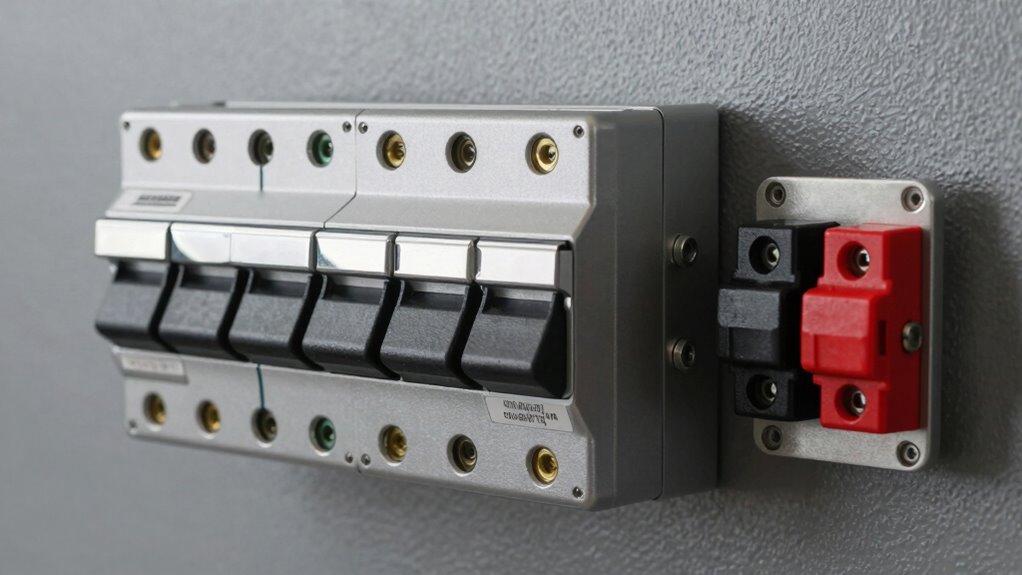

Transfer switches and interlock kits are safety devices that help you switch your home’s power source between utility and a generator securely. The transfer switch acts as a gatekeeper, isolating your home from the utility lines during outages, preventing dangerous backfeeding. Interlock kits work on your main breaker panel to make certain the generator and utility never run at the same time, avoiding hazards. Understanding how these devices work can protect your home and improve your backup power system—if you want to learn more, keep exploring.

Get the latest gadgets delivered free — and shop member deals
- Fast, free delivery on millions of items
- Access to Prime Big Deal Days deals on October 6–7
- Prime Video, Amazon Music and more included
Key Takeaways
- Transfer switches safely manage the switch between utility power and generator power during outages.
- They prevent backfeeding, protecting utility workers and home appliances from electrical hazards.
- Interlock kits mechanically prevent simultaneous operation of utility and generator circuits.
- Both devices ensure a smooth, safe transition and proper functioning of backup power systems.
- Regular maintenance and correct installation are essential for safety, reliability, and code compliance.
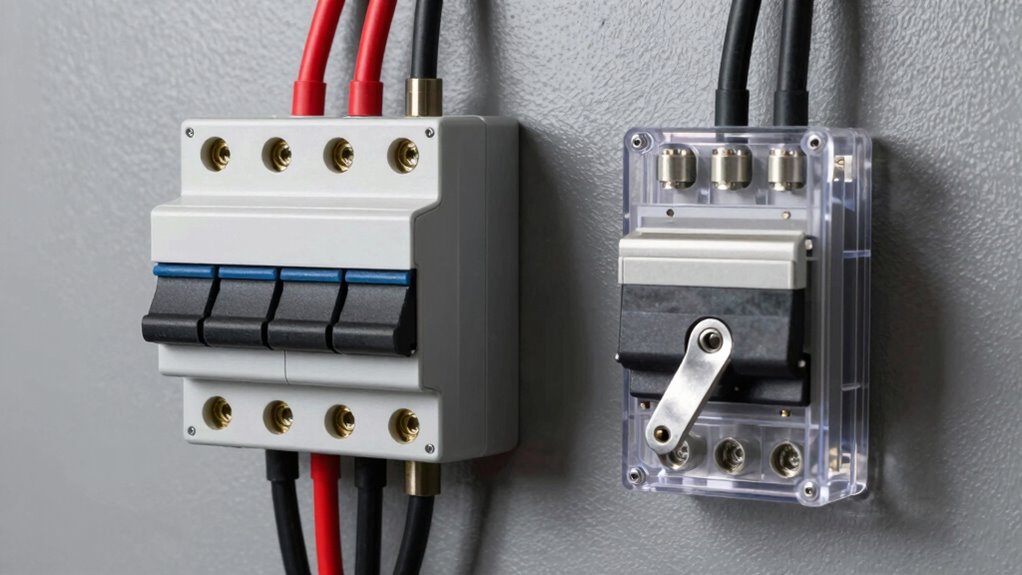
When it comes to ensuring reliable power during outages, understanding transfer switches and interlock kits is essential. These devices are critical components of a safe and effective backup power system, playing a vital role in generator safety and power outage preparedness. Without them, running a generator improperly can lead to dangerous situations, including electrical fires or damage to your home’s wiring. Knowing what these devices do helps you operate your generator safely and ensures that your backup power setup functions smoothly when you need it most.
A transfer switch acts as a gatekeeper between your generator and your home’s electrical system. When the power grid goes out, you flip a switch—either manually or automatically—and it isolates your home from the utility lines. This prevents backfeeding, a dangerous situation where electricity from your generator flows back into the utility lines, risking injury to utility workers and damaging equipment. The transfer switch then directs power from your generator to your home’s circuits, allowing you to operate essential appliances safely. Once the utility power is restored, the switch switches back to the grid, and your generator is disconnected, stopping any risk of backfeed. This process not only safeguards utility workers but also protects your generator and home wiring, making it a vital element of power outage preparedness. Proper installation of transfer switches is crucial for optimal safety and performance. Additionally, understanding power source selection helps ensure the correct setup and operation. Proper testing and maintenance** of these devices further enhances their reliability and safety. Being aware of electrical codes** and regulations is also important to ensure compliance and safe operation.
Interlock kits are a more straightforward, cost-effective solution that also enhances generator safety. They’re mechanical devices installed directly on your main breaker panel, preventing both the utility power and generator power from operating simultaneously. When you’re ready to use your generator, you manually switch the breaker to the generator position, and the interlock kit ensures that the main breaker is turned off. This simple mechanical interlock guarantees that you won’t accidentally energize your home from both sources at once, again preventing backfeeding and potential electrical hazards. Interlock kits are especially popular because they’re easy to install and don’t require a transfer switch’s complex wiring. They’re a practical choice for many homeowners looking to improve power outage preparedness without significant expense or rewiring.
Both transfer switches and interlock kits serve the same purpose: to ensure that your generator operates safely and your home remains protected during power outages. They prevent dangerous backfeeding, protect utility workers, and extend the lifespan of your generator. By understanding their functions, you take an active step toward generator safety and making sure your home stays powered and safe during the unpredictable moments of a blackout. Proper installation and regular maintenance of these devices are key to reliable performance, giving you peace of mind when the lights go out. Recognizing the importance of proper device installation can significantly improve overall safety and system reliability.
automatic transfer switch for generator
As an affiliate, we earn on qualifying purchases.
As an affiliate, we earn on qualifying purchases.
Frequently Asked Questions
Are Transfer Switches Always Manual or Automatic?
Transfer switches can be either manual or automatic, depending on your generator compatibility and safety considerations. Manual switches require you to operate them during outages, providing control and simplicity. Automatic switches detect power loss and switch seamlessly, ideal for critical loads. Choose based on your safety needs and generator compatibility to guarantee a reliable and safe power transfer, reducing risks and guaranteeing continuous power during outages.
How Long Does Installation Typically Take?
Installing a transfer switch or interlock kit usually takes a few hours—if you’re lucky. Expect to spend time on safety precautions, double-checking connections, and gathering your installation tools. Rushing can lead to mishaps, so take your time. A professional can often complete it faster, but if you’re DIY-ing, brace yourself for some sweating and careful effort. Remember, safety first—no shortcut should jeopardize your home or health.
Can I Install a Transfer Switch Myself?
You can attempt a DIY installation of a transfer switch if you’re comfortable with electrical work, but always prioritize safety precautions. Make certain to turn off power, follow manufacturer instructions, and use proper tools. However, if you’re unsure or unfamiliar with electrical systems, it’s best to hire a professional. Proper installation ensures safety, code compliance, and reliable operation, preventing potential hazards or damage.
What Is the Cost Difference Between Manual and Automatic Switches?
Imagine you’re choosing between a manual and an automatic transfer switch for your home. The cost comparison shows manual switches are typically $200-$500, while automatic ones can cost $1,000-$3,000. Installation expenses also vary, with automatic switches often needing professional setup. If you want quick, hands-off operation, expect to pay more upfront. Conversely, manual switches save money but require you to activate them during a power outage.
Do Transfer Switches Work During a Power Outage?
Yes, transfer switches work during a power outage by automatically or manually switching your power source to your generator. They guarantee generator compatibility and help prevent back-feeding, which could be dangerous. Always follow safety precautions, like turning off appliances and consulting a professional, to ensure proper operation. This setup keeps your home powered safely and reliably, giving you peace of mind during outages.
interlock kit for main breaker panel
As an affiliate, we earn on qualifying purchases.
As an affiliate, we earn on qualifying purchases.
Conclusion
In short, transfer switches and interlock kits keep your power safe and simple. They prevent potential problems, promote peace of mind, and provide reliable, ready-reserve energy. By understanding their purpose and proper use, you protect your property and personal peace. Power problems become problems no more when you pair preparedness with the right device. Remember, for safety and satisfaction, select, install, and support your switch or kit with confidence and care.
manual transfer switch for home backup power
As an affiliate, we earn on qualifying purchases.
As an affiliate, we earn on qualifying purchases.
generator interlock kit installation
As an affiliate, we earn on qualifying purchases.
As an affiliate, we earn on qualifying purchases.
Fall Picks
fall essentials
As an affiliate, we earn on qualifying purchases.