
When shared expectations exist, you feel safer because everyone knows how to behave and what to expect from others. This common understanding reduces misunderstandings and conflicts, creating a predictable environment. Trust grows when norms are respected, making it easier to work together and support each other. Clear communication and strong leadership reinforce these shared norms, fostering a sense of security. Keep exploring to discover how these elements work together to strengthen community resilience.
Key Takeaways
- Shared expectations create predictability, reducing uncertainty and preventing conflicts within the community.
- Clear norms ensure everyone understands acceptable behavior, minimizing misunderstandings and promoting safety.
- Reinforcing community standards fosters accountability, encouraging members to act responsibly.
- Consistent adherence to norms builds trust, strengthening cooperation and mutual support.
- A unified understanding of shared goals enhances resilience and collective response to challenges.
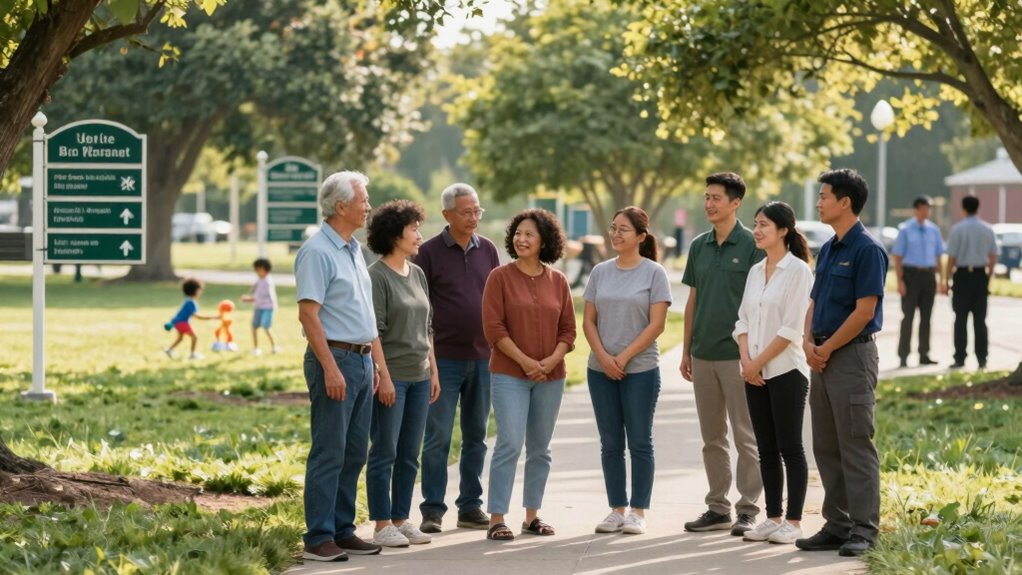
Have you ever wondered what keeps a community functioning smoothly? The answer lies in shared expectations that everyone within the community understands and upholds. These expectations often take the form of community norms—unspoken rules about how members behave and interact. When everyone aligns with these norms, it creates a sense of predictability and order, making daily life easier and more comfortable. People know what’s expected of them, and they can anticipate how others will respond in various situations. That predictability fosters trust, which is essential for a community to feel safe and cohesive. When you trust that your neighbors will respect your space, or that community leaders will handle issues fairly, you naturally feel more secure.
Trust building is a continuous process rooted in consistent behavior and shared understanding. When community members adhere to common norms, they send a message that they respect each other’s rights and well-being. This consistency helps to eliminate uncertainty and potential conflicts, reinforcing the idea that everyone is working toward the same goal: a safe, welcoming environment. As trust grows, people are more willing to cooperate and lend support, knowing that others will act responsibly. This collective reliability becomes a foundation upon which the community rests, making it easier for everyone to feel protected and valued. Recognizing that trust is a vital component of community safety emphasizes the importance of ongoing communication and accountability. Additionally, understanding the role of communication in maintaining these norms helps to strengthen community bonds.
Shared expectations also act as social glue, binding members together through common goals and values. When you know what’s acceptable and what isn’t, you’re less likely to engage in behavior that might harm others or create chaos. This clarity reduces misunderstandings and conflicts, which can often threaten a community’s safety. Instead, it promotes a culture where accountability is valued and upheld. When community norms are reinforced through communication, participation, and leadership, members develop a sense of belonging and confidence that their community can handle challenges effectively. Recognizing the importance of community norms and standards helps to reinforce the shared expectations that underpin safety. Maintaining consistent behavior within these norms is crucial for fostering a reliable environment.
In essence, shared expectations are the backbone of community safety. They establish a framework where trust can flourish and everyone understands their role in maintaining harmony. When you and your neighbors commit to upholding these norms, you create an environment where everyone feels secure, respected, and supported. This collective effort not only prevents issues before they arise but also encourages a resilient, unified community that can face adversity together. By understanding and embracing shared expectations, you help lay the groundwork for a community where safety isn’t just a goal—it’s a shared reality.
community norms enforcement signs
As an affiliate, we earn on qualifying purchases.
As an affiliate, we earn on qualifying purchases.
Frequently Asked Questions
How Do Shared Expectations Develop in Diverse Communities?
You develop shared expectations in diverse communities through open communication practices and understanding cultural norms. When people actively share their perspectives and listen to others, it fosters mutual respect. Recognizing and adapting to different cultural norms helps build common ground. Over time, consistent communication and shared experiences strengthen these expectations, creating a safer environment where everyone feels valued and understood. This process encourages trust and cooperation among community members.
Can Shared Expectations Change Over Time? How?
Yes, shared expectations can change over time through cultural shifts and generational changes. As society evolves, new values and norms emerge, influencing what people expect from each other. You might notice younger generations bringing different perspectives, leading to adjustments in communal standards. These changes happen gradually through conversation, education, and experience, helping communities adapt and stay inclusive. Embracing these shifts fosters understanding and keeps shared expectations relevant.
What Role Do Leaders Play in Establishing Shared Expectations?
Back in the day, leaders really shaped the vibe of a community. Your leadership influence is key in setting shared expectations, as you establish cultural norms that guide behavior. By communicating clearly and modeling those norms, you help everyone feel safe and connected. Your role is to foster trust and consistency, ensuring people understand what’s expected, which promotes a cohesive and secure environment.
How Are Shared Expectations Enforced Without Conflicts?
You guarantee shared expectations are enforced smoothly by fostering open communication and encouraging expectation compliance through respectful dialogue. When conflicts arise, you actively practice conflict resolution, addressing issues calmly and fairly. Setting clear, consistent guidelines helps community members understand boundaries, reducing misunderstandings. By promoting accountability and cooperation, you create an environment where everyone feels safe, and shared expectations are upheld without escalating conflicts.
Do Shared Expectations Influence Individual Behavior Differently?
Shared expectations influence your individual behavior differently depending on your motivation and cultural background. When your motivation aligns with community norms, you’re more likely to follow expectations willingly. Cultural differences also shape how you interpret and respond to these expectations—what’s considered respectful in one culture might differ in another. This means your personal motivation and cultural context directly shape your behavior, making shared expectations more or less influential in guiding your actions.
neighborhood safety communication tools
As an affiliate, we earn on qualifying purchases.
As an affiliate, we earn on qualifying purchases.
Conclusion
When everyone shares the same expectations, your community becomes a fortress of safety where trust blooms and chaos takes a backseat. It’s like having an invisible shield that protects you from the chaos of the outside world. When you all agree on what’s acceptable, you create a space so secure, it’s practically a sanctuary. So, embrace those shared norms—they’re the secret sauce that turns ordinary neighborhoods into extraordinary safe havens!
As an affiliate, we earn on qualifying purchases.
shared expectations community posters
As an affiliate, we earn on qualifying purchases.
As an affiliate, we earn on qualifying purchases.