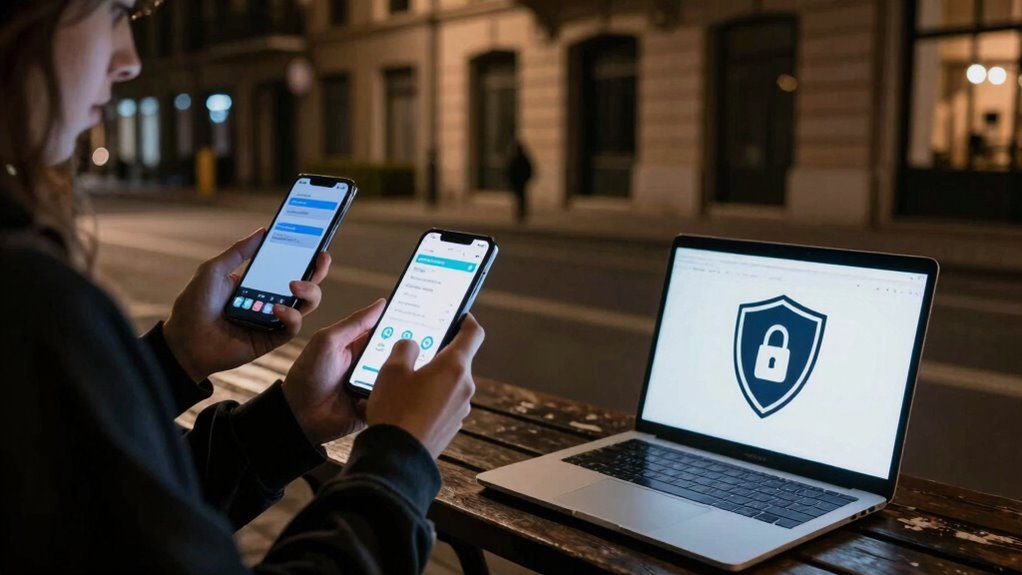

Digital privacy is now essential to your personal safety because it helps protect your sensitive information from hackers and scams. By safeguarding your online data, you reduce the risk of identity theft, financial loss, and unauthorized access. Being aware of social engineering tactics and using strong security practices, like encryption and strong passwords, keeps you safer. If you keep exploring, you’ll discover more ways to stay secure and confident in your digital life.
Key Takeaways
- Digital privacy safeguards sensitive personal information from hackers and identity theft.
- Protecting online data prevents unauthorized access to personal accounts and financial details.
- Maintaining digital privacy reduces risks associated with social engineering scams like phishing.
- Privacy measures enhance overall personal safety in an increasingly connected digital world.
- Being informed about cybersecurity practices helps prevent data breaches and online threats.
In today’s digital world, safeguarding your privacy and personal safety is more important than ever. As you go about your daily routines online, your personal information becomes a valuable target for cybercriminals and malicious actors. One crucial aspect of protecting yourself is understanding how data encryption works. When you send sensitive information, like passwords or financial details, data encryption transforms it into a code that only authorized parties can decipher. This process helps prevent hackers from intercepting and misusing your data, making your online activities more secure. Without encryption, your information is vulnerable to being stolen or manipulated, which can lead to serious consequences like identity theft or financial loss.
Data encryption protects your sensitive information from hackers and prevents identity theft and financial loss online.
But encryption isn’t enough on its own. You also need to be aware of social engineering tactics that threaten your digital safety. Social engineering involves manipulative tricks used by cybercriminals to deceive you into revealing confidential information or granting access to your accounts. These scams can take many forms, such as phishing emails, fake phone calls, or deceptive messages on social media. The goal is to exploit your trust or curiosity, making you believe that the request is legitimate. If you fall for these tricks, you could inadvertently give hackers the keys to your online life. That’s why staying vigilant and questioning unexpected requests is essential. Never share passwords or personal details unless you’re sure of the source, and always verify identities through separate channels.
Your personal safety in the digital realm depends heavily on your ability to recognize and counteract these threats. Implementing strong, unique passwords for each account adds an extra layer of security, making it harder for cybercriminals to gain access. Additionally, enabling two-factor authentication can protect your accounts even if your password is compromised. Being cautious about the links you click and the information you share online reduces your chances of falling prey to social engineering schemes. Regularly updating your devices and security software also helps patch vulnerabilities that hackers might exploit. Understanding how data encryption works can further enhance your defenses by ensuring your sensitive information remains protected. It’s also beneficial to stay informed about the latest cyber threats****, as new tactics are constantly evolving to bypass security measures.
Furthermore, familiarizing yourself with common online scams and how they operate can help you identify suspicious activity early on. Ultimately, digital privacy and personal safety are intertwined. By understanding how data encryption shields your information and staying alert to social engineering scams, you take proactive steps to defend yourself in the digital landscape. You’re not just protecting your data—you’re safeguarding your reputation, your finances, and your peace of mind. Embracing these practices empowers you to navigate the online world confidently, knowing you’re less likely to become a victim of cyber threats. In a landscape where threats constantly evolve, staying informed and cautious is your best defense.

Lovell DESTRUCT PRO – USB Hard Drive Eraser & Data Destruction Tool – 3 Phase Crytopgraphic Wipe – Super Fast SMART Technology – Multi-Drive Compatibility – Works With HDD, SSD, & External Hard Drives
- Permanent Data Erasure: Complete and irreversible data destruction
- Secure Data Reset: Prepares devices for sale or disposal
- Revolutionary USB Device: Compact tool with powerful wiping capabilities
As an affiliate, we earn on qualifying purchases.
As an affiliate, we earn on qualifying purchases.
Frequently Asked Questions
How Does Digital Privacy Impact Mental Health?
Digital privacy directly impacts your mental well-being by reducing stress and anxiety related to online threats. When you prioritize online security, you feel more in control, decreasing worries about data breaches or identity theft. Protecting your digital information fosters a sense of safety, which supports better mental health. Conversely, feeling exposed online can cause fear and anxiety, so maintaining digital privacy helps you stay mentally balanced and secure.
Are Children at Higher Risk of Digital Privacy Breaches?
Yes, children face a higher risk of digital privacy breaches because their online safety often depends on parental controls, which can be imperfect or misused. They share personal information, chat with strangers, and navigate platforms that may not fully protect their privacy. You must actively implement child online safety measures, monitor their online activity, and educate them about digital privacy to reduce these risks and keep them safe.
Can Digital Privacy Measures Prevent Identity Theft?
Yes, digital privacy measures can help prevent identity theft. By using encryption tools, you protect your sensitive information from hackers, making it harder for them to access your data. Additionally, reviewing and understanding privacy policies guarantees you know how your information is handled and shared. Implementing these steps reduces your risk of identity theft, keeping your personal details safer and safeguarding your financial and personal security online.
How Often Should I Update My Privacy Settings?
You should update your privacy settings at least once every three to six months to stay ahead of potential threats. Follow privacy best practices and stay aware of new security features or updates on your platforms. Regular updates help you manage who accesses your information, reduce risks, and enhance your overall security awareness. Staying proactive guarantees your personal safety online and keeps your digital footprint protected against evolving cyber threats.
What Are the Legal Rights Regarding Digital Privacy?
You have legal rights regarding digital privacy, including protections for your user rights and data encryption. Laws like GDPR and CCPA give you control over your personal data, allowing you to access, correct, or delete it. Data encryption helps safeguard your information from unauthorized access. Staying informed about these rights empowers you to demand better privacy practices and hold companies accountable for protecting your digital footprint.

Thetis Pro FIDO2 Security Key, Two Factor Authentication NFC Security Key FIDO 2.0, Dual USB A Ports & Type C for Multi layered Protection (HOTP) in Windows/MacOS/Linux, Gmail, Facebook,Dropbox,Github
- FIDO2 Compatibility Check: Verify compatibility before purchase
- NFC Support for Mobile Authentication: NFC works with mobile devices only
- Dual USB-A and USB-C Ports: Compatible with multiple device ports
As an affiliate, we earn on qualifying purchases.
As an affiliate, we earn on qualifying purchases.
Conclusion
As you navigate the digital world, remember that your privacy is like a fragile shield, constantly shimmering in the sunlight yet easily shattered by careless clicks. Protecting your personal information isn’t just about avoiding hackers; it’s about safeguarding your sense of security amid the endless stream of data. Think of your digital presence as a quiet garden—tend it carefully, keep unwanted intruders out, and let your safety flourish amidst the lush, unseen landscape of the online domain.

Keeper Password Manager
- Password and secret info management: Manage passwords and sensitive data
- Auto-fill passwords: Automatically fill passwords on sites and apps
- Secure file storage: Store private files, photos, and videos
As an affiliate, we earn on qualifying purchases.
As an affiliate, we earn on qualifying purchases.

McAfee Total Protection 2026 Antivirus Software, 10+ Devices | Auto-Renews
- Device Security: Protects all your devices in real-time
- Scam Detection: Identifies risky texts, emails, and videos
- Secure VPN: Private, unlimited browsing on public Wi-Fi
As an affiliate, we earn on qualifying purchases.
As an affiliate, we earn on qualifying purchases.




![A Walkable ASCII Cyberpunk City In One HTML File [Video]](https://peppereyes.com/wp-content/uploads/2026/09/a-walkable-ascii-cyberpunk-city-in-one-html-file-video-featured-260x140.jpg)