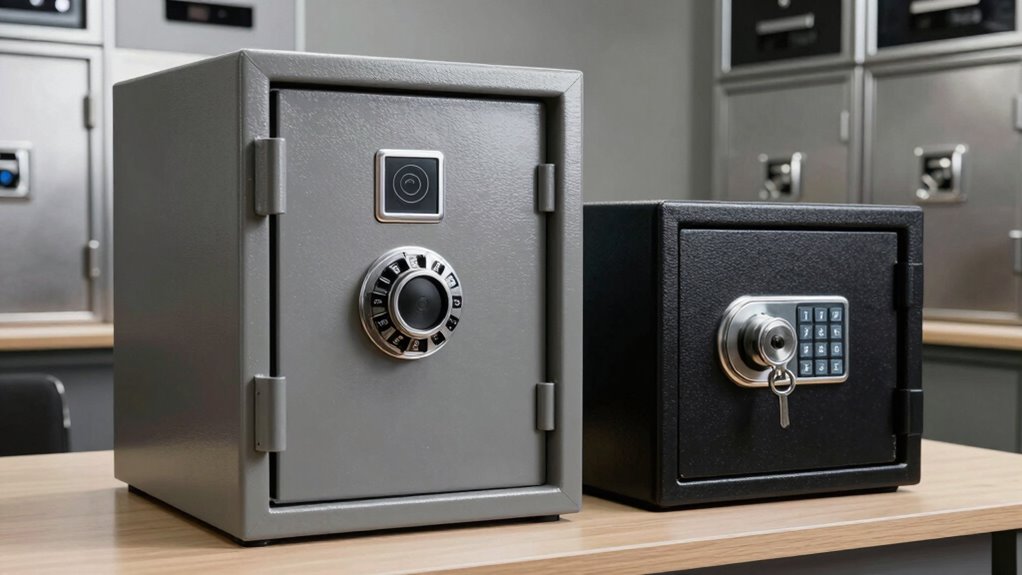

Depository safes are designed for maximum security in commercial settings, featuring reinforced steel, thick walls, and internal relocking mechanisms to resist forced entry, while allowing quick deposits through drop slots or chutes. Home safes focus on ease of access with smaller sizes, portable designs, and security features like digital or biometric locks. Their construction balances security and convenience for personal valuables. To discover how these differences affect your security choices, keep exploring the details below.

Get the latest gadgets delivered free with Prime
- Fast, free delivery on millions of items
- Prime Video, Amazon Music and more included
- Member-only deals all year
Key Takeaways
- Depository safes feature drop slots or chutes for quick deposits without opening the safe, unlike home safes which are opened for access.
- They are constructed with reinforced steel and thick walls for enhanced forced entry resistance, tailored for commercial security needs.
- Depository safes often have higher fire resistance ratings to protect large volumes of cash and valuables in commercial settings.
- Home safes prioritize easy access for personal items and may include biometric or digital locks for convenience.
- The design and materials of depository safes emphasize durability and rapid deposit capability, whereas home safes focus on portability and everyday security.

When choosing between a depository safe and a home safe, understanding their differences can help you make the right security decision. Both safes serve to protect your valuables, but they are designed for different needs and environments. A depository safe is typically used in commercial settings, banks, or retail locations, allowing quick deposits without the need to open the safe frequently. It features a drop slot or chute, so cash or documents can be deposited without exposing the contents. In contrast, a home safe is meant for personal use, providing a secure place to store jewelry, important documents, or small valuables.
One key difference lies in their construction and security features. Depository safes are built with reinforced steel and thick walls to withstand attempts at forced entry, often including internal relocking mechanisms. Their design emphasizes durability and rapid access for deposits, rather than frequent retrieval. Home safes, on the other hand, prioritize ease of access while maintaining a high level of security. Many are equipped with digital keypad locks, biometric options, or traditional key locks. They are usually smaller, portable, and designed to fit conveniently into closets or hidden spots around your home. security features are tailored to different environments and usage patterns. Additionally, the materials used in their construction play a crucial role in their overall security and durability.
Depository safes focus on durability and rapid deposits with reinforced steel, while home safes prioritize easy access and high security features.
When it comes to insurance coverage, a depository safe often plays a crucial role. Because these safes are used for cash deposits or valuables in a commercial setting, they are usually insured based on their security features and compliance with industry standards. Many insurance policies require safes to meet specific fire resistance ratings and security standards to qualify for coverage. Fire resistance becomes a vital consideration here, especially in commercial environments where the risk of fire can threaten stored assets. Depository safes tend to have higher fire resistance ratings, sometimes capable of withstanding high temperatures for extended periods, ensuring that your valuables remain protected during a fire. Furthermore, the fire resistance ratings of safes are tested under standardized conditions to provide reliable protection, making them a critical factor in safe selection. Proper installation and regular maintenance also contribute to maintaining their protective qualities over time.
For a home safe, insurance coverage depends on the value of what you store inside and the safe’s security features. Many homeowner policies offer coverage for valuables stored in a fire-resistant safe, but the level of protection can vary. Fire resistance in home safes is generally designed to protect documents and small valuables from heat and flames for a certain period, such as 30 minutes or an hour. Additionally, fire-resistant safes are often rated based on their ability to withstand specific temperature and time standards, providing added peace of mind. This feature offers peace of mind, knowing that even if a fire occurs, your important papers or jewelry are less likely to be destroyed. Proper installation and placement are also essential to maximize their effectiveness.
Ultimately, choosing between a depository safe and a home safe hinges on your specific needs. Consider what valuables you need to protect, whether fire resistance and insurance coverage are priorities, and how frequently you’ll access the contents. Understanding these distinctions ensures you select a safe that offers the right balance of security, accessibility, and peace of mind. Factors like security standards and the environment in which the safe will be used should also influence your decision.
As an affiliate, we earn on qualifying purchases.
Frequently Asked Questions
Can I Rent a Depository Safe Long-Term?
Yes, you can rent a depository safe long-term through rental agreements or long-term leasing options. Many providers offer flexible lease terms, allowing you to secure a safe for months or even years. You simply choose a plan that fits your needs, sign the agreement, and pay the monthly or annual fee. This approach gives you secure storage without the upfront cost of purchasing, making it a convenient long-term solution.
Are Depository Safes Fireproof?
You’ll find that many depository safes are designed with fire resistance in mind, aligning with high security standards to protect your valuables. While not all are entirely fireproof, they often provide a good level of protection against heat and flames. This means your important documents or cash stay safer during unexpected events, giving you peace of mind. Always check the specific fire resistance ratings to verify it meets your needs.
What Are the Insurance Options for Valuables in a Depository?
You can protect your valuables in a depository with valuable insurance and security coverage options. Most facilities offer specialized insurance policies that cover theft, loss, or damage, giving you peace of mind. Additionally, security coverage often includes surveillance, alarms, and restricted access, ensuring your items stay safe. Always review the insurance policy details and security measures to select the best coverage for your valuables and feel confident in their safety.
How Often Can I Access My Items in a Depository Safe?
You can access your items in a depository safe as often as the facility’s hours allow, often daily or by appointment, like opening a treasure chest. Access frequency depends on deposit procedures, which are usually straightforward but require proper identification and filling out a quick form. This system guarantees your valuables are secure yet reachable, giving you peace of mind with each visit, like opening a vault of trust.
Do Depository Safes Require Special Security Clearances?
Depository safes typically don’t require a security clearance, but they do have access restrictions to guarantee safety. You might need a combination, key, or biometric verification to open them, depending on the model. These measures protect your valuables from unauthorized access, making them more secure than standard home safes. Always follow the safety protocols provided by the manufacturer to maintain the safe’s security and your peace of mind.
As an affiliate, we earn on qualifying purchases.
Conclusion
Choosing between a depository safe and a home safe is about more than just security; it’s about peace of mind. While a depository safe offers professional protection for your valuables, a home safe provides immediate access during emergencies. Imagine the relief of knowing your treasures are securely stored, yet accessible when needed. Both options serve a purpose—one offers peace of mind, the other quick reassurance. Ultimately, your choice reflects what matters most: safety or convenience.
As an affiliate, we earn on qualifying purchases.
As an affiliate, we earn on qualifying purchases.
Halloween Picks
halloween
As an affiliate, we earn on qualifying purchases.