

If you want to carry pepper spray at work, start by checking your company’s policies and local laws, as rules can vary widely. It’s smart to ask your HR department about their specific guidelines, safety restrictions, and whether they permit personal safety devices like pepper spray. Be clear about your safety concerns and show you plan to use it responsibly. To learn about managing policies and protecting yourself legally, continue exploring these important considerations.
Key Takeaways
- Review your company’s policies and employee handbook to determine if carrying pepper spray is permitted.
- Contact HR for clarification on restrictions, safety protocols, and proper storage requirements.
- Understand local laws and regulations regarding carrying self-defense tools at work.
- Explain your safety concerns to HR and ask about acceptable alternatives or safety measures.
- Ensure proper training and maintenance of any safety device you plan to carry for responsible use.
Is It Legal to Carry Pepper Spray to Work?
Is it legal to carry pepper spray to work? The answer depends on your workplace policies and local laws. While pepper spray can enhance your personal safety, it’s essential to prioritize workplace safety and understand your employee rights. Some employers may restrict carrying any self-defense tools, citing safety regulations or liability concerns. Others might allow pepper spray if it’s used solely for personal protection outside work duties. Check your state and local laws first, as regulations vary widely. Even if legal, your employer may have specific policies prohibiting or permitting pepper spray on company premises. Ultimately, knowing your rights and understanding your employer’s stance helps you make informed decisions about carrying pepper spray at work.
Do Employers Allow Pepper Spray at the Workplace?
Many employers restrict or prohibit employees from carrying pepper spray at work to maintain a safe and secure environment. They do this to prioritize workplace safety, ensuring that no weapon or self-defense tool causes accidental harm or disruptions. Employers typically have policies that limit or ban pepper spray, citing concerns about liability and safety risks. While employee rights protect your ability to carry pepper spray in some cases, these rights may be overridden by company policies designed to promote a secure workplace. It’s essential to review your company’s specific policies and understand that, even if legally permitted, carrying pepper spray may not be allowed at your workplace. Always check with HR to confirm what’s permitted and ensure compliance with safety standards. Additionally, understanding the power of electric bikes can help you make informed decisions about personal safety and transportation options. Being aware of workplace safety regulations can further clarify what tools are appropriate for personal protection at work. For example, some workplaces may implement security protocols that limit the use of self-defense items to prevent escalation of conflicts. Familiarizing yourself with employer policies on safety equipment can provide additional guidance on permissible self-defense options. Moreover, staying informed about occupational safety can help you navigate and adhere to these policies more effectively.
How Can I Ask HR About Pepper Spray Policies?

To find out your workplace’s specific rules about carrying pepper spray, start by reaching out to your HR representative. Explain that you’re seeking policy clarification related to personal safety and want to ensure you’re compliant. Be direct and respectful, asking if pepper spray is permitted or if there are any restrictions. It helps to mention your intent to prioritize safety while respecting company policies. You can also inquire about any guidelines for self-defense tools or alternative safety measures. Taking this proactive approach shows you’re responsible and committed to maintaining a safe work environment. Additionally, understanding workplace safety regulations can help you navigate safety concerns effectively and ensure you are aware of any legal restrictions related to self-defense devices. Being aware of workplace policies and the relevant laws can further assist in making informed decisions about personal safety tools at work. Moreover, familiarizing yourself with company safety procedures demonstrates your commitment to a secure workplace environment. Remember to listen carefully to their response and ask follow-up questions if needed, so you fully understand your options and stay within workplace rules.
What Factors Influence Whether Pepper Spray Is Banned?
What factors determine whether pepper spray gets banned in a workplace? Several key aspects influence this decision, primarily related to workplace safety and employee rights. Employers consider the nature of the work environment, local laws, and potential safety risks. The table below highlights some important factors:
| Factor | Impact on Banning | Rationale |
|---|---|---|
| Workplace Environment | High-risk areas may ban pepper spray | To prevent escalation and ensure safety |
| Local Regulations | Varying legal restrictions | Laws may prohibit personal safety devices |
| Company Policy | Policies aligned with safety goals | To maintain a safe and productive workplace |
| Nature of Employee Roles | Customer-facing or sensitive roles | Higher risk may warrant restrictions |
| Employee Rights | Balance safety with personal rights | Ensures policies respect individual needs |
Additionally, some workplaces may reference employee safety policies to guide their decisions, emphasizing the importance of workplace safety considerations in policy-making. Understanding legal compliance is also crucial to ensure policies adhere to applicable laws and regulations. Employers often evaluate risk management strategies to determine the appropriateness of allowing or banning pepper spray in the workplace.
How Can Employees Safely Carry Personal Safety Devices?
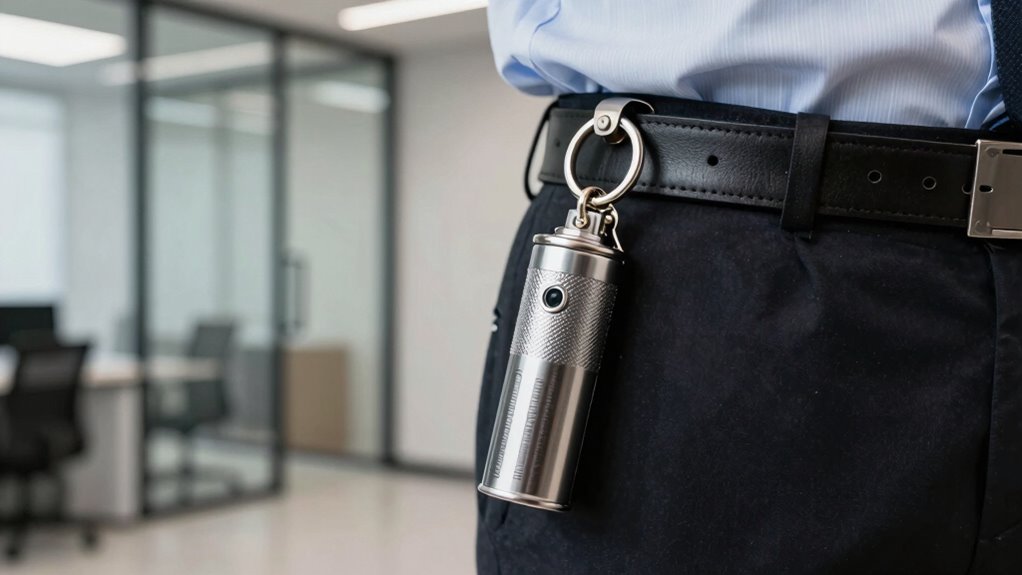
To carry personal safety devices safely, you need to follow proper storage methods to prevent accidental discharge or damage. It’s also essential to receive employee training on how to use these devices correctly and responsibly. By doing so, you guarantee your safety and comply with workplace regulations. Additionally, understanding the role of color accuracy in safety equipment can help ensure that indicators and signals are clearly visible and effective in emergency situations. Maintaining proper storage practices can also extend the lifespan of your safety devices and ensure they function correctly when needed. Regularly inspecting your safety devices for wear and tear can help identify potential issues before they compromise safety. Incorporating compliance with safety standards ensures that your safety devices meet legal and organizational requirements, enhancing overall workplace safety. Integrating smart safety technology can further enhance device monitoring and response during emergencies.
Proper Storage Methods
Proper storage is essential to guarantee you can access your pepper spray quickly and safely when needed. To make certain storage safety, choose a container with high durability that prevents accidental discharge or damage. Keep your pepper spray in a secure, accessible location, such as a designated pocket or holster, avoiding places prone to extreme temperatures or moisture. Additionally, consider selecting storage solutions that align with European cloud innovation principles to ensure compliance and security. Ensuring proper water chemistry can also help maintain the integrity of your safety device over time. Furthermore, selecting durable materials for your storage container can enhance its ability to withstand environmental factors and prevent accidental leaks. Incorporating proper maintenance practices can extend the lifespan and reliability of your safety device, ensuring it functions correctly when needed. Paying attention to storage conditions can also prevent deterioration and ensure readiness when required.
Employee Training Requirements
Knowing how to carry your personal safety device correctly is vital for guaranteeing quick access and safe use in emergencies. Employee awareness of proper carrying techniques helps prevent accidents and guarantees you’re prepared if needed. Employers should provide extensive training on safety protocols, including how to securely store and access pepper spray or other devices. This training should emphasize the importance of keeping the device in an accessible yet secure location, avoiding interference with daily tasks. Regular refresher sessions reinforce safety awareness and help employees stay confident in their ability to use personal safety devices responsibly. By implementing clear employee training requirements, employers promote a safer workplace environment and empower staff to respond effectively during critical moments.
FAQs About Pepper Spray and Workplace Safety

Are you wondering whether carrying pepper spray at work is safe and legal? It’s a common question when considering workplace self-defense. Generally, pepper spray can be a useful safety tool, but laws and policies vary by location and employer. To protect yourself, you should understand your company’s employee safety measures and whether they permit personal defense tools like pepper spray. Many workplaces have strict policies against weapons or self-defense sprays, so check your employee handbook or HR policies first. If permitted, ensure you know how to use pepper spray correctly and responsibly. Remember, the goal is to stay safe without violating company rules or local laws. Always prioritize non-violent conflict resolution and follow the guidance of workplace safety protocols.
What Should I Do If My Employer Bans Pepper Spray But I Feel Unsafe?

If your employer bans pepper spray but you still feel unsafe, it’s important to understand your legal rights and options. You can also seek support from workplace safety resources or HR to discuss your concerns. Taking these steps helps you find safe, lawful ways to protect yourself.
Legal Rights and Options
Even when your employer bans pepper spray, you still have options to protect yourself if you’re feeling unsafe at work. Understanding your legal considerations is vital. First, review your company’s policies and local laws regarding self-defense tools. Some states or jurisdictions may have specific regulations allowing personal safety devices, even if your employer prohibits them. If you believe your safety is at risk, consult an employment lawyer to understand your rights and options. You might also consider requesting accommodations or discussing safety concerns with HR. Remember, your legal rights depend on local laws, workplace policies, and whether your actions are justified to guarantee personal safety. Taking informed steps can help you protect yourself within legal boundaries.
Seeking Workplace Support
When you feel unsafe at work despite your employer’s ban on pepper spray, reaching out for support is essential. Start by talking to your supervisor or HR representative about your concerns. Explain how the situation affects your sense of workplace safety and ask about available resources. Many workplaces offer employee support programs or access to counseling services that can help you manage safety concerns. If you don’t receive a satisfactory response, consider consulting a workplace safety advocate or labor union if applicable. Document your concerns and any responses from management. Remember, your safety matters, and advocating for workplace safety is your right. Seeking support ensures you’re taking proactive steps to protect yourself and maintain a secure work environment.
Frequently Asked Questions
Are There Any Penalties for Bringing Pepper Spray to Work?
Yes, bringing pepper spray to work can lead to employee discipline and potential legal repercussions. Employers often consider it a safety violation, which might result in warnings, suspension, or termination. Additionally, you could face legal issues if the spray causes harm or is deemed a threat. To avoid these consequences, always check your company’s policies and ask HR about acceptable self-defense tools before bringing pepper spray into the workplace.
Can I Use Pepper Spray Against a Coworker?
Using pepper spray against a coworker is like igniting a fire in a paper house—it’s risky and often illegal. Self-defense legality varies, but generally, you shouldn’t use it unless you’re facing imminent danger. For workplace security, it’s best to report threats to HR or security instead of taking matters into your own hands. Protect yourself, but remember, self-defense has limits inside the workplace.
How Does Workplace Violence Policy Address Pepper Spray?
Your workplace violence policy typically clarifies whether carrying or using pepper spray is permitted for employee safety. Most policies prioritize workplace security and discourage weapons or defensive sprays unless explicitly allowed for self-defense. You should review your company’s specific policy, as violations can lead to disciplinary action. If unsure, ask HR directly about acceptable safety measures, ensuring you understand how to protect yourself while maintaining a secure work environment.
Are There Alternative Safety Devices Recommended by Employers?
A stitch in time saves nine, so it’s wise to explore your options. Employers often recommend alternative devices like personal alarms, stun guns, or portable panic buttons for personal safety. These tools can deter threats without the complications of pepper spray. Check your company’s policies, and discuss with HR which alternative safety devices are permitted and best suited for your work environment, ensuring your safety without risking job policies.
What Are My Rights if I Feel Unsafe Without Pepper Spray?
If you feel unsafe without pepper spray, your rights to employee safety are protected by self-defense laws. You can request additional safety measures from your employer, such as security training or access to safety devices that conform to workplace policies. If your safety concerns aren’t addressed, consider reporting to HR or seeking legal advice. Your employer must ensure a safe work environment, respecting your right to protect yourself within legal boundaries.
Conclusion
Ultimately, your safety depends on understanding your workplace policies and feeling confident in your choices. Picture yourself walking through your office or parking lot, knowing you’ve taken the right steps to protect yourself. By asking HR and staying informed, you can navigate the gray areas with clarity and assurance. Remember, your safety is a priority—equip yourself with knowledge and trust your instincts to stay secure in any environment.