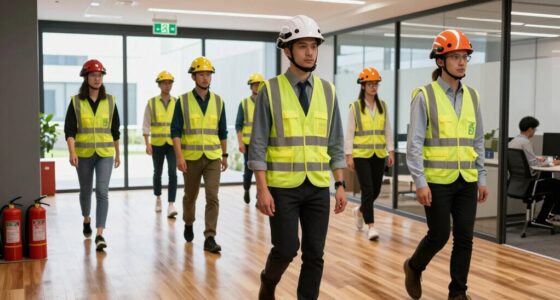
📊 Full opportunity report: Boosting Manufacturing Productivity With Advanced VR Workplace Training on IdeaNavigator AI — validation score, market gap, and execution plan.

Get the latest gadgets delivered free with Prime
- Fast, free delivery on millions of items
- Prime Video, Amazon Music and more included
- Member-only deals all year
TL;DR
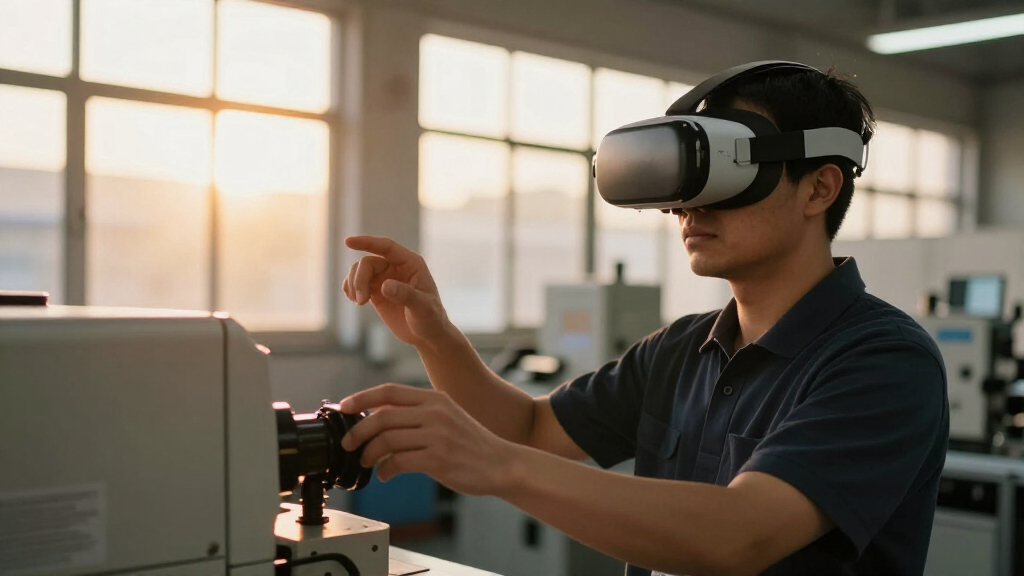
Manufacturers are piloting virtual reality training modules to accelerate onboarding and improve safety. Early results suggest faster skill acquisition and better hazard recognition, addressing labor shortages and safety concerns.
Manufacturers are beginning to deploy advanced virtual reality (VR) training modules to improve onboarding efficiency and safety compliance for workers handling dangerous machinery. This initiative aims to address ongoing labor shortages and skills gaps, with early pilot programs showing promising results in speeding up training and hazard recognition. The development is driven by the decreasing hardware costs of standalone VR headsets and the urgent need for scalable, standardized training solutions in the manufacturing sector.
Manufacturing companies, particularly those facing a severe labor shortage, are testing VR-based training modules designed for high-risk procedures such as lockout/tagout (LOTO) and forklift safety. These modules are delivered via standalone headsets like Meta Quest and Pico, which have significantly lowered the hardware cost barrier. The pilot programs involve deploying 5-10 headsets per plant, with a cloud dashboard that tracks worker progress, scores hazard recognition, and measures time-to-competency against traditional classroom training.
Early results from these pilots indicate that workers trained with VR demonstrate faster skill acquisition and higher hazard recognition accuracy. The approach also offers standardized training across multiple plants, reducing variability inherent in traditional methods. The solution is offered as a SaaS platform with optional custom scenario development and hardware management services, targeting mid-to-large manufacturing firms.
According to industry sources, the immersive enterprise training market is growing at approximately 20% annually, with the USD 14.55 billion market in 2025 including a growing segment dedicated to manufacturing safety and onboarding. The pilot programs are designed to validate whether VR training can deliver measurable improvements in safety performance and onboarding speed, with success defined as statistically significant gains in hazard recognition and reduced time-to-competency.
Impact of VR Training on Manufacturing Safety and Efficiency
The adoption of VR training in manufacturing could significantly improve safety outcomes by providing workers with realistic, risk-free practice environments. Faster onboarding reduces downtime and operational costs, while standardized modules ensure consistent skill levels across plants. If validated, this approach could transform workforce development, especially amid the ongoing labor shortages, by enabling rapid, scalable, and effective training that meets safety compliance standards.
VR headset for industrial training
As an affiliate, we earn on qualifying purchases.
As an affiliate, we earn on qualifying purchases.
Growing Need for Scalable, Safe Manufacturing Training Solutions
The manufacturing sector in the U.S. faces a critical labor shortage, with approximately 409,000 unfilled positions as of August 2025, and projections indicate a need for 3.8 million new workers by 2033. Traditional training methods—classroom instruction and on-the-floor demonstrations—are slow, inconsistent, and pose safety risks when practiced on live machinery. Meanwhile, advancements in immersive technology, particularly the availability of affordable standalone VR headsets, have opened new opportunities for scalable, standardized training programs. Industry experts see VR as a promising tool to bridge the skills gap and enhance safety compliance, especially for high-risk procedures.
Previous efforts in industrial VR training have been limited to pilot projects or bespoke solutions. The current focus is on developing focused modules for specific procedures, such as lockout/tagout and forklift safety, with measurable outcomes to validate effectiveness. The push for rapid deployment aligns with broader industry trends toward digital transformation and automation of workforce training processes.
standalone VR headset for manufacturing
As an affiliate, we earn on qualifying purchases.
As an affiliate, we earn on qualifying purchases.
Uncertainties Around Long-Term Effectiveness and Adoption
While early pilot results are encouraging, it remains unclear whether VR training will consistently outperform traditional methods across different procedures and manufacturing environments. The long-term impact on safety records, training costs, and worker retention has not yet been established. Additionally, industry adoption may face barriers related to integration with existing systems, worker acceptance, and ongoing content development needs. Further data from extended pilots and broader implementation are required to confirm these benefits.
As an affiliate, we earn on qualifying purchases.
Next Steps for VR Training Validation and Expansion
Manufacturers involved in pilot programs plan to run 60-90 day trials, measuring improvements in time-to-competency, hazard recognition, and supervisor assessments. Success metrics will determine whether the approach scales to additional procedures and plants. Industry observers expect more companies to adopt VR training if pilot results demonstrate clear safety and efficiency gains, with eventual integration into standard workforce development programs. Developers are also working on expanding content libraries and refining analytics dashboards based on pilot feedback.
As an affiliate, we earn on qualifying purchases.
Key Questions
How does VR training improve safety compared to traditional methods?
VR training provides realistic, risk-free practice environments where workers can learn procedures and hazard recognition more effectively, leading to faster skill acquisition and better safety compliance.
What procedures are currently being targeted for VR training pilots?
The initial focus is on high-risk procedures such as lockout/tagout (LOTO) and forklift safety, which are critical for preventing accidents and ensuring regulatory compliance.
What are the main barriers to wider adoption of VR training in manufacturing?
Barriers include integration with existing training systems, worker acceptance of new technology, ongoing content development, and demonstrating long-term cost-effectiveness and safety improvements.
How cost-effective is VR training compared to traditional methods?
While initial setup involves hardware and content development costs, ongoing expenses are primarily subscription-based, and early pilots suggest potential savings through faster onboarding and reduced safety incidents.
When can manufacturers expect to see broader adoption of VR training?
If pilot programs confirm significant benefits, wider adoption could occur within the next 1-2 years, as companies seek scalable solutions to address labor shortages and safety requirements.
Source: IdeaNavigator AI
Fall Picks
fall essentials
As an affiliate, we earn on qualifying purchases.