Choosing a smart smoke detector with app alerts requires balancing reliable local alarms with responsive remote notifications. The Kidde Smart Smoke Detector with Ring stands out as the best overall pick due to its seamless integration with the Ring ecosystem and reliable dual-sensor technology. For those prioritizing long-term maintenance, the X-Sense Interconnected Smoke Detector offers a compelling 10-year sealed battery solution that eliminates frequent replacements. Buyers must decide between hardwired reliability for new constructions and wireless convenience for retrofits, while also weighing the necessity of carbon monoxide monitoring. This guide breaks down the specific tradeoffs of each model to help you secure the right protection for your home layout.

Get the latest gadgets delivered free with Prime
- Fast, free delivery on millions of items
- Prime Video, Amazon Music and more included
- Member-only deals all year
Complete the kit



Key Takeaways
- Hardwired models like the Kidde Hardwired Smart Smoke and CO Detector provide power resilience but require professional installation, whereas battery-powered units offer DIY simplicity at the cost of regular maintenance.
- Matter over Thread devices, such as the Heiman Smart Smoke Detector, represent the future of cross-platform compatibility, allowing alerts to reach users regardless of their preferred smart home ecosystem.
- Interconnectivity is a critical differentiator; systems like the X-Sense 6-Pack ensure that if one alarm detects smoke, every unit in the house sounds, a feature absent in standalone budget models.
- Carbon monoxide detection is increasingly standard in premium units, providing a dual-threat safety net that single-sensor smoke detectors cannot offer.
- App latency varies by connectivity protocol; Wi-Fi models may experience slight delays compared to Bluetooth or Zigbee gateways, which often provide faster local alerting before cloud processing.
| Kidde Smart Smoke Detector with Ring, AA Battery, RGSDR-RW | 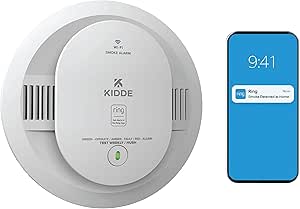 | Best for Ring Ecosystem Users | Power Source: 2 AA Alkaline Batteries | Connectivity: Ring App, Alexa, Wireless Interconnect | Certification: UL 217, FCC | VIEW ON AMAZON | See Our Full Breakdown |
| X-Sense Interconnected Smoke Detector, 10-Year Battery, SD20-W, 6-Pack |  | Best Value Multi-Pack | Battery Life: 10 Years | Unit Count: 6 | Connectivity: Wireless Interconnected | VIEW ON AMAZON | See Our Full Breakdown |
| Kidde Hardwired Smart Smoke and Carbon Monoxide Detector with App Alerts and Battery Backup |  | Best Premium Hardwired Option | Power Source: 120V AC Hardwired | Backup Power: 2 AA Batteries | Connectivity: 2.4 GHz Wi-Fi | VIEW ON AMAZON | See Our Full Breakdown |
| Kidde Compact Smoke Detector, AA Battery-Powered, Model 10SDR |  | Best Compact Basic Detector | Model: 10SDR | Power Source: 2 AA Batteries | Alarm Volume: 85 Decibels | VIEW ON AMAZON | See Our Full Breakdown |
| First Alert 10-Year Battery Smoke Alarm, Dual Sensor |  | Best Maintenance-Free Basic Alarm | Battery Life: 10 Years | Sensor Type: Dual (Photoelectric/Ionization) | Features: End-of-Life Warning | VIEW ON AMAZON | See Our Full Breakdown |
| Heiman Matter over Thread Smart Smoke Detector |  | Best for Local Control Enthusiasts | Connectivity: Matter over Thread | Sensor Type: Dual-beam photoelectric | Power Source: CR123A battery (included) | VIEW ON AMAZON | See Our Full Breakdown |
| YoLink Photoelectric Smoke Detector with Interconnected Alarms |  | Best for Large Property Coverage | Alarm Type: Photoelectric smoke alarm | Communication Range: Up to 2,034 ft (open air) | Battery Life: Up to 5 years | VIEW ON AMAZON | See Our Full Breakdown |
| Kidde Smart Smoke & CO Detector with Ring, AA Battery |  | Best for Ring Ecosystem Users | Detection Types: Smoke and Carbon Monoxide | Battery: 2-AA alkaline batteries (included) | Connectivity: Wireless interconnectivity | VIEW ON AMAZON | See Our Full Breakdown |
| First Alert SC5 Hardwired Smart Smoke and Carbon Monoxide Alarm |  | Best for Permanent Installation | Alarm Type: Combination smoke and carbon monoxide | Power Source: Corded electric | Backup Battery: 3V lithium battery pack | VIEW ON AMAZON | See Our Full Breakdown |
| Heiman Smart Interconnected Smoke Detectors with Gateway, 3-Pack |  | Best Value Multi-Unit Kit | Package Contents: 3 smoke detectors and 1 gateway | Sensor Type: Dual-beam photoelectric | Battery: CR123A lithium, 10-year | VIEW ON AMAZON | See Our Full Breakdown |
| Heiman S1-TM Matter over Thread Smoke Detector |  | Best for Local-First Automation | Brand: HEIMAN | Model: S1-TM | Sensor Type: Photoelectric, dual-beam | VIEW ON AMAZON | See Our Full Breakdown |
| Kidde Smart Hardwired Smoke Detector and Indoor Air Quality Monitor |  | Best for Whole-Home Interconnection | Brand: Kidde | Model: P4010ACSAQ-WF | Power: 120V AC hardwired with lithium battery backup | VIEW ON AMAZON | See Our Full Breakdown |
| smart smoke detector with app alert | Connectivity | Power Source |
|---|---|---|
| Kidde Smart Smoke Detector wit | Ring App, Alexa, Wireless Interconnect | 2 AA Alkaline Batteries |
| X-Sense Interconnected Smoke D | Wireless Interconnected | — |
| Kidde Hardwired Smart Smoke an | 2.4 GHz Wi-Fi | 120V AC Hardwired |
| Kidde Compact Smoke Detector | None | 2 AA Batteries |
| First Alert 10-Year Battery Sm | None | Sealed Lithium |
| Heiman Matter over Thread Smar | Matter over Thread | CR123A battery (included) |
| YoLink Photoelectric Smoke Det | — | — |
| Kidde Smart Smoke & CO Detecto | Wireless interconnectivity | — |
| First Alert SC5 Hardwired Smar | First Alert app alerts | Corded electric |
| Heiman Smart Interconnected Sm | — | — |
| Heiman S1-TM Matter over Threa | Matter over Thread | Battery powered (10-year life) |
| Kidde Smart Hardwired Smoke De | Wi-Fi; Amazon Alexa, Google Home compatible | — |
More Details on Our Top Picks
Kidde Smart Smoke Detector with Ring, AA Battery, RGSDR-RW
This detector is the logical choice if you already own Ring cameras or doorbells. Unlike the X-Sense Interconnected Smoke Detector, which relies on a proprietary link system, this unit integrates directly into the Ring app, allowing you to see who is home or view camera feeds when an alarm triggers. The wireless interconnectivity means if one alarm sounds, others in compatible Kidde units follow suit, covering the whole home without running wires. However, the optional subscription for 24/7 monitoring adds a recurring cost that free alternatives avoid. While it reduces cooking nuisances, the reliance on AA batteries means you must remember to replace them, unlike sealed-battery models. It is a strong pick for those who want visual verification of alarms through existing Ring hardware.Pros:- Seamless integration with Ring app for visual verification
- Wireless interconnectivity with compatible Kidde alarms
- No electrical wiring required for installation
- Designed to minimize false alarms from cooking
Cons:- Requires ongoing AA battery replacements
- 24/7 professional monitoring requires a monthly subscription
- Limited smart home features outside the Ring/Alexa ecosystem
Best for: Homeowners who already use Ring security devices and want visual confirmation during alarms
Not ideal for: Users who want zero ongoing costs or prefer a completely sealed, maintenance-free battery
- Power Source:2 AA Alkaline Batteries
- Connectivity:Ring App, Alexa, Wireless Interconnect
- Certification:UL 217, FCC
- Detection Speed:25% faster than leading competitor
- Monitoring:Optional 24/7 via subscription
- Battery Included:Yes
Our verdict“Choose this if you want your smoke alarms to talk to your Ring cameras, but be prepared for battery changes and potential subscription fees.”
X-Sense Interconnected Smoke Detector, 10-Year Battery, SD20-W, 6-Pack
For those needing to cover an entire house quickly, this 6-pack offers significant value. The 10-year sealed lithium battery eliminates the hassle of yearly changes, a clear advantage over the AA-powered Kidde Smart Smoke Detector. The photoelectric sensors are tuned to detect smoldering fires faster and reduce kitchen false alarms. However, this unit lacks smart home integration; it does not send app notifications, relying instead on audible alerts from interconnected units. If you leave the house, you won’t receive a push alert. This makes it ideal for renters or budget-conscious buyers who prioritize long-term maintenance savings over remote monitoring capabilities. It connects only to other X-Sense Link+ devices, limiting future expansion options.Pros:- 10-year sealed battery eliminates maintenance
- Includes six units for comprehensive coverage
- Wireless interconnection triggers all alarms simultaneously
- Photoelectric sensor reduces cooking-related false alarms
Cons:- No smart app connectivity or remote notifications
- Locked into the X-Sense Link+ ecosystem
- Cannot detect carbon monoxide
Best for: Budget-conscious homeowners or landlords needing whole-home coverage with minimal maintenance
Not ideal for: Users who require remote app alerts or integration with smart home hubs
- Battery Life:10 Years
- Unit Count:6
- Connectivity:Wireless Interconnected
- Sensor Type:Photoelectric
- Installation:Easy hardware included
- Housing:Flame-retardant material
- Smart Features:None
Our verdict“The best choice for covering a whole home cheaply and quietly, provided you do not need remote alerts on your phone.”
Kidde Hardwired Smart Smoke and Carbon Monoxide Detector with App Alerts and Battery Backup
This unit stands out for its dual protection against both smoke and carbon monoxide, a feature missing from the X-Sense Interconnected Smoke Detector. The voice alerts specify the hazard, reducing panic during emergencies. Because it is hardwired with a battery backup, it remains operational during power outages, offering higher reliability than battery-only models like the Kidde Compact Smoke Detector. The app notifications work even when you are away, providing peace of mind. However, installation requires 120V AC wiring and access to a 2.4 GHz Wi-Fi network, which may exclude homes with only 5 GHz routers. It is a robust, professional-grade solution for those who want maximum safety and smart features, assuming they can handle the electrical installation.Pros:- Detects both smoke and carbon monoxide
- Voice alerts clarify the type of emergency
- Hardwired with battery backup for outage protection
- Sends mobile app notifications when away
Cons:- Requires professional or DIY 120V AC wiring
- Dependent on 2.4 GHz Wi-Fi for smart features
- Single unit purchase (not a multi-pack)
Best for: Homeowners with existing hardwired systems who want combined smoke and CO detection with remote alerts
Not ideal for: Renters or homeowners without access to 120V wiring or 2.4 GHz Wi-Fi
- Power Source:120V AC Hardwired
- Backup Power:2 AA Batteries
- Connectivity:2.4 GHz Wi-Fi
- Detection:Smoke and Carbon Monoxide
- Alerts:Mobile App and Voice
- Certification:UL 217, UL 2034
- Features:Hush Function
Our verdict“A top-tier choice for safety-conscious homeowners who want dual-hazard detection and remote alerts, provided they have the necessary wiring and Wi-Fi setup.”
Kidde Compact Smoke Detector, AA Battery-Powered, Model 10SDR
If you need a simple, no-nonsense detector for a small space, this compact unit fits the bill. It offers over 25% faster detection than older models and an 85-decibel alarm that is loud enough for bedrooms. Unlike the Kidde Smart Smoke Detector with Ring, this model has no app connectivity or interconnectivity, making it a standalone safety device. It is ideal for closets, small apartments, or as a backup in areas where you don’t need smart features. The 10-year warranty provides long-term confidence, though the AA batteries will need periodic replacement. It lacks carbon monoxide detection, so it must be paired with a separate CO alarm if you have fuel-burning appliances. This is a solid, affordable entry-level safety tool.Pros:- Compact design fits discreetly in small spaces
- Faster smoke detection than previous generations
- Easy battery-only installation
- Includes a 10-year limited warranty
Cons:- No smart app or wireless interconnectivity
- Does not detect carbon monoxide
- Requires manual battery replacements
Best for: Renters or homeowners needing a simple, fast-detecting alarm for small rooms or as a backup
Not ideal for: Users who need whole-home interconnection, app alerts, or carbon monoxide detection
- Model:10SDR
- Power Source:2 AA Batteries
- Alarm Volume:85 Decibels
- Detection Speed:25% Faster
- Warranty:10 Years
- Standards:UL 217 10th Ed.
- Connectivity:None
Our verdict“A reliable, fast-detecting basic alarm for those who prioritize simplicity and speed over smart connectivity.”
First Alert 10-Year Battery Smoke Alarm, Dual Sensor
This First Alert model focuses on long-term reliability with its 10-year sealed battery. The dual sensors combine photoelectric and ionization technologies to catch both smoldering and flaming fires, offering broader coverage than the single-sensor X-Sense Interconnected Smoke Detector. It includes an end-of-life warning, so you know exactly when to replace the unit. However, it lacks smart connectivity and interconnection; if one alarm sounds, others in the house will not necessarily follow. You also won’t receive app alerts if you are away. This is a strong choice for those who want a “set it and forget it” solution with superior fire detection logic, but it falls short for anyone wanting to integrate safety into their smart home routine.Pros:- 10-year sealed battery requires no maintenance
- Dual sensors detect a wider range of fire types
- End-of-life signal prevents using expired units
- Simple test/silence functionality
Cons:- No wireless interconnection with other alarms
- No smart app or remote notifications
- Smoke detection only (no CO)
Best for: Homeowners who want maximum fire detection accuracy and zero battery maintenance, without smart features
Not ideal for: Users who need remote alerts, interconnected alarms, or carbon monoxide detection
- Battery Life:10 Years
- Sensor Type:Dual (Photoelectric/Ionization)
- Features:End-of-Life Warning
- Connectivity:None
- Detection:Smoke Only
- Maintenance:Test/Silence Button
- Power Source:Sealed Lithium
Our verdict“The best choice for those who prioritize accurate, maintenance-free fire detection over smart home integration.”
Heiman Matter over Thread Smart Smoke Detector
This detector stands out for its commitment to local processing via Matter over Thread. Unlike the Heiman Smart Interconnected Smoke Detectors with Gateway, which relies on a proprietary gateway and cloud connection for alerts, this model communicates directly through a Thread Border Router. This architecture means alerts and automations continue working even if your internet drops, provided the local network is intact. The UL217 10th Edition certification ensures compliance with modern safety standards, while the dual-beam photoelectric sensor reduces false alarms from cooking. However, the requirement for a compatible Matter hub adds complexity. It is not a plug-and-play solution for those unfamiliar with smart home protocols. If you prioritize privacy and local reliability over simple setup, this is a strong candidate, but it demands more technical confidence than battery-only competitors.Pros:- Operates locally via Thread, reducing latency and cloud dependency
- Dual-beam photoelectric sensor minimizes false alarms
- UL217 10th Edition certified for latest safety standards
- Battery-powered design ensures functionality during power outages
Cons:- Requires a compatible Matter hub and Thread Border Router
- Setup involves complex network configurations like IPv6 and mDNS
Best for: Users with an existing Thread Border Router and a preference for local-only smart home automation.
Not ideal for: Beginners or renters who want a simple, standalone device without needing a separate hub.
- Connectivity:Matter over Thread
- Sensor Type:Dual-beam photoelectric
- Power Source:CR123A battery (included)
- Alarm Volume:85 dB
- Certifications:UL217 10th Edition, FCC, CSFM
- Housing Material:UL94 V-0 flame-retardant
Our verdict“Choose this if you want robust local automation and already have a Thread-enabled smart home infrastructure.”
YoLink Photoelectric Smoke Detector with Interconnected Alarms
The YoLink Photoelectric Smoke Detector distinguishes itself with an impressive 2,034-foot open-air communication range. This makes it far more suitable for large homes or outbuildings than the Kidde Smart Smoke & CO Detector, which relies on shorter-range wireless interconnectivity. YoLink’s system continues to sound interconnected alarms locally even if the Hub or internet fails, a critical safety feature. The battery life, rated up to five years, reduces maintenance frequency. However, the requirement for a separately sold YoLink Hub to enable app alerts is a significant upfront cost and hurdle. While the local interconnectivity is robust, the full smart home experience is gated behind this additional hardware. It is a powerful choice for sprawling properties where signal penetration is a concern.Pros:- Extensive 2,034-foot open-air range for large areas
- Local interconnectivity persists during internet outages
- Up to 5-year battery life reduces maintenance
- Comprehensive alerts for smoke, temperature, and malfunctions
Cons:- Requires a separately sold YoLink Hub for app features
- Actual range may vary significantly in dense building materials
Best for: Owners of large properties or rural homes needing long-range wireless interconnectivity.
Not ideal for: Apartment dwellers or those unwilling to purchase a separate proprietary hub.
- Alarm Type:Photoelectric smoke alarm
- Communication Range:Up to 2,034 ft (open air)
- Battery Life:Up to 5 years
- Alarm Sound Level:85 dB or higher at 10 ft
- Certifications:UL 217 10th Edition; CAN/ULC S531
- Temperature Threshold:9–36°F change within 2 minutes
- Hub Requirement:YoLink Hub required for remote alerts
Our verdict“Ideal for large properties where standard wireless detectors fail to maintain a reliable connection.”
Kidde Smart Smoke & CO Detector with Ring, AA Battery
This detector is the logical choice for anyone already invested in the Ring ecosystem. It integrates seamlessly with the Ring app, providing unified notifications for smoke and carbon monoxide alongside security alerts. Compared to the First Alert SC5, which requires a hardwired connection, this battery-powered unit offers flexible installation anywhere in the home. The wireless interconnectivity with other Kidde alarms ensures whole-home coverage without complex wiring. However, the reliance on an optional subscription for 24/7 professional monitoring adds recurring costs. Additionally, being battery-only means you must monitor battery levels, unlike hardwired models with backup batteries. It excels in convenience and integration but lacks the permanent installation confidence of wired systems.Pros:- Seamless integration with the Ring app ecosystem
- Detects both smoke and carbon monoxide
- Wireless interconnectivity with other Kidde devices
- Battery-powered for flexible installation
Cons:- Requires optional subscription for professional monitoring
- Battery dependency requires periodic replacement
Best for: Households already using Ring cameras or doorbells who want unified alerts.
Not ideal for: Those seeking a permanent, hardwired solution or avoiding subscription services.
- Detection Types:Smoke and Carbon Monoxide
- Battery:2-AA alkaline batteries (included)
- Connectivity:Wireless interconnectivity
- App Notifications:Ring app
- Standards:UL 217, FCC
- Subscription:Optional Ring subscription
Our verdict“The best option if you want to consolidate smoke alerts into your existing Ring security app.”
First Alert SC5 Hardwired Smart Smoke and Carbon Monoxide Alarm
The First Alert SC5 appeals to those who prioritize reliability through hardwiring. Unlike the battery-dependent Kidde Smart Smoke & CO Detector, this unit draws power from your home’s electrical system, backed by a lithium battery pack. This ensures continuous operation and eliminates the need for frequent battery swaps. The Quick Connect Plug simplifies replacement for existing hardwired alarms, a major advantage for DIYers upgrading older units. Voice alerts provide clear, localized warnings, which is superior to generic beeps for identifying specific threats. However, it is useless in rooms without existing wiring. The dependency on compatible alarms for interconnectivity also limits flexibility if you mix brands. It is a robust choice for new constructions or fully wired homes.Pros:- Hardwired power with battery backup for maximum uptime
- Voice alerts specify danger type and location
- Quick Connect Plug enables easy replacement
- Interconnects with compatible First Alert devices
Cons:- Requires existing hardwired electrical connection
- Interconnectivity limited to compatible brands
Best for: Homeowners with existing hardwired electrical boxes who want a permanent, maintenance-light solution.
Not ideal for: Renters or homes without pre-existing hardwired smoke alarm circuits.
- Alarm Type:Combination smoke and carbon monoxide
- Power Source:Corded electric
- Backup Battery:3V lithium battery pack
- Connectivity:First Alert app alerts
- Interconnect:Compatible alarms sound together
- Installation:Quick Connect Plug
- Dimensions:5.75 x 1.6 x 5.75 inches
- Weight:16 ounces
Our verdict“Select this for permanent, wired installation where reliability and voice guidance are paramount.”
Heiman Smart Interconnected Smoke Detectors with Gateway, 3-Pack
This kit offers exceptional value for those needing multiple detectors. Including three units and a gateway, it provides immediate whole-home coverage compared to buying single units like the Heiman Matter over Thread Smart Smoke Detector. The 10-year CR123A batteries mean no maintenance for a decade, a significant advantage over AA-powered models. The gateway enables local interconnection, so all three sound if one triggers, while also sending app alerts. However, the gateway requires a 2.4 GHz Wi-Fi network, which can be finicky in modern dual-band router setups. While it supports Home Assistant and other platforms, the setup is more involved than simple Bluetooth or Wi-Fi direct devices. It is the most cost-effective way to equip a standard apartment or small home.Pros:- Includes 3 detectors and gateway for immediate coverage
- 10-year battery life eliminates maintenance
- Local interconnection ensures all units sound together
- Magnetic mounting offers flexible placement options
Cons:- Gateway requires specific 2.4 GHz Wi-Fi compatibility
- Smart home integration requires additional platform setup
Best for: Apartment dwellers or small homeowners needing multiple detectors with a single gateway.
Not ideal for: Users with only 5 GHz Wi-Fi or those who dislike managing proprietary gateways.
- Package Contents:3 smoke detectors and 1 gateway
- Sensor Type:Dual-beam photoelectric
- Battery:CR123A lithium, 10-year
- Wi-Fi Frequency:2.4 GHz
- Interconnection:Up to 24 detectors
- Mounting:Magnetic pads or hardware
- Certification:UL 217 10th Edition, CSFM, FCC
Our verdict“The most practical bundle for equipping a small home with synchronized, long-lasting smart alarms.”
Heiman S1-TM Matter over Thread Smoke Detector
This detector stands out for its Matter over Thread connectivity, which enables local smart home automations without relying on cloud servers. Unlike the Kidde Smart Hardwired Smoke Detector, which requires Wi-Fi for most features, the Heiman S1-TM operates on a mesh network that remains functional even if your internet goes down. The inclusion of temperature and humidity sensors allows for more nuanced triggers, such as turning on fans when humidity spikes, rather than just reacting to smoke. However, this advanced local control demands a compatible Thread Border Router, adding a layer of complexity for beginners. While the dual-beam photoelectric sensing reduces false alarms effectively, the setup process is less plug-and-play compared to simpler Wi-Fi models. It is a powerful choice for enthusiasts but requires specific infrastructure.Pros:- Operates locally via Thread, ensuring alerts work even during internet outages.
- Integrates temperature and humidity data for smarter, proactive automations.
- Dual-beam sensing technology significantly reduces false alarms from cooking.
- 10-year battery life eliminates the need for frequent maintenance.
Cons:- Requires a compatible Matter hub with a Thread Border Router to function fully.
- Setup complexity is higher than standard Wi-Fi or Bluetooth devices.
Best for: Home automation enthusiasts with a local-first philosophy and existing Thread Border Router hardware.
Not ideal for: Beginners without a Thread hub or those who prefer simple, standalone battery-operated alarms.
- Brand:HEIMAN
- Model:S1-TM
- Sensor Type:Photoelectric, dual-beam
- Connectivity:Matter over Thread
- Power Source:Battery powered (10-year life)
- Alarm Volume:85 dB
- Certifications:UL217 10th Edition, CSFM listed
Our verdict“Choose this if you want reliable local automation and already have a Thread-compatible smart home setup.”
Kidde Smart Hardwired Smoke Detector and Indoor Air Quality Monitor
This model excels in whole-home safety by combining hardwired reliability with air quality monitoring. Compared to the battery-powered Heiman S1-TM, the Kidde P4010ACSAQ-WF draws power from your home’s electrical system, ensuring it never runs out of battery unexpectedly. Its ability to interconnect with other Kidde alarms means if one unit detects smoke, all linked alarms sound, which is critical for larger homes or multi-story layouts. The addition of TVOC and humidity monitoring provides insights into indoor air quality, triggering voice alerts for potential hazards. However, this convenience comes with the hurdle of hardwired installation, which may require an electrician for older homes. Unlike the simpler Kidde Compact Smoke Detector, this unit is bulkier and requires specific wiring knowledge.Pros:- Hardwired power with long-life battery backup ensures continuous protection.
- Interconnects with other Kidde alarms for synchronized whole-home alerts.
- Monitors TVOCs and humidity to provide broader indoor air quality data.
- Voice alerts provide clear, spoken warnings alongside loud audible sirens.
Cons:- Requires 120V AC hardwired installation, which can be complex for DIYers.
- Interconnection features are limited to select Kidde alarm models.
Best for: Homeowners with existing hardwired alarm systems who want integrated air quality monitoring.
Not ideal for: Renters or those in homes without existing hardwired alarm circuits.
- Brand:Kidde
- Model:P4010ACSAQ-WF
- Power:120V AC hardwired with lithium battery backup
- Detection:Photoelectric smoke, TVOCs, and humidity
- Alarm volume:85 dB
- Connectivity:Wi-Fi; Amazon Alexa, Google Home compatible
- Warranty:10-year limited manufacturer warranty
Our verdict“Ideal for upgrading an existing hardwired system to include smart alerts and air quality tracking.”
How We Picked
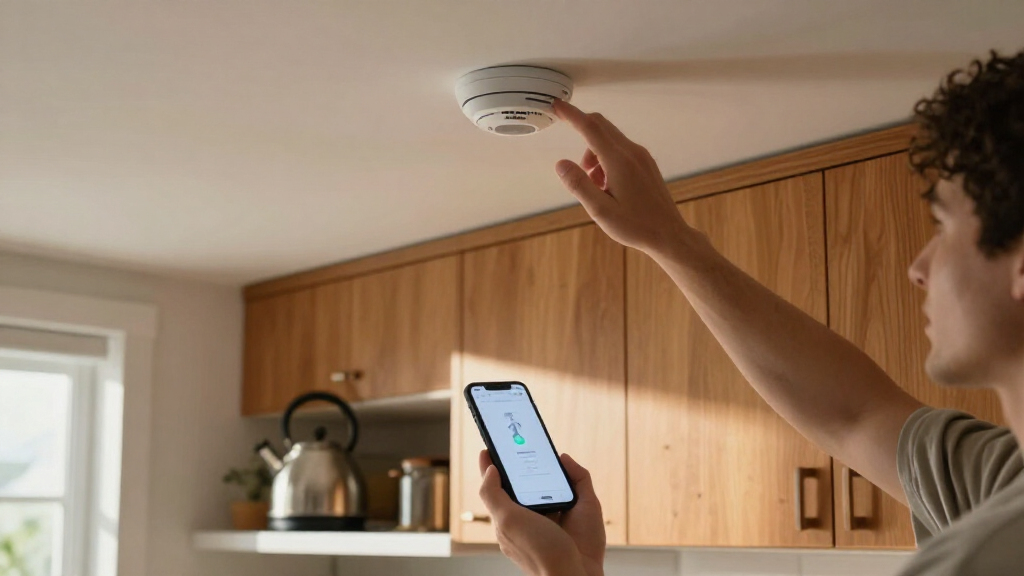
To rank these devices, I evaluated the reliability of app notifications and the ease of initial setup. A smart detector is only as good as its ability to wake you up, so I prioritized models with proven low-latency alert systems and robust companion apps. I also examined the power source architecture, distinguishing between units with sealed 10-year batteries, standard AA replaceables, and hardwired options with battery backups. Each product was judged on its ability to integrate with existing smart home platforms, ensuring that the device fits into your current digital infrastructure rather than forcing a new hub requirement.
Furthermore, I assessed the sensitivity and false alarm resistance of the sensors. Photoelectric sensors generally respond faster to smoldering fires, while ionization sensors are better for flaming fires; dual-sensor models were favored for their comprehensive coverage. I also considered the physical form factor, as bulkier units may be unsightly in open-plan living areas. This combination of technical performance, aesthetic fit, and ecosystem compatibility determined the final order of recommendations.
Factors to Consider When Choosing Smart Smoke Detector With App Alerts
Selecting the right smart smoke detector involves more than just checking for Wi-Fi capability. The following factors will help you navigate the technical distinctions and lifestyle requirements that define this category.Connectivity Protocols and Ecosystem Lock-in
The communication method dictates how quickly you receive alerts and which devices can control the alarm. Wi-Fi models connect directly to your router, requiring no extra hardware but potentially straining network bandwidth if you have many devices. Zigbee or Z-Wave models require a hub, offering better battery life and mesh networking stability, which is ideal for larger homes. Matter over Thread is the emerging standard, promising universal compatibility with Apple Home, Google Home, and Amazon Alexa without vendor lock-in. If you already have a dominant smart home platform, sticking to a detector that natively integrates with that ecosystem reduces setup friction. However, if you plan to switch platforms in the future, a Matter-compliant device offers greater longevity and flexibility.
Power Source: Hardwired vs. Battery
Hardwired detectors draw power from your home’s electrical system and use a backup battery during outages, making them the most reliable choice for permanent residences. They are typically required by code in new constructions and major renovations. Battery-powered smart detectors offer installation flexibility, allowing placement in historic homes or areas where wiring is impractical. Sealed 10-year batteries eliminate the annoyance of chirping mid-night but mean the entire unit must be replaced when the battery dies. Standard AA battery models allow for cheaper component replacement but demand annual maintenance. Consider your home’s age and your willingness to perform routine maintenance when deciding between these power architectures.
Sensor Technology and CO Integration
Smoke alarms use either photoelectric or ionization sensors. Photoelectric sensors are superior at detecting slow, smoldering fires, which are common in residential settings and produce more smoke before flames appear. Ionization sensors react faster to fast-flaming fires but are more prone to false alarms from cooking steam. Dual-sensor models combine both for comprehensive protection. Additionally, many modern units integrate carbon monoxide detection. If your home uses gas appliances, a combined smoke and CO detector saves space and provides critical protection against odorless gas leaks. Standalone smoke detectors lack this vital layer of safety, so assess your home’s fuel sources before choosing a single-threat device.
Interconnectivity and Multi-Room Coverage
A single detector in a hallway may not alert you if a fire starts in a distant bedroom. Interconnected systems ensure that when one unit detects smoke, all linked units sound their alarms simultaneously. This is particularly important in multi-story homes or large floor plans. Some systems use wireless interconnectivity via proprietary protocols, while others rely on hardwired interconnect cables. Smart hubs can sometimes simulate interconnectivity through app commands, but local audio synchronization is faster and more reliable. If you are buying multiple units, prioritize systems that support native interconnectivity to guarantee synchronized warnings without relying solely on cloud processing.
Frequently Asked Questions
Do smart smoke detectors work if the internet goes down?
Most smart smoke detectors will still sound their local audible alarms if the internet connection fails, as the detection and siren mechanism operate independently of the cloud. However, you will not receive app alerts on your phone until the connection is restored. Some models with cellular backup can send texts even without Wi-Fi, but these are rare and often require a subscription. The local alarm is the primary safety feature, so connectivity loss does not compromise immediate physical protection, only remote notification capabilities.
How often do I need to replace the batteries in smart smoke detectors?
Standard AA battery-powered models typically require annual battery changes, similar to traditional alarms. Sealed 10-year battery models, such as the X-Sense or certain First Alert units, do not require battery replacements during their lifespan; instead, the entire unit is replaced after ten years. Hardwired models usually have a backup battery that needs replacing every year to ensure functionality during power outages. Always check the manufacturer’s guidelines, as neglecting battery maintenance can lead to false alarms or failure to sound during an emergency.
Can I mix different brands of smart smoke detectors in one home?
Generally, no. Interconnectivity features, where one alarm triggers all others, are proprietary to specific brands and models. You cannot mix a Kidde interconnect system with a First Alert or X-Sense system and expect them to communicate locally. While they can all send individual app alerts to your phone, they will not synchronize their audible sirens. To achieve whole-home synchronized alerts, you must use a unified system from a single manufacturer or a hub that supports a specific mixed-brand protocol, which is uncommon.
Are smart smoke detectors compatible with all smart home systems?
Compatibility varies by protocol. Devices using Matter over Thread are designed to work with Apple HomeKit, Google Home, Amazon Alexa, and Samsung SmartThings simultaneously. Wi-Fi models often lock you into a specific ecosystem; for example, a Ring-branded detector works best within the Ring app and may not fully integrate with HomeKit. Check the specific product specifications for supported platforms before purchasing. If you have a mixed-ecosystem household, Matter-compatible devices are the safest choice to avoid fragmentation.
Will cooking fumes trigger false alarms on smart detectors?
Yes, especially if the detector is placed too close to the kitchen. Photoelectric sensors are less prone to false alarms from cooking steam than ionization sensors, but no sensor is immune. Many smart detectors offer a ‘hush’ feature that can be activated via the app to silence the alarm temporarily without disabling the sensor. Positioning units at least 10 feet away from cooking appliances is the best preventive measure. Some advanced models use AI algorithms to distinguish between smoke particles and steam, reducing nuisance alerts significantly.
Conclusion
For most homeowners, the Kidde Smart Smoke Detector with Ring is the best overall choice due to its mature app ecosystem and reliable performance. If you are upgrading a whole house and want to avoid battery changes for a decade, the X-Sense Interconnected Smoke Detector is the best value pick for its sealed battery and multi-pack format. Those with existing hardwired infrastructure should opt for the Kidde Hardwired Smart Smoke and CO Detector as the best premium option, offering dual-threat protection and power resilience. Beginners or renters will find the First Alert 10-Year Battery Smoke Alarm the best for simplicity, balancing smart features with straightforward installation. Finally, tech enthusiasts seeking future-proof interoperability should choose the Heiman Matter over Thread Smart Smoke Detector as the best for smart home integration.