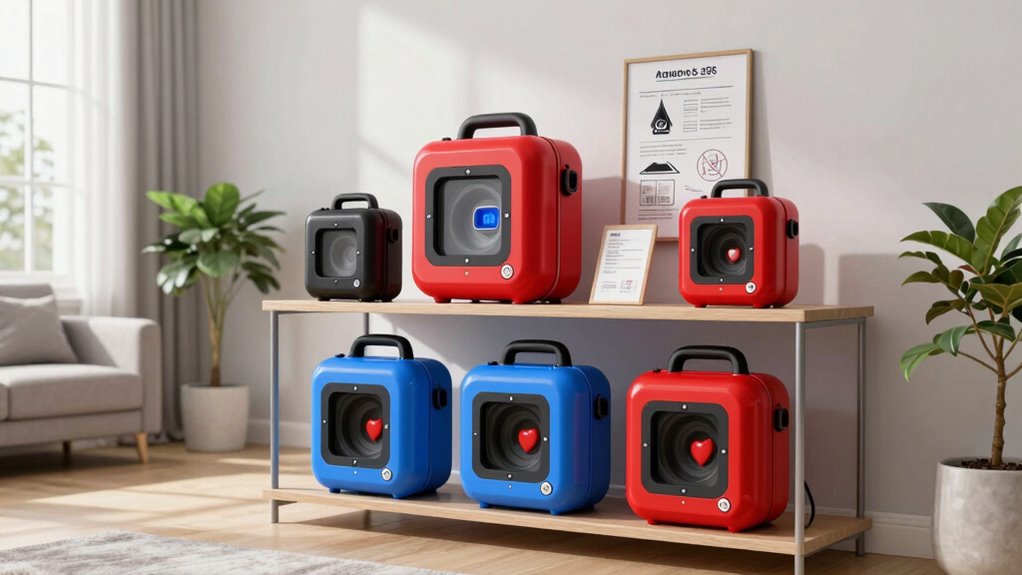
When it comes to preparing for a cardiac emergency at home, having a reliable Automated External Defibrillator (AED) can be a life-saving decision. The best options combine ease of use with dependable performance, but they vary in features, price, and maintenance needs. The American Red Cross AED Trainer stands out for training purposes, while the Philips HeartStart OnSite AED is a top choice for everyday readiness. Buyers often face tradeoffs between cost, portability, and advanced features. Continue reading for a detailed breakdown of the top products and what makes each one unique.

Get the latest gadgets delivered free with Prime
- Fast, free delivery on millions of items
- Prime Video, Amazon Music and more included
- Member-only deals all year
Complete the kit


Key Takeaways
- The top-ranked AEDs balance user-friendly operation with reliable shock delivery, essential for untrained bystanders.
- Portability and size vary significantly; slimmer models are easier to store and access quickly at home.
- Training features or simulators are common in models like the Red Cross AED Trainer, ideal for households with less experience.
- Price differences often reflect build quality, feature set, and brand reputation—higher cost doesn’t always mean better performance.
- Maintenance and replacement parts, such as pads and batteries, are key ongoing considerations influencing overall value.
| American Red Cross AED Trainer with Adult and Child Gel Pads, Carry Case |  | Best for Training and Practice | Features: Metronome, bilingual switch, volume control, scenario buttons, auto/semi-automatic modes, pause button, on/off switch | Includes: Adult and child gel adhesive pads, nylon carry case, 3 C batteries | Warranty: 2 years | VIEW ON AMAZON | See Our Full Breakdown |
| HeartStart Philips OnSite AED Defibrillator, Business Package |  | Best for Public Environments | Model: M5066A-C02BPB | Warranty: 8 years for AED, 4 years for battery | Includes: Pre-installed SMART Pads, carry case, wall sign, response kit, cabinet, manuals | VIEW ON AMAZON | See Our Full Breakdown |
| Philips HeartStart Home AED Defibrillator with Training Pads Cartridge |  | Best for Home Users with Training Flexibility | Model: M5068A-C02 | Warranty: 8 years for AED, 4 years for battery | Includes: Defibrillator, pre-installed battery, SMART Pads, carry case, training pads, quick set-up guide, maintenance booklet, manual, DVD | VIEW ON AMAZON | See Our Full Breakdown |
| Philips HeartStart OnSite AED Defibrillator |  | Best for Versatile Public Use | Model: M5066A-R01 | Warranty: 8 years for AED, 4 years for battery | Includes: Carry case, spare SMART Pads, pre-installed battery and pads, quick set-up guide | VIEW ON AMAZON | See Our Full Breakdown |
| Philips HeartStart Home AED Defibrillator with Slim Carry Case |  | Best for Compact Home Use | Model: M5068A-C01 | Warranty: 8 years for AED, 4 years for battery | Includes: Defibrillator, pre-installed battery, SMART Pads, manuals | VIEW ON AMAZON | See Our Full Breakdown |
| Philips HeartStart OnSite AED Defibrillator, Slim Carry Case M5066A-C02 | 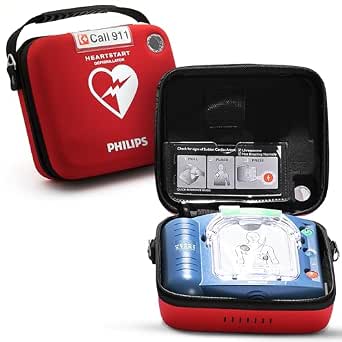 | Best Overall for Public Environments | Model: M5066A-C02 | Type: AED Defibrillator | Carry Case: Included | VIEW ON AMAZON | See Our Full Breakdown |
| AED Automatic External Defibrillator, Portable Emergency Machine for Home, Gym, Office, School, and Public Spaces |  | Best for Multi-Environment Use in Private and Semi-Public Spaces | Usage Environment: Dry environments only | Intended Use: Emergency defibrillation | Cleaning Instructions: Wipe with damp, lint-free cloth; avoid harsh chemicals | VIEW ON AMAZON | See Our Full Breakdown |
| home aed for cardiac emergency preparedness | Warranty | Includes | Model |
|---|---|---|---|
| American Red Cross AED Trainer | 2 years | Adult and child gel adhesive pads, nylon carry case, 3 C batteries | — |
| HeartStart Philips OnSite AED | 8 years for AED, 4 years for battery | Pre-installed SMART Pads, carry case, wall sign, response kit, cabinet, manuals | M5066A-C02BPB |
| Philips HeartStart Home AED De | 8 years for AED, 4 years for battery | Defibrillator, pre-installed battery, SMART Pads, carry case, training pads, quick set-up guide, maintenance booklet, manual, DVD | M5068A-C02 |
| Philips HeartStart OnSite AED | 8 years for AED, 4 years for battery | Carry case, spare SMART Pads, pre-installed battery and pads, quick set-up guide | M5066A-R01 |
| Philips HeartStart Home AED De | 8 years for AED, 4 years for battery | Defibrillator, pre-installed battery, SMART Pads, manuals | M5068A-C01 |
| Philips HeartStart OnSite AED | 8-year AED, 4-year battery | — | M5066A-C02 |
| AED Automatic External Defibri | — | — | — |
More Details on Our Top Picks
American Red Cross AED Trainer with Adult and Child Gel Pads, Carry Case
This AED trainer stands out for its focus on realistic practice, featuring multiple scenarios, bilingual prompts, and adjustable volume, making it ideal for first responders and training programs. Compared with the Philips Home AED models, it does not provide real-life shock delivery but excels in preparing users through simulation. Its water-resistant case ensures durability for frequent use, yet it cannot be used for actual emergencies, which limits its scope. The requirement of 3 C batteries (not included) may add to ongoing costs. Overall, this pick makes the most sense for organizations aiming to train staff or volunteers in AED use without risking actual device deployment.
Pros:- Realistic scenario-based training features
- Bilingual English/Spanish prompts for diverse learners
- Water-resistant durable case for frequent handling
Cons:- Requires 3 C batteries, which are not included
- Limited to training, not suitable for actual emergency use
Best for: Organizations, training centers, or first aid instructors seeking realistic AED practice tools
Not ideal for: Home users or individuals needing a device for real emergencies, since this is strictly a training model
- Features:Metronome, bilingual switch, volume control, scenario buttons, auto/semi-automatic modes, pause button, on/off switch
- Includes:Adult and child gel adhesive pads, nylon carry case, 3 C batteries
- Warranty:2 years
Our verdict“This trainer is perfect for organizations prioritizing practice and skill-building over real-world deployment.”
HeartStart Philips OnSite AED Defibrillator, Business Package
The Philips HeartStart OnSite AED Business Package is designed for public spaces like offices or gyms, offering clear, step-by-step voice prompts and comprehensive accessories including a wall sign and response kit. It surpasses many basic models by incorporating automatic self-testing, reducing the maintenance burden for busy facilities. Compared to the home-focused Philips models, this device is built for frequent use in high-traffic areas, but it involves a higher initial investment and requires proper storage in the included cabinet. The optional training pads cartridge, sold separately, allows for practice but adds to the total cost. This package suits environments where quick, reliable response is critical.
Pros:- Intuitive voice prompts and CPR guidance
- Includes extensive accessories for immediate deployment
- Self-testing features for ongoing device readiness
Cons:- Training pads cartridge is sold separately, increasing total expense
- Limited info on exact battery life duration
Best for: Business owners or facility managers needing a dependable public AED with minimal maintenance
Not ideal for: Home users or small workplaces with limited budget, due to its higher cost and setup requirements
- Model:M5066A-C02BPB
- Warranty:8 years for AED, 4 years for battery
- Includes:Pre-installed SMART Pads, carry case, wall sign, response kit, cabinet, manuals
- Suitable for:Offices, gyms, airports, restaurants
Our verdict“This AED package is ideal for public venues seeking a reliable, ready-to-use emergency device with minimal upkeep.”
Philips HeartStart Home AED Defibrillator with Training Pads Cartridge
This device offers simplicity for home use, guiding users through CPR and AED steps with clear voice prompts, making it suitable for untrained family members. It performs regular self-tests to ensure readiness, similar to the more advanced Philips OnSite models, but it’s tailored for personal environments. Its ability to convert into an AED trainer with separate training pads adds flexibility, yet training pads are not included and must be purchased separately. Compared with the more comprehensive business models, this home AED may require more frequent maintenance and testing from the user, which could be a challenge for some. Still, it provides peace of mind for those without professional medical training.
Pros:- Easy-to-follow voice prompts and CPR instructions
- Performs regular self-tests to confirm readiness
- Convertible into AED trainer with optional pads
Cons:- Training pads are sold separately, adding cost
- Requires regular maintenance and testing by the user
Best for: Homeowners or family members seeking a straightforward, reliable AED with training capabilities
Not ideal for: Professional settings or public spaces, as it’s primarily designed for individual home use
- Model:M5068A-C02
- Warranty:8 years for AED, 4 years for battery
- Includes:Defibrillator, pre-installed battery, SMART Pads, carry case, training pads, quick set-up guide, maintenance booklet, manual, DVD
- Self-Test:Yes, regular
Our verdict“This AED is well-suited for families wanting a user-friendly device that can double as a training tool for peace of mind.”
Philips HeartStart OnSite AED Defibrillator
The Philips HeartStart OnSite AED is designed for quick deployment in a variety of public settings, featuring intuitive voice prompts and a sturdy carry case for portability. Its self-testing ensures reliable operation, making it suitable for environments like restaurants, offices, and airports where trained responders may be unavailable. While it’s comparable to the Business Package, this model is more suited for individual purchase rather than comprehensive office setups, and the optional trainer conversion requires an additional accessory purchase. Its simplicity and durability make it a dependable choice for locations with diverse emergency preparedness needs.
Pros:- Step-by-step voice prompts and CPR guidance
- Portability with a sturdy carry case
- Self-tests keep device ready without manual intervention
Cons:- Requires purchase of optional training pads for trainer mode
- Limited technical details in the product description
Best for: Public spaces and small organizations needing a straightforward, dependable AED solution
Not ideal for: Large facilities or professional medical settings that require advanced features
- Model:M5066A-R01
- Warranty:8 years for AED, 4 years for battery
- Includes:Carry case, spare SMART Pads, pre-installed battery and pads, quick set-up guide
- Suitable environments:Restaurants, offices, gyms, airports
Our verdict“This AED offers a reliable, easy-to-operate solution for public environments with minimal maintenance needs.”
Philips HeartStart Home AED Defibrillator with Slim Carry Case
This Philips Home AED emphasizes user-friendliness with a slim, portable design, making it ideal for small living spaces. It features clear voice prompts and performs daily to monthly self-tests, ensuring readiness without complex maintenance. Compared with bulkier models, its slim carry case makes it easier to store discreetly. However, it requires regular replacement of pads and batteries, and training is not included, which might be a challenge for some users unfamiliar with AED operation. It’s best suited for those prioritizing ease of storage and straightforward operation in a home setting.
Pros:- Slim, portable design fits easily in small spaces
- Automatic daily, weekly, and monthly self-tests
- Step-by-step voice prompts simplify use
Cons:- Training not included, which could be daunting for some users
- Pads and accessories sold separately, increasing ongoing costs
Best for: Homeowners or individuals looking for a compact, reliable AED for personal safety
Not ideal for: Large households or users needing frequent training or professional-grade features
- Model:M5068A-C01
- Warranty:8 years for AED, 4 years for battery
- Includes:Defibrillator, pre-installed battery, SMART Pads, manuals
- Self-Test:Daily, weekly, monthly
Our verdict“This AED makes the most sense for those wanting a discreet, easy-to-use device for home safety with minimal setup complexity.”
Philips HeartStart OnSite AED Defibrillator, Slim Carry Case M5066A-C02
The Philips HeartStart OnSite AED stands out for its combination of ease of use and portability, making it ideal for public spaces like gyms, schools, or offices. Its clear voice prompts and real-time CPR guidance facilitate quick action even if bystanders lack training. The included slim carry case enhances mobility, and the built-in self-testing ensures the device remains ready to deploy. Compared to the AED portable in the next product, it offers a more comprehensive set of features with longer battery life and an established brand reputation. However, the need to purchase training pads separately and periodic replacements can add up over time, which might be a concern for budget-conscious users. This pick makes the most sense for organizations seeking a reliable, user-friendly AED for frequent public access, where ease of use and readiness are top priorities.
Pros:- Intuitive step-by-step voice prompts for easy operation
- Portable design with included slim carry case
- Automatic daily, weekly, and monthly self-testing ensures readiness
- Trusted brand with proven reliability
Cons:- Training pads sold separately, adding ongoing cost
- Periodic replacement of pads and battery needed, which can be overlooked
- Limited detailed technical specifications may concern tech-savvy users
Best for: Public spaces like schools, gyms, or offices seeking a dependable, easy-to-operate AED with long-term readiness.
Not ideal for: Home users or small private settings where budget constraints or infrequent usage make this more than necessary.
- Model:M5066A-C02
- Type:AED Defibrillator
- Carry Case:Included
- Battery Life:8 years
- Warranty:8-year AED, 4-year battery
- Training Pads:Optional, sold separately
- Self-Test:Daily, weekly, monthly
Our verdict“This AED suits organizations that prioritize ease of use, portability, and ongoing device readiness for public access scenarios.”
AED Automatic External Defibrillator, Portable Emergency Machine for Home, Gym, Office, School, and Public Spaces
This AED is designed for versatility across various environments, including homes, gyms, and smaller public venues. Its lightweight and compact profile make it easy to store and access quickly, similar to the Philips HeartStart OnSite but with a focus on more flexible placement in personal settings. The device emphasizes ease of cleaning and maintenance, with simple wipe-down instructions that support hygiene in shared spaces. Unlike the Philips model, it does not specify detailed technical specs or battery life, which could be a drawback for those seeking precise performance data. Its main tradeoff is the limited environment—it’s suitable for dry spaces but not for wet or humid conditions, and regular inspection is necessary to ensure readiness. This AED makes the most sense for users who want a straightforward emergency device that can be stored in multiple locations around a home or small facility.
Pros:- Lightweight and easy to move between different locations
- Designed for quick deployment in various private or semi-public spaces
- Simple cleaning and maintenance instructions facilitate hygiene
- Suitable for quick response in dry environments
Cons:- Limited technical specifications reduce clarity on device performance
- Must be used in dry conditions only, restricting placement options
- Regular inspection and maintenance are required to ensure functionality
Best for: Homeowners, small office managers, or gym owners needing a portable AED suitable for dry, controlled environments.
Not ideal for: Public facilities or environments prone to humidity, moisture, or irregular inspection routines, where more detailed technical specs are preferred.
- Usage Environment:Dry environments only
- Intended Use:Emergency defibrillation
- Cleaning Instructions:Wipe with damp, lint-free cloth; avoid harsh chemicals
- Storage Conditions:Store in a clean, dry location within recommended temperature ranges
Our verdict“This AED is well-suited for users who want a portable, easy-to-maintain device for dry environments in private or small public settings, with less emphasis on detailed specs.”

How We Picked
These products were selected based on a combination of performance, ease of use, durability, and value. We prioritized AEDs that are specifically designed or suitable for home use, ensuring they meet safety standards and are easy for non-professionals to operate. The ranking considers user reviews, brand reputation, and the availability of replacement parts or training features. Devices with proven reliability in emergency situations and straightforward maintenance earned higher scores, while those with complex features or high costs were rated lower unless they offered significant added value.| home aed for cardiac emergency preparedness | Includes | Model |
|---|---|---|
| American Red Cross AED Trainer | Adult and child gel adhesive pads, nylon carry case, 3 C batteries | — |
| HeartStart Philips OnSite AED | Pre-installed SMART Pads, carry case, wall sign, response kit, cabinet, manuals | M5066A-C02BPB |
| Philips HeartStart Home AED De | Defibrillator, pre-installed battery, SMART Pads, carry case, training pads, quick set-up guide, maintenance booklet, manual, DVD | M5068A-C02 |
| Philips HeartStart OnSite AED | Carry case, spare SMART Pads, pre-installed battery and pads, quick set-up guide | M5066A-R01 |
| Philips HeartStart Home AED De | Defibrillator, pre-installed battery, SMART Pads, manuals | M5068A-C01 |
| Philips HeartStart OnSite AED | — | M5066A-C02 |
| AED Automatic External Defibri | — | — |
Factors to Consider When Choosing Home Aed For Cardiac Emergency Preparedness
Choosing the right home AED involves evaluating several critical factors beyond just initial cost. Safety standards and ease of operation are paramount, especially if the device might be used by someone unfamiliar with medical equipment. Portability can influence where you store the AED and how quickly it can be accessed during an emergency. Maintenance requirements, including pad and battery replacements, impact long-term usability. Finally, consider whether additional features like training modes or clear voice prompts are worth the extra investment. Being aware of these factors helps avoid common pitfalls like overspending on unnecessary features or purchasing a device that’s difficult to use under stress.Ease of Use and Voice Prompts
In a cardiac emergency, clarity and simplicity matter most. Devices with straightforward, step-by-step voice instructions reduce hesitation and errors during high-stress moments. Look for AEDs that are intuitive and have clear visual cues, especially if the device might be used by someone with limited medical knowledge. A complicated interface can delay critical shocks, so prioritizing models with proven user-friendly design is wise.
Portability and Storage
Many home AEDs are compact, but some are designed to be ultra-slim or lightweight, making them easier to store discreetly and access quickly. However, smaller models may sacrifice some features or battery capacity. Consider your storage location—if space is limited or if the AED needs to be moved easily between rooms, a slim, portable design becomes more attractive. Conversely, larger units might offer longer battery life or additional features, but at the expense of convenience.
Maintenance and Replacement Parts
Proper maintenance ensures the device functions correctly when needed. Batteries and pads are consumables that need regular replacement, and some models have longer-lasting components than others. Check the availability and cost of replacement parts, as frequent or expensive replacements can increase total ownership costs. Devices with straightforward, inexpensive maintenance routines tend to be more reliable over time.
Cost and Value
While high-end AEDs often boast advanced features, they may not be necessary for typical home use. Balance your budget with the importance of features like training modes, size, and brand reputation. Sometimes, paying a bit more upfront yields a more reliable, durable device that lasts longer and requires less ongoing maintenance. Conversely, budget options can still provide effective emergency response but may lack some convenience or features, so assess your specific needs carefully.
Additional Features and Certifications
Some AEDs include extra features like training modes, visual aids, or enhanced shock algorithms. While these can improve user confidence, they may also increase cost and complexity. Verify that the device is certified by relevant safety standards (e.g., IEC, FDA approval), which ensures it meets strict safety and performance criteria. Additional features should align with your comfort level and intended use environment.
Frequently Asked Questions
How often should I replace the pads and batteries on my home AED?
Most AED manufacturers recommend replacing pads every 1 to 2 years and batteries roughly every 4 to 5 years, depending on usage and storage conditions. Regularly checking the device’s status indicator can help identify when replacements are needed before an emergency occurs. It’s important to follow the manufacturer’s guidelines closely to ensure the AED remains ready for use at all times. Proper maintenance guarantees that the device will deliver effective shocks when needed.
Can I use a public access AED at home?
While many public access AEDs can be used at home, they are often designed for trained responders and may include features that are unnecessary or confusing for laypersons. Home-specific AEDs tend to be more straightforward, with simplified instructions and smaller size for easy storage. If you choose a public access AED, ensure it is approved for home use and that you understand how to operate it correctly. Training and familiarity with the device significantly improve emergency response effectiveness.
Is it necessary to get training before using a home AED?
Basic familiarity and understanding of AED operation significantly increase confidence and effectiveness in an emergency. Many devices include voice prompts and visual cues, which are designed to guide untrained users. However, taking a CPR/AED course provides valuable hands-on practice and can help you respond more calmly. Regular refreshers ensure you stay prepared, especially if the device includes additional features or training modes that you want to utilize fully.
What features should I prioritize if I want a simple, reliable home AED?
For straightforward home use, prioritize an AED with clear voice prompts, simple operation, and a compact design. Reliability and safety certifications are essential to ensure performance during an emergency. Avoid overly complex models with numerous features that might cause confusion in high-stress moments. Instead, focus on proven, easy-to-use devices from reputable brands known for quality and durability.
Are there any legal considerations for owning a home AED?
Ownership laws for AEDs vary by region, but generally, there are few restrictions for personal use in a home. Some areas might require registration or training, while others offer legal protections when using an AED in an emergency. It is advisable to familiarize yourself with local regulations and ensure your device complies with safety standards. Proper training and regular maintenance also help demonstrate responsible ownership and readiness.
Conclusion
For most families, the Philips HeartStart OnSite AED offers a reliable, easy-to-use option that balances affordability with performance, making it ideal for those seeking a dependable device without extra bells and whistles. The American Red Cross AED Trainer suits households focused on training and preparedness, especially if multiple users want practice opportunities. For those willing to invest in premium features and maximum portability, the Philips HeartStart Home AED with Slim Carry Case provides a compact, durable solution. Budget-conscious buyers should look for models that meet safety standards without unnecessary extras, while households with members who may need additional guidance benefit from devices with clear voice prompts and training features. Ultimately, selecting the right AED depends on your specific environment, user familiarity, and long-term maintenance considerations.
As an affiliate, we earn on qualifying purchases.Halloween Picks
halloween