
If you’re shopping for portable external hard drives, the main decision is really between three things: capacity per dollar, physical size, and transfer speed. The WD 2TB My Passport takes my best overall spot because it balances all three with bundled backup software and hardware encryption that budget rivals skip. For pure value, the Seagate Portable 4TB and WD 4TB Elements deliver the lowest cost per terabyte on this list, while the SanDisk 2TB Extreme Portable SSD is the outlier — a solid-state option that costs more but trades capacity for speed and ruggedness. The 500GB ultra-slim models from Maxone, UnionSine, and Aiolo fill the budget tier for light storage needs. Keep reading for the full breakdown of where each drive wins and where it falls short.

Get the latest gadgets delivered free with Prime
- Fast, free delivery on millions of items
- Prime Video, Amazon Music and more included
- Member-only deals all year
Complete the kit



Key Takeaways
- Western Digital’s My Passport and Elements lines dominated the top spots because of consistent reliability ratings, included backup software, and hardware encryption — features almost no budget 500GB drive offers.
- Cost per terabyte drops sharply once you move past 2TB: the Seagate 4TB and 5TB models and the WD 4TB and 5TB Elements drives undercut the 500GB budget drives by a wide margin if you amortize cost over capacity.
- The 500GB tier (generic USB 3.0 drives, Maxone, UnionSine, Aiolo) is only worth buying for console game backups or occasional file transfers — read/write speeds typically trail name-brand drives by 30-50%.
- The SanDisk 2TB Extreme Portable SSD is the only solid-state pick here, and it’s roughly 5-8x faster than every spinning-disk option, but you pay about double the price per terabyte for that speed.
- Every drive on this list is bus-powered with no external power supply needed, which is what makes them genuinely portable — the real differentiators are bundled software, warranty length, and shock resistance.




| portable external hard drife | Interface | Storage Capacity | Compatibility | Setup |
|---|---|---|---|---|
| 500GB External Hard Drive | USB 3.0 and USB-C | 500GB | Windows, Mac, Linux, PS4, PS5, Xbox One, Xbox Series X/S | — |
| WD 2TB My Passport Portable Ex | USB 2.0/3.0 | 2 TB | — | — |
| Seagate 2TB Portable Hard Driv | — | 2TB | Windows and Mac | Plug-and-play, no software required |
| Maxone 500GB Ultra Slim Portab | — | — | Windows 7/8/10, PC, Laptop | — |
| 500 GB External Hard Drive | USB 3.0 | — | Windows, Mac, PS4, Xbox One, Xbox 360, Linux | Plug-and-play |
| Seagate Portable 1TB External | — | 1TB | PC, Mac, PlayStation, Xbox | — |
| WD 2TB Elements Portable Exter | USB 3.2 Gen 1 (5Gbps), backward compatible with USB 2.0 | — | — | — |
| UnionSine 1TB Ultra Slim Porta | USB 3.0 | — | — | Plug and play |
| Aiolo Innovation 500GB Externa | USB 3.0 | 500GB | — | — |
| WD 4TB Elements Portable Exter | USB 3.0 / USB 3.2 Gen 1 | 4TB | — | Plug and play, reformat for Mac |
| SanDisk 2TB Extreme Portable S | — | — | — | — |
| Seagate Portable 4TB External | — | 4TB | PC, Mac, Xbox, PlayStation | Plug and play, drag-and-drop backup |
| Seagate Portable 5TB External | — | 5TB | PC, Mac, PS4, Xbox | Plug and play |
| Western Digital 5TB Elements P | USB 3.2 Gen 1 (USB 3.0 compatible) | — | Windows, Mac | Plug and play |
| UnionSine 500GB Ultra Slim Por | USB 3.0 | — | — | Plug and play |
More Details on Our Top Picks
500GB External Hard Drive, USB 3.0 & USB-C Portable Storage
Most budget portable drives force you into a single USB-A cable, but this one stands out for its dual USB 3.0 and USB-C connectivity, which means one drive works with older laptops and modern USB-C machines without a dongle. The reinforced silicone casing is also a genuine differentiator — compared with the bare aluminum shells of the Maxone 500GB, this model is better suited to backpacks, travel bags, and life with kids. Console owners get plug-and-play support for PS4 and Xbox One too. The tradeoffs are real, though: 500GB fills up fast if you’re archiving photos or video, and current-gen PS5 and Xbox Series X|S games can’t run directly from the drive. You’ll also need to supply your own USB-C cable, which undercuts the convenience story a little.
Pros:- Dual USB 3.0 and USB-C support covers old and new devices
- Impact-resistant silicone casing survives rough handling
- Featherweight 0.3 lbs design
- Broad compatibility across Windows, Mac, Linux, and consoles
Cons:- 500GB is tight for photo, video, or game libraries
- Cannot store or run PS5 and Xbox Series X|S games directly
- USB-C cable not included
Best for: Students and commuters who bounce between USB-C laptops and older USB-A desktops and want a drop-tolerant drive
Not ideal for: Anyone with a large media library or a PS5/Series X owner who wants to play current-gen games off the drive
- Storage Capacity:500GB
- Interface:USB 3.0 and USB-C
- Weight:0.3 lbs
- Protection:Reinforced silicone outer casing
- Compatibility:Windows, Mac, Linux, PS4, PS5, Xbox One, Xbox Series X/S
- Game Storage:PS4/Xbox One games supported; current-gen games not playable from drive
Our verdict“Buy this if connector flexibility and drop protection matter more to you than raw capacity.”
WD 2TB My Passport Portable External Hard Drive, Black
This is the pick I’d point most buyers toward, because it solves the problem the budget 500GB options can’t: capacity plus security in one package. With 2TB of space, it holds roughly four times what the 500GB drives in this roundup offer — enough for a serious photo archive or a stacked console library. What separates it from the similarly priced Seagate 2TB Portable is the hardware encryption with password protection and ransomware defense, a meaningful advantage if the drive holds tax documents, client files, or anything you’d hate to lose to malware. The aluminum enclosure feels more premium than the plastic-and-silicone budget picks too. The compromises: you have to download and install WD’s backup software to get the full security feature set, and as a spinning HDD it’s noticeably slower than an SSD like the SanDisk 2TB Extreme for large file transfers.
Pros:- 2TB capacity handles large archives and game libraries
- Hardware encryption and password protection safeguard sensitive data
- Ransomware defense adds a security layer budget drives lack
- 3-year limited warranty beats the 1-year coverage on cheaper picks
Cons:- Backup and security software must be downloaded and installed separately
- HDD transfer speeds lag well behind portable SSDs
- Priced above no-frills 2TB competitors like the Seagate Portable
Best for: Professionals and families who need serious capacity for sensitive files and want built-in encryption and backup tooling
Not ideal for: Anyone who needs fast transfer speeds for video editing or frequent large file moves — an SSD serves that use case far better
- Storage Capacity:2 TB
- Interface:USB 2.0/3.0
- Form Factor:2.5 inches
- Hardware Encryption:Yes
- Enclosure Material:Aluminum
- Compatible Devices:Desktop, Laptop, Tablet
- Color:Black
- Warranty:3-year limited
Our verdict“If you want one drive that balances capacity, security, and portability without paying SSD prices, this is the safest choice in the lineup.”
Seagate 2TB Portable Hard Drive USB 3.0
When the math is capacity per dollar, this drive wins. You get the same 2TB of storage as the WD My Passport but without paying for encryption software you may never use — making it the smarter buy for people who just want a big, simple dump drive. Setup is genuinely effortless: unlike the WD, which nudges you toward installing its backup suite, this one is pure plug-and-play with drag-and-drop backups on both Windows and Mac. The 18-inch cable is a small but practical touch, long enough to reach a tower under a desk. The flip side is that it’s a bare-bones experience — no password protection, no ransomware defense, no bundled utilities. And if 2TB starts feeling cramped, there’s no upgrade path here; buyers with heavier storage needs should look at the Seagate Portable 4TB or 5TB models instead.
Pros:- 2TB capacity at a budget-friendly price
- True plug-and-play operation with no software installation
- Works with both Windows and Mac out of the box
- Generous 18-inch USB cable
Cons:- No encryption, password protection, or backup software
- Capacity is capped at 2TB with no larger configuration in this line
Best for: Budget-conscious buyers who want maximum storage per dollar for straightforward backups without security extras
Not ideal for: Users carrying confidential or business data who need encryption — the WD My Passport covers that base for a little more money
- Storage Capacity:2TB
- Connection:USB 3.0
- Compatibility:Windows and Mac
- Setup:Plug-and-play, no software required
- Cable Length:18 inches
- Backup Method:Drag-and-drop
Our verdict“This pick makes the most sense for anyone who values raw capacity and simplicity over security features.”
Maxone 500GB Ultra Slim Portable External Hard Drive HDD USB 3.0
At 0.4 inches thick with an all-aluminum shell, this is the thinnest, most pocketable drive in this batch — slimmer and stiffer than the silicone-wrapped 500GB USB-C model, and far easier to slide into a laptop sleeve. The scratch-resistant metal construction also means it keeps looking new after months of bag travel, where plastic budget drives tend to scuff. Transfer speeds up to 5 Gbit/s over USB 3.0 handle documents and photo libraries without frustration, and it draws power entirely from the USB port. The catch is compatibility: this model is Windows-only, so Mac owners and console players get nothing here — a real limitation when rivals like the 500GB USB 3.0 Slim HDD support Mac, PS4, and Xbox out of the box. Capacity is also modest at 500GB, so anyone with a growing media collection will outgrow it quickly.
Pros:- Ultra-slim 0.4-inch profile fits anywhere
- Durable scratch-resistant all-aluminum construction
- USB 3.0 speeds up to 5 Gbit/s
- No external power or software installation needed
Cons:- Windows-only compatibility excludes Mac and consoles
- 500GB capacity limits long-term usefulness
Best for: Windows laptop owners who want the slimmest possible slip-in-a-sleeve drive for documents and everyday backups
Not ideal for: Mac users and console gamers — the Windows-only support rules them out entirely
- Capacity:500GB
- Design:Ultra slim, all-aluminum
- Thickness:0.4 inch
- Transfer Speed:up to 5 Gbit/s
- Connection:USB 3.0
- Compatibility:Windows 7/8/10, PC, Laptop
- Power:Bus-powered via USB
Our verdict“Choose this for its build and slimness if you’re firmly in the Windows ecosystem; skip it the moment cross-platform support matters.”
500 GB External Hard Drive, Portable USB 3.0 Slim HDD for Windows, Mac, PS4, Xbox
For a first external drive, this option nails the basics: plug-and-play setup, a slim 0.35 lbs body, and compatibility that spans Windows, Mac, Linux, PS4, and both Xbox generations — a wider net than the Maxone, which shuts out everything but Windows. Its stated transfer speeds up to 133MB/s are respectable for a budget HDD, enough that moving a photo library doesn’t feel like a chore. Compared with the other 500GB drive in this batch, you give up the USB-C connector and the silicone drop protection but gain console coverage and a 1-year warranty. The obvious ceiling is capacity: 500GB disappears quickly under game installs and phone backups, and like every HDD here, it can’t run current-gen console games directly. Think of it as a low-risk entry point rather than a long-term archive.
Pros:- Plug-and-play with no software installation
- Wide compatibility including Mac, Linux, PS4, and Xbox
- Transfer speeds up to 133MB/s
- Lightweight 0.35 lbs design with 1-year warranty
Cons:- 500GB capacity fills fast with modern games and media
- Cannot run current-gen console games from the drive
- No USB-C connectivity for newer laptops
Best for: First-time buyers and casual users who want an inexpensive, no-setup drive for light backups across a mix of devices
Not ideal for: Gamers with large libraries or anyone planning long-term storage — the capacity and current-gen game limitations bite quickly
- Capacity:500 GB
- Interface:USB 3.0
- Transfer Speed:up to 133MB/s
- Weight:0.35 lbs
- Compatibility:Windows, Mac, PS4, Xbox One, Xbox 360, Linux
- Setup:Plug-and-play
- Warranty:1 year
Our verdict“A sensible low-cost first drive for light, multi-device use — just don’t expect it to be your only storage for long.”
Seagate Portable 1TB External Hard Drive HDD – USB 3.0 for PC, Mac, PlayStation, & Xbox
What sets this Seagate Portable 1TB apart in a crowded field is its explicit console compatibility. Plenty of drives here work with a PlayStation or Xbox in practice, but Seagate designs and markets this one for it, which means fewer setup headaches when you plug it into a PS5 or Xbox Series console. The plug-and-play USB 3.0 experience is genuinely frictionless on Windows, and the bundled 18-inch cable is a thoughtful touch that budget rivals like the Aiolo 500GB don’t always match. The tradeoff is capacity: 1TB fills up fast with modern game installs, so serious gamers accumulating large libraries will outgrow it quickly and should step up to the Seagate Portable 4TB instead. Mac users also face a reformat before first use, and there’s no bundled backup software — a gap WD covers better on its Elements line.
Pros:- Officially compatible with PlayStation and Xbox, not just PC
- Plug-and-play setup with no software needed on Windows
- Includes an 18-inch USB 3.0 cable in the box
- Trusted brand with broad device support
Cons:- 1TB fills quickly with modern games and 4K video
- Mac users must reformat before use, and no backup software is included
Best for: Console gamers and casual users who want a known-compatible drive for PS4/PS5 or Xbox without troubleshooting
Not ideal for: Players with large modern game libraries — 1TB disappears after a handful of big AAA installs
- Storage Capacity:1TB
- Connection:USB 3.0
- Compatibility:PC, Mac, PlayStation, Xbox
- Included Cable:18-inch USB 3.0
Our verdict“Buy this if you want a safe, console-friendly 1TB drive from a major brand; skip it if your game library already exceeds a terabyte.”
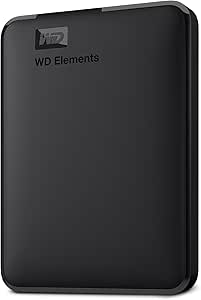
WD 2TB Elements Portable External Hard Drive, USB 3.2 Gen 1 / USB 3.0 – WDBU6Y0020BBK-WESN
When I weigh price per terabyte against reliability, the WD 2TB Elements is the sweet spot in this lineup. It doubles the capacity of the Seagate Portable 1TB for not much more money, and WD’s Elements line has a long track record of dependable mechanical drives — something lesser-known brands like UnionSine can’t claim with the same confidence. The USB 3.2 Gen 1 interface delivers real-world transfer speeds that make backing up a photo library a minutes-long task rather than an evening chore. The honest tradeoff is physics: this is a 5400 RPM spinning disk, so anyone who has touched the SanDisk 2TB Extreme Portable SSD will notice the difference when copying large video files. The plastic enclosure also won’t shrug off drops the way a padded SSD can. For capacity-per-dollar, though, nothing else here competes as cleanly.
Pros:- Excellent price-per-terabyte among drives in this roundup
- Proven WD reliability with a strong track record
- Fast 5Gbps USB 3.2 Gen 1 transfers with backward compatibility
- Compact, lightweight, and truly plug-and-play on Windows and Mac
Cons:- Mechanical drive is noticeably slower than SSD alternatives for large files
- Plastic enclosure offers less drop protection than rugged SSDs
Best for: Students and everyday users who want dependable 2TB backup storage without paying SSD prices
Not ideal for: Video editors and photographers moving multi-gigabyte files regularly — an SSD will save real time
- Capacity:2TB
- Interface:USB 3.2 Gen 1 (5Gbps), backward compatible with USB 2.0
- Rotational Speed:5400 RPM
- Compatible Devices:Desktop, laptop, gaming console
- Enclosure Material:Plastic
- Color:Black
Our verdict“This is the default pick for most buyers: trusted-brand 2TB storage at a mechanical-drive price, as long as you don’t need SSD speed.”
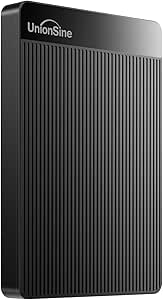
UnionSine 1TB Ultra Slim Portable External Hard Drive HDD-USB 3.0
The UnionSine 1TB earns its place by being the thinnest, lightest way to carry a full terabyte in this batch. Compared with the blockier WD 2TB Elements, it slips into a laptop sleeve almost unnoticed, and the heat dissipation strips are a genuinely smart touch — slim mechanical drives can throttle when warm during long transfers, and this design detail helps sustain the advertised 125MB/s speeds. Noise-free operation also makes it pleasant for quiet offices or libraries. The compromises are real, though. There’s no encryption or security software of any kind, so this isn’t a drive for sensitive work files, and as a smaller brand it lacks the established reliability reputation of Seagate or WD. You’ll also want a proper USB 3.0 port, since it slows down on older connections.
Pros:- Ultra-slim, lightweight body travels easily in any bag
- Up to 125MB/s transfer speeds for a budget HDD
- Heat dissipation strips help maintain stable performance
- Quiet, noise-free operation
Cons:- No encryption or security features at all
- Smaller brand with a shorter reliability track record than WD or Seagate
Best for: Students and commuters who want maximum portability for documents, photos, and light media at a low price
Not ideal for: Anyone storing sensitive or confidential data — there’s no encryption or password protection built in
- Capacity:1TB
- Interface:USB 3.0
- Transfer Speed:Up to 125MB/s
- Design:Ultra-slim with heat dissipation strips
- Setup:Plug and play
Our verdict“A smart budget pick for portability-first users who don’t need security features or brand-name pedigree.”
Aiolo Innovation 500GB External Hard Drive Ultra Slim Portable HDD – USB 3.0 for PC, Mac, Laptop, PS4, Xbox One, Xbox 360
For a first external drive, the Aiolo 500GB gets the basics right at a rock-bottom price. The 120MB/s read and 103MB/s write speeds are respectable for a budget spinning drive, and its compatibility list is unusually broad — PC, Mac, Linux, Android, plus three generations of Xbox and the PS4. That range beats the Seagate Portable 1TB on paper for legacy console owners still running an Xbox 360. The obvious catch is capacity: 500GB holds a photo collection and some documents comfortably, but a handful of modern games or a few 4K video projects will exhaust it. There’s no encryption or bundled utilities, and performance can dip depending on the host device. If your budget stretches even slightly further, the WD 2TB Elements offers four times the storage for not much more — which is the main argument against this drive.
Pros:- Very low entry price for a brand-name-spec portable HDD
- Impressively broad compatibility including Xbox 360 and Android
- Solid 120MB/s read / 103MB/s write speeds for the class
- Plug-and-play with no software installation
Cons:- 500GB capacity is quickly outgrown by games and video
- No encryption or security features included
Best for: First-time buyers and students who need simple, inexpensive extra storage for documents and photos
Not ideal for: Gamers or media collectors — 500GB is too small for modern game installs or video libraries
- Storage Capacity:500GB
- Interface:USB 3.0
- Read Speed:120 MB/s
- Write Speed:103 MB/s
- Rotational Speed:5400 RPM
- Form Factor:2.5 inches
- Compatible Devices:Windows, Mac, Linux, Android, PS4, Xbox One, Xbox 360
Our verdict“Fine as an inexpensive starter drive, but the small capacity makes it a false economy for anyone with growing storage needs.”
WD 4TB Elements Portable External Hard Drive for Windows and Mac
When one drive has to hold everything, the WD 4TB Elements is the most sensible big-capacity choice here. It quadruples the WD 2TB Elements while keeping the same compact shell and trusted brand reliability, and it undercuts the SanDisk 2TB Extreme SSD on cost per terabyte by a wide margin — which matters when you’re archiving years of photos rather than editing from the drive. The USB 3.2 Gen 1 connection handles scheduled backups of large folders without fuss, and true plug-and-play on both Windows and Mac removes setup friction. The tradeoffs mirror its 2TB sibling: it’s still a mechanical drive, so it lags SSDs badly on large single-file transfers, and there’s no built-in encryption — a surprising omission on a drive likely to hold an entire family’s digital life. Anyone needing faster or more secure bulk storage will need to spend considerably more.
Pros:- 4TB of trusted-brand storage at a strong price per terabyte
- Same compact, portable design as the smaller Elements drives
- Fast USB 3.2 Gen 1 transfers with plug-and-play on Windows and Mac
- Well suited to whole-library backups and archives
Cons:- Mechanical drive speeds can’t compete with SSDs for large transfers
- No encryption or advanced security features despite the capacity for sensitive archives
Best for: Families and professionals who need to archive complete photo, video, and document libraries in one place
Not ideal for: Speed-sensitive workflows like video editing, or anyone needing encryption for confidential files
- Storage Capacity:4TB
- Interface:USB 3.0 / USB 3.2 Gen 1
- Form Factor:2.5 inches
- Compatible Devices:Windows and Mac laptops and desktops
- Setup:Plug and play, reformat for Mac
- Color:Black
Our verdict“The best value for bulk storage in this lineup — choose it for archiving, not for speed or security.”
SanDisk 2TB Extreme Portable SSD
This is the only SSD in this lineup, and the difference shows the moment you copy large files. With NVMe speeds up to 1050MB/s read, it transfers data roughly ten times faster than spindle drives like the Seagate Portable 4TB, which matters if you regularly move video projects or big game libraries. The IP65 water and dust resistance plus 3-meter drop protection make it the sturdiest option here by a wide margin — the WD 5TB Elements doesn’t publish durability specs at all.
The tradeoff is cost per terabyte: at 2TB, you’re paying a premium for speed that 5TB HDD buyers trade away for capacity. It also skips extras like bundled backup software, and real-world performance depends on having a USB 3.2 Gen 2 port. This pick makes the most sense for buyers who value speed and durability over raw storage space.
Pros:- NVMe speeds up to 1050MB/s read and 1000MB/s write — roughly 10x faster than HDD options here
- IP65 water and dust resistance with 3-meter drop protection
- 256-bit AES hardware encryption protects sensitive files on the go
- Carabiner loop attaches to bags for true grab-and-go portability
Cons:- Cost per terabyte is much higher than the 4TB and 5TB HDDs in this roundup
- Top speeds require a USB 3.2 Gen 2 port; older ports throttle performance
- No backup software or bundled accessories included
Best for: Content creators and frequent travelers who move large files regularly and need a drive that survives rough handling
Not ideal for: Budget-conscious buyers maximizing storage per dollar — a 5TB HDD like the WD Elements delivers far more space for less
- Capacity:2TB
- Read Speed:Up to 1050MB/s
- Write Speed:Up to 1000MB/s
- Drop Protection:Up to 3 meters
- Water and Dust Resistance:IP65 rated
- Encryption:256-bit AES hardware encryption
- Operating Temperature:-20°C to 85°C
Our verdict“Buy this if speed, durability, and encryption matter more than raw capacity; skip it if you just need cheap terabytes.”
Seagate Portable 4TB External Hard Drive HDD – USB 3.0 for PC, Mac, Xbox, & PlayStation
This 4TB drive nails the price-to-capacity sweet spot for buyers who just want storage that works. Setup is genuinely simple: plug it in, drag and drop, done — no drivers or software, which contrasts with the UnionSine 500GB‘s far smaller footprint and the premium SanDisk SSD’s speed-first approach. Console gamers get real value here too, since 4TB holds dozens of full-size games on a PS5 or Xbox.
The compromises are the flip side of the low price. It’s a mechanical drive, so transfer speeds top out well below the SanDisk’s 1050MB/s, and there’s no hardware encryption or backup software bundled — the WD My Passport line elsewhere in this roundup at least offers WD’s backup utilities. It’s also slightly heavier than slim 2.5-inch rivals. This model suits buyers who measure value in terabytes, not milliseconds.
Pros:- Excellent cost per terabyte at 4TB
- Plug-and-play setup with no software or drivers required
- Works across PC, Mac, Xbox, and PlayStation
- Enough space for large game libraries and media archives
Cons:- Mechanical HDD speeds are far slower than SSD options like the SanDisk Extreme
- No encryption or bundled backup software
- USB 3.0 only — older USB 2.0 ports will be painfully slow
Best for: Console gamers and families who want maximum storage for game libraries, photos, and backups at a low per-TB price
Not ideal for: Anyone working with 4K video or large project files who would notice the slower HDD transfer speeds
- Storage Capacity:4TB
- Connection:USB 3.0
- Compatibility:PC, Mac, Xbox, PlayStation
- Setup:Plug and play, drag-and-drop backup
- Drive Type:2.5-inch portable HDD
- Software Required:None
Our verdict“The smart choice when the goal is lots of affordable storage across consoles and computers without fuss.”
Seagate Portable 5TB External Hard Drive HDD – USB 3.0 for PC, Mac, PS4, & Xbox
When 4TB isn’t enough, this is the roomiest drive in the batch. The extra terabyte over the Seagate Portable 4TB matters for hoarders: that’s roughly 250,000 more photos or another stack of installed games. An 18-inch USB 3.0 cable ships in the box, a small but real convenience the SanDisk SSD can’t claim. Setup follows the same plug-and-play formula, and console support covers PS4 and Xbox out of the gate.
Be aware that some consoles require initial formatting — the listed setup steps are slightly more involved than the 4TB model’s pure drag-and-drop pitch. Like its smaller sibling, there’s no encryption, and it’s physically the heaviest option here since 5TB pushes the limits of 2.5-inch mechanical design. Compared with the WD 5TB Elements, capacity ties, so the choice comes down to price and included cable on the day you buy.
Pros:- Largest capacity in this roundup at 5TB
- Works with PC, Mac, PS4, and Xbox
- Includes an 18-inch USB 3.0 cable in the box
- Plug-and-play with no software installation needed for basic use
Cons:- Console use may require a formatting step before first use
- No encryption or security features of any kind
- Physically bulkier than lower-capacity portable drives
Best for: Media collectors and multi-console households whose 4TB drive is already full and need one drive to hold everything
Not ideal for: Laptop-only minimalists — the 5TB mechanical chassis is thicker and heavier than slim drives like the UnionSine
- Storage Capacity:5TB
- Connection:USB 3.0
- Compatibility:PC, Mac, PS4, Xbox
- Included Cable:18-inch USB 3.0
- Setup:Plug and play
- Usable Capacity Note:Formatted capacity may be lower than 5TB
Our verdict“The pick when sheer storage volume is the priority and you want everything on one drive.”
Western Digital 5TB Elements Portable External Hard Drive
WD’s Elements line is the definition of frictionless expansion storage: format once, plug in forever. The USB 3.2 Gen 1 interface is technically the same speed class as the USB 3.0 on the Seagate 5TB, but WD’s firmware tuning tends to deliver steady sustained write speeds, which matters when backing up hundreds of gigabytes overnight. For Windows and Mac users who just want a second copy of their files, nothing here gets in the way.
What you give up is everything beyond the basics. No encryption, no bundled backup suite, and — unlike the SanDisk Extreme — zero published durability ratings, so this isn’t a drive for adventurous environments. Console owners should also note compatibility is listed for computers only, unlike Seagate’s explicitly console-friendly drives. This model is better suited to desk-adjacent backups than travel duty.
Pros:- True plug-and-play on both Windows and Mac
- USB 3.2 Gen 1 delivers fast, consistent file transfers
- 5TB capacity rivals the Seagate 5TB for large backups
- WD’s Elements line has a long track record for reliability
Cons:- No bundled backup software or encryption features
- Durability and build ratings aren’t specified
- Advertised compatibility covers computers only, not gaming consoles
Best for: Windows and Mac owners who want a dependable, no-frills backup drive for home or office use
Not ideal for: Console gamers and rugged-use travelers — console support isn’t advertised and durability specs are absent
- Capacity:5TB
- Interface:USB 3.2 Gen 1 (USB 3.0 compatible)
- Compatibility:Windows, Mac
- Setup:Plug and play
- Drive Type:2.5-inch portable HDD
- Encryption:None included
Our verdict“A straightforward, trustworthy pick for computer backups where extra features would just be unused baggage.”
UnionSine 500GB Ultra Slim Portable External Hard Drive HDD-USB 3.0
Not everyone needs terabytes, and this drive makes the case for small, cheap, and pocketable. At 500GB with a slim anti-slip chassis, it slides into a laptop sleeve where the Seagate 5TB would bulge. Claimed speeds of 125MB/s read and 103MB/s write are respectable for a budget HDD — a step up from generic 500GB competitors like the Aiolo, which don’t publish speed figures at all. A three-year warranty is unusually generous at this price and beats anything else in this roundup.
The obvious ceiling is capacity: 500GB fills fast if you store video or modern games, so gamers should look at the Seagate 4TB instead. There’s also no encryption or backup software, and heat dissipation stripes help but don’t change the fact that this is a modest mechanical drive. For students and light users, though, the value equation works.
Pros:- Ultra-slim, lightweight design fits easily in a bag or pocket
- Published read/write speeds (125MB/s / 103MB/s) beat typical budget drives
- Three-year warranty — longer coverage than any other pick here
- Plug-and-play with no software installation required
Cons:- 500GB capacity limits it to light storage duties
- No encryption or security features for sensitive files
- Mechanical speeds still lag far behind the SanDisk SSD
Best for: Students and laptop users who need modest, affordable extra storage that travels in a pocket or sleeve
Not ideal for: Anyone archiving video, photos at scale, or large game libraries — 500GB disappears quickly
- Capacity:500GB
- Interface:USB 3.0
- Read Speed:Up to 125MB/s
- Write Speed:Up to 103MB/s
- Design:Ultra-slim with anti-slip stripes and heat dissipation
- Warranty:3 years
- Setup:Plug and play
Our verdict“A sensible budget buy for light storage needs, as long as 500GB is genuinely enough for your files.”

How We Picked
I evaluated each drive against the factors that actually matter to someone tossing a drive into a backpack: real-world transfer speeds for large files, cost per terabyte, build and shock durability, out-of-the-box compatibility with Windows, Mac, and consoles, and the software and warranty package. Name-brand drives from WD and Seagate consistently scored higher on sustained write speeds and warranty coverage (typically two years or more), while generic 500GB models traded those advantages away for a lower sticker price. The SSD option was judged on a separate curve since it serves a different buyer.
The ranking order reflects a simple logic: drives that deliver the best mix of capacity, speed, and reliability rise to the top; drives that win on exactly one dimension (cheapest, biggest, fastest) sit in the middle with clearly stated use cases; and drives that make too many compromises — slow speeds, thin warranties, awkward formatting requirements — land at the bottom. Every pick still earns its place for some buyer, and I say exactly who that buyer is in each entry.
| portable external hard drife | Interface | Setup |
|---|---|---|
| 500GB External Hard Drive | USB 3.0 and USB-C | — |
| WD 2TB My Passport Portable Ex | USB 2.0/3.0 | — |
| Seagate 2TB Portable Hard Driv | — | Plug-and-play, no software required |
| Maxone 500GB Ultra Slim Portab | — | — |
| 500 GB External Hard Drive | USB 3.0 | Plug-and-play |
| Seagate Portable 1TB External | — | — |
| WD 2TB Elements Portable Exter | USB 3.2 Gen 1 (5Gbps), backward compatible with USB 2.0 | — |
| UnionSine 1TB Ultra Slim Porta | USB 3.0 | Plug and play |
| Aiolo Innovation 500GB Externa | USB 3.0 | — |
| WD 4TB Elements Portable Exter | USB 3.0 / USB 3.2 Gen 1 | Plug and play, reformat for Mac |
| SanDisk 2TB Extreme Portable S | — | — |
| Seagate Portable 4TB External | — | Plug and play, drag-and-drop backup |
| Seagate Portable 5TB External | — | Plug and play |
| Western Digital 5TB Elements P | USB 3.2 Gen 1 (USB 3.0 compatible) | Plug and play |
| UnionSine 500GB Ultra Slim Por | USB 3.0 | Plug and play |
Factors to Consider When Choosing Portable External Hard Drives
Before settling on a specific model, it helps to understand the broader tradeoffs in the portable storage market. These are the factors that separate a smart purchase from a regrettable one.HDD vs. SSD: The Fundamental Split
Every drive on this list except the SanDisk Extreme uses spinning magnetic platters, and that single fact shapes everything else. Hard drives cost far less per terabyte — a 5TB HDD can cost less than a 1TB SSD — but they max out around 100-130 MB/s and have moving parts that can fail if dropped while running. SSDs are faster, silent, and shock-proof, but you pay heavily for capacity. A common mistake is buying an SSD for static storage like photo archives where speed doesn’t matter; conversely, gamers who move huge files weekly often regret choosing a budget HDD. Match the technology to your workflow, not to marketing claims.
Capacity: Buy More Than You Think You Need
Storage needs compound faster than most buyers expect. A 500GB drive that feels spacious today can fill up after a few game installs or one 4K video project. The pricing structure in this category rewards jumping tiers: doubling from 500GB to 2TB often costs only 30-40% more, and stepping from 2TB to 4TB similarly adds little to the price. My advice is to calculate your current usage, double it, and then buy the tier at or above that number. The 4TB and 5TB Seagate and WD models exist precisely because the per-terabyte math favors them.
Interface and Real Speed Expectations
Nearly every drive here advertises USB 3.0, USB 3.2 Gen 1, or USB-C, and it’s worth knowing these are often the same 5Gbps connection under different marketing names. What matters more is whether the drive can actually saturate that bus: a mechanical hard drive tops out well below the interface’s limit, so paying extra for a fancier connector on an HDD buys you nothing. The real speed differences come from drive internals — platter density, cache size, and controller quality — which is why name-brand drives consistently beat generic 500GB models in sustained transfers. Small-file performance is where budget drives fall apart hardest.
Formatting, Compatibility, and Consoles
Most drives ship formatted as NTFS for Windows, which means Mac users face a reformat before read-write access works — a step that catches many buyers off guard and occasionally leads to confused returns. Console owners should check whether their system requires a specific format; PlayStation and Xbox both handle external drives well but with their own requirements. If you regularly swap between Windows and Mac, exFAT formatting is the practical middle ground. Factor in the time and data-loss risk of reformatting when comparing a plug-and-play drive against one that needs setup.
Durability, Warranty, and the Hidden Costs of Cheap Drives
Budget 500GB drives often carry vague or short warranty terms, and that’s the hidden cost behind the low price. Portable drives lead rough lives — laptop bags, car seats, airport security — and a single drop while a mechanical drive is spinning can end its life. WD and Seagate back their drives with multi-year warranties and published shock specifications; generic brands frequently don’t publish either. Also remember that no drive is a backup until its contents exist in a second location. A cheap drive holding your only copy of important files is a liability, not a bargain.
Software Bundles: Useful or Bloat?
WD includes backup and encryption utilities with the My Passport line, and that software genuinely differentiates it from the Elements and generic competitors — automatic scheduled backups are the difference between a drive you use and a drive you forget. Some buyers prefer a completely clean drive and will find any preinstalled utility annoying, and that’s a fair preference. Encryption matters more than most people realize for a portable device: a lost unencrypted drive exposes every file on it. If a drive lacks hardware encryption, consider whether you’re comfortable with software alternatives before committing.
Frequently Asked Questions
Is a 500GB portable hard drive enough in 2026?
For most buyers, 500GB is the minimum sensible capacity rather than a comfortable one. It handles document archives, photo libraries under about 100GB, and a couple of console games, but modern game installs alone can run 50-150GB each, and video projects consume space even faster. The pricing in this roundup shows why 500GB is a questionable value: the generic 500GB drives cost only slightly less than 1TB and 2TB name-brand options. The 500GB tier makes sense mainly as a cheap secondary drive for specific, bounded purposes — a PS4 game-mover drive, a scratch disk, or a gift for a casual user. If your storage needs could plausibly grow, buy 2TB instead.
Why is the SanDisk Extreme SSD so much more expensive than the 2TB hard drives?
You’re paying for flash memory instead of spinning platters, and that changes both performance and physics. The SanDisk delivers sequential speeds several times faster than any HDD on this list, which matters when you move large video files or want games to load faster from external storage. It also has no moving parts, so drops that would kill a running hard drive leave it unharmed, and it carries a high IP rating against water and dust. The tradeoff is steep: at roughly double the price per terabyte, you could own a 4TB or 5TB WD or Seagate drive for the same money. Choose the SSD if speed and durability drive your decision; choose an HDD if capacity does.
Do these drives work with both Windows and Mac without reformatting?
Most of them work with one platform out of the box and require reformatting for full use on the other. Drives formatted as NTFS (the default for most Windows-targeted models) can be read by Macs but not written to without third-party software, so Mac owners should plan on reformatting to exFAT or APFS. Consoles add another layer: PlayStation and Xbox both support external drives but may require their own formatting step, and the drive needs to meet minimum speed requirements for game storage. My practical advice is to budget fifteen minutes for setup on day one and confirm the format before copying anything important.
What’s the real difference between WD My Passport and WD Elements?
They look similar and share the same core hardware, but My Passport includes WD’s backup software and hardware-based 256-bit encryption, while Elements is the bare-bones, value-oriented version. For someone who wants set-and-forget automated backups or carries sensitive files, My Passport justifies its slightly higher price. Elements makes more sense if you already have a backup system, use the drive with a console, or simply want the cheapest reliable WD storage per terabyte. The 4TB and 5TB Elements drives in this lineup are among the best raw capacity values here. Decide based on whether software features matter to you, not on performance — the drives themselves are comparable.
Are generic 500GB drives like Maxone, UnionSine, and Aiolo safe for important files?
They can serve light duties fine, but I’d hesitate to trust them as the only home for irreplaceable data. These drives typically use older or leftover mechanical drive mechanisms, publish vague or short warranty terms, and trail name-brand drives in sustained transfer speeds — sometimes by half. In this comparison they consistently lagged WD and Seagate on both speed measurements and warranty clarity, which is the price of their low cost. They’re reasonable for console storage, media libraries you can re-download, or shuttling files between machines. Follow the standard rule regardless of brand: any file that matters should exist in two places, and a budget drive should never be one of only two.
Conclusion
The right pick depends entirely on what you’re storing and how you work. For the best overall choice, the WD 2TB My Passport hits the sweet spot of capacity, speed, bundled backup software, and encryption — it’s the drive I’d point most buyers toward. The best value picks are the Seagate Portable 4TB and WD 4TB Elements, which deliver the lowest cost per terabyte on the list for anyone with growing storage needs. For the best premium option, the SanDisk 2TB Extreme Portable SSD is worth the premium if speed and drop resistance matter more than raw capacity.
Beginners should start with the Seagate Portable 1TB — it’s affordable, plug-and-play simple, and forgiving of first-time mistakes. For specific needs: console gamers get the most from the 4TB or 5TB Seagate drives, media hoarders should jump straight to the WD 5TB Elements or Seagate 5TB, and anyone wanting an ultra-slim, low-cost secondary drive for bounded tasks can grab the Maxone or UnionSine 500GB models. Whatever you choose, remember that a portable drive is only half a backup strategy — keep a second copy of anything you can’t afford to lose.
Fall Picks
fall essentials
As an affiliate, we earn on qualifying purchases.