
Complete the kit




Get the latest gadgets delivered free with Prime
- Fast, free delivery on millions of items
- Prime Video, Amazon Music and more included
- Member-only deals all year
Key Takeaways
- The Logitech MX Mechanical Tactile Quiet is the strongest work-focused choice here; its quieter typing profile sets it apart from gaming-oriented models.
- The AULA F75 pairs a compact 75% layout with tri-mode wireless, making it a flexible pick when desk space and connection choice both matter.
- The AULA F99 and other larger layouts suit buyers who rely on more keys, while 75% boards save space by giving up some dedicated controls.
- Not every keyboard in this roundup is mechanical: the AULA S99 and S99 Pro V2 are membrane models, so check the switch type before choosing by product name or appearance.
- Wireless modes and intended use differ: compare Bluetooth, 2.4 GHz, and wired support against your devices and gaming needs instead of assuming every tri-mode board behaves the same.
| Logitech MX Mechanical Wireless Illuminated Performance Keyboard Clicky |  | Best for Multi-Device Work | Layout: Full-size QWERTY, 104 keys | Switch type: Clicky low-profile mechanical | Connectivity: Bluetooth and USB-C charging; Logi Bolt receiver support | VIEW LATEST PRICE | See Our Full Breakdown |
| Redragon K710 Wireless Mechanical Keyboard with Round Keycaps, Black | 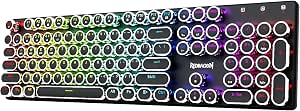 | Best for Typewriter Style and RGB | Layout: QWERTY, 104 keys | Switch type: Clicky blue mechanical | Connectivity: USB-C wired, Bluetooth 3.0/5.0, 2.4 GHz wireless | VIEW LATEST PRICE | See Our Full Breakdown |
| AULA S99 Wireless RGB Membrane Keyboard, Green and Beige, 99 Keys |  | Best for a Compact Number Pad | Layout: 96% QWERTY, 99 keys | Switch type: Membrane | Connectivity: Bluetooth 5.0, 2.4 GHz wireless, USB-C wired | VIEW LATEST PRICE | See Our Full Breakdown |
| Kisnt KN85 75% Wireless Mechanical Keyboard, Retro Beige |  | Best for Switch Customization | Layout: 75%, 85 keys | Dimensions: 13.68 × 5.51 × 1.77 in | Switch type: Pre-lubed Bsun linear, 45–50 gf actuation force | VIEW LATEST PRICE | See Our Full Breakdown |
| Redragon K521KS Tri-Mode Wireless Gaming Keyboard |  | Best for Multi-Device Gaming Features | Layout: QWERTY | Key type: Mechanical-feel | Connectivity: Bluetooth, 2.4 GHz wireless, USB-C wired | VIEW LATEST PRICE | See Our Full Breakdown |
| AULA F75 75% Tri-Mode Wireless Mechanical Keyboard, White and Brown |  | Best for Customization | Layout: 75%, 81-key QWERTY | Connectivity: Bluetooth 5.0, 2.4 GHz wireless, USB-C wired | Device connections: Up to 5 | VIEW LATEST PRICE | See Our Full Breakdown |
| EpikList 75% Tri-Mode Wireless Mechanical Keyboard |  | Best for PBT Keycaps | Layout: 75% ANSI, 82-key QWERTY | Connectivity: 2.4 GHz wireless, Bluetooth, USB-C wired | Switches: Linear; hot-swappable 3-pin and 5-pin MX switches | VIEW LATEST PRICE | See Our Full Breakdown |
| Redragon K768 PRO Wireless 100-Key Gasket Mechanical Gaming Keyboard |  | Best for a Cushioned Typing Feel | Layout: 100-key QWERTY | Connectivity: USB-C, Bluetooth, 2.4 GHz wireless | Switches: Custom linear; hot-swap compatible with 3-pin or 5-pin switches | VIEW LATEST PRICE | See Our Full Breakdown |
| Redragon K671KS Wireless Mechanical Gaming Keyboard |  | Best for Multi-Device Windows Setups | Layout: 81-key QWERTY | Connectivity: USB-C, Bluetooth 3.0/5.0, 2.4 GHz wireless | Device support: Up to 5 devices | VIEW LATEST PRICE | See Our Full Breakdown |
| Logitech MX Mechanical Wireless Illuminated Keyboard, Tactile Quiet, Graphite | | Best for Low-Profile Office Typing | Layout: 104-key QWERTY | Switches: Low-profile Tactile Quiet | Connectivity: Bluetooth Low Energy or Logi Bolt receiver | VIEW LATEST PRICE | See Our Full Breakdown |
| AULA F99 Wireless Mechanical Keyboard | 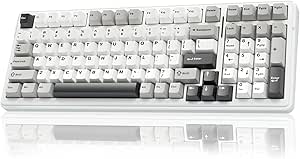 | Best for a Compact Number Pad | Layout: 99 keys, 96% compact | Connectivity: Bluetooth 5.0, 2.4 GHz wireless, USB-C wired | Device switching: Up to 5 devices | VIEW LATEST PRICE | See Our Full Breakdown |
| AULA S99 Pro V2 Wireless 99-Key Membrane Gaming Keyboard |  | Best for Quiet Membrane Typing | Layout: 99 keys, 97% compact | Key type: Silent membrane | Connectivity: Bluetooth 5.0, 2.4 GHz wireless, USB wired | VIEW LATEST PRICE | See Our Full Breakdown |
| ProtoArc K310 Pro Backlit Wireless Mechanical Keyboard |  | Best Full-Size Wireless Pick | Layout: Full-size QWERTY, 108 keys | Switches: Linear red | Connectivity: Bluetooth and 2.4 GHz USB receiver | VIEW LATEST PRICE | See Our Full Breakdown |
| AULA F75 Pro 75% Wireless Mechanical Keyboard with Knob |  | Best Compact Control Layout | Layout: 75%, 81 keys, QWERTZ | Connectivity: Bluetooth 5.0, 2.4 GHz wireless, USB-C | Device switching: Up to 5 devices | VIEW LATEST PRICE | See Our Full Breakdown |
| wireless mechanical keyboard | Layout | Connectivity | Backlighting | Battery |
|---|---|---|---|---|
| Logitech MX Mechanical Wireles | Full-size QWERTY, 104 keys | Bluetooth and USB-C charging; Logi Bolt receiver support | — | 1500 mAh rechargeable Li-Po; up to 15 days with backlight or 10 months with lights off |
| Redragon K710 Wireless Mechani | QWERTY, 104 keys | USB-C wired, Bluetooth 3.0/5.0, 2.4 GHz wireless | RGB, 16 preset modes, per-key customization | 4000 mAh rechargeable |
| AULA S99 Wireless RGB Membrane | 96% QWERTY, 99 keys | Bluetooth 5.0, 2.4 GHz wireless, USB-C wired | RGB | — |
| Kisnt KN85 75% Wireless Mechan | 75%, 85 keys | USB-C, 2.4 GHz wireless, Bluetooth 5.0 | — | 4000 mAh rechargeable |
| Redragon K521KS Tri-Mode Wirel | QWERTY | Bluetooth, 2.4 GHz wireless, USB-C wired | RGB, 8 modes and 7 monochrome colors | 4000 mAh rechargeable |
| AULA F75 75% Tri-Mode Wireless | 75%, 81-key QWERTY | Bluetooth 5.0, 2.4 GHz wireless, USB-C wired | RGB with 16 lighting effects | 4000 mAh rechargeable |
| EpikList 75% Tri-Mode Wireless | 75% ANSI, 82-key QWERTY | 2.4 GHz wireless, Bluetooth, USB-C wired | South-facing RGB, 16.8 million colors | — |
| Redragon K768 PRO Wireless 100 | 100-key QWERTY | USB-C, Bluetooth, 2.4 GHz wireless | Adjustable RGB | 8000 mAh |
| Redragon K671KS Wireless Mecha | 81-key QWERTY | USB-C, Bluetooth 3.0/5.0, 2.4 GHz wireless | RGB with 16 preset effects | — |
| Logitech MX Mechanical Wireles | 104-key QWERTY | Bluetooth Low Energy or Logi Bolt receiver | Single-color smart illumination with automatic adjustment | — |
| AULA F99 Wireless Mechanical K | 99 keys, 96% compact | Bluetooth 5.0, 2.4 GHz wireless, USB-C wired | RGB with 16 lighting effects | 8000 mAh rechargeable |
| AULA S99 Pro V2 Wireless 99-Ke | 99 keys, 97% compact | Bluetooth 5.0, 2.4 GHz wireless, USB wired | 16.8 million colors and 15 preset effects | 4000 mAh |
| ProtoArc K310 Pro Backlit Wire | Full-size QWERTY, 108 keys | Bluetooth and 2.4 GHz USB receiver | Single color with 10 effects | — |
| AULA F75 Pro 75% Wireless Mech | 75%, 81 keys, QWERTZ | Bluetooth 5.0, 2.4 GHz wireless, USB-C | RGB, 16.8 million colors | 4000 mAh rechargeable |
More Details on Our Top Picks
Logitech MX Mechanical Wireless Illuminated Performance Keyboard Clicky
The Logitech MX Mechanical Clicky suits people who want mechanical feedback in a full-size keyboard built for switching between devices. Bluetooth and Logi Bolt pairing support up to three computers or tablets, while the proximity-activated backlight adjusts to room light instead of staying lit constantly. That makes it a more office-focused choice than the RGB-heavy Redragon K710, which offers wired and 2.4 GHz modes alongside Bluetooth but leans into customization and a typewriter look. The Logitech’s low-profile clicky switches keep the familiar audible feedback in a slimmer design, though that sound may bother people nearby. Its single-color lighting is less flexible than the K710’s RGB, and it cannot use Logitech Unifying receivers. Choose it for a polished multi-device setup; skip it if you need quieter typing or colorful lighting.
Pros:- Pairs with up to three devices over Bluetooth or Logi Bolt.
- Proximity-activated backlighting adjusts to ambient light.
- Full-size layout includes 104 keys.
- Rechargeable battery can last up to 15 days with backlighting on.
Cons:- Clicky switches produce audible typing noise.
- Backlighting is single-color only.
- Does not work with Logitech Unifying receivers.
Best for: People who move between a work computer and personal devices and want a full-size layout with smart backlighting.
Not ideal for: Shared-office users who need quiet keys, or buyers who want per-key RGB customization or Logitech Unifying receiver support.
- Layout:Full-size QWERTY, 104 keys
- Switch type:Clicky low-profile mechanical
- Connectivity:Bluetooth and USB-C charging; Logi Bolt receiver support
- Battery:1500 mAh rechargeable Li-Po; up to 15 days with backlight or 10 months with lights off
- Dimensions:1.02 × 17.08 × 5.18 in
- Weight:29.2 oz (828 g)
- Compatibility:Windows, macOS, Linux, Chrome OS, iOS, iPadOS, Android
- Material:Graphite model uses 45% certified post-consumer recycled plastic
Our verdict“Choose the MX Mechanical Clicky for multi-device work and smart lighting if you prefer audible, low-profile keys.”
Redragon K710 Wireless Mechanical Keyboard with Round Keycaps, Black
The Redragon K710 gives a full-size desk setup a distinctive typewriter-inspired look, with round keycaps, a metal panel, and per-key RGB customization. Its three connection choices—USB-C, Bluetooth, and 2.4 GHz—make it more adaptable across wired and wireless setups than the Bluetooth and Logi Bolt-focused Logitech MX Mechanical Clicky. The tradeoff is that the K710’s blue switches are loud, and its programmable features are a better fit for Windows users, the only operating system listed for compatibility. Its 104-key layout and anti-ghosting support suit people who want a number pad and simultaneous key presses, but this is a visually bold keyboard rather than a restrained office tool. Choose it if customization and style matter; pass if quiet typing or broad OS support is a priority.
Pros:- Supports USB-C wired, Bluetooth, and 2.4 GHz wireless connections.
- RGB offers 16 preset modes and per-key customization.
- 104-key layout includes a number pad and anti-ghosting.
- Metal panel and round keycaps give it a distinctive style.
Cons:- Clicky blue switches are noisy in shared spaces.
- Listed operating system compatibility is limited to Windows.
- Typewriter-style round keycaps may not suit buyers who prefer conventional key shapes.
Best for: Windows users who want a full-size keyboard with a typewriter look, customizable RGB, and wired or wireless connections.
Not ideal for: Quiet workspaces and people who need confirmed compatibility or software support across macOS and mobile systems.
- Layout:QWERTY, 104 keys
- Switch type:Clicky blue mechanical
- Connectivity:USB-C wired, Bluetooth 3.0/5.0, 2.4 GHz wireless
- Backlighting:RGB, 16 preset modes, per-key customization
- Battery:4000 mAh rechargeable
- Panel material:Metal
- Keycap style:Round, typewriter-inspired
- Compatibility:Windows; listed compatible devices include consoles, computers, phones, and tablets
Our verdict“Pick the K710 for a customizable, full-size Windows setup with a typewriter look, provided loud switches are acceptable.”
AULA S99 Wireless RGB Membrane Keyboard, Green and Beige, 99 Keys
The AULA S99 keeps a number pad in a 96% layout, so spreadsheet users can reclaim some desk space without giving up number entry. That makes it a different proposition from the mechanical Kisnt KN85, which is smaller at 75% but has no number pad. The distinction matters: despite appearing in a wireless mechanical keyboard roundup, the S99 is a membrane keyboard, so it does not provide mechanical switches or hot-swapping. It does offer Bluetooth, 2.4 GHz, and USB-C wired connections, plus a rotary knob, programmable macros, and an adjustable stand. Those controls give it more ways to tailor a desk setup than the straightforward Logitech MX Mechanical Clicky, but buyers seeking mechanical key feel should look elsewhere. The listed battery power also means it needs batteries to operate.
Pros:- 96% layout retains a number pad in a smaller footprint than a full-size design.
- Bluetooth, 2.4 GHz wireless, and USB-C wired connectivity.
- Rotary knob, macro programming, and three programmable shortcut keys.
- Two-stage adjustable stand changes the typing angle.
Cons:- Membrane switches do not provide mechanical feel or hot-swapping.
- Requires battery power, with no battery capacity or runtime specified.
- Not a mechanical keyboard despite its inclusion in this roundup.
Best for: Spreadsheet users who want a space-saving keyboard with a number pad, multi-mode connections, and programmable controls.
Not ideal for: Mechanical keyboard buyers who want switch customization or a rechargeable battery specification.
- Layout:96% QWERTY, 99 keys
- Switch type:Membrane
- Connectivity:Bluetooth 5.0, 2.4 GHz wireless, USB-C wired
- Backlighting:RGB
- Controls:Dual-mode rotary knob; three programmable shortcut keys
- Stand:Foldable, two-stage adjustable
- Power:Battery powered
- Compatibility:Windows XP/7/8/10, Mac, Android, iOS
- Color:Green and beige
Our verdict“Choose the S99 if you need a compact number pad and programmable controls but do not require mechanical switches.”
Kisnt KN85 75% Wireless Mechanical Keyboard, Retro Beige
The Kisnt KN85 is the mechanical pick for buyers who want a compact layout and room to tune how their keyboard feels. Its 75% arrangement retains function and arrow keys while leaving out the number pad, a practical middle ground between the full-size Logitech MX Mechanical Clicky and more stripped-down compact boards. Hot-swappable 3-pin and 5-pin switches let owners change switches without soldering, while the gasket mount and pre-lubed linear switches are designed for a cushioned, smooth press. Tri-mode connectivity adds flexibility for computers and mobile devices. The tradeoffs are real: there is no number pad, the board is not water resistant, and its companion driver is limited to Windows and wired or 2.4 GHz use. Choose it for a customizable compact mechanical setup, not for spill-prone desks or extensive cross-platform software control.
Pros:- 75% layout keeps function and arrow keys while reducing desk footprint.
- Hot-swappable 3-pin and 5-pin switch support enables solder-free changes.
- Gasket mount and pre-lubed linear switches are designed for cushioned, smooth typing.
- USB-C, 2.4 GHz, and Bluetooth connectivity with three Bluetooth channels.
Cons:- No dedicated number pad.
- Not water resistant.
- Companion driver is limited to Windows and wired or 2.4 GHz modes.
Best for: Compact-keyboard fans who want linear switches, hot-swap customization, and Bluetooth or 2.4 GHz connectivity.
Not ideal for: Number-pad users, spill-prone workspaces, or Mac users who need the companion driver while connected over Bluetooth.
- Layout:75%, 85 keys
- Dimensions:13.68 × 5.51 × 1.77 in
- Switch type:Pre-lubed Bsun linear, 45–50 gf actuation force
- Connectivity:USB-C, 2.4 GHz wireless, Bluetooth 5.0
- Bluetooth channels:3
- Switch compatibility:Hot-swappable 3-pin and 5-pin switches
- Mount:Gasket mount
- Battery:4000 mAh rechargeable
- Compatibility:Android, Linux, macOS, Windows
Our verdict“Choose the KN85 if you want a compact mechanical board you can customize and can do without a number pad.”
Redragon K521KS Tri-Mode Wireless Gaming Keyboard
The Redragon K521KS is aimed at Windows PC users who want wireless flexibility and gaming-oriented shortcuts in one board. It can pair with up to five devices and offers Bluetooth, 2.4 GHz, and USB-C wired modes, giving it more stated device switching capacity than the Logitech MX Mechanical Clicky, which supports up to three. Its 25-key anti-ghosting and 12 multimedia keys address simultaneous inputs and quick media control, while programmable RGB and macros offer room to tailor the setup. The key distinction is that the K521KS has mechanical-feel keys; the supplied data does not identify it as a true mechanical-switch keyboard, unlike the Kisnt KN85. Its plastic enclosure and Windows-only compatibility also narrow its appeal. Pick it for its feature set and device count, not for switch customization or premium construction.
Pros:- Bluetooth, 2.4 GHz, and USB-C wired modes support flexible setups.
- Can connect to up to five devices.
- Includes 25-key anti-ghosting and 12 multimedia keys.
- RGB lighting, key functions, and macros are programmable.
Cons:- Mechanical-feel keys are not specified as true mechanical switches.
- Listed operating system compatibility is limited to Windows.
- Plastic enclosure lacks the metal panel of the Redragon K710.
Best for: Windows PC users who want a keyboard that can connect to several devices and includes gaming and media shortcuts.
Not ideal for: Buyers seeking confirmed mechanical switches, a metal enclosure, or listed compatibility with macOS and mobile operating systems.
- Layout:QWERTY
- Key type:Mechanical-feel
- Connectivity:Bluetooth, 2.4 GHz wireless, USB-C wired
- Device connections:Up to 5
- Wireless range:Up to 10 meters
- Battery:4000 mAh rechargeable
- Backlighting:RGB, 8 modes and 7 monochrome colors
- Additional controls:25-key anti-ghosting, 12 multimedia keys
- Compatibility:PC; Windows listed
Our verdict“Choose the K521KS for multi-device Windows gaming features if mechanical-feel keys meet your needs.”
AULA F75 75% Tri-Mode Wireless Mechanical Keyboard, White and Brown
The AULA F75 suits buyers who want a compact wireless board they can tailor over time. Its 75% layout keeps arrow keys while making more room on a desk than the full-size Logitech MX Mechanical. Bluetooth, 2.4 GHz, and USB-C connections let me switch between work and play setups, with support for up to five devices. Hot-swap sockets accommodate 3-pin and 5-pin switches, so changing the linear typing feel does not call for soldering. A multifunction knob and programmable keys add more control, while layered sound-dampening construction aims to soften typing noise. The tradeoffs are its plastic enclosure and missing full-size keys; buyers who prioritize a metal build or a complete key set may prefer the Logitech. This is a flexible pick for people who enjoy adjusting their setup.
Pros:- Bluetooth, 2.4 GHz, and USB-C connectivity support different setups
- Connects with up to five devices
- Hot-swap sockets accept 3-pin and 5-pin switches
- Arrow keys and a multifunction knob fit into a compact layout
Cons:- Plastic enclosure lacks the metal construction of some alternatives
- Compact layout leaves out keys found on full-size keyboards
Best for: Desk-space-conscious PC and laptop users who want to swap switches and move among several devices
Not ideal for: Buyers who need a full-size key layout or prefer a metal enclosure
- Layout:75%, 81-key QWERTY
- Connectivity:Bluetooth 5.0, 2.4 GHz wireless, USB-C wired
- Device connections:Up to 5
- Switches:Pre-lubricated linear; hot-swap support for 3-pin and 5-pin switches
- Backlighting:RGB with 16 lighting effects
- Battery:4000 mAh rechargeable
- Additional controls:Programmable keys and multifunction knob
- Enclosure:Plastic, white and brown
Our verdict“Choose the AULA F75 if you want a customizable compact board with several connection options and can live without a full-size layout.”
EpikList 75% Tri-Mode Wireless Mechanical Keyboard
The EpikList 75% pairs a compact layout with PBT keycaps, a material choice that may appeal to buyers seeking a different keycap feel from the ABS enclosure beneath them. Its 82-key arrangement retains arrow keys, and the 2.4 GHz, Bluetooth, and USB-C modes cover wireless and wired use across compatible devices. A gasket mount and sound-absorbing layers are intended to give typing a more cushioned character than a basic compact board. Compared with the AULA F75, it lists PBT keycaps and full N-key rollover, while the AULA specifies support for up to five device connections. The EpikList also offers hot-swap sockets, RGB lighting, and a volume knob, but it is not water resistant and omits keys available on larger keyboards. It fits buyers who value its listed materials and compact footprint, provided they can keep liquids away.
Pros:- PBT keycaps on a compact 75% layout
- Tri-mode connection through 2.4 GHz, Bluetooth, or USB-C
- Hot-swap sockets accept 3-pin and 5-pin MX switches
- Gasket mount, sound-absorbing layers, and volume knob add practical customization
Cons:- Not water resistant
- Compact layout omits keys found on larger keyboards
- ABS enclosure
Best for: Compact-keyboard buyers who want PBT keycaps, a volume knob, and three connection modes
Not ideal for: People who need spill protection or regularly use keys omitted from a 75% layout
- Layout:75% ANSI, 82-key QWERTY
- Connectivity:2.4 GHz wireless, Bluetooth, USB-C wired
- Switches:Linear; hot-swappable 3-pin and 5-pin MX switches
- Keycaps:PBT
- Backlighting:South-facing RGB, 16.8 million colors
- Rollover:Full N-key rollover
- Dimensions:12.7 × 5.64 × 1.7 in
- Enclosure and water resistance:ABS; not water resistant
Our verdict“Pick the EpikList if PBT keycaps and a cushioned compact typing setup matter more to you than spill resistance or a full-size key set.”
Redragon K768 PRO Wireless 100-Key Gasket Mechanical Gaming Keyboard
The Redragon K768 PRO is the lineup’s pick for buyers who want a compact board with more keys than a typical 75% layout and a typing setup designed around cushioning. Its gasket design and five-layer noise dampening distinguish it from the AULA F75, whose description lists layered sound dampening but does not specify a five-layer construction. The 100-key layout preserves more functions while still using less space than a full-size 104-key board like the Logitech MX Mechanical. Tri-mode connectivity and an 8000 mAh battery support wireless use, while PBT keycaps and hot-swap support leave room for personalization. The tradeoffs are that it still is not full-size, and its software is needed for advanced lighting effects and macros. I’d favor it for a quieter, cushioned feel and larger-than-75% layout, not for buyers who need every standard key at hand.
Pros:- Gasket design and five-layer dampening target a cushioned, quieter typing feel
- Tri-mode connectivity covers USB-C, Bluetooth, and 2.4 GHz
- 8000 mAh battery capacity
- PBT keycaps and hot-swap support for 3-pin or 5-pin switches
Cons:- 100-key layout is not a full-size keyboard
- Advanced lighting effects and macros require software
Best for: Wireless gaming and work users who want a cushioned typing feel, PBT keycaps, and more keys than a 75% board
Not ideal for: People who require a full-size 104-key layout or want advanced lighting controls without software
- Layout:100-key QWERTY
- Connectivity:USB-C, Bluetooth, 2.4 GHz wireless
- Switches:Custom linear; hot-swap compatible with 3-pin or 5-pin switches
- Mount and dampening:Gasket design with five-layer noise dampening
- Battery:8000 mAh
- Keycaps:PBT
- Backlighting:Adjustable RGB
- Enclosure:ABS and PBT
Our verdict“Choose the K768 PRO if you want a cushioned 100-key wireless board and accept software-dependent controls and a layout short of full-size.”
Redragon K671KS Wireless Mechanical Gaming Keyboard
The Redragon K671KS makes sense for Windows users who want an 81-key layout and connections for several devices. It supports USB-C, Bluetooth 3.0/5.0, and 2.4 GHz, with up to five device connections, matching the AULA F75’s listed device capacity. Unlike the EpikList, it includes a metal panel and double-injection PBT keycaps, which give its materials a sturdier specification on paper than that model’s ABS enclosure. Its linear Cherry MX Red switches are hot-swappable, and eight spare switches are included for replacement or experimentation. The limitations deserve attention: the provided compatibility information lists Windows only, and the compact layout drops keys available on full-size boards such as the Logitech MX Mechanical. This is a practical multi-device choice for Windows setups, but less suitable if cross-platform support or a complete key set is a priority.
Pros:- USB-C, Bluetooth 3.0/5.0, and 2.4 GHz connectivity
- Supports up to five devices
- Hot-swappable Cherry MX Red linear switches with eight spares included
- Double-injection PBT keycaps and metal panel
Cons:- Listed operating system compatibility is limited to Windows
- 81-key layout omits keys found on full-size keyboards
Best for: Windows users switching among a PC, laptop, phone, or tablet who want a compact board and included spare switches
Not ideal for: Buyers seeking documented macOS support or a full-size layout with all standard keys
- Layout:81-key QWERTY
- Connectivity:USB-C, Bluetooth 3.0/5.0, 2.4 GHz wireless
- Device support:Up to 5 devices
- Switches:Cherry MX Red linear, hot-swappable
- Keycaps:Double-injection PBT
- Backlighting:RGB with 16 preset effects
- Materials:Metal panel and plate
- Included accessories:8 spare switches, 2 extra red keycaps, keycap puller, USB cable
Our verdict“Pick the K671KS for a multi-device Windows setup that benefits from hot-swap switches and PBT keycaps in a compact layout.”
Logitech MX Mechanical Wireless Illuminated Keyboard, Tactile Quiet, Graphite
The Logitech MX Mechanical is the office-oriented alternative in this group: its full-size 104-key layout and low-profile Tactile Quiet switches prioritize familiar key access and a restrained typing sound over switch swapping or compactness. Smart single-color illumination activates as hands approach and adjusts to ambient light, while pairing for up to three devices supports a mixed-device desk. Compared with the Redragon K768 PRO, it offers a full-size key set and broad listed operating system support, but the K768 PRO brings hot-swap switches, RGB, and a much larger stated battery capacity. Logitech instead lists up to 15 days with backlighting or up to 10 months with it off. The drawbacks are the heavier, wide format and limited software customization on operating systems outside Windows and macOS. Buyers with FileVault-enabled Macs may need the Logi Bolt receiver for startup password entry.
Pros:- Low-profile tactile switches are designed for quieter typing
- Full-size 104-key layout
- Smart backlighting adjusts to nearby hands and ambient light
- Pairs with up to three devices and supports several operating systems
Cons:- Wide, heavier format takes more desk space than the 75% AULA F75
- Customization software is available only for Windows and macOS
- Bluetooth may prevent startup password entry on some FileVault Macs; Logi Bolt is suggested
Best for: Office users who want low-profile mechanical feedback, full-size keys, smart lighting, and cross-platform device pairing
Not ideal for: Desk-space-conscious gamers seeking a compact layout, hot-swap switches, or RGB customization
- Layout:104-key QWERTY
- Switches:Low-profile Tactile Quiet
- Connectivity:Bluetooth Low Energy or Logi Bolt receiver
- Device pairing:Up to 3 devices
- Battery life:Up to 15 days with backlighting; up to 10 months with backlighting off
- Charging:USB-C; 1500 mAh rechargeable Li-Po battery
- Backlighting:Single-color smart illumination with automatic adjustment
- Dimensions and weight:17.08 × 5.18 × 1.02 in; 29.2 oz (828 g)
Our verdict“Choose the Logitech MX Mechanical if you want a full-size, low-profile board for a multi-device office desk and do not need switch customization.”
AULA F99 Wireless Mechanical Keyboard
The AULA F99 keeps a number area and arrow keys in a 96% layout, making it a better fit than the more compact AULA F75 Pro for spreadsheet work without taking up as much desk space as a full-size board. Its three connection modes and support for up to five devices make it practical for switching between a PC, laptop, or tablet. Hot-swappable switches give enthusiasts room to change the feel later, while the gasket structure and layered dampening aim for a softer, quieter typing experience. The tradeoff is that its listed AZERTY layout may require adjustment for QWERTY users. Water-repellent construction can help with small splashes, but does not make the keyboard waterproof.
Pros:- 96% layout retains a number area and arrow keys while saving desk space.
- Bluetooth, 2.4 GHz, and USB-C connections support flexible use across devices.
- Hot-swappable 3-pin and 5-pin switch support makes future switch changes easier.
- Gasket structure and layered sound dampening are designed for a softer, quieter feel.
Cons:- AZERTY layout may be inconvenient for users accustomed to QWERTY.
- Water-repellent construction is not a guarantee against spills or immersion.
Best for: People who use a number pad, want wireless device switching, and have room for a compact 96% keyboard.
Not ideal for: QWERTY typists who do not want to adapt to AZERTY, or anyone who needs a fully waterproof keyboard.
- Layout:99 keys, 96% compact
- Connectivity:Bluetooth 5.0, 2.4 GHz wireless, USB-C wired
- Device switching:Up to 5 devices
- Switches:Pre-lubed linear; hot-swappable 3-pin and 5-pin
- Keycaps:Double-shot PBT
- Backlighting:RGB with 16 lighting effects
- Battery:8000 mAh rechargeable
- Layout language:AZERTY
Our verdict“Choose the F99 if you want a number pad in a smaller footprint and can use its AZERTY layout.”
AULA S99 Pro V2 Wireless 99-Key Membrane Gaming Keyboard
The AULA S99 Pro V2 is the membrane choice in a roundup centered on mechanical keyboards, so it suits buyers who value a quiet, cushioned keystroke more than switch customization. Bluetooth, 2.4 GHz, and USB connections allow it to move between a computer and other devices, while its status display shows battery and connection details at a glance. That display and the three-level stand give it practical conveniences the mechanical AULA F99 does not emphasize. The tradeoff is fundamental: its silent membrane keys do not offer the replaceable mechanical switches or distinct switch feel found on the F99. Its 99-key layout also saves space by omitting some keys, and the manufacturer notes the surface may feel oily before cleaning.
Pros:- Quiet membrane keys provide a soft, cushioned typing feel.
- Bluetooth, 2.4 GHz, and wired USB connections support multiple use cases.
- Display reports battery level, connection mode, lighting, and Num Lock status.
- Two-stage stand provides three height levels.
Cons:- Membrane keys lack the mechanical switch feel and replaceability of the AULA F99.
- Compact 99-key layout may omit keys available on a full-size keyboard.
- The surface may feel slightly oily before cleaning, according to the manufacturer.
Best for: Shared-office users and casual gamers who want quiet, soft keys and a display for connection and battery status.
Not ideal for: Mechanical keyboard enthusiasts seeking hot-swappable switches, or full-size typists who rely on every key.
- Layout:99 keys, 97% compact
- Key type:Silent membrane
- Connectivity:Bluetooth 5.0, 2.4 GHz wireless, USB wired
- Device switching:Multiple devices, switched with Fn combinations
- Backlighting:16.8 million colors and 15 preset effects
- Battery:4000 mAh
- Display:Shows battery, connection, lighting, and Num Lock status
- Stand:Two-stage design with three height levels
Our verdict“Pick the S99 Pro V2 if quiet membrane typing and at-a-glance status matter more than mechanical switches.”
ProtoArc K310 Pro Backlit Wireless Mechanical Keyboard
For buyers who do not want to give up keys for a smaller footprint, the ProtoArc K310 Pro offers a full-size 108-key QWERTY layout, including a number pad. Its linear red switches are described as quiet, making it a more office-friendly mechanical option than a clicky board such as the Logitech MX Mechanical Clicky. Bluetooth and a 2.4 GHz receiver let it connect to up to three devices, and the aluminum top case adds a sturdier material choice than the plastic-forward compact AULA F75 Pro. It is a relatively large keyboard, though, and its lighting is single-color rather than RGB. Macro setup also has limits: it requires a 2.4 GHz connection, and the listed software constraints may frustrate some Mac workflows.
Pros:- Full-size 108-key QWERTY layout preserves the number pad and navigation keys.
- Quiet linear red switches suit shared workspaces better than clicky options.
- Bluetooth and 2.4 GHz receiver support up to three devices.
- Aluminum top case and adjustable tilt legs add a sturdy build and typing-angle options.
Cons:- Its full-size footprint takes more desk space than the AULA F99 or AULA F75 Pro.
- Macro customization requires a 2.4 GHz USB connection.
- Single-color backlighting offers less visual customization than RGB keyboards.
Best for: Desk-based typists who need a full number pad, prefer QWERTY, and want quiet linear switches with wireless device switching.
Not ideal for: Travelers or compact-desk users, and Mac users who need the listed macro functions in Safari or through a multi-port hub.
- Layout:Full-size QWERTY, 108 keys
- Switches:Linear red
- Connectivity:Bluetooth and 2.4 GHz USB receiver
- Device switching:Up to 3 devices
- Backlighting:Single color with 10 effects
- Customization:Programmable keys and macros
- Charging:USB-C rechargeable
- Materials and size:Aluminum top case and plate; 17.64 × 6.1 × 1.77 in
Our verdict“Choose the K310 Pro if a full number pad and quieter mechanical switches matter more than compact size or RGB lighting.”
AULA F75 Pro 75% Wireless Mechanical Keyboard with Knob
The AULA F75 Pro keeps the keys many compact-board users reach for most—arrows and a function row—while leaving out the number pad found on the AULA F99 and full-size ProtoArc K310 Pro. Its multi-function knob adds quick control for compatible functions, and tri-mode connectivity with support for up to five devices suits a desk shared across a PC, phone, and tablet. The pre-lubricated linear Reaper switches and hot-swappable sockets make it a more adaptable mechanical option than the membrane AULA S99 Pro V2. The compromises are its smaller key set and listed QWERTZ layout, which may not suit QWERTY users. Water-repellent construction also should not be treated as waterproofing.
Pros:- 75% layout retains arrow keys and a function row while reducing desk footprint.
- Multi-function knob adds direct control without relying only on key combinations.
- Bluetooth, 2.4 GHz, and USB-C support up to five devices.
- Hot-swappable 3-pin and 5-pin support allows switch replacement without soldering.
Cons:- No number pad, unlike the AULA F99 and ProtoArc K310 Pro.
- QWERTZ layout may not match users accustomed to QWERTY.
- Water-repellent design does not mean waterproof.
Best for: Compact-desk users who want arrow keys, a control knob, hot-swappable switches, and frequent device switching.
Not ideal for: People who regularly use a number pad or require a QWERTY layout without adapting to QWERTZ.
- Layout:75%, 81 keys, QWERTZ
- Connectivity:Bluetooth 5.0, 2.4 GHz wireless, USB-C
- Device switching:Up to 5 devices
- Switches:Linear LEOBOG Reaper; hot-swappable 3-pin and 5-pin
- Keycaps:Side-printed PBT
- Backlighting:RGB, 16.8 million colors
- Battery:4000 mAh rechargeable
- Additional controls:Multi-function knob, programmable keys, N-key rollover, Win key lock
Our verdict“Choose the F75 Pro if you want a compact mechanical board with a knob and device flexibility, and can work with QWERTZ.”

How We Picked
I ranked these keyboards by how well their listed design and features serve real buyer needs: typing comfort, layout usefulness, wireless connection choices, and fit for work, gaming, or mixed use. I gave more weight to a clear use case and practical flexibility than to decorative RGB lighting or a long feature list. Since the lineup includes both mechanical and membrane keyboards, I treated switch type as a key distinction rather than assuming every model matched the search term.
The order reflects the tradeoffs visible in the product details: office-friendly typing and straightforward productivity rank well for general use, while compact layouts, tri-mode connectivity, and gaming-oriented designs earn their place for more specific needs. Larger boards can be more convenient when you use extra keys, but they take up more desk space. Where product names or descriptions leave details unclear, buyers should confirm switch type, connection modes, and layout before choosing.
Factors to Consider When Choosing Wireless Mechanical Keyboards
A wireless keyboard is easiest to choose when you start with your daily setup, then narrow the field by layout, switches, and connection needs. These factors can prevent a common mismatch: buying for a feature that sounds useful while overlooking how the board will fit your desk and routine.Choose a layout around the keys you actually use
Start by listing the keys you reach for often, such as the number pad, function row, or navigation cluster. A compact layout can free space for a mouse and make a smaller desk feel less crowded, but missing dedicated keys may slow work that depends on spreadsheets, editing shortcuts, or frequent navigation. Larger layouts reduce reliance on layers and key combinations, at the cost of taking up more desk width. Do not assume a board’s key count tells the whole story; check the layout image and confirm which keys are omitted or combined. If you switch between tasks, prioritize the keys that save you time every day. A small amount of desk space is usually a better trade than repeatedly fighting an unfamiliar layout.
Match switch feel and sound to your environment
Mechanical keyboards can differ in both how their switches feel and how much sound they make, so the word “mechanical” alone does not tell you whether a board will suit a shared room. Clicky switches produce audible feedback that some typists enjoy, but that sound can distract nearby people or carry through a call. Tactile options provide a bump without the same click, while quieter designs are often easier to live with in offices and shared spaces. Membrane keyboards are a separate switch category, even when their styling resembles a mechanical board. If you are unsure, consider who will hear your typing before prioritizing a particular feel. Also check whether the switch type is fixed or replaceable; that affects how much you can tailor the keyboard later.
Check wireless support against your devices
Bluetooth is useful when you want to pair with more than one device or keep a receiver out of a crowded setup, while a 2.4 GHz receiver can suit a desktop connection where you want a dedicated wireless link. Wired support can give you another way to use or charge a keyboard, but its availability varies by model. “Tri-mode” usually signals three connection choices, yet you should confirm which modes the specific keyboard offers and how switching between them works. Check operating system support and device pairing details if you plan to move between a computer, tablet, or phone. For gaming, verify that the connection method you plan to use is supported for your setup rather than choosing by the tri-mode label alone. A connection feature helps only when it fits your devices and habits.
Decide whether compactness is worth giving up dedicated keys
Compact boards can make a desk feel more open and leave more room for mouse movement, which may help a gaming setup. That space-saving design often comes with fewer dedicated controls, so number-heavy work or frequent use of navigation keys may require extra key combinations. Think through your normal tasks instead of judging the layout by appearance. If you want to try a compact board, learn which keys are accessed through layers before buying; a layout that looks tidy can still interrupt a fast workflow. The best compromise depends on whether desk space or direct access to keys matters more to you. If you divide your time evenly between work and games, a mid-sized layout may be easier to adapt to than the smallest form factor.
Pay for useful flexibility, not a feature checklist
A higher-end feature set makes sense when it solves a recurring problem, such as moving between devices or needing quieter typing. Backlighting can help when you work in dim conditions, while a knob or extra controls are useful only if they support actions you perform often. RGB effects and a gaming label do not by themselves show whether a keyboard fits your games, connection setup, or typing preferences. Before choosing, compare the details that are hard to change later: layout, switch type, and wireless modes. Treat styling as a preference after those practical checks. This approach can help you avoid paying for features that look appealing but add little to your daily use.
Frequently Asked Questions
How can I tell whether a keyboard in this roundup is actually mechanical?
Check the product description for its switch type rather than relying on words like “gaming” or “keyboard” in the name. This roundup includes AULA S99 and S99 Pro V2 membrane models, which are not mechanical keyboards. Membrane and mechanical designs can offer different typing feedback, so the distinction matters if switch feel is your main reason for shopping. If a listing is unclear, confirm the switch technology with the seller before ordering. The mechanical picks are the better match when mechanical switches are a firm requirement.
Should I choose a 75% keyboard or a larger layout?
Choose a 75% layout if saving desk space matters and you are comfortable using a more compact arrangement of keys. A larger board is a safer fit if your work relies on a number pad or dedicated navigation keys. Think about how often you use those keys, not only whether they are available on your current keyboard. Reaching for a layer or shortcut can become a nuisance when repeated throughout the day. If both size and direct access matter, look closely at the exact layout before deciding.
Is a tri-mode wireless keyboard useful if I only use one computer?
It can be, but the extra connection choices only help if they match your setup. A dedicated 2.4 GHz receiver, Bluetooth, and wired support can provide different ways to connect, though the specific options vary by keyboard. If you use one computer and do not need to change connection methods, layout and switch feel may matter more. For a multi-device desk, confirm that the board supports the devices and pairing behavior you expect. Do not infer a particular connection mode from “tri-mode” alone; check the product details.
Are quiet mechanical switches a better choice for an office?
They are often a more considerate choice in shared rooms than clicky switches, but “quiet” is relative and does not mean silent. The Logitech MX Mechanical Tactile Quiet is the clearest office-focused pick in this lineup. Your desk, room, and typing force can still affect how much sound people nearby hear. If colleagues sit close to you or calls are frequent, prioritize a quieter switch profile and consider your work environment. A clicky model may be more satisfying for solo use but less comfortable for a shared space.
What should I check before buying a wireless keyboard for gaming?
Confirm the connection methods, layout, and switch type against the games you play and the devices you use. A compact board can leave more room for mouse movement, while a larger one provides more dedicated keys for shortcuts. Do not assume that every wireless keyboard offers the same connection behavior just because it has a gaming label or RGB lighting. If you plan to use a receiver or wired connection, verify that the specific model supports that setup. For mixed work and gaming, weigh typing comfort alongside gaming features so the board remains practical after play.
Conclusion
For one keyboard that balances everyday work with wireless flexibility, I recommend the Logitech MX Mechanical Tactile Quiet as the best overall. Choose the AULA F75 as the value-minded compact pick if its 75% layout suits your habits, or the AULA F99 if you want a fuller layout. For beginners, I would start by matching layout and switch sound to your desk and routine, then choose an uncomplicated option that meets those needs; the Logitech is a sensible office-oriented starting point. Buyers who want a premium productivity focus should compare the Logitech models by switch feel and sound, while gamers should prioritize their preferred connection method and room for mouse movement when considering the Redragon and AULA gaming-oriented boards. If mechanical switches are essential, skip the S99 membrane models and confirm switch details on any listing before buying.