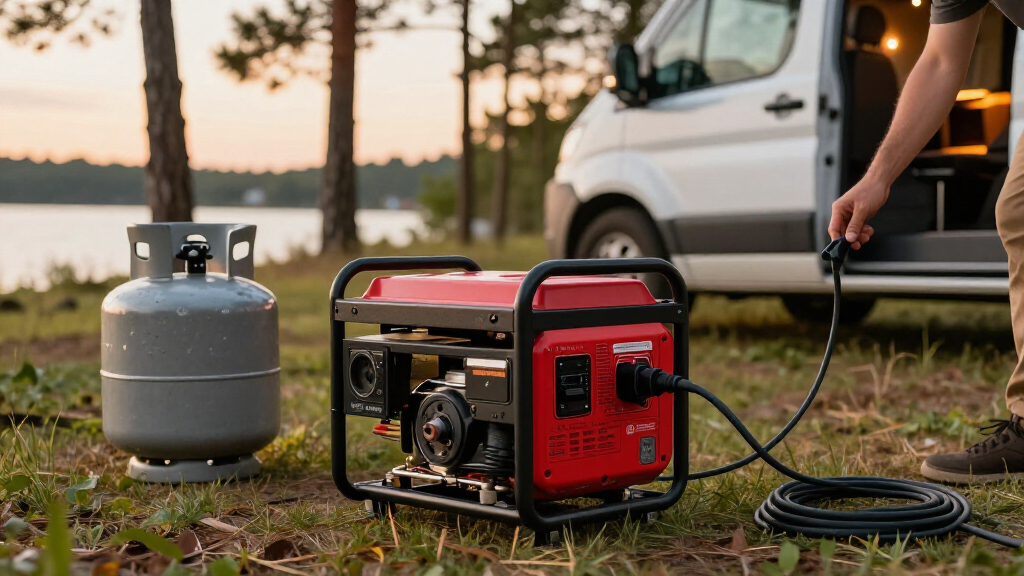

If you’re searching for the best tri-fuel generators, the Westinghouse WGen20000TFc stands out as my top overall pick thanks to its 28,000 peak watts of whole-home power, remote electric start, and built-in CO sensor — a rare combination of capacity and safety at this size. For buyers who want clean inverter power for sensitive electronics, the Westinghouse iGen12000TFc is the strongest inverter option, while the GENMAX GM10500XiT offers a smart middle ground with an automatic transfer switch port and 50-amp output at a more manageable size. The main tradeoff in this category is raw wattage versus portability and power quality: conventional open-frame models deliver more surge capacity for well pumps and HVAC, while inverter models are quieter and safer for laptops and TVs. Budget also splits the field, as higher-wattage tri-fuel units carry real cost and require proper transfer-switch installation. Keep reading for the full ranked breakdown and which model fits your home, RV, or jobsite.

Get the latest gadgets delivered free with Prime
- Fast, free delivery on millions of items
- Prime Video, Amazon Music and more included
- Member-only deals all year
Complete the kit


Key Takeaways
- Westinghouse dominates this comparison with seven of the fourteen slots, and its lineup spans every buyer tier — from the 8,200-watt iGen8200TFc to the 28,000-watt WGen20000TFc — making brand familiarity and parts availability a real advantage.
- Only the inverter models (iGen12000TFc, iGen8200TFc, Gidrox 11000W, GENMAX GM10500XiT, AIVOLT 11500W) produce clean-enough power for sensitive electronics; every conventional open-frame pick trades power quality for higher surge capacity.
- Natural gas support is the deciding factor for permanent home backup — models with transfer-switch readiness and NG inlets (the WGen20000TFc, DuroMax XP15000HXT, and Westinghouse 13500) are the only ones that make sense for a hard-plumbed installation.
- Built-in CO sensors and automatic shutoff appear on the premium Westinghouse and DuroMax HXT models but are missing from the Generac 12,500 and DuroStar DS13000MXT, which matters if the generator will run near living spaces.
- The 13,000–15,000 watt class is the most crowded part of the lineup — DuroMax’s XP15000HXT and XP13000HXT and Westinghouse‘s 14500 differentiate mainly on fuel tank size, CO alert, and outlet configuration, so choosing between them comes down to runtime and panel setup rather than headline wattage.
| Westinghouse iGen12000TFc 12000 Peak Watt Tri-Fuel Portable Inverter Generator with Remote Start |  | Best Overall | Peak Wattage (Gasoline): 12,000W | Running Wattage (Natural Gas): 7,200W | Engine: 457cc Westinghouse 4-Stroke OHV | VIEW LATEST PRICE | See Our Full Breakdown |
| Westinghouse WGen9500TFc 12500 Peak Watt Tri-Fuel Portable Generator with Remote Electric Start |  | Best Value for Whole-Home Backup | Peak Watts (Gasoline): 12,500W | Running Watts (Gasoline): 9,500W | Running Watts (Natural Gas): 7,500W | VIEW LATEST PRICE | See Our Full Breakdown |
| DuroStar DS13000MXT 13,000-Watt 500cc Tri Fuel Portable Generator |  | Best Mid-Size Raw Power | Peak Wattage: 13,000W (gasoline) | Fuel Types: Gasoline, Propane, Natural Gas | Engine: 500cc | VIEW LATEST PRICE | See Our Full Breakdown |
| DuroMax XP15000HXT 15,000 Watt Tri-Fuel Portable Home Backup Generator with CO Alert |  | Best for Maximum Power | Peak Wattage: 15,000W | Fuel Types: Gasoline, Propane, Natural Gas | Engine: 500cc OHV DuroMax | VIEW LATEST PRICE | See Our Full Breakdown |
| Gidrox 11000W Tri-Fuel Inverter Generator (Gas, Propane, Natural Gas) |  | Best for Long, Quiet Outages | Wattage: 11,000W | Fuel Types: Gasoline, Propane, Natural Gas | Type: Inverter, pure sine wave <3% THD | VIEW LATEST PRICE | See Our Full Breakdown |
| Westinghouse iGen8200TFc 8200 Peak Watt Tri-Fuel Portable Inverter Generator |  | Best Quiet Inverter Pick | Fuel Types: Gasoline, Propane, Natural Gas | Peak Watts (Gasoline): 8,200 | Running Watts (Gas/Propane/Natural Gas): 6,600 / 5,940 / 5,280 | VIEW LATEST PRICE | See Our Full Breakdown |
| Westinghouse 14500 Peak Watt Tri-Fuel Home Backup Portable Generator |  | Best Balanced Whole-Home Backup | Fuel Types: Gasoline, Propane, Natural Gas | Peak Watts (Gas/Propane/Natural Gas): 14,500 / 13,500 / 12,000 | Running Watts (Gas/Propane/Natural Gas): 11,500 / 10,500 / 9,500 | VIEW LATEST PRICE | See Our Full Breakdown |
| DuroMax XP13000HXT 13,000-Watt Tri Fuel Portable Generator with CO Alert |  | Best Value for Whole-Home Power | Fuel Types: Gasoline, Propane, Natural Gas | Peak Watts: 13,000 | Running Watts: 10,500 | VIEW LATEST PRICE | See Our Full Breakdown |
| Westinghouse 18000 Peak Watt Tri-Fuel Home Backup Portable Generator with Remote Electric Start, CO Sensor |  | Best for Larger Homes | Fuel Types: Gasoline, Propane, Natural Gas | Peak Watts (Gas/Propane/Natural Gas): 18,000 / 16,000 / 14,400 | Running Watts (Gas/Propane/Natural Gas): 14,500 / 13,000 / 11,600 | VIEW LATEST PRICE | See Our Full Breakdown |
| Westinghouse WGen20000TFc 28,000 Peak Watt Tri-Fuel Portable Generator with Remote Electric Start, CO Sensor, and Transfer Switch Ready |  | Best Maximum-Power Station | Fuel Types: Gasoline, Propane, Natural Gas | Peak Watts (Gas/Propane/Natural Gas): 28,000 / 25,200 / 22,400 | Running Watts (Gasoline): 20,000 | VIEW LATEST PRICE | See Our Full Breakdown |
| Generac 12,500/9,500-Watt Tri-Fuel Portable Generator with Electric Start |  | Best for Transfer Switch Integration | Starting Watts: 12,500 | Running Watts: 9,500 | Engine: 500cc Generac OHV | VIEW LATEST PRICE | See Our Full Breakdown |
| Westinghouse 13500 Peak Watt Tri-Fuel Home Backup Portable Generator |  | Best Long-Runtime Workhorse | Peak Watts (Gasoline): 13,500 | Running Watts (Gasoline): 10,500 | Peak Watts (Propane): 12,500 | VIEW LATEST PRICE | See Our Full Breakdown |
| GENMAX GM10500XiT 10500 Peak Watt Tri-Fuel Open Frame Inverter Generator |  | Best for Clean Power and Solar Integration | Running Watts: 7,800W | Peak Watts: 10,500W | Fuel Types: Gasoline, LPG, natural gas | VIEW LATEST PRICE | See Our Full Breakdown |
| AIVOLT 11500W Tri-Fuel Inverter Generator with 50A Outlet |  | Best Quiet Inverter Value | Running Watts (Gasoline): 9,200W | Starting Watts (Gasoline): 11,500W | Fuel Types: Gasoline, propane, natural gas | VIEW LATEST PRICE | See Our Full Breakdown |
| tri-fuel generator | Engine | Fuel Types | Start Type | Run Time |
|---|---|---|---|---|
| Westinghouse iGen12000TFc 1200 | 457cc Westinghouse 4-Stroke OHV | — | — | Up to 19 hours at 25% load |
| Westinghouse WGen9500TFc 12500 | 457cc 4-Stroke OHV with cast iron sleeve | — | — | Up to 12 hours |
| DuroStar DS13000MXT 13,000-Wat | 500cc | Gasoline, Propane, Natural Gas | Remote electric start with push button | — |
| DuroMax XP15000HXT 15,000 Watt | 500cc OHV DuroMax | Gasoline, Propane, Natural Gas | Push button and remote start | — |
| Gidrox 11000W Tri-Fuel Inverte | — | Gasoline, Propane, Natural Gas | — | — |
| Westinghouse iGen8200TFc 8200 | 298cc Westinghouse 4-stroke OHV with cast iron sleeve | Gasoline, Propane, Natural Gas | Remote electric start | Up to 17 hours at 25% load |
| Westinghouse 14500 Peak Watt T | 550cc 4-stroke OHV Westinghouse | Gasoline, Propane, Natural Gas | Remote electric start | Up to 19 hours on gasoline |
| DuroMax XP13000HXT 13,000-Watt | 500cc OHV 4-stroke | Gasoline, Propane, Natural Gas | Push-button / remote start | 8 hours |
| Westinghouse 18000 Peak Watt T | 713cc Westinghouse V-Twin OHV | Gasoline, Propane, Natural Gas | Push-button and remote electric start | Up to 16 hours at 25% load |
| Westinghouse WGen20000TFc 28,0 | 999cc Westinghouse V-Twin 4-stroke OHV | Gasoline, Propane, Natural Gas | Push-button electric start with remote key fob | Up to 15 hours at 25% load |
| Generac 12,500/9,500-Watt Tri- | 500cc Generac OHV | Gasoline, liquid propane, natural gas | Electric push-button with included 12V battery | — |
| Westinghouse 13500 Peak Watt T | 500cc Westinghouse 4-stroke OHV with cast iron sleeve | Gasoline, propane, natural gas | — | — |
| GENMAX GM10500XiT 10500 Peak W | — | Gasoline, LPG, natural gas | — | — |
| AIVOLT 11500W Tri-Fuel Inverte | 459cc 4-stroke | Gasoline, propane, natural gas | — | — |
More Details on Our Top Picks
Westinghouse iGen12000TFc 12000 Peak Watt Tri-Fuel Portable Inverter Generator with Remote Start
When I weigh what most tri-fuel buyers actually need, the iGen12000TFc hits the sweet spot better than anything else in this lineup. Unlike the open-frame WGen9500TFc, this is a true inverter with ≤3% THD, so you can safely run furnaces, computers, and modern appliances with sensitive control boards — a real differentiator when the whole point of tri-fuel is whole-home backup. Output drops as you move from gasoline (9,000 running watts) down to natural gas (7,200), which is normal for the category but worth planning around if you’re hard-piping to a gas line. The remote start key fob and Eco Mode make it genuinely livable during multi-day outages, and up to 19 hours of runtime at partial load beats most rivals here. The tradeoff is weight and bulk — this is a ‘portable’ generator in name only, and you’ll want it positioned permanently on a pad.
Pros:- True inverter output at ≤3% THD makes it safe for sensitive electronics and modern appliances
- Transfer switch ready 50A outlet supports genuine whole-home backup rather than just extension cords
- Quiet for its class at as low as 64 dBA with Eco Mode
- Up to 19 hours of runtime at 25% load on a single 7.9-gallon tank
Cons:- Very heavy and awkward to move once positioned
- Output drops noticeably on natural gas (7,200 running watts), so sizing matters if that’s your primary fuel
- Whole-home use requires proper transfer switch or interlock kit installation
Best for: Homeowners who want clean, inverter-quality whole-home backup with the flexibility to switch between gasoline, propane, and natural gas
Not ideal for: Campers or job-site users who need to move a generator frequently — at this size and weight, portability is mostly theoretical
- Peak Wattage (Gasoline):12,000W
- Running Wattage (Natural Gas):7,200W
- Engine:457cc Westinghouse 4-Stroke OHV
- Fuel Tank Capacity:7.9 gallons
- Run Time:Up to 19 hours at 25% load
- Noise Level:As low as 64 dBA
- THD:≤3%
- Outlets:14-50R 50A, L14-30R 30A, GFCI 5-20R duplex
- Start:Remote key fob, electric, recoil
Our verdict“If you want one generator that does clean whole-home backup on any fuel without compromise, this is the pick to beat.”
Westinghouse WGen9500TFc 12500 Peak Watt Tri-Fuel Portable Generator with Remote Electric Start
Not everyone needs inverter-clean power, and the WGen9500TFc proves you can get serious tri-fuel capability without paying for it. With 9,500 running watts on gasoline and 7,500 on natural gas, it sits close to the iGen12000TFc in practical output while skipping the inverter premium. The cast iron sleeve engine and three start options (remote fob, push-button, recoil) are the kind of durability and redundancy you want in an emergency. Compared with the DuroMax XP15000HXT, you give up raw wattage, but you also avoid the punishing fuel consumption that comes with a 500cc engine running at partial load. One honest caveat: this is a conventional generator, so THD is higher than the inverter picks — fine for well pumps and fridges, riskier for laptops and modern HVAC boards unless you add surge protection. Factory testing can also leave residual oil smells in the box.
Pros:- Strong value for the wattage, with 9,500 running watts on gasoline and true tri-fuel flexibility
- Cast iron sleeve engine built for long-term durability
- Three start options including remote key fob for bad-weather startups
- 3-year warranty with lifetime technical support and transfer switch plus RV-ready outlets
Cons:- Conventional generator output is not ideal for sensitive electronics
- Heavy and large, with some assembly required despite the portability kit
- High fuel consumption at full load
Best for: Budget-conscious homeowners who want reliable tri-fuel backup for basic appliances and don’t need inverter-clean power
Not ideal for: Anyone planning to run computers, medical devices, or variable-speed HVAC directly — the non-inverter output is the wrong tool for that job
- Peak Watts (Gasoline):12,500W
- Running Watts (Gasoline):9,500W
- Running Watts (Natural Gas):7,500W
- Engine:457cc 4-Stroke OHV with cast iron sleeve
- Fuel Tank:6.6 gallons
- Run Time:Up to 12 hours
- Start Options:Remote key fob, push-button, recoil
- Warranty:3-year limited with lifetime technical support
Our verdict“This is the smart spend for buyers who want maximum dependable watts per dollar and can live without inverter-clean power.”
DuroStar DS13000MXT 13,000-Watt 500cc Tri Fuel Portable Generator
The DS13000MXT occupies a useful middle ground: more output than the WGen9500TFc (13,000 peak watts on gasoline), meaningfully more affordable than the bigger DuroMax XP15000HXT unless you truly need every one of those extra 2,000 watts. The 500cc engine gives you headroom to start power-hungry loads like a well pump alongside a fridge and AC, and the transfer-switch-ready 50A outlet means it’s a legitimate whole-home contender, not just a big job-site unit. The simple fuel selection knob is honestly one of my favorite touches here — no fumbling with hose swaps mid-outage compared with some rivals. DuroStar’s CO Alert automatic shutdown is standard, which matters for a machine this size. The downsides are the usual for the class: it’s a conventional (non-inverter) generator, heavy, and thirsty, and DuroStar’s fit-and-finish lags Westinghouse’s polish.
Pros:- 13,000 peak watts handles simultaneous heavy loads like well pumps and HVAC
- Simple fuel selection knob makes switching between gas, propane, and natural gas quick
- Transfer switch-ready 50A outlet for whole-home connection
- CO Alert automatic shutdown protects against carbon monoxide buildup
Cons:- Non-inverter output is unsuitable for sensitive electronics without protection
- Large, heavy, and fuel-hungry at high load
- Fit and finish trail Westinghouse and DuroMax equivalents
Best for: Suburban homeowners with larger service needs who want near-DuroMax power and 50A whole-home connection at a more accessible price
Not ideal for: RV travelers or anyone prioritizing quiet, clean power — it’s loud, heavy, and not inverter-rated
- Peak Wattage:13,000W (gasoline)
- Fuel Types:Gasoline, Propane, Natural Gas
- Engine:500cc
- Start Type:Remote electric start with push button
- Outlets:Variety including transfer switch-ready 50A
- Safety:CO Alert automatic shutdown
- Use Case:Whole home, RV, emergency backup
Our verdict“A straightforward workhorse for buyers who need big watts and 50A connectivity without paying for the biggest engine in the category.”
DuroMax XP15000HXT 15,000 Watt Tri-Fuel Portable Home Backup Generator with CO Alert
If your priority is running essentially everything in a large house at once — central air, electric water heater, well pump, kitchen appliances — the XP15000HXT is the ceiling of this batch before you step up to the monstrous Westinghouse WGen20000TFc. The 500cc engine’s 15,000 peak watts give you startup headroom the DS13000MXT can’t match, and the 100% copper windings plus the detailed LED interface (fuel level, load, voltage, runtime) feel genuinely built for sustained multi-day use rather than occasional camping trips. Compared with the Westinghouse flagship, this unit is more manageable in size while still feeding a 50A transfer switch. The tradeoffs are real: it burns fuel aggressively, it’s very heavy despite the ‘portable’ label, and like the other open-frame DuroMax/Westinghouse units here, it lacks inverter-clean output. Buy this for brute capacity, not refinement.
Pros:- 15,000 watts of peak power handles simultaneous heavy appliances with startup headroom
- 100% copper windings and robust build for long-duration backup duty
- Advanced LED display tracks fuel level, load, voltage, frequency, and runtime
- Transfer switch-ready 50A outlet with CO Alert automatic shutdown
Cons:- Very large and heavy despite portable marketing
- High fuel consumption, especially on gasoline at load
- No inverter-clean output for sensitive electronics
Best for: Owners of large homes with high electrical demands who want to run most or all of their panel during extended outages
Not ideal for: Anyone with modest needs — a smaller, quieter unit like the Gidrox inverter will do the job with far less noise and fuel burn
- Peak Wattage:15,000W
- Fuel Types:Gasoline, Propane, Natural Gas
- Engine:500cc OHV DuroMax
- Start Type:Push button and remote start
- Outlets:4x 120V 20A GFCI, 120V 30A twist lock, 120/240V 30A, 120/240V 50A
- Windings:100% copper
- Safety:CO Alert automatic shutdown
- Display:LED interface with fuel, load, voltage, frequency, runtime
Our verdict“The pick when capacity is the deciding factor and you’d rather over-buy power than manage loads during an outage.”
Gidrox 11000W Tri-Fuel Inverter Generator (Gas, Propane, Natural Gas)
Extended outages punish loud, thirsty generators, and that’s exactly where the Gidrox 11,000W inverter carves out its role. Its 8.7-gallon tank and up to 21 hours of runtime outlast everything else in this roundup, including the Westinghouse iGen12000TFc, and its 62-65 dB operation means you won’t be listening to it through the night. The dial-based fuel switching with an included NG/LPG hose kit is simpler than hose-swap systems on some rivals, and the ATS-ready port means it can pair with an automatic transfer switch for hands-free backup — a nice touch at this price tier. The obvious weakness is the outlet panel: just two 240V receptacles (50A and 30A) with no 120V household outlets, so you’ll be feeding a transfer switch or power strip rather than plugging in tools directly. Brand support networks also lag Westinghouse and DuroMax, which matters for a machine you’ll own for a decade.
Pros:- Up to 21 hours of runtime from the 8.7-gallon tank, best in this lineup for long outages
- Quiet 62-65 dB inverter operation with <3% THD safe for electronics
- Dial-based fuel switching with included NG/LPG hose kit
- ATS-ready port enables automatic transfer switch integration
Cons:- Only two outlets — no 120V household receptacles for direct plug-in use
- Large and heavy despite the inverter design
- Smaller brand with a thinner service and support network than Westinghouse or DuroMax
Best for: Buyers preparing for multi-day outages who prioritize quiet operation, clean inverter power, and long unattended runtimes
Not ideal for: Job sites or campgrounds needing direct 120V plug-in convenience — the two-outlet panel assumes whole-home or RV-style wiring
- Wattage:11,000W
- Fuel Types:Gasoline, Propane, Natural Gas
- Type:Inverter, pure sine wave <3% THD
- Tank Volume:8.7 gallons
- Runtime:Up to 21 hours
- Noise Level:62-65 dB
- Outlets:50A 14-50R, 30A L14-30R 240V
- Start:Remote, push-button, manual backup
- Warranty:3-year limited
Our verdict“For quiet, clean, marathon-length backup on any fuel, this is the endurance pick — as long as you’re wiring it into a transfer switch rather than plugging in directly.”
Westinghouse iGen8200TFc 8200 Peak Watt Tri-Fuel Portable Inverter Generator
This option stands out as the only true inverter in this batch, and that changes the ownership experience more than the wattage numbers suggest. The inverter technology means the engine throttles down when demand drops, which is why it runs at roughly 60 dBA at 25% load — far quieter than the 74 dBA Westinghouse 18000 model elsewhere in this lineup. Sub-3% THD also makes it the safest choice here for laptops, TVs, and modern HVAC control boards. Compared with the DuroMax XP13000HXT, you give up roughly 4,000 running watts, but you gain portability, fuel economy, and up to 17 hours of runtime on a 3.9-gallon tank. The tradeoff: natural gas output drops to 5,280 running watts, which may not carry a whole house.
Pros:- Inverter design keeps noise around 60 dBA and cuts fuel use at partial loads
- Under 3% THD safely powers sensitive electronics
- 50A transfer-switch-ready outlet supports whole-home backup of major appliances
- Runs up to 17 hours on a single 3.9-gallon tank
Cons:- Heavy and bulky despite being an inverter unit
- Natural gas output drops to 5,280 running watts — noticeably below gasoline capability
Best for: Suburban homeowners who want backup for essentials — fridge, furnace, electronics — without the noise of a conventional open-frame generator
Not ideal for: Households trying to run central air conditioning plus multiple large appliances; the natural gas output is too low for that job
- Fuel Types:Gasoline, Propane, Natural Gas
- Peak Watts (Gasoline):8,200
- Running Watts (Gas/Propane/Natural Gas):6,600 / 5,940 / 5,280
- Engine:298cc Westinghouse 4-stroke OHV with cast iron sleeve
- Fuel Tank:3.9 gallons
- Run Time:Up to 17 hours at 25% load
- Noise Level:Approximately 60 dBA at 25% load
- Start Type:Remote electric start
- Safety Features:CO sensor, automatic low oil shutdown
Our verdict“This is the pick if quiet operation and clean power matter more than raw wattage, though whole-house shoppers should step up to a larger model.”
Westinghouse 14500 Peak Watt Tri-Fuel Home Backup Portable Generator
For buyers who need genuine whole-home coverage without stepping into the 18,000-plus-watt heavyweight class, this model hits a sweet spot. With 11,500 running watts on gasoline and 10,500 on propane, it comfortably outmuscles the DuroMax XP13000HXT’s 10,500 watts while nearly matching the larger Westinghouse 18000 model’s propane output. The 9.5-gallon tank delivers up to 19 hours of runtime — the longest gasoline run in this batch — which means fewer 3 a.m. refuels during an extended outage. Low-THD output protects electronics, and the three-year warranty covering parts, labor, and service is more generous than typical coverage. One quirk worth knowing: factory testing can leave residual oil or fuel odor in the packaging, so unbox it outdoors.
Pros:- 11,500 running watts covers most home circuits including a well pump or AC
- Up to 19 hours of runtime on a single gasoline tank
- 3-year limited warranty includes service and labor, not just parts
- Transfer-switch-ready design simplifies professional installation
Cons:- Heavy and bulky, limiting any real portability
- Factory testing may leave residual oil or fuel smell on arrival
Best for: Families in outage-prone areas who want multi-day backup of most household circuits with minimal refueling
Not ideal for: Anyone planning to move it regularly between locations; the size and weight make it a set-it-and-forget-it unit
- Fuel Types:Gasoline, Propane, Natural Gas
- Peak Watts (Gas/Propane/Natural Gas):14,500 / 13,500 / 12,000
- Running Watts (Gas/Propane/Natural Gas):11,500 / 10,500 / 9,500
- Engine:550cc 4-stroke OHV Westinghouse
- Fuel Tank:9.5 gallons
- Run Time:Up to 19 hours on gasoline
- Start Type:Remote electric start
- Warranty:3-year limited service, labor, and parts
Our verdict“The most sensible middle ground in this lineup for whole-home backup where runtime and warranty coverage outrank portability.”
DuroMax XP13000HXT 13,000-Watt Tri Fuel Portable Generator with CO Alert
Where the Westinghouse iGen8200TFc prioritizes refinement, the DuroMax XP13000HXT is blunt-force reliability: a 500cc OHV engine, 10,500 running watts, and seven outlets including a transfer-switch-ready 50-amp receptacle. Compared with the Westinghouse 14500 model, you sacrifice about 1,000 running watts and several hours of runtime, but the XP13000HXT makes up for it with a straightforward steel-frame build and both push-button and remote start. The integrated CO Alert system shuts the engine down if fumes accumulate, a genuine safety feature rather than marketing gloss. The main compromise is efficiency — an 8.3-gallon tank lasts just 8 hours, so expect more frequent refueling than the Westinghouse alternatives during long outages.
Pros:- 10,500 running watts handles essential household loads including a 50A transfer switch connection
- Push-button and remote start add convenience at this price tier
- CO Alert system automatically shuts down on carbon monoxide buildup
- Seven outlets give flexible connection options
Cons:- 8-hour runtime on a full tank falls well short of Westinghouse competitors
- Large and heavy steel construction limits portability
Best for: Budget-conscious homeowners who want 50-amp whole-home backup capability without paying for premium-brand extras
Not ideal for: Extended multi-day outages without someone available to refuel; the 8-hour runtime demands regular attention
- Fuel Types:Gasoline, Propane, Natural Gas
- Peak Watts:13,000
- Running Watts:10,500
- Engine:500cc OHV 4-stroke
- Fuel Tank:8.3 gallons
- Run Time:8 hours
- Outlets:7 total, including 50A transfer-switch-ready
- Start Type:Push-button / remote start
Our verdict“A practical, no-frills tri-fuel workhorse for buyers who value raw capability and safety features over long runtimes.”
Westinghouse 18000 Peak Watt Tri-Fuel Home Backup Portable Generator with Remote Electric Start, CO Sensor
Step up from the Westinghouse 14500 model and the extra capacity here is immediately obvious: 14,500 running watts on gasoline and 13,000 on propane, driven by a 713cc V-Twin engine that handles simultaneous heavy loads — central air, well pump, and kitchen appliances — without bogging down. The 10.5-gallon tank stretches to 16 hours at quarter load, beating the DuroMax XP13000HXT by double on runtime. Still, this is not a quiet neighbor: at 74 dBA, it’s considerably louder than the iGen8200TFc’s inverter design, and it drinks fuel quickly under real load. THD stays under 5%, which is acceptable for most electronics though not as clean as the iGen’s sub-3% figure.
Pros:- 14,500 running watts powers central AC and multiple large appliances simultaneously
- V-Twin 713cc engine sustains heavy loads without strain
- 16-hour runtime at 25% load outlasts most competitors
- Transfer switch and interlock kit ready with push-button and remote start
Cons:- 74 dBA operating noise is loud for residential settings
- High fuel consumption at heavy loads shortens runtime considerably
- Heavy and difficult to reposition once placed
Best for: Owners of larger homes with central air conditioning and high-amperage appliances who need true whole-house coverage
Not ideal for: Close-quarters neighborhoods or anyone sensitive to noise; 74 dBA is comparable to a loud vacuum running continuously
- Fuel Types:Gasoline, Propane, Natural Gas
- Peak Watts (Gas/Propane/Natural Gas):18,000 / 16,000 / 14,400
- Running Watts (Gas/Propane/Natural Gas):14,500 / 13,000 / 11,600
- Engine:713cc Westinghouse V-Twin OHV
- Fuel Tank:10.5 gallons
- Run Time:Up to 16 hours at 25% load
- Noise Level:74 dBA
- Start Type:Push-button and remote electric start
Our verdict“The right choice when wattage demands rule out smaller units and noise can be managed through placement.”
Westinghouse WGen20000TFc 28,000 Peak Watt Tri-Fuel Portable Generator with Remote Electric Start, CO Sensor, and Transfer Switch Ready
This is the ceiling of the lineup — 20,000 running watts on gasoline from a 999cc V-Twin, enough to run essentially an entire house at once. What separates it from the Westinghouse 18000 model isn’t just headroom; it’s the 125A 240V hardwire terminal block, which allows a licensed electrician to connect it directly to a home’s electrical system rather than relying on plug-in outlets. That makes it function closer to a standby generator than a portable one. The 17.2-gallon tank delivers up to 15 hours at light load, and dual 50A outlets plus dual 30A outlets give unusual connection flexibility. The tradeoffs are real: it requires wheels and a lift bracket to move, and hardwiring adds installation cost and complexity.
Pros:- 20,000 running watts can power an entire home simultaneously
- 125A hardwire terminal enables direct whole-home connection
- Massive outlet array including two 50A and two 30A 120/240V receptacles
- 3-year warranty plus lifetime technical support
Cons:- Requires wheels and a lift bracket to move — effectively stationary
- Hardwiring demands a licensed electrician, adding cost
- High fuel consumption under heavy load
Best for: Homeowners who want standby-generator-class power with tri-fuel flexibility and can accommodate professional hardwired installation
Not ideal for: Renters or anyone needing a movable unit; the size and electrician-required setup make it a permanent fixture
- Fuel Types:Gasoline, Propane, Natural Gas
- Peak Watts (Gas/Propane/Natural Gas):28,000 / 25,200 / 22,400
- Running Watts (Gasoline):20,000
- Engine:999cc Westinghouse V-Twin 4-stroke OHV
- Fuel Tank:17.2 gallons
- Run Time:Up to 15 hours at 25% load
- Hardwire Terminal:125A 240V AC terminal block
- Start Type:Push-button electric start with remote key fob
Our verdict“Buy this only if nothing smaller in the roundup covers your total load; for most homes it’s more power than needed.”
Generac 12,500/9,500-Watt Tri-Fuel Portable Generator with Electric Start
This Generac earns its spot as the pick for permanent home backup setups, and the reason is simple: it plays nicely with Generac HomeLink transfer switches, which means a clean, code-friendly connection to your panel instead of running extension cords through a window. Compared with the Westinghouse 13500, it gives up about 1,000 running watts on gasoline, but the tradeoff is a more polished ecosystem — push-button start, COsense CO detection, and automatic voltage regulation that protects appliances from power spikes. The 12,500 starting watts are enough to kick over a well pump and an AC compressor at the same time. The tradeoffs are real, though: at 219 lbs it’s a two-person job to move, and the first oil change comes at just 20 hours, so buy oil up front.
Pros:- Seamless compatibility with Generac HomeLink transfer switches for permanent installation
- 12,500 starting watts handle simultaneous motor starts like AC compressors and pumps
- COsense automatically shuts the engine down when carbon monoxide levels rise
- Push-button electric start with the battery included
Cons:- At 219 lbs, relocation requires two people even with the never-flat wheels
- Break-in oil change required at only 20 hours of use
Best for: Homeowners who want to hardwire a tri-fuel generator into an existing transfer switch for whole-home outages
Not ideal for: Campers or anyone who plans to move the generator frequently — the weight makes it impractical to load and unload
- Starting Watts:12,500
- Running Watts:9,500
- Engine:500cc Generac OHV
- Fuel Types:Gasoline, liquid propane, natural gas
- Fuel Tank Capacity:7.5 gallons
- Runtime:Up to 9.5 hours at 50% load (gasoline)
- Start Type:Electric push-button with included 12V battery
- Weight:219 lbs
- Warranty:3-year residential / 2-year commercial limited
Our verdict“If you’re wiring a generator into your home’s electrical panel rather than rolling it around the yard, this is the tri-fuel unit built for that job.”
Westinghouse 13500 Peak Watt Tri-Fuel Home Backup Portable Generator
Where the Generac 12,500 prioritizes ecosystem polish, this Westinghouse goes raw endurance: a 9.5-gallon tank that runs up to 19 hours on a single fill, which is nearly double the Generac’s runtime and the difference between sleeping through a storm outage and stumbling outside at 3 a.m. to refuel. With 10,500 running watts on gasoline and a 50A RV-ready outlet plus a 30A twist-lock, it covers whole-circuit backup without breaking a sweat. The remote key-fob start is a genuine quality-of-life feature when the generator sits 50 feet from the door. It’s a conventional (non-inverter) design, so power isn’t as clean as the GENMAX GM10500XiT — skip it if you plan to run laptops and TVs directly — and it’s a big, heavy frame you won’t be lifting into a truck bed solo.
Pros:- Up to 19 hours of runtime from the 9.5-gallon tank — exceptional for this class
- Three start options including remote key fob for convenient activation
- 50A and 30A outlets cover whole-home and RV connections out of the box
- Low-oil and CO shutdown protection with a digital hour meter for maintenance tracking
Cons:- Conventional generator output isn’t ideal for sensitive electronics without a surge protector
- Large and heavy, so placement needs to be decided before a storm arrives
Best for: Suburban homeowners in hurricane or ice-storm regions who need multi-day backup without constant refueling
Not ideal for: RV campers and tailgaters — it’s a conventional generator, so the noise and dirty power don’t suit close quarters or delicate electronics
- Peak Watts (Gasoline):13,500
- Running Watts (Gasoline):10,500
- Peak Watts (Propane):12,500
- Running Watts (Natural Gas):8,500
- Fuel Types:Gasoline, propane, natural gas
- Fuel Tank Capacity:9.5 gallons with fuel gauge
- Runtime:Up to 19 hours
- Engine:500cc Westinghouse 4-stroke OHV with cast iron sleeve
- Warranty:3-year limited coverage
Our verdict“This is the generator for buyers who measure value in hours between fuel stops rather than bells and whistles.”
GENMAX GM10500XiT 10500 Peak Watt Tri-Fuel Open Frame Inverter Generator
The GENMAX occupies a niche none of the bigger conventional units can touch: it’s an inverter generator with THD under 3%, meaning laptops, TVs, and modern furnace controls can plug straight in without worry — something I’d hesitate to do with the Westinghouse 13500. Its secret weapon is the 2-wire automatic start/stop, which pairs with solar battery systems so the generator fires itself up when battery banks run low. That makes it a favorite for off-grid cabins and solar-plus-backup configurations. Compared with the AIVOLT 11,500W, it trades raw wattage (7,800 running vs. 9,200) for smarter power delivery and better fuel economy — under 370 grams of fuel per kWh. The compromises: an open frame means more mechanical noise than enclosed inverters, and 7,800 running watts won’t carry a large central AC unit alongside a household load.
Pros:- Inverter output with THD ≤3% is safe for sensitive electronics
- 2-wire ATS support enables automatic start with solar battery banks
- Three start options including remote start
- Excellent fuel economy — under 370 grams of fuel per kWh
Cons:- Open frame design runs louder than fully enclosed inverter generators
- 7,800 running watts limits whole-home coverage compared with larger tri-fuel rivals
Best for: Off-grid homeowners and solar battery owners who need clean, automatic backup power for electronics
Not ideal for: Buyers who need to run a central air conditioner plus a full household load — the running wattage ceiling is too low
- Running Watts:7,800W
- Peak Watts:10,500W
- Fuel Types:Gasoline, LPG, natural gas
- THD:≤3%
- Runtime:Up to 13.5 hours at 25% load
- Start Options:One-button, remote, and recoil start
- Circuit Breaker:50A
- Warranty:3 years with free lifetime technical support
Our verdict“For solar setups and electronics-heavy households, this is the smartest tri-fuel choice in the lineup — just size your loads honestly first.”
AIVOLT 11500W Tri-Fuel Inverter Generator with 50A Outlet
The AIVOLT splits the difference between the loud conventional brutes and the clean-but-limited inverters: you get 9,200 running watts of inverter power at roughly 64 dBA, which is quiet enough to run in a driveway without waking the neighbors — something neither the Generac 12,500 nor the Westinghouse 13500 can claim. Its up-to-16-hour runtime at quarter load means overnight outages don’t require a mid-sleep refuel, and the dual 30A plus 50A outlets give it genuine whole-home and large-RV reach. Unlike the GENMAX GM10500XiT, it gives up solar ATS integration, so it’s a manual-start machine (remote fob aside). Two annoyances temper the value: oil ships separately, so it’s not run-ready out of the box, and the natural gas output drops to 6,800 running watts — noticeably less than its gasoline rating, which matters if a permanent NG hookup is your plan.
Pros:- Quiet inverter operation at ~64 dBA, friendly for residential neighborhoods
- 50A and dual 30A outlets support whole-home and large RV connections
- Up to 16 hours of runtime at 25% load
- Remote, push-button, and recoil start options with a complete accessory kit
Cons:- Engine oil is not included, so it can’t run right out of the box
- Natural gas running output drops to 6,800W — a real limit for permanent NG installations
- At 216 lbs, it’s awkward to move despite the wheels and handle
Best for: Homeowners and large-RV owners who want quiet, electronics-safe backup power without conventional-generator noise
Not ideal for: Buyers planning to run primarily on natural gas — output drops to 6,800 running watts, which shrinks whole-home coverage
- Running Watts (Gasoline):9,200W
- Starting Watts (Gasoline):11,500W
- Fuel Types:Gasoline, propane, natural gas
- Fuel Tank Capacity:7.1 gallons
- Runtime:Up to 16 hours at 25% load
- Noise Level:~64 dBA at 23 ft (25% load)
- Engine:459cc 4-stroke
- Weight:216 lbs
- Warranty:2 years
Our verdict“Buyers who want inverter-clean power at near-conventional wattage — quietly — will find this the most balanced tri-fuel inverter here.”
How We Picked
I ranked these fourteen generators on four factors, weighted in this order: realistic running wattage on propane and natural gas (not just gasoline peak numbers), whole-home readiness (transfer-switch compatibility, 50-amp outlets, and automatic transfer switch support), safety features (CO detection and automatic shutoff), and usability (electric or remote start, fuel-switching procedure, and noise). Tri-fuel generators almost always lose 10–20% of their rated output when running on propane or NG, so I treated manufacturers’ propane and NG specs — where published — as more meaningful than the gasoline peak figure in the product name.
The second layer of ranking logic was fit. A 28,000-watt giant and an 8,200-watt inverter serve completely different buyers, so instead of forcing a single linear ranking, I sorted these models into roles: whole-home backup, clean-power inverter use, budget value, and mid-size flexibility. Models with CO sensors, remote start, and ATS compatibility ranked above equally powerful units without them, because those features directly affect whether a generator can be installed and operated safely during an actual outage. Build quality, engine displacement relative to claimed wattage, and warranty coverage broke ties.
| tri-fuel generator | Fuel Types |
|---|---|
| Westinghouse iGen12000TFc 1200 | — |
| Westinghouse WGen9500TFc 12500 | — |
| DuroStar DS13000MXT 13,000-Wat | Gasoline, Propane, Natural Gas |
| DuroMax XP15000HXT 15,000 Watt | Gasoline, Propane, Natural Gas |
| Gidrox 11000W Tri-Fuel Inverte | Gasoline, Propane, Natural Gas |
| Westinghouse iGen8200TFc 8200 | Gasoline, Propane, Natural Gas |
| Westinghouse 14500 Peak Watt T | Gasoline, Propane, Natural Gas |
| DuroMax XP13000HXT 13,000-Watt | Gasoline, Propane, Natural Gas |
| Westinghouse 18000 Peak Watt T | Gasoline, Propane, Natural Gas |
| Westinghouse WGen20000TFc 28,0 | Gasoline, Propane, Natural Gas |
| Generac 12,500/9,500-Watt Tri- | Gasoline, liquid propane, natural gas |
| Westinghouse 13500 Peak Watt T | Gasoline, propane, natural gas |
| GENMAX GM10500XiT 10500 Peak W | Gasoline, LPG, natural gas |
| AIVOLT 11500W Tri-Fuel Inverte | Gasoline, propane, natural gas |
Factors to Consider When Choosing Best Tri-fuel Generators
Before locking in a pick, step back and think about how you’ll actually use a tri-fuel generator. The right choice depends less on the biggest wattage number and more on your fuel situation, your electrical panel, and how long you expect outages to last. These are the factors I’d weigh before buying.Match Wattage to Your Panel, Not the Marketing Number
The single most common mistake in this category is buying off peak wattage. Peak (or surge) watts only matter for the few seconds a motor — a well pump, AC compressor, or refrigerator — takes to start. What sustains your home is running wattage on the fuel you’ll actually use, and every fuel behaves differently: propane typically derates output by around 10%, natural gas by 15–20% or more. A generator advertised at 13,000 watts may deliver closer to 10,000 running watts on NG, which changes what breakers you can realistically support. Add up the starting requirements of your two or three largest loads, then compare against the propane/NG spec sheet, not the model name. If you plan to back up a central air conditioner, assume you need the 12,000+ watt class; for essentials-only backup, an 8,000–10,000 watt unit covers most homes comfortably.
Why the Third Fuel Matters More Than the First Two
The whole point of tri-fuel is refusing to be stranded when one fuel disappears. During extended regional outages, gasoline stations lose power and pumps go dry — this happened repeatedly in recent hurricane seasons. Propane stores indefinitely and doesn’t gum up a carburetor, while natural gas flows without any storage or refueling on your part, which is why NG-capable models dominate whole-home backup recommendations. The tradeoff is infrastructure: using NG requires a professional plumber to run a line and a licensed electrician for the transfer switch, which can add meaningfully to the total project cost. If you rent, move often, or don’t want a permanent install, prioritize propane-only operation with portable tanks and treat NG as a bonus. Buyers who skip this math often end up with a generator they can’t legally or practically connect.
Inverter Versus Conventional: Power Quality Is a Real Decision
Conventional open-frame generators produce total harmonic distortion high enough to stress or damage sensitive electronics over time — laptops, modern furnaces with electronic control boards, and smart appliances. Inverter models clean that power to levels safe for anything you’d plug into a wall outlet, and they’re dramatically quieter, often running at 60 dB versus 75+ dB for open-frame units. The tradeoffs are cost per watt and surge capacity: an inverter generator at 12,000 peak watts costs substantially more than a conventional unit with the same rating and typically handles motor-starting loads less gracefully. My honest advice for whole-home backup with a manual transfer switch: conventional is fine because your home’s electronics ride through brief distortion. For RV use, tailgating, or running home-office equipment directly off the generator, spend the extra on an inverter model.
CO Safety Features Should Be Non-Negotiable
Carbon monoxide poisoning from portable generators kills dozens of people every year, and it’s almost always preventable. Models with built-in CO sensors and automatic shutoff — standard on the newer Westinghouse TFc line and DuroMax HXT series — detect dangerous CO buildup and kill the engine before it becomes lethal. This isn’t a premium nicety; it’s the difference between a generator you can place 20 feet from the house per code and one that becomes a hazard in wind shifts or when someone sets it too close. If you’re choosing between two similarly priced units and only one has CO-Monitoring, take the one that does. Also check whether your model is listed to the ANSI/PGMA G300 standard, which mandates this behavior. No feature on the spec sheet matters more than this one.
Transfer Switch and Outlet Configuration
A generator is only as useful as its connection to your home. Look for a 50-amp 120/240V outlet (NEMA 14-50 or TT-30 equivalent) if you plan to feed a transfer switch, and check whether the manufacturer supports an automatic transfer switch port — the GENMAX GM10500XiT includes ATS support, meaning the generator can start itself when the power drops, a feature usually reserved for permanent standby units. Manual transfer switches require you to roll out the generator, connect the cord, and flip the switch yourself; interlock kits are cheaper but demand more care to operate safely. Before buying, photograph your panel and count the circuits you truly need — many buyers overbuy on wattage and underbuy on connectivity. Also confirm the generator comes with or supports a tri-fuel connection kit for NG, since inlet fittings vary by brand.
Runtime, Noise, and Long-Term Ownership Costs
Runtime at half load determines whether you sleep through the night or get up at 2 AM to refuel. Larger fuel tanks on the conventional DuroMax and Westinghouse models push 10–12 hours at half load on gasoline, while propane and NG trade some runtime for convenience — NG runs indefinitely as long as the line is pressurized. Noise is the hidden cost of open-frame units: 75+ decibels will annoy neighbors and violate some HOA rules during multi-day outages. Maintenance costs are similar across brands (oil changes every 50–100 hours), but factor in oil type, filter availability, and whether the brand has a real service network — Westinghouse and Generac have broader parts support than newer entrants like Gidrox and AIVOLT. Finally, register the warranty immediately; several of these manufacturers require it to activate coverage.
Frequently Asked Questions
Do tri-fuel generators really lose power when running on propane or natural gas?
Yes, and the derating is bigger than most buyers expect. A generator rated at 13,000 peak watts on gasoline typically delivers around 10–15% less on propane and 15–20% less on natural gas, because both fuels carry less energy per combustion cycle than gasoline. That means a 15,000-watt unit might realistically run around 11,000–12,000 watts on NG. This matters most if you’re sizing for a central air conditioner or well pump, where starting surge on top of the derate can trip the breaker. Always check the manufacturer’s published propane and NG specs in the manual — not the headline number — and size your backup circuits against the lowest fuel’s output. If propane will be your primary fuel during outages, buying one size class larger than your gasoline-only math suggests is usually the right call.
Is it better to run a tri-fuel generator on natural gas or propane for home backup?
Natural gas wins on convenience: it flows continuously from your utility line, so you never refuel, and it never goes stale the way gasoline does. That makes NG the best choice for a permanently installed backup setup with a transfer switch, which is exactly why the transfer-switch-ready Westinghouse models make sense. Propane wins on independence — if an earthquake or utility failure disrupts your gas line, stored 20 or 100-pound tanks keep you running, and propane engines need less maintenance since the fuel burns cleaner. Many owners run NG day-to-day but keep a few propane tanks as a hedge, which is precisely the flexibility tri-fuel is designed for. Whichever you choose, have the NG connection installed by a licensed plumber; an improper hookup is a genuine safety hazard and can void your warranty.
Can I connect a tri-fuel portable generator directly to my house without a transfer switch?
Not safely, and in most jurisdictions not legally. Backfeeding a dryer or range outlet is illegal in most of North America because it can electrocute utility workers restoring lines. The proper options are a manual transfer switch (an electrician installs a sub-panel with a generator inlet, typically $500–1,500 plus labor), an interlock kit on your main panel (cheaper, DIY-friendlier, but only legal in some areas and requires careful operation), or a GenerLink device at the meter. Models marketed as transfer switch ready — like the Westinghouse 13500 and WGen20000TFc — have the correct 50-amp outlets and neutral bonding configuration for these installs. If you want zero-touch operation instead, an ATS-compatible inverter like the GENMAX GM10500XiT can auto-start when the power drops, the closest a portable gets to standby-generator behavior.
Are inverter tri-fuel generators worth the extra cost over conventional models?
It depends entirely on what you’re powering. Inverter models produce clean power with low total harmonic distortion, which protects electronic control boards in furnaces, refrigerators, and anything with a microprocessor — and they run far quieter, often half the perceived noise of an open-frame unit. For RV use, camping, job sites with laptops and tools, or homes where the generator sits near living space, that premium is well spent. For pure whole-home backup through a transfer switch, the math flips: conventional models like the DuroMax XP15000HXT deliver more running wattage per dollar and handle motor-starting surges better, and your home’s electronics are largely buffered by the electrical system. The compromise pick is a large inverter like the Westinghouse iGen12000TFc, which pairs clean power with enough capacity for serious backup, provided you accept the higher price per watt.
What’s the safest way to run one of these generators during an outage?
Placement is everything: the standard guidance is at least 20 feet from any door, window, or vent, with the exhaust pointed away from the house — never in a garage, even with the door open. Models with built-in CO sensors and auto-shutoff, like the Westinghouse TFc line and DuroMax HXT series, add a critical backstop if wind shifts push exhaust toward the house, and I’d treat that feature as mandatory rather than optional. Keep a battery-powered CO detector inside the home near sleeping areas regardless of what the generator has. Store gasoline with stabilizer and rotate it seasonally, keep propane tanks outdoors and upright, and shut the generator down and let it cool before refueling. Run it under load monthly so you know it works, and stock oil and filters before storm season — not during it, when supplies sell out.
Conclusion
After comparing all fourteen models, the right pick comes down to what you’re backing up and how. For best overall whole-home backup, the Westinghouse WGen20000TFc is the clear choice — 28,000 peak watts, remote start, CO sensing, and transfer-switch readiness cover virtually any residential load. For best value, the DuroMax XP13000HXT delivers genuine 13,000-watt tri-fuel capability with a CO alert at a price point that undercuts the bigger Westinghouse units while covering most homes’ essentials. On the premium end, the DuroMax XP15000HXT and Westinghouse 18000-watt model buy you headroom for large AC systems and longer runtimes. For beginners and RV owners, the Westinghouse iGen8200TFc is the friendliest entry point — clean inverter power, manageable size, and simple fuel switching. And for a specific need — clean power at whole-home scale, or auto-start capability — the GENMAX GM10500XiT with its ATS port and 50-amp output is the smartest hybrid in the group. Whatever you choose, budget for the transfer switch and NG hookup upfront: the generator is only half the system.
Fall Picks
fall essentials
As an affiliate, we earn on qualifying purchases.