

Gewerkton is entering beta with a voice-first platform designed to turn activity on construction sites into structured evidence, reports and follow-up work. Born in the German market but built for global deployment, the platform combines construction documentation and defect management with multilingual capture, regional AI-provider choice and coordination across field, browser and cloud environments.

Get the latest gadgets delivered free with Prime
- Fast, free delivery on millions of items
- Prime Video, Amazon Music and more included
- Member-only deals all year
Tech News · Beta Briefing
Gewerkton turns the construction site’s spoken record into structured proof.
The voice-first platform enters beta with a defined three-part operating structure—linking field evidence, browser-based model work and cloud coordination—while its public beta remains ahead.
One operating structure
3product lines, one connected record
Global project layer
Teams choose provider keys and processing regions across the EU, US and Asia—including mainland China—while deployment can use an EU cloud or the organisation’s own infrastructure.
German foundation
4commercial integrations
GAEB, REB, XRechnung and DATEV anchor the platform in the market where it originated.
Agent-driven build
21packages in one night
A solo founder directed coding agents using Codex and Claude; output was checked with negative controls and mutation tests.
Tracker-free front door
0website trackers
No tracker means no cookie banner. The site is fully egress-free and its media bank contains more than 51 self-produced clips and posters.
What the workflow preserves
Capture close to the work
A defect can retain its photograph and deadline; handover can include an on-device signature; tunnel instructions can remain backed by original audio. Offline capture keeps the record starting in wind-farm and infrastructure dead zones.
Release reality
In beta nowPublic beta: fall 2026
The structure and core workflows are defined, but Gewerkton is not presenting the platform as a finished general release. The next stated milestone is the public beta.
The product is in beta now, with a public beta planned for fall 2026. That distinction matters: the three-part product structure and its core workflows are defined, but Gewerkton is not presenting the platform as a finished general release. The current beta covers Gewerkton Field, Gewerkton Studio and Gewerkton Cloud under one brand.
The company’s guiding line is simple: “On site, what counts is what’s proven.” Gewerkton applies that idea to projects where information can be scattered across spoken instructions, photographs, plans, models, reports and different languages. Its proposed answer is to make voice the starting point for capturing what happened while keeping the resulting material connected to the wider project.
Products Worth Considering

Bose QuietComfort Wireless Noise-Cancelling Over-Ear Headphones, Black

Sony WH-1000XM6 Wireless Noise-Canceling Over-Ear Headphones, Blue, Bundle

Samsung 27 Odyssey OLED G5 (G50SF) QHD QD-OLED Gaming Monitor
As an affiliate, we earn on qualifying purchases.
Three product lines, one operating structure
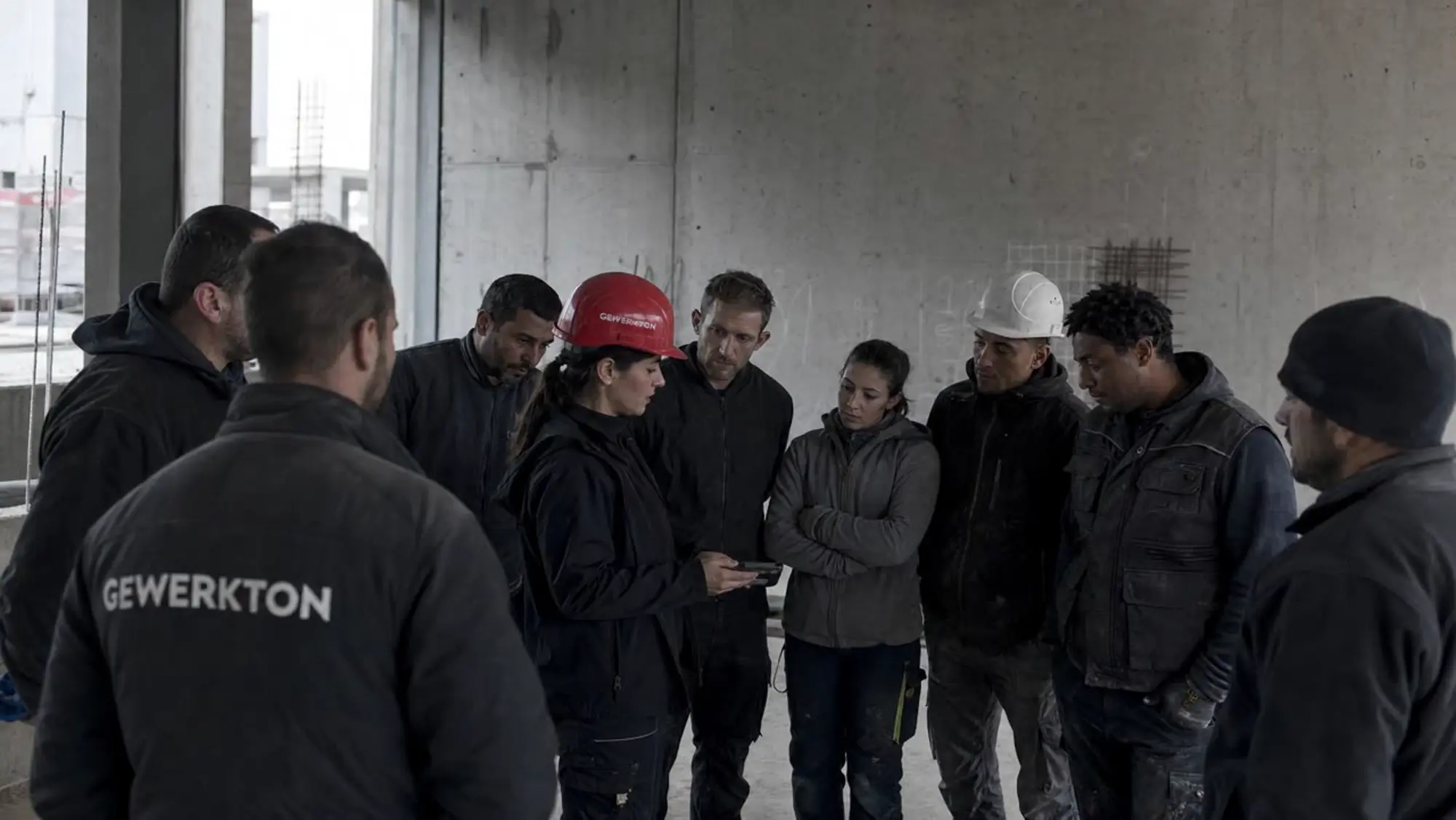
Gewerkton Field is the construction-site application. It takes dictation and turns it into evidence, defects, daywork reports and takt information, with a portal for the associated workflows. The focus is on capture at the point where work is taking place, rather than reconstructing the record later from disconnected notes.
That field-first approach is particularly relevant when a site team needs to document a defect with a photograph and deadline, dictate a daywork report or collect a signature on the device available at handover. For distributed projects, Field also supports offline capture in dead zones, allowing crews to record information where reliable connectivity cannot be assumed.
Gewerkton Studio is the browser workspace for plans and models. Where a model already exists, the workspace provides the environment in which it can be used. Where no model exists, the site team can create one directly in the browser. That gives the platform a route into projects that do not begin with the same level of digital preparation.
Gewerkton Cloud handles operations and the coordination of model and project data between Field, Studio and third parties. It is the connecting layer in the product family rather than a separate brand or unrelated service.
Together, the three lines describe a flow from on-site capture to plan or model work and then into broader operational coordination. The scope is ambitious, but the release status remains straightforward: Gewerkton is in beta, and the public beta is planned for fall 2026.
German commercial integration, global deployment
Gewerkton’s deepest commercial integration is in Germany, where it works with GAEB, REB, XRechnung and DATEV. Those connections reflect the market in which the platform originated. They are paired with a broader global strategy built around 27 content languages and selectable AI infrastructure.
The multilingual capability is intended for the project material itself, not merely the surrounding website. Cross-border teams in the EU, US and APAC can work on the same project in their own languages while the original evidence remains unambiguous. On projects in Asia, that includes workflows involving Chinese, Korean and Vietnamese crews, from initial capture through to the report.
The AI layer follows a bring-your-own-AI model. Gewerkton supports 13 AI providers, allows organisations to bring their own keys and lets them select a region across the EU, US and Asia, including mainland China. The stated aim is to avoid vendor lock-in while giving project teams a choice over the provider and region used for AI processing.

Data residency is similarly presented as a choice: customers can use an EU cloud or their own infrastructure. For multinational work, the combination of content language, provider region and deployment location gives teams several separate decisions rather than binding all three to a single vendor arrangement.
Built around demanding project environments
The deployment fields identified for Gewerkton range from housing to complex infrastructure. Wind farms and renewable-energy projects bring distributed sites, rotating crews and field-acceptance work, often in places where connectivity disappears. Offline capture is central in those dead zones because a voice-first workflow is only useful if the record can begin where the work happens.
Data centres and industrial plants create a different coordination problem. Many trades can be working in parallel against tight deadlines. Gewerkton is designed to turn decisions made in meetings into task lists sorted by trade, connecting spoken project decisions with the teams responsible for carrying them out.
In housing and general building construction, the emphasis is on routine but consequential records: a defect paired with a photograph and deadline, a daywork report dictated on site, and a signature captured on the available device during handover. These are familiar activities, but the platform’s approach is to pull them into the same voice-led documentation structure.
Infrastructure and tunnel projects add long durations, repeated change orders and a continuing need to establish what instruction was given. Here, instructions can be backed by the original audio. That preserves the source alongside the processed project record instead of leaving only a later transcription or summary.
Across these fields, Gewerkton is not limited to one construction scale or one type of crew. Its stated use cases span wind farms, data centres, industrial plants, housing, building construction, tunnels and cross-border projects. The common factor is the need to capture evidence close to the work and coordinate it across people, systems and locations.
A solo founder and a fleet of coding agents
The development model is unusual. Gewerkton is being built by a solo founder directing a fleet of coding agents using Codex and Claude. In one night, that fleet shipped 21 software packages. The packages were verified with negative controls and mutation tests, bringing explicit checks into a development process built around agent-driven output.
That fact says more about how the platform is being produced than about its readiness for general use. Shipping packages quickly is not the same as completing a public release, and Gewerkton’s own timeline still places the product in beta today. The public beta planned for fall 2026 will be the next stated milestone.
A tracker-free front door
The platform’s global and regional choices also extend to its public-facing presence. The Gewerkton website is available in 27 languages and runs with zero trackers. It has no cookie banner because the site does not use trackers, and its architecture is fully egress-free.
Gewerkton has also produced a media bank containing more than 51 self-produced clips and posters. That material supports the introduction of a product whose scope crosses field capture, browser-based model work, cloud coordination and multilingual construction operations.
What is available now, and what remains ahead
What exists now is the beta platform organised around Field, Studio and Cloud. Field covers voice-first site capture for evidence, defects, daywork reports, takt and portal workflows. Studio provides the browser environment for plans and models, including the ability for site teams to create a model when one does not exist. Cloud coordinates operations and model or project data between those products and third parties.
The platform also has its defined integration and infrastructure framework: GAEB, REB, XRechnung and DATEV for its deepest German commercial integration; 27 content languages; 13 bring-your-own-AI providers; selectable EU, US and Asian regions, including mainland China; and a choice between an EU cloud and an organisation’s own infrastructure.
What remains in beta is the product as a whole. Gewerkton has not crossed into general public release, and its public beta is planned for fall 2026. For now, it should be viewed as a clearly structured but still developing construction platform—one built around voice, original evidence and coordination across the site, browser and cloud.