
TL;DR

Get the latest gadgets delivered free with Prime
- Fast, free delivery on millions of items
- Prime Video, Amazon Music and more included
- Member-only deals all year
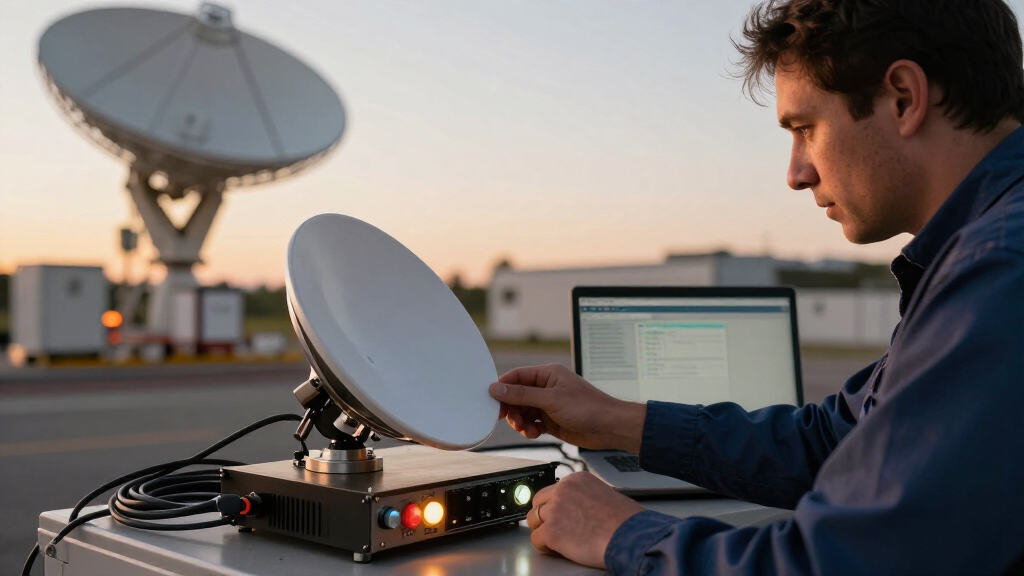
WISeSat.Space says it is developing an architecture to bring post-quantum cryptography, digital identity and key management to satellite communications and connected devices. The company plans to use SEALSQ platforms supporting NIST-standardized algorithms, but it has not said that its current satellite network already uses this architecture.
WISeSat.Space says it is developing a security architecture that would apply post-quantum cryptography, digital identity and cryptographic key management across connected devices, ground infrastructure and future satellite platforms. The plan matters to customers seeking long-term protection for satellite communications, but the company described the work as development and planned deployment—not a security upgrade already installed across its network.
The company plans to draw on SEALSQ’s QS7001 and QVault TPM platforms, which support NIST-standardized algorithms ML-KEM and ML-DSA. ML-KEM is used to establish shared cryptographic secrets; ML-DSA is a digital-signature algorithm used to check authenticity and integrity. WISeSat.Space says the architecture is intended to protect communications, identities and satellite operations against conventional cyberattacks as well as future threats from quantum computing.
WISeSat.Space reports access to nine active low-Earth-orbit satellites and ground stations in Lausanne, Switzerland, and La Línea de la Concepción, Spain. It is developing a project called the Quantum Spatial Orbital Cloud. Its longer-term roadmap targets a 100-satellite sovereign constellation by 2033, conditional on financing, technical development, regulatory approvals and launch availability.
The announcement follows the company’s October 2026 business combination and Nasdaq listing. WISeSat.Space also said it closed a $10 million private investment in public equity led by SEALSQ to accelerate development of its quantum-resilient space architecture. The announcement does not specify how much of that funding is allocated to particular systems or deployment milestones.
Security Across Satellite Networks
Satellite links can connect remote facilities and infrastructure beyond the reach of terrestrial networks, while supporting government communications, emergency response and monitoring of energy, water and transport systems. Security failures in those links could affect the confidentiality or reliability of communications and operational data. WISeSat.Space’s proposal seeks to address that risk by linking cryptographic protection with device identities and key management, rather than treating encryption as a feature of a satellite alone.
Post-quantum algorithms are designed to resist attacks from quantum computers, which could threaten some cryptographic methods in use today. Planning a migration before such systems become practical can matter where data must remain protected for many years. However, adopting algorithms with NIST standards is only one part of the work: the company’s source material notes that end-to-end security also depends on implementation, integration and operation. No independent testing results or customer deployments were included in the announcement.
post-quantum cryptography satellite security
As an affiliate, we earn on qualifying purchases.
As an affiliate, we earn on qualifying purchases.
NIST Standards and Migration Dates
WISeSat.Space linked its strategy to U.S. Executive Order 14412, which the company says was issued on June 22, 2026, and directs migration of federal information systems to NIST-approved post-quantum cryptography. The order sets objectives for federal high-value assets and high-impact systems, excluding National Security Systems: post-quantum key establishment by December 31, 2030, and post-quantum digital signatures by December 31, 2031. It also calls for proposed federal procurement requirements addressing applicable NIST standards.
The company says its plans are intended to support those migration objectives. It also acknowledges that regulatory alignment and compliance must be assessed for each implementation, including relevant standards, cryptographic module validation requirements and customer procurement conditions. The announcement does not establish that the architecture is certified or compliant for any specific government use.
“Security is a core differentiator in our strategy to build a satellite communications business serving governments, enterprises and critical infrastructure operators.”
— Carlos Moreira, WISeSat.Space founder and CEO
quantum-resistant satellite communication devices
As an affiliate, we earn on qualifying purchases.
As an affiliate, we earn on qualifying purchases.
Deployment and Compliance Still Pending
Important implementation details remain undisclosed. WISeSat.Space has not provided a schedule for bringing the architecture into service, identified which satellites or customer systems would receive it first, or reported independent security testing. Its announcement explicitly says planned integration does not mean every satellite it can access already carries the same post-quantum hardware.
The 100-satellite target is a roadmap, not a confirmed deployment commitment: it depends on funding, technical progress, approvals and launch availability. The source material also does not establish that the company’s systems have completed regulatory review or cryptographic module validation. Whether particular customers can use the architecture for sensitive communications will depend on implementation-specific requirements.
NIST-standardized cryptographic modules for satellite
As an affiliate, we earn on qualifying purchases.
As an affiliate, we earn on qualifying purchases.
Milestones for the Security Architecture
The next meaningful developments would be details about planned deployments, technical integration and testing, along with any customer or operational use. WISeSat.Space has not announced dates for those milestones in the material available. Progress toward the broader constellation plan will also depend on financing, regulatory approvals, engineering work and launch access.
For prospective government and infrastructure customers, the relevant questions will include which systems use the standardized algorithms, how keys and identities are managed, and what compliance evidence is available for each implementation. The company’s plans can be evaluated more concretely when it reports deployment status and results against those requirements.
As an affiliate, we earn on qualifying purchases.
Key Questions
What did WISeSat.Space announce?
It outlined development of a satellite and IoT security architecture combining post-quantum cryptography, digital identity and key management across devices, ground infrastructure and future satellite platforms.
Is post-quantum security already installed on its satellites?
The announcement does not say that. WISeSat.Space says integration is being advanced through planned deployments and cautions that its current satellite access does not mean every satellite has the same post-quantum hardware.
Which algorithms are part of the plan?
The company plans to draw on SEALSQ platforms supporting ML-KEM for establishing shared secrets and ML-DSA for digital signatures. Both are NIST-standardized algorithms, according to the announcement.
How large is the planned constellation?
WISeSat.Space targets a 100-satellite sovereign constellation by 2033. The target is conditional on financing, technical development, regulatory approvals and launch availability.
Does the announcement confirm regulatory compliance?
No. The company says compliance must be assessed for individual implementations against applicable standards, validation requirements and customer procurement conditions.
Source: rss
Columbus Day / Indigenous Peoples' Day Picks
long weekend sales
As an affiliate, we earn on qualifying purchases.