
🔍 Read the full analysis: Which Of These 9 Best WiFi 7 Routers Fits Your AI Needs? on ThorstenMeyerAI.com

Get the latest gadgets delivered free with Prime
- Fast, free delivery on millions of items
- Prime Video, Amazon Music and more included
- Member-only deals all year
TL;DR
ThorstenMeyerAI.com’s guide compares nine WiFi 7 routers and names the TP-Link Archer BE600 its pick for most households, the ASUS ROG Rapture GT-BE98 Pro for high-demand gaming, and the TP-Link Deco BE25 for mesh coverage. These are the guide’s assessments, not independently verified test results; the supplied material does not include prices, measured speeds or a full model-by-model test table.
ThorstenMeyerAI.com has published a guide to nine WiFi 7 routers, recommending the TP-Link Archer BE600 for most households, the ASUS ROG Rapture GT-BE98 Pro for heavy gaming and device loads, and the TP-Link Deco BE25 for larger homes needing mesh coverage. The rankings are editorial recommendations: the supplied source material does not provide independent benchmark data or a complete table of all nine models.
The guide says its comparisons emphasize throughput consistency, coverage efficiency and ecosystem integration, rather than headline theoretical speeds alone, an approach also relevant to WiFi 7 routers for smart homes. It describes the Archer BE600 as a balance of tri-band capability, ease of use and value, while characterizing the quad-band ROG Rapture GT-BE98 Pro as a more specialized option for demanding networks. No test conditions, prices or measured throughput figures are included in the material provided.
For homes with dead zones or multiple floors, the guide favors the Deco BE25 mesh system over relying on one powerful router, a consideration also covered in this guide to WiFi 6E routers for crowded neighborhoods. Mesh nodes can extend coverage, but the source notes that wireless backhaul performance depends on placement and that multi-node systems can cost more. Among the other models it discusses, the dual-band Archer BE230 lacks 6 GHz access, while the ASUS RT-BE82U is presented as a gaming-focused alternative. NETGEAR’s Nighthawk RS700S and RS90 are mentioned in connection with single-router coverage and faster wired ports; the Archer BE400 is described as a more limited option for Ethernet speeds.
The 9 picks
- 1
 ASUS ROG Rapture GT-BE98 Pro Quad-Band WiFi 7 Gaming RouterView on Amazon →
- 2
 NETGEAR Nighthawk WiFi 7 Router RS700S, Up to 3,500 sq ft, 19 GbpsView on Amazon →
- 3
 NETGEAR Nighthawk WiFi 7 Router, Up to 2,500 sq ft, 9.3 GbpsView on Amazon →
- 4
 Deco 7 Dual-Band BE5000 WiFi 7 Mesh Wi-Fi System 4-Stream 5 Gbps, 240 MHzView on Amazon →
- 5
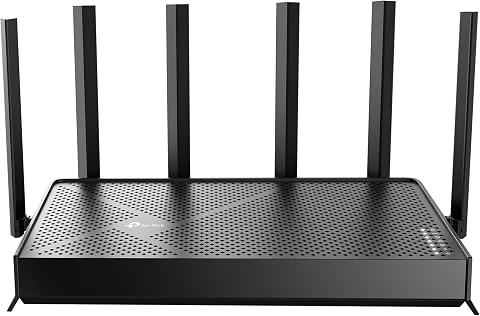 TP-Link Tri-Band BE9700 WiFi 7 Router (Archer BE600)View on Amazon →
- 6
 ASUS RT-BE82U Dual-Band Wi-Fi 7 RouterView on Amazon →
- 7
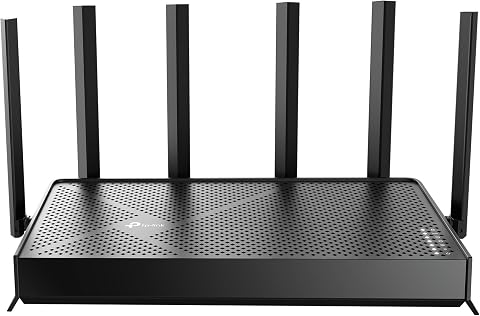 TP-Link BE6500 Dual-Band WiFi 7 Router (BE400)View on Amazon →
- 8
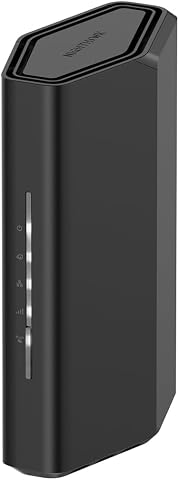 NETGEAR Nighthawk WiFi 7 Router RS90, Up to 2,000 sq ft, 3.6 GbpsView on Amazon →
- 9
 TP-Link Dual-Band Wi-Fi 7 Router, Archer BE230View on Amazon →
Matching Router Design to Home Needs
The guide’s central point is that choosing a router means balancing coverage, device capacity and wired connections, not simply buying the model with the biggest WiFi 7 label. A dual-band router may suit a smaller network, while households with many active devices may benefit from access to the 6 GHz band on tri-band models. Large or multi-story homes may need mesh nodes even when a standalone router offers higher peak speeds near the device.
Wired ports also matter for people paying for fast broadband or connecting a desktop computer or network storage device. The source advises checking for 2.5-gigabit or 10-gigabit Ethernet where those links are needed. These recommendations can help readers narrow their choices, but they do not establish that a particular model will deliver a given speed in every home.
Products Worth Considering

Apple AirPods Pro 3 Wireless Earbuds with Active Noise Cancellation

LG UltraGear 27GX704A-B 27-inch QHD OLED Gaming Monitor

LG UltraGear 34GX90SA-W 34-inch WQHD Curved OLED Gaming Monitor
As an affiliate, we earn on qualifying purchases.
What WiFi 7 Adds to the Choice
WiFi 7 introduces features including 320 MHz channels, Multi-Link Operation (MLO) and 4096-QAM. The guide cautions that compatible client devices are needed to benefit from these features; older phones and computers can still connect, but will not use WiFi 7-specific capabilities. Actual results also depend on a home’s layout, interference, broadband plan and the router’s wired connections.
The source frames the move from WiFi 6E as a purchase decision rather than a guarantee of faster service for every household. In particular, users whose devices mostly support older WiFi generations may see less benefit from an upgrade. The supplied text identifies nine models as the subject of the guide, but does not name or evaluate every model in the ranking.
““My top pick for most households is the TP-Link Archer BE600.””
— ThorstenMeyerAI.com guide
Missing Test Data Limits Comparisons
The source material does not provide measured speeds, test locations, device lists, prices or a complete ranking of all nine routers. Its descriptions of coverage, latency, value and performance are therefore editorial judgments that cannot be checked against results included here. It also does not specify the guide’s publication date.
The precise benefits a buyer would see remain dependent on equipment and conditions: compatible WiFi 7 clients, broadband speed, walls and floors, interference, and node placement. The supplied text names only a subset of the nine picks, so the identities and relative strengths of the other models are not confirmed in this account.
Check the Full Model-by-Model Review
Readers considering a purchase should consult the complete guide for the full list of nine routers and check current retailer listings for prices and port configurations. Before upgrading, they can compare their home’s floor plan and client-device support with the guide’s recommendations, then verify whether a mesh system or a single router better fits their coverage needs.
No further testing or update is specified in the supplied source. The guide’s recommendations should be treated as a starting point until full test methods and comparable performance data are available.
Key Questions
Which router does the guide recommend for most households?
ThorstenMeyerAI.com names the TP-Link Archer BE600 as its general recommendation, citing a balance of tri-band capability, usability and value. The supplied material does not include measured test results or pricing to independently assess that ranking.
Which model is recommended for a large or multi-story home?
The guide points to the TP-Link Deco BE25 mesh system for extending coverage across larger homes. Results can depend on node placement, the building layout and whether the nodes use a wired or wireless connection between them.
Do older devices benefit from a WiFi 7 router?
Older WiFi devices can connect, but they cannot use WiFi 7-specific features such as MLO or 320 MHz channels unless they support them. The guide says the upgrade may offer less benefit when most household devices use older WiFi generations.
What should buyers check besides wireless features?
Check the router’s Ethernet port speeds against your broadband plan and wired-device needs. The guide recommends considering 2.5G or 10G ports for multi-gigabit connections, and weighing those requirements against the router’s cost.
Source: ThorstenMeyerAI.com