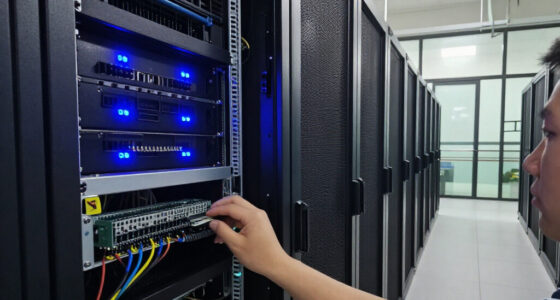

🔍 Read the full analysis: OpenAI Could Use Google TPUs. Does That Put Nvidia’s Lead In Question? on ThorstenMeyerAI.com

Get the latest gadgets delivered free with Prime
- Fast, free delivery on millions of items
- Prime Video, Amazon Music and more included
- Member-only deals all year
TL;DR
The Information and Bloomberg reported that OpenAI plans to buy Google’s TPUs, citing one person familiar with the matter. OpenAI and Google have not confirmed a deal, and its price, scale and timing are unknown. If it proceeds, the purchase would add another supplier to OpenAI’s already broad chip portfolio and could strengthen its negotiating position with Nvidia.
OpenAI is reportedly planning to buy Google’s tensor processing units (TPUs), according to reports published by The Information on October 27 and Bloomberg on October 28. Neither company has confirmed a deal, but if it goes ahead, the purchase would add another chip option for one of the world’s largest AI developers and could give it more leverage in talks with Nvidia.
The Information and Bloomberg each cited one person familiar with the matter. The Information’s report was relayed by Reuters, which said financial terms and other details could not be learned. Bloomberg also reported that final terms were not known. OpenAI declined to comment, while Google did not comment, according to the source material.
There is evidence OpenAI is working on TPU technology, but it does not confirm a purchase. An OpenAI careers listing posted October 20 sought a software engineer to work on TPU compilers and optimize the company’s frontier models for the chips. The listing indicates technical preparation; it is not an order or proof that OpenAI has committed to deploying TPUs at scale.
Google, meanwhile, has begun offering TPU systems beyond its own data centers. The company said on its October 28 earnings call that nearly 100 customers use TPUs, naming Anthropic and Apple, and announced partnerships with Oracle and Crux AI. Oracle plans to offer Google TPUs through its cloud from 2027. Google has also said it began delivering TPU systems to selected customers’ own data centers during the second quarter.
Infographic 01 · Reported, documented, confirmed
OpenAI and Google’s TPUs: what we actually know
The purchase itself is a report. The pieces around it, Google selling its chips and OpenAI hiring for them, are on the record.
- OpenAI plans to buy Google’s AI chipsReported
The Information, 27 October; Bloomberg, 28 October. Each cites one person familiar with the matter. OpenAI declined to comment; Google did not comment.
- OpenAI is hiring to optimize its frontier models on TPUsPrimary document
“Software Engineer, TPU Compilers”, posted on OpenAI’s careers page on 20 October 2026. A sign of serious work, not a purchase order.
- Google sells TPU systems into customers’ own data centersConfirmed
Announced on 29 April, first deliveries in the second quarter, “a meaningful revenue ramp in 2027” (Alphabet’s CFO, 28 October).
- Oracle will offer Google TPUs in its cloudConfirmed
The first cloud outside Google to do so. Available in calendar year 2027, ramping over several years.
- Price, number of chips, TPU generation, delivery dates, locationNot known
Nothing published. Not even whether the chips would sit in Google’s data centers, OpenAI’s or a partner’s.
How OpenAI and Google got here
- Jun 2025OpenAI rents Google TPUs, calls it early testingReuters: no active plans to deploy them at scale
- 29 Apr 2026Google: TPUs for customers’ own data centersAlphabet Q1 earnings call
- 20 Oct 2026OpenAI posts a TPU compiler jobOpenAI careers page
- 21 Oct 2026OpenAI models coming to Google CloudOpenAI announcement, as reported by Reuters
- 27 Oct 2026The Information reports the purchase plan; Oracle announces TPUsReported · Oracle press release
- 28 Oct 2026Bloomberg reports it too; Alphabet’s call does not mention OpenAIReported · Alphabet Q3 call
“Reported” means the outlets’ own reporting, which I could read only in part (paywalls). “Confirmed” means the company’s own statement or filing.
Sources: The Information via Reuters, 27 Oct 2026, Bloomberg, 28 Oct 2026, as cited by The Asia Business Daily, OpenAI careers, posted 20 Oct 2026, Reuters, 30 Jun 2025, Alphabet Q1 call, 29 Apr 2026, Q3 call, 28 Oct 2026, Oracle, 27 Oct 2026.
Powered by Thorsten Meyer AI
More Chips, More Negotiating Leverage
If the reported purchase proceeds, its immediate importance may be less about replacing Nvidia than about giving OpenAI another source of computing capacity. Access to different chip suppliers can help a large buyer manage demand, supply constraints and costs. It may also improve OpenAI’s hand when negotiating prices or delivery schedules with vendors, including Nvidia.
That would matter across the AI market because building and running models requires large amounts of specialized computing. More competition among chip suppliers could create additional options for cloud providers and AI companies. But the report does not establish that Google’s chips will be cheaper, faster or available in enough volume to change market conditions. No effect on ChatGPT’s price or speed has been announced, and there is no indication that users’ experience changes now.
The potential deal also has a distinct competitive dimension: Google is not just a chip supplier but a rival in AI products. OpenAI already said on October 21 that it would make its frontier models available through Google Cloud. A commercial relationship around TPUs would add another point of overlap between companies that compete for customers while also doing business with each other.
Products Worth Considering

Logitech MX Mechanical Wireless Illuminated Keyboard, Tactile Quiet, Graphite

Logitech MX Keys S Wireless Keyboard, Graphite

Samsung 32-inch Odyssey OLED G8 (G80SH) 4K QD-OLED Gaming Monitor
As an affiliate, we earn on qualifying purchases.
OpenAI’s Supplier Mix Is Expanding
The suggestion that Google would be OpenAI’s first move away from Nvidia is inaccurate. OpenAI has announced several non-Nvidia chip arrangements. The source material lists agreements or commitments involving AMD, Broadcom, Cerebras and Amazon, alongside Nvidia. The reported Google plan would add a further supplier, not mark the start of diversification.
Those arrangements are described using different measures and should not be treated as directly comparable capacity already in use. OpenAI’s 2025 letter of intent with Nvidia referred to 10 gigawatts; its announced arrangement with AMD referred to 6 gigawatts, and its Broadcom deal to 10 gigawatts of custom chips. The source also lists 750 megawatts with Cerebras and about 2 gigawatts of Amazon Trainium. These figures describe announced plans or commitments, not proof that all the chips have been delivered or deployed.
OpenAI has had some contact with Google TPUs before. Reuters reported in June 2025 that OpenAI had begun renting them through Google Cloud. OpenAI told Reuters at the time that it was in early testing and had no active plans to deploy them at scale. Testing, cloud access and a possible purchase are different stages; the earlier report does not verify the newly reported buying plan.
“As TPU demand grows from AI labs, capital markets firms, and high performance computing applications, we will begin to deliver TPUs to a select group of customers in their own data centers in a hardware configuration.”
— Sundar Pichai, Google chief executive, on the company’s April 29, 2026 earnings call
Deal Terms Remain Unconfirmed
No purchase agreement has been confirmed by either company. The reports cite one person familiar with the matter, and the source material says the companies did not disclose whether discussions have reached a final agreement. The number and generation of TPUs, any price, delivery dates and the intended scale of use are all unknown.
It is also unclear where any chips would operate: in Google’s data centers, at OpenAI facilities or through a cloud partner such as Oracle. The reporting does not establish whether OpenAI would buy hardware outright, how much computing work might move to TPUs, or whether the reported plan has changed since the stories were published. The job listing supports the conclusion that OpenAI is developing TPU expertise, but it does not resolve those commercial questions.
Watch for a Confirmed Agreement
The next meaningful update would be confirmation from OpenAI or Google, or a filing or announcement that provides terms, scale or timing. Until then, the reports should be treated as a reported plan, not a completed purchase. Oracle’s expected TPU cloud offering from 2027 is a separate development and does not confirm that OpenAI will use its service.
For customers and ChatGPT users, the practical effects depend on whether OpenAI secures the chips, how much capacity it obtains and when it becomes available. The source material says most of the broader chip arrangements are expected in 2027 or later. There is no announced change to ChatGPT today; pricing, performance and availability implications remain unknown.
Key Questions
Has OpenAI confirmed it will buy Google TPUs?
No. The Information and Bloomberg reported a plan, each citing one person familiar with the matter. OpenAI declined to comment and Google did not confirm a deal.
Does this mean OpenAI is leaving Nvidia?
No. OpenAI has announced arrangements with Nvidia and other chip suppliers. A possible Google purchase would add another option; there is no confirmed information that OpenAI is replacing Nvidia.
What are Google TPUs?
TPUs, or tensor processing units, are chips designed by Google for AI computing. Google has historically used them in its own data centers and is now making TPU systems available to selected outside customers.
Could this change ChatGPT’s price or performance?
There is no confirmed information about an effect on ChatGPT. The reports do not specify the number of chips, their delivery date or how much work OpenAI might run on them. No user-facing change has been announced.
Source: ThorstenMeyerAI.com