🔍 Read the full analysis: How To Think About Long Prompts And LLM Context on ThorstenMeyerAI.com

Get the latest gadgets delivered free with Prime
- Fast, free delivery on millions of items
- Prime Video, Amazon Music and more included
- Member-only deals all year
TL;DR
A Nov. 22, 2026, explainer from ThorstenMeyerAI.com says million-token context windows do not mean a model uses every part of a long prompt equally well. Longer prompts can increase processing time and cost, while research cited in the article found weaker performance when relevant information appeared in the middle of a document.
ThorstenMeyerAI.com published an explainer on Nov. 22 arguing that the million-token context windows advertised for leading language models do not guarantee reliable use of every detail in a long prompt. The article says larger windows can also bring higher processing costs and longer waits, making the distinction important for anyone using chatbots to analyze long documents.
The explainer describes a context window as the model’s working memory: the instructions, current question, chat history, attached documents and generated answer all occupy space in it. If a conversation exceeds the available window, some information must be left out or otherwise handled. The source lists Claude models and Google’s Gemini 4 models at about one million tokens as of Nov. 22, 2026. It lists OpenAI’s GPT-6.2 Astra and Sol at 1,050,000 tokens, with up to 922,000 for input. Those are figures reported by the source from vendor pages; they are not a measure of how accurately a model retrieves every detail.
The article also explains that models process text as tokens rather than ordinary words, and that the token count depends on the model’s tokenizer. It says Anthropic’s pricing page describes its newer tokenizer as producing approximately 30% more tokens for the same text than its previous one. That difference can affect how much material fits into a window and, where billing is token-based, what a prompt costs.
For standard full attention, each token is compared with other tokens in the sequence. The explainer cites the Transformer paper’s quadratic scaling: in simplified terms, doubling sequence length can mean roughly four times the attention work. It contrasts that with sliding-window attention, which limits each token’s view to nearby tokens and can scale more gradually, while also limiting which distant text is directly considered.
Long Prompts Bring Cost and Recall Trade-offs
For people asking a model to review contracts, reports or other large files, a high token limit can make it possible to submit more source material at once. But the explainer cautions against treating capacity as comprehension: fitting a document into the window does not show that the model will find or correctly use every relevant passage.
The article cites the “Lost in the Middle” study as an example of uneven recall. In the reported test, GPT-3.5-Turbo answered correctly 75.8% of the time when the key document came first, compared with 53.8% when it appeared in the middle. Its reported score with no documents was 56.1%. These are results from that particular study and task, not a general accuracy estimate for all models or document questions.
Long prompts also have practical costs. According to the source, users may pay for tokens each time they are sent, and some vendors charge higher rates above a threshold. The model may also need more time to process a larger input. Prompt size, placement of key evidence and pricing rules can therefore matter alongside the headline context limit.
Products Worth Considering
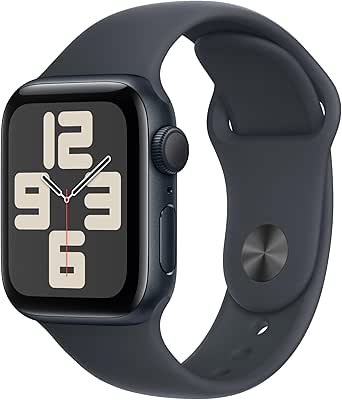
Apple Watch SE (2nd Generation) GPS 40mm Smartwatch with Midnight Aluminum Case and Midnight Sport Band (S/M)

Samsung 27-Inch Odyssey G5 QHD Gaming Monitor (G51F)

LG UltraGear 27GX700A-B 27-Inch QHD OLED Gaming Monitor
As an affiliate, we earn on qualifying purchases.
From Training Windows to Chat Memory
The explainer links today’s context windows to how language models are trained. It cites the GPT-3 paper, which says training used sequences of the full 2,048-token context window, packing shorter documents together and splitting longer ones. At each position, the model learned to predict the next token without seeing tokens that came later in the sequence.
That training setup and a chatbot’s context limit are related ideas, but they are not the same thing. In use, the window must accommodate both the material supplied to the model and the response it generates. The source presents a rapid expansion in listed limits: GPT-3 had 2,048 tokens in 2020, while several models it names in 2026 advertise around one million. The figures are a snapshot from vendor materials checked by ThorstenMeyerAI.com on Nov. 22, 2026.
The article also introduces the KV cache as a way to retain calculations for earlier tokens while a model generates a response, rather than repeating that work for each new token. The source characterizes the cache as growing as tokens are added. It says vendors may reduce charges for repeated prompts through caching, though the precise effects depend on each provider’s implementation and pricing.
“During training we always train on sequences of the full nctx = 2048 token context window, packing multiple documents into a single sequence when documents are shorter than 2048.”
— GPT-3 paper by Brown and colleagues, as quoted in the explainer
Capacity Does Not Settle Recall
The cited benchmark does not establish how every current model handles long documents. The source reports one study’s results for GPT-3.5-Turbo, but gives no comparable placement test for the 2026 models it lists. It is therefore unclear from this material how much their performance varies with document length, where a relevant passage appears, or the kind of question asked.
The article’s cost and timing observations also depend on provider-specific details. It does not give a consistent price comparison across the named models or measured response times for prompts of different sizes. Listed context limits can vary by model, product and input/output allowance, and the source’s figures are a date-stamped snapshot rather than a guarantee of current availability.
Check Limits, Pricing and Evidence
The source does not announce a new model release or a scheduled test; it is the second installment in a seven-part explainer series. For readers applying its findings, the next step is to check the current model documentation and pricing before sending a large prompt, including input and output limits, any higher-rate thresholds and whether repeated material can be cached.
For document analysis, users can also verify important answers against the cited passage rather than relying on the context-window number alone. Further comparisons of long-context accuracy across current models, document positions and task types would help clarify how well advertised capacity translates into dependable retrieval. The explainer says its listed figures were checked on Nov. 22, 2026; later vendor changes may alter them.
Key Questions
What does an LLM context window include?
It includes the text the model can reference while generating a response, such as instructions, the prompt, chat history, attached documents and the response itself. The available space is measured in tokens.
Does a one-million-token window mean a model can reliably use a million tokens?
No. The window describes how much text can fit within the model’s working context; it does not establish that the model will locate and use every detail accurately. The explainer cites research showing that, in one test, answer accuracy changed depending on where relevant information appeared.
Why can longer prompts cost more?
Prompts are processed as tokens, and the source says users may be charged per token each time material is sent. It also notes that some providers charge higher rates above a threshold. Exact charges vary by provider and model.
What is the KV cache?
The explainer describes it as stored information from earlier tokens that helps a model avoid repeating calculations while generating an answer. It says the cache grows as tokens are added; how that affects cost or performance depends on the provider.
Source: ThorstenMeyerAI.com