TL;DR
Delta Gold Technologies has launched a dedicated quantum sensing program, funding new equipment at Penn State and the University of Toronto. The research will test gold nanoclusters for magnetic sensing, including a possible role in navigation without GPS; no working navigation system or commercial product has been announced.
Delta Gold Technologies has launched a dedicated quantum sensing program, funding equipment at Penn State and the University of Toronto to test gold nanoclusters for magnetic sensing. The work will examine whether the material could eventually support GPS-free navigation, while the company’s longer-term quantum computing research continues.

Get the latest gadgets delivered free with Prime
- Fast, free delivery on millions of items
- Prime Video, Amazon Music and more included
- Member-only deals all year
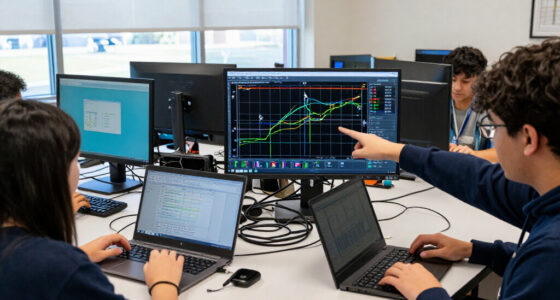
At Penn State, a US$500,000 magnetic-field instrument will be funded through the university’s existing six-year, US$6 million sponsored research program. The instrument is designed to produce controlled, changing three-dimensional magnetic fields, allowing researchers to study how the gold nanoclusters respond. Navigation is a primary target for the experiments, but the source report describes this as research to test the material, not as a completed navigation technology.
At the University of Toronto, a C$500,000 budget amendment will fund atomic-layer fabrication and microscopy equipment for sensing-device research. Delta Gold says the amendment will be covered by funds it has already transferred. The company’s total commitment under the Toronto agreement remains C$3 million, with C$2 million paid, according to the report.
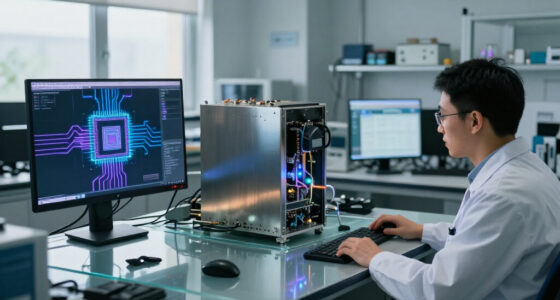
The two research groups are set to pursue sensing work together. The program builds on separate approaches to gold-based quantum materials: Penn State researchers study the clusters optically, while the Toronto group works with thin gold structures and electrical methods. Delta Gold presents sensing as its nearest-term commercial pathway; that is the company’s stated strategy, not evidence that a commercial product or revenue stream is in place.
The research addresses a potential vulnerability in navigation that depends on satellite signals. A sensor capable of reading local variations in Earth’s magnetic field could, in principle, help a vehicle determine its position by comparing those readings with a map, without relying on an external positioning signal. The new equipment is intended to test whether Delta Gold’s material can register relevant magnetic changes; it does not establish that the technology can yet navigate reliably.
The program also gives Delta Gold a nearer-term research goal alongside quantum computing. A sensor can be evaluated against specific measurements before the more complex task of building a quantum computer from the company’s materials. The report says Delta Gold expects sensing and communications research to support, rather than replace, its computing work. Potential uses cited by the company include medical imaging, mineral exploration and battery diagnostics, but each would require further testing and engineering.
Products Worth Considering

Amazon Kindle Scribe (16GB) with Premium Pen, Tungsten

DJI Mini 5 Pro Fly More Combo with DJI RC 2, 1-Inch CMOS

LG UltraGear 27-inch QHD OLED Gaming Monitor, 240Hz, 0.03ms, G-SYNC Compatible, FreeSync Premium Pro, HDR True Black 400
As an affiliate, we earn on qualifying purchases.
Two University Research Tracks
Delta Gold’s work centers on gold nanoclusters and related gold structures. At Penn State, Professor Kenneth Knappenberger’s group studies optical properties and spin states in the clusters. The source report says the group has recorded roughly 40% spin-polarised photon emission and produced the material at gram scale under standard laboratory conditions. Those reported results are research milestones, not proof of sensing performance in a deployed device.
At Toronto, Professor Harry Ruda’s group is developing atomically thin planar gold structures and studying their spin states through circuitry. The equipment budget amendment adds fabrication and microscopy capacity for that line of work. The teams’ differing methods form the research base for the new sensing program, while Penn State’s existing research agreement also includes quantum communications experiments.
“Quantum sensing is the company’s “nearest-term commercial pathway” for its gold nanocluster technology.”
— Delta Gold Technologies, as described in The Quantum Insider report
Performance and Commercial Timing
The source report does not give a timetable for completing the new experiments or specify performance thresholds the nanoclusters must meet. It also does not report a working GPS-free navigation system, field tests, a product release date or commercial agreements. Whether the material can detect magnetic variations with sufficient stability, sensitivity and compactness for use outside a laboratory remains to be established.
The full scope and schedule for the joint sensing work are not detailed. Potential applications beyond navigation—including medical imaging, mineral exploration and battery diagnostics—are identified as possibilities, not validated uses. The relationship between future sensing results and the company’s longer-term quantum computing plans will depend on research outcomes.
Experiments Set the Next Milestone
The immediate next step is for the Penn State team to use the new instrument to expose the nanoclusters to controlled magnetic-field changes and measure their responses. The University of Toronto’s fabrication and microscopy equipment is intended to support development and examination of sensing devices. The report does not state when the equipment will be installed or when results are expected.
Evidence of repeatable sensing performance would help clarify whether the material can advance toward navigation or other applications. Until those results are reported, the program remains a funded research effort, and Delta Gold’s description of sensing as its nearest-term commercial route should be understood as a company position rather than a confirmed commercialization schedule.
Key Questions
What has Delta Gold announced?
It has launched a dedicated quantum sensing program and allocated funding for research equipment at Penn State and the University of Toronto.
How much funding is going to the universities?
Penn State will receive a US$500,000 instrument funded through an existing research program. Toronto has a C$500,000 budget amendment for fabrication and microscopy equipment, paid from funds Delta Gold says it has already transferred.
Will this replace GPS?
No replacement has been announced. Researchers will test whether the gold nanoclusters can detect magnetic-field changes that might eventually help with GPS-free navigation.
Is Delta Gold selling a quantum sensor?
The report does not identify a commercial sensor or launch date. Delta Gold calls sensing its nearest-term commercial pathway, but the work described is still research and testing.
What remains to be shown?
The teams have yet to report whether the material can deliver reliable, sufficiently sensitive measurements in practical devices. The research schedule and expected results have not been specified.
Source: thequantuminsider.com