

🔍 Read the full analysis: AI Capture Cards For Gamers And Streamers: 10 Options For 2027 on ThorstenMeyerAI.com

Get the latest gadgets delivered free with Prime
- Fast, free delivery on millions of items
- Prime Video, Amazon Music and more included
- Member-only deals all year
TL;DR
This is a buying-guide roundup, not a report of a new product launch or a confirmed 2027 market shift. The source names 10 capture-card options and highlights the Elgato 4K S, Elgato Game Capture Neo and PORTTA DX20R for different setups, while warning that input resolution, capture resolution and passthrough are not interchangeable.
A 10-option capture-card roundup for gamers and streamers identifies the Elgato 4K S as its preferred console-focused pick, while pointing to the Elgato Game Capture Neo for portable setups and the PORTTA DX20R when high-refresh passthrough matters. The source is a buying guide, not an announcement of new hardware, and it says shoppers should compare capture resolution, passthrough, connections and setup needs rather than rely on a “4K” label alone.
The guide evaluates cards by whether they can accept a source signal, send video to a computer for recording or streaming, and pass video to a separate display. It gives the Elgato 4K S the strongest overall recommendation for PS5, Xbox Series X/S and Switch 2 users, but does not provide a full benchmark comparison or detailed test results in the supplied material. The recommendation is the guide’s assessment, not an independently verified performance finding.
Three terms shape the comparison: input resolution is the signal a card accepts; capture resolution is what it sends to a computer; and passthrough is what reaches a connected screen. A device may accept a 4K input but record at 1080p, which can work for a 1080p stream but does not meet a requirement to record in 4K. The source says several USB options advertise 1080p at 60 frames per second while accepting 4K input.
The roundup also cautions that USB 3.0 models can share similar headline claims while differing in loop-out, supported signals and stated recording capabilities. It recommends checking the exact configuration and the computer’s compatibility before purchase. The supplied source names 10 options, but gives full identifying details for only some of them; information about several entries is limited to product type or a broad description.
The 10 picks
- 1
 Elgato 4K S Capture Card for PS5, Xbox Series X/S, and Switch 2View on Amazon →
- 2
 Elgato Game Capture Neo Portable USB Capture Card, 4K60 HDR PassthroughView on Amazon →
- 3
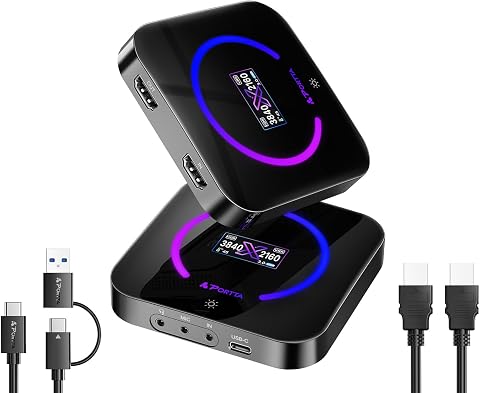 Portta DX20R HDMI Video Capture Card, Stream & Record in 4K 60Hz with Ultra-L…View on Amazon →
- 4
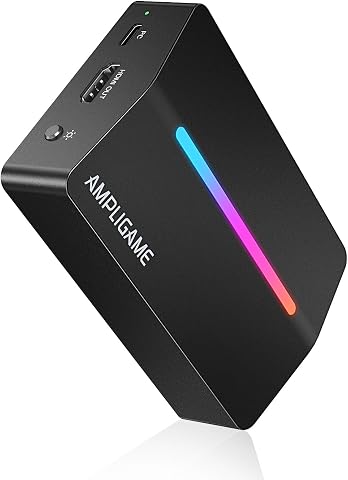 Fifine AmpliGame V3 Video Capture CardView on Amazon →
- 5
 4K HDMI Video Capture Card with Loop-Out, 1080P 60FPS USB 3.0 Streaming Devic…View on Amazon →
- 6
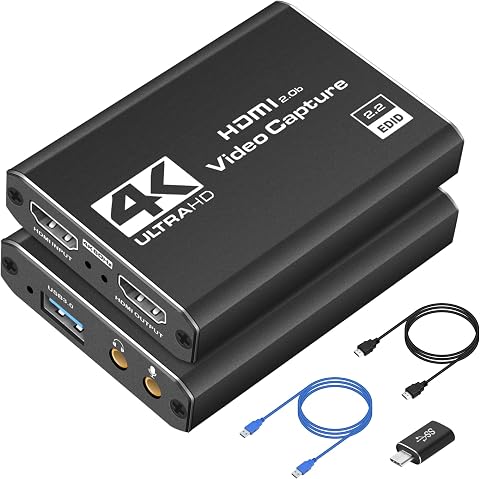 4K HDMI to USB 3.0 Video Capture Card (1080P 60FPS)View on Amazon →
- 7
 UGREEN HDMI to USB 3.0 Video Capture Card, 4K Input, 2K at 30Hz and 1080p at…View on Amazon →
- 8
 USB 3.0 HDMI Video Capture Card, 4K Input, 1080p 60FPS CaptureView on Amazon →
- 9
 4K HDMI Capture Card with 1080p 60fps RecordingView on Amazon →
- 10
 Dobestyou V316 4K HDMI Capture Card with USB 3.0View on Amazon →
Match the Card to Your Display
The choice can affect both the video viewers see and the experience of playing while recording. For console players who use a separate television or monitor, passthrough resolution and refresh rate can matter as much as the stream feed. A card that accepts a high-resolution signal may still send a lower-resolution recording to the computer, so reading only the largest number on a product listing risks buying the wrong tool.
That distinction is relevant to streamers, too: a device suited to a simple 1080p recording job may not be the right fit for 4K capture or a high-refresh display. The guide’s central practical point is to map the whole chain—console or camera, capture card, computer and screen—before choosing. The source does not establish that any model is best for every setup.
Products Worth Considering

Amazon Kindle Scribe Colorsoft 64GB with Premium Pen

Samsung 32 Odyssey G5 QHD Gaming Monitor

Kindle Paperwhite Signature Edition 32GB (2024 Model) – Metallic Black
As an affiliate, we earn on qualifying purchases.
How the Signal Path Shapes Choice
The guide says its ranking weighs use case, stated resolution and frame rate, connection style, platform support, portability, HDR passthrough and loop-out. It favors products with clearer roles over cards whose descriptions offer few distinctions. On that basis, it puts the Elgato 4K S first for console use, the Neo forward for portability, and the PORTTA DX20R for passthrough needs.
Loop-out is a separate feature from capture: it sends the source onward to a display while the card feeds video to a computer. That can let a player use a monitor or television instead of relying on the computer preview. Buyers should also confirm the supported combination of resolution, refresh rate and HDR; one passthrough claim does not automatically establish support for another combination.
“Capture resolution and passthrough are separate jobs.”
— ThorstenMeyerAI.com buying guide
Specifications Still Need Checking
The supplied source does not provide a complete model-by-model specification table, prices, independent test results, or detailed operating-system requirements. It also does not establish whether every product description has been updated for 2027. The roundup’s recommendations should therefore be read as the source’s buying judgments, not as verified comparative measurements.
For several USB 3.0 entries, the source gives overlapping claims but limited differentiating information. Exact capture limits, supported refresh-rate and HDR combinations, and the performance of loop-out may depend on the specific model and signal path. Shoppers should confirm those details with current manufacturer documentation and check that their computer, ports, cables and recording software support the intended setup.
Verify the Full Setup Before Buying
The next step for a buyer is to list the source device, desired recording quality, display requirements and computer connection, then compare those needs with current product specifications. Anyone who requires 4K recording should confirm the capture resolution itself; anyone playing on a separate screen should check loop-out and the exact passthrough mode. The source provides no announced follow-up test, product release or scheduled update.
Key Questions
Does a 4K input label mean a card records in 4K?
No. Input resolution and capture resolution are different: a card may accept a 4K signal but send a 1080p feed to the computer. Check the recording specification if 4K capture is required.
Which option does the guide recommend for console setups?
The source ranks the Elgato 4K S as its preferred console-focused option, naming PS5, Xbox Series X/S and Switch 2 users. This is the guide’s recommendation, not an independent benchmark result.
What is loop-out for?
Loop-out sends the source video to a separate screen while the card also feeds a computer for recording or streaming. It can help players avoid playing from a computer preview window.
What should high-refresh-rate players check?
Check the precise passthrough combination of resolution and refresh rate, and verify HDR support separately if needed. A general high-refresh claim does not specify every supported mode.
Are the 10 options fully compared in the supplied material?
No. The source names a 10-option roundup but supplies detailed descriptions for only some entries. It does not include a full specification table, pricing, or independent test results for every model.
Source: ThorstenMeyerAI.com