
🔍 Read the full analysis: A 2026 Selection Of 10 Best AI Mini PCs For Local Workloads on ThorstenMeyerAI.com

Get the latest gadgets delivered free with Prime
- Fast, free delivery on millions of items
- Prime Video, Amazon Music and more included
- Member-only deals all year
TL;DR
A Thorsten Meyer AI roundup published Sept. 29 compares 10 mini PCs for local AI and everyday work. The GMKtec EVO-X3 leads its ranking for its listed 128GB of memory, while the article says configuration details alone do not establish real-world speed, cooling or software compatibility.
Thorsten Meyer AI published a 10-model mini PC roundup on Sept. 29, ranking compact computers for local AI work, everyday computing and upgrade flexibility. The article names the GMKtec EVO-X3 its top pick for local AI workloads based on its listed 128GB of LPDDR5X memory and 2TB SSD, while noting that specifications alone do not prove how a system performs on real workloads.
The roundup compares processor, memory, storage and expansion information, then assigns each product a buyer-oriented category. Its top-ranked EVO-X3 is listed with AMD’s Ryzen AI Max+ 395, 128GB of onboard LPDDR5X and a 2TB PCIe 4.0 SSD. The article describes that memory capacity as its clearest advantage for memory-intensive local projects, while saying product data gives inconsistent graphics and AI performance figures.
The list spans systems with markedly different starting configurations, as explored in another AI mini PC roundup. The GEEKOM IT13 Max is specified with 24GB of onboard LPDDR5 and a 500GB SSD; the Glorlin model has 16GB of DDR5 and a 1TB SSD. Several models list 32GB of memory, including the GEEKOM GT15 Max, GEEKOM A9 Max, GMKtec K15 and NucBox K15, GEEKOM IT15, and MINISFORUM AI X1 Pro. Listed capacity, memory type and upgrade options vary, so the roundup does not treat the models as interchangeable.
The roundup also flags gaps and inconsistencies in its source specifications. It says the EVO-X2’s included memory and storage are not clear in the listed data, and that the NucBox K15 product information conflicts on processor core count. Those limitations matter when comparing systems on paper: buyers may need to confirm the exact configuration offered before relying on the comparison.
The 10 picks
- 1
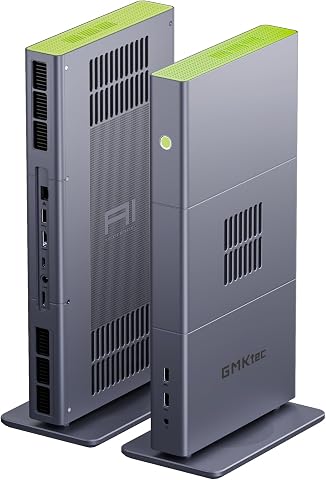 GMKtec EVO-X3 Mini PC with AMD Ryzen AI Max+ 395, 128GB LPDDR5X, and 2TB PCIe…View on Amazon →
 - 2
 GMKtec EVO-X2 AI Mini PC AMD Ryzen AI Max+ 395, Up to 5.1GHz, 16C/32TView on Amazon →
 - 3
 GEEKOM A9 Max Top AI Mini PC, AMD Ryzen AI9 HX470, 32GB DDR5, 2TB SSDView on Amazon →
 - 4
 GEEKOM IT15 Mini PC with Intel Ultra 9 285H, 32GB DDR5, 1TB SSD, Arc 140T GPU…View on Amazon →
 - 5
 MINISFORUM AI X1 Pro-370 Mini PC with AMD Ryzen AI 9 HX370, 32GB DDR5, 1TB SS…View on Amazon →
 - 6
 GEEKOM GT15 Max Business & Professional Mini PC with Intel Core Ultra 9, 32GB…View on Amazon →
 - 7
 GEEKOM IT13 MAX AI Mini PC with Intel Ultra 9 185H, 24GB LPDDR5, 500GB SSDView on Amazon →
 - 8
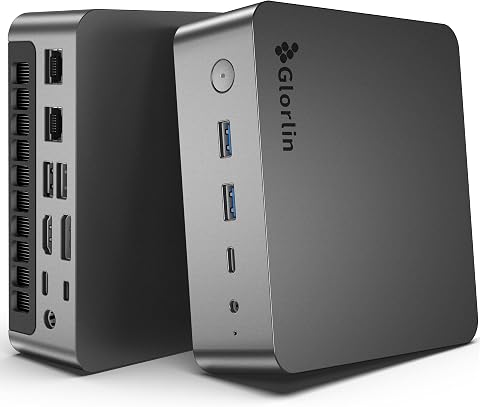 Glorlin Mini PC with AMD Ryzen 7 Pro 8845HS, 16GB DDR5 RAM, and 1TB SSDView on Amazon →
 - 9
 GMKtec K15 AI Mini PC Oculink Intel Ultra 5 125U 32GB DDR5 512GB SSD, Desktop…View on Amazon →
 - 10
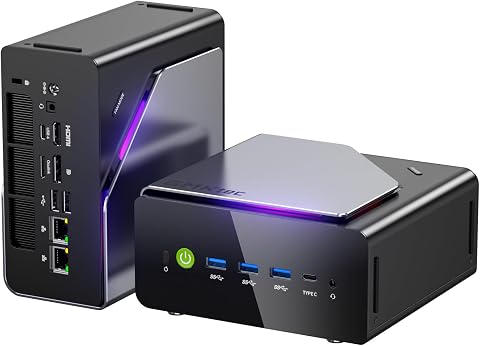 GMKtec K15 Mini PC AI Ultra 5 125U, 12-Core, 32GB DDR5, 1TB PCIe 4.0 SSDView on Amazon →
GMKtec EVO-X2 AI Mini PC
The roundup names the EVO-X2 its pick for maximum AI headroom, citing the Ryzen AI Max+ 395, 16 cores and Radeon RX 8060S graphics. It says the listed NPU figure exceeds 50 TOPS. The article cautions that memory and storage configuration details are missing and that onboard memory cannot be upgraded, advising buyers to check the specific unit before purchase.
GEEKOM IT13 Max
For beginners, the article points to the IT13 Max with Core Ultra 9 185H, 24GB LPDDR5 and 500GB SSD. Its onboard memory limits future RAM upgrades, and the listed capacity is lower than the roundup’s 32GB and 128GB options. The article frames it as a possible fit for office use and lighter workloads, not as a proven heavy local AI performer.
GEEKOM GT15 Max
The GT15 Max is presented as an upgradeable option, with Core Ultra 9 285H, 32GB DDR5 and a 1TB SSD. Its memory is listed as expandable to 128GB, though graphics are integrated Intel Arc 140T rather than a discrete GPU. The roundup cites an AI performance figure of up to 99 TOPS; that is a specification claim, not an independent benchmark result in the provided comparison.
GMKtec K15 with Oculink
The Oculink-equipped K15 pairs Intel Core Ultra 5 125U with 32GB of replaceable DDR5 and a 512GB SSD. The roundup presents its Oculink port as a possible route to external graphics, subject to additional hardware and compatibility checks. Its smaller included drive and less-defined AI specifications are relevant tradeoffs for buyers planning to run workloads on the built-in system.
GEEKOM A9 Max
The A9 Max is the roundup’s balanced workstation pick: Ryzen AI 9 HX 470, 32GB DDR5 and 2TB SSD. Its listed memory is upgradeable, and the article cites an NPU rating up to 55 TOPS. It also notes that the Radeon 890M is integrated graphics, so the configuration does not include a discrete GPU.
GMKtec EVO-X3
The EVO-X3 is the roundup’s top pick for local AI workloads. Its listed 128GB onboard LPDDR5X and 2TB SSD offer more stated memory capacity than the other configurations discussed. The article says the memory is not described as upgradeable and flags inconsistent graphics and AI performance figures in the product data.
GMKtec NucBox K15
The NucBox K15 is listed with Core Ultra 5 125U, 32GB DDR5 and a 1TB SSD, twice the capacity of the Oculink K15’s listed drive. It is categorized for multi-display setups. The roundup mentions up to four displays and expansion options, but flags conflicting processor core counts in the product information.
Glorlin Mini PC
The Glorlin model is listed with Ryzen 7 Pro 8845HS, 16GB DDR5 and a 1TB SSD. Its described features include Windows 11 Pro, dual 2.5Gb Ethernet and support for up to four 4K monitors. The article says the memory is listed as expandable up to 256GB, while emphasizing that the supplied configuration starts at 16GB.
GEEKOM IT15
The IT15 is listed with Core Ultra 9 285H, 32GB DDR5 and a 1TB SSD. The roundup categorizes it for quiet AI work and cites a 99 TOPS AI performance figure, without presenting independent workload measurements in the comparison. It says the operating system is not specified in the product data it reviewed.
MINISFORUM AI X1 Pro
The AI X1 Pro is listed with Ryzen AI 9 HX 370, 32GB removable DDR5 and a 1TB SSD, with memory expansion stated up to 128GB. The roundup calls it an expandable workstation option and reports a listed full-load noise figure as high as 45 dB. That figure and the listed specifications should be checked against the specific configuration.
Memory Shapes Local AI Choices
The comparison highlights a practical constraint for local AI: available memory can determine which models or datasets fit, while processor branding alone cannot settle that question. The EVO-X3’s listed 128GB sets it apart on capacity, but its onboard memory is not described as upgradeable. The 32GB systems offer different tradeoffs in storage, memory upgrades and expansion ports.
For buyers, that makes the intended workload the key comparison point. A system for office tasks and occasional local inference may not need the same capacity as one intended for larger models or datasets. The article supplies a shortlist and configuration details, but does not provide independent, comparable benchmarks establishing relative speed across all ten PCs.
How the Roundup Ranks Systems
The article says it considered processor class, memory capacity and type, storage, expansion and fit for likely use. It ranks the EVO-X3 first based on its stated memory configuration, then distinguishes models for use cases such as beginner setups, upgradeability, multi-display work and external graphics.
Its own caveat is that specifications do not establish sustained performance, cooling behavior or software compatibility. The selection is a buyer guide published with AI assistance, according to the page, rather than a report of controlled benchmark testing across the full lineup.
“Processor labels alone do not tell you whether a system can handle a particular model or workload.”
— Thorsten Meyer AI roundup
Performance Claims Need Checking
The comparison does not establish how quickly each system runs specific local models, how performance changes under sustained loads, or how loud and hot each becomes in a buyer’s setup. It also flags inconsistent specifications for the EVO-X3 and NucBox K15, and missing configuration details for the EVO-X2. Prices, availability and exact configurations can vary; the article’s ranking does not resolve those questions.
Confirm the Configuration Before Buying
Readers considering a model should check the seller’s current listing for memory type and capacity, storage, upgrade limits, ports and operating system. They should also confirm that their AI software supports the processor or graphics features they plan to use. The roundup provides a comparison and buyer categories; it does not announce a later test or follow-up milestone.
Key Questions
Which mini PC does the roundup rank first for local AI?
It ranks the GMKtec EVO-X3 first, citing its listed Ryzen AI Max+ 395, 128GB of onboard LPDDR5X and 2TB SSD.
Does the article prove which computer runs AI models fastest?
No. It compares specifications and buyer fit, and says those details alone do not establish real-world model speed or sustained performance.
Which listed system has the most memory?
The EVO-X3 is listed with 128GB of onboard LPDDR5X. The roundup does not describe that memory as upgradeable.
What is the Oculink K15 intended to offer?
The roundup presents Oculink as a possible connection for an external graphics setup. Buyers would need to check compatibility and account for the additional hardware.
Source: ThorstenMeyerAI.com
Halloween Picks
halloween
As an affiliate, we earn on qualifying purchases.