Wearable safety devices excel with quick, simple activation via one-touch SOS buttons and gesture controls, making them highly effective in emergencies, but they may have limited features and less advanced connectivity. Smartphones offer broader functionalities, such as detailed alerts and easy access to multiple features, but can be slower to activate and drain faster. Each has strengths and limits depending on your safety needs—exploring further will help you choose the right solution.
Key Takeaways
- Wearable safety devices offer quick, discreet activation with one-touch SOS and gesture controls, unlike phones which may require manual navigation.
- Wearables typically have longer battery life and stable low-power connectivity, while smartphones rely on cellular networks that can be less reliable remotely.
- Wearables excel in privacy by limiting data sharing and continuous location tracking, whereas phones often require manual control, raising privacy concerns.
- Phones provide multifunctionality and broader communication options but tend to be bulkier and less specialized for emergency activation.
- Wearables are generally more affordable, portable, and easier to use in emergencies, but may have limited features compared to smartphones’ extensive capabilities.
What Are the Key Safety Features of Wearable Devices vs. Smartphones?
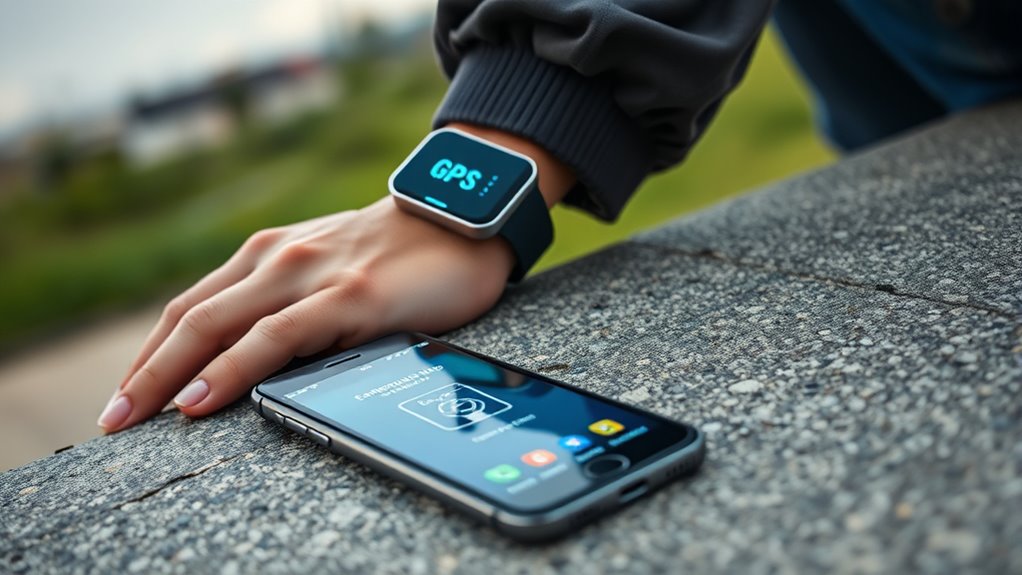
Wearable safety devices often include features specifically designed for quick and easy emergency response, such as one-touch SOS buttons and real-time location tracking. These devices usually offer personalization options, allowing you to customize alerts or set specific contacts for emergencies. However, privacy concerns can arise because these devices continuously monitor your location, raising questions about data security and how your information is shared. Unlike smartphones, which require manual input to activate safety features, wearables often provide instant access, making them more accessible in urgent situations. Still, you need to weigh the benefits of quick response against the potential risks to your privacy. Choosing a device with strong security measures helps guarantee your safety without compromising your personal information. Additionally, understanding the technology and materials used in these devices can help users select options that balance safety with durability and security. Being aware of the privacy implications is crucial to making informed decisions about wearable safety technology. Moreover, data security protocols play a vital role in protecting personal information from unauthorized access. Incorporating security standards aligned with industry best practices can further enhance user trust and safety. As the net worth of wearable device manufacturers grows, so does the importance of maintaining rigorous security measures to protect consumer data.
How Easy Are Wearables and Smartphones to Use in Emergencies?
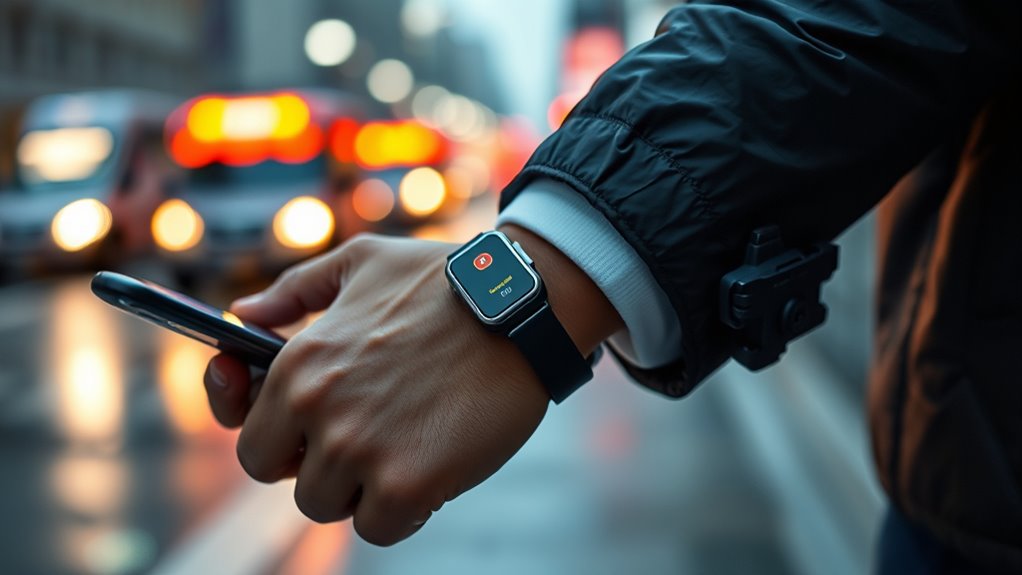
In emergency situations, how quickly and easily you can activate safety features can make all the difference. Wearables often excel with gesture simplicity, allowing you to trigger emergency activation with a simple tap or swipe. Smartphones, on the other hand, may require steering menus or pressing multiple buttons, which can slow you down. The ease of emergency activation depends on device design and user familiarity. Additionally, Free Floating technology can enable more seamless interaction without the need for physical buttons, further enhancing quick response capabilities. Your ability to activate safety features swiftly could be the difference between safety and danger, especially when device usability is optimized for emergencies. Moreover, understanding the user interface design of each device can significantly impact how effectively you respond in urgent situations. Simplified gesture controls on wearables can further reduce activation time, making them more reliable in critical moments. As technology advances, intuitive design plays an increasingly vital role in ensuring users can access emergency features under stress.
Which Device Offers Better Battery Life and Connection Reliability?
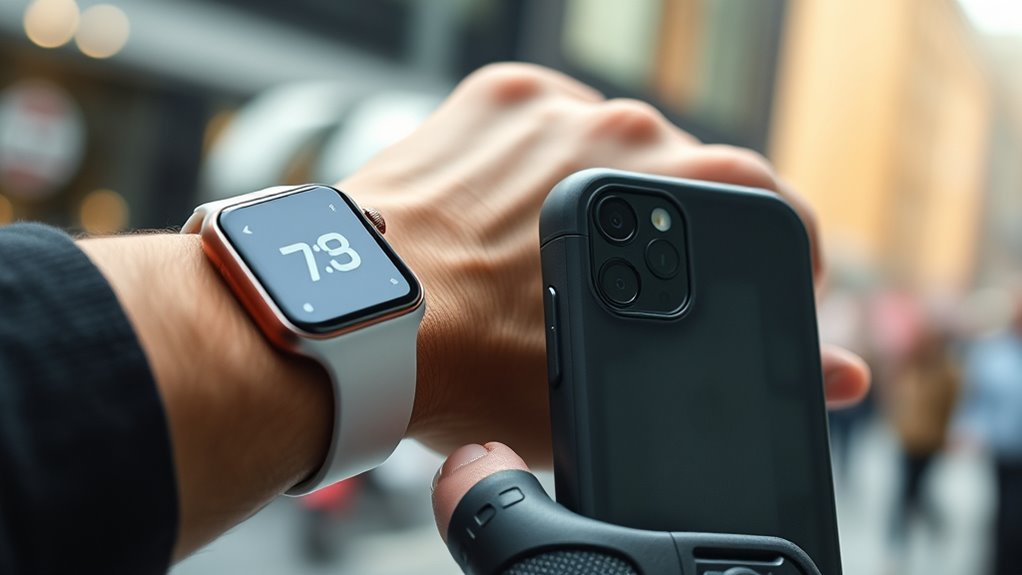
When it comes to staying safe, having a device with reliable battery life and connection is essential; otherwise, it might fail when you need it most. Wearable safety devices often excel in battery endurance, lasting longer with less frequent charging, so you’re less likely to be caught off guard. Smartphones, however, typically have larger batteries but may drain faster during emergencies or heavy use. Signal stability is another critical factor. Wearables usually connect via Bluetooth or low-power networks, providing consistent, localized communication. Smartphones rely on cellular networks, which can be less reliable in remote areas or crowded places. Overall, wearables tend to offer better battery endurance and signal stability in critical moments, but smartphones provide broader connectivity, depending on network coverage. Creating calm, clutter-light homes can help reduce stress and improve focus, making it easier to manage safety devices effectively. Incorporating proper ventilation and wiring considerations from your sauna setup can also ensure your safety devices function optimally in various environments. Additionally, understanding the limitations of connectivity in different settings can help you choose the most reliable device for your safety needs, especially considering the industry trends that influence device development and performance. Recognizing how connected fitness technology is advancing can also guide you in selecting safety devices that integrate seamlessly with your overall wellness approach.
How Much Do Wearables and Smartphones Cost, and Are They Compatible?
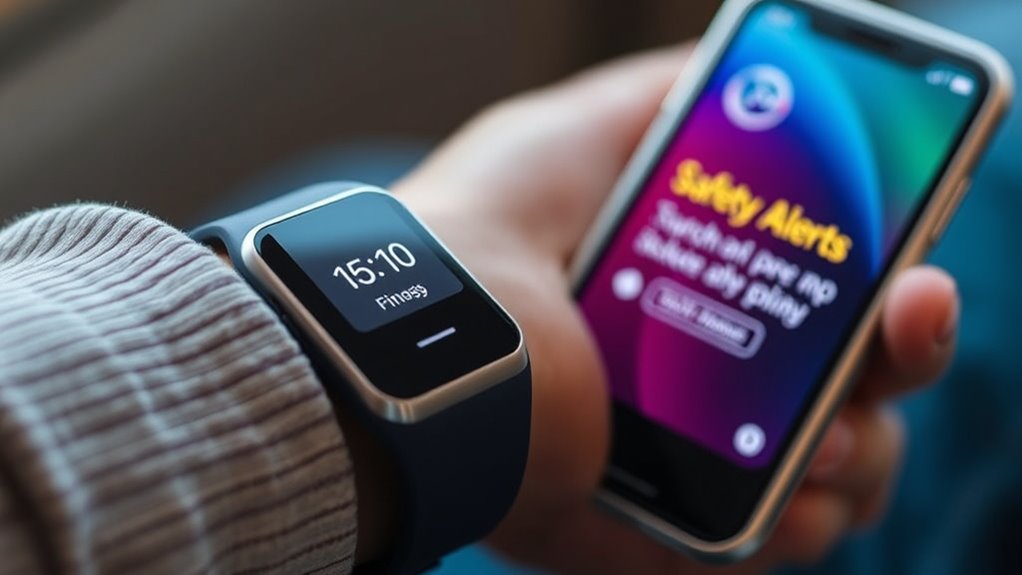
Choosing between wearables and smartphones involves considering both cost and compatibility. The pricing comparison shows wearables are generally more affordable upfront, but smartphones offer multifunctionality at a higher price point. Compatibility considerations are essential—some wearables sync seamlessly with specific devices, while others may face limitations. Additionally, understanding affiliate disclosure is important when researching product recommendations, as it impacts the transparency of where your information and potentially your purchases originate. When evaluating costs, think about: – The initial investment for quality wearables versus smartphones – Long-term expenses like replacement or upgrades – Compatibility with your existing devices – Additional accessories needed for full functionality. It’s also helpful to consider cybersecurity risks associated with each device type, as security features can vary significantly. Recognizing device security features can help you better protect your personal information. To make an informed decision, it’s helpful to analyze device features and how they align with your safety needs. Understanding cost differences can help you choose the right device for your budget. Feeling confident in your choice depends on understanding these factors. If your budget is tight, a wearable might be enough. But for broader features, a smartphone could be worth the extra investment. Make sure your devices align to maximize safety and usability.
Which Safety Solution Is Right for Your Needs?
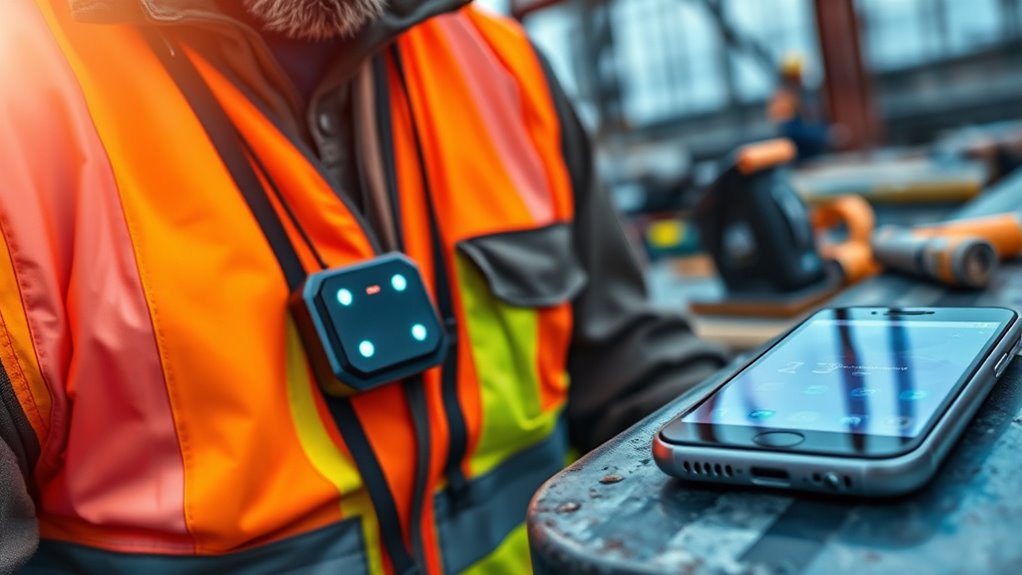
Selecting the right safety solution depends on your specific needs, lifestyle, and budget. Consider whether you prefer the quick accessibility of a phone or the targeted features of a wearable device. Device customization can help tailor safety features to your preferences, but privacy concerns may arise with constant tracking. Here’s a quick comparison:
| Feature | Wearables | Phones | Both |
|---|---|---|---|
| Device customization | High (alerts, sensors) | Moderate (apps, settings) | Varies |
| Privacy concerns | Location sharing, data security | Data sharing, app permissions | Both require safeguards |
| Ease of use | Hands-free, discreet | Versatile, multi-purpose | Depends on user preference |
| Cost | Usually less expensive | Typically more costly | Varies |
Understanding the privacy considerations associated with each option is crucial to protect your loved one’s data. Additionally, understanding the security features of each device can help prevent unauthorized access or data breaches. Being aware of the vetted nature of available products can further help in making an informed decision.
Being informed about the regulatory standards that govern these devices can also help ensure compliance and safety.
Frequently Asked Questions
Can Wearables Detect Falls More Accurately Than Smartphones?
Wearables generally detect falls more accurately than smartphones because of their advanced sensor technology and dedicated fall detection features. They are worn close to your body, providing better sensor data and real-time alerts. Smartphones, while useful, rely on less specialized sensors and may miss subtle falls. Thanks to sensor technology advancements, wearables offer higher fall detection accuracy, making them more reliable for preventing injuries in emergencies.
How Do Privacy Concerns Differ Between Wearables and Phones?
Imagine holding a glowing sphere of your personal data; with wearables, you’re more in control of that sphere, managing data privacy and user control directly through device settings. Phones often collect more extensive data, raising broader privacy concerns. Wearables can limit data sharing more easily, but both require vigilant privacy practices. Your comfort hinges on understanding data privacy policies and actively managing user control, whether with a wearable or a phone.
Are Wearable Safety Devices Suitable for Children or Seniors?
Yes, wearable safety devices are suitable for children and seniors. They enhance child safety by providing real-time location tracking and emergency alerts, giving parents peace of mind. For seniors, these devices support senior monitoring, helping caregivers respond quickly during emergencies. You can easily monitor loved ones’ safety, ensuring they stay connected and protected. Wearables are practical, non-intrusive tools that promote safety for all ages.
What Is the Typical Lifespan of Wearable Safety Devices?
Think of it as a race against time; wearable safety devices usually last between 1 to 3 years before needing replacement, depending on battery longevity and device durability. Proper care can extend this life, but batteries naturally degrade over time. You’ll want to stay vigilant, as wear and tear or battery drain can affect performance, making regular checks vital to make sure your loved ones stay protected.
How Do Weather Conditions Affect Device Performance?
Weather conditions can considerably impact your wearable safety device’s performance. Heavy rain or snow may reduce its weather resistance, causing potential damage, while extreme temperatures can affect battery life. Additionally, moisture and harsh elements can interfere with signal reliability, making it harder for the device to communicate or alert you effectively. To stay safe, choose devices with strong weather resistance and be mindful of environmental conditions that could compromise their functionality.
Conclusion
Choosing between wearable safety devices and smartphones is like picking the right tool for a job—you want reliability when it matters most. Imagine you’re hiking alone; your wearable might be like a trusty compass, always on your wrist, ready to guide you back. While smartphones are versatile, they can run out of juice or lose signal. Ultimately, weigh your needs carefully, and remember: the best safety device is the one you trust to be there when it counts.