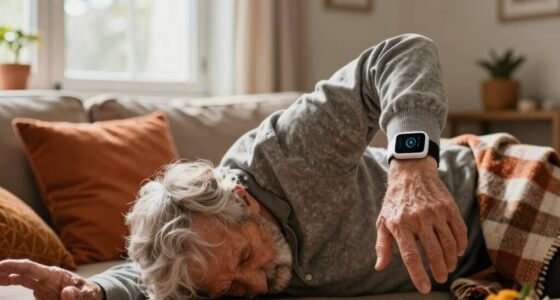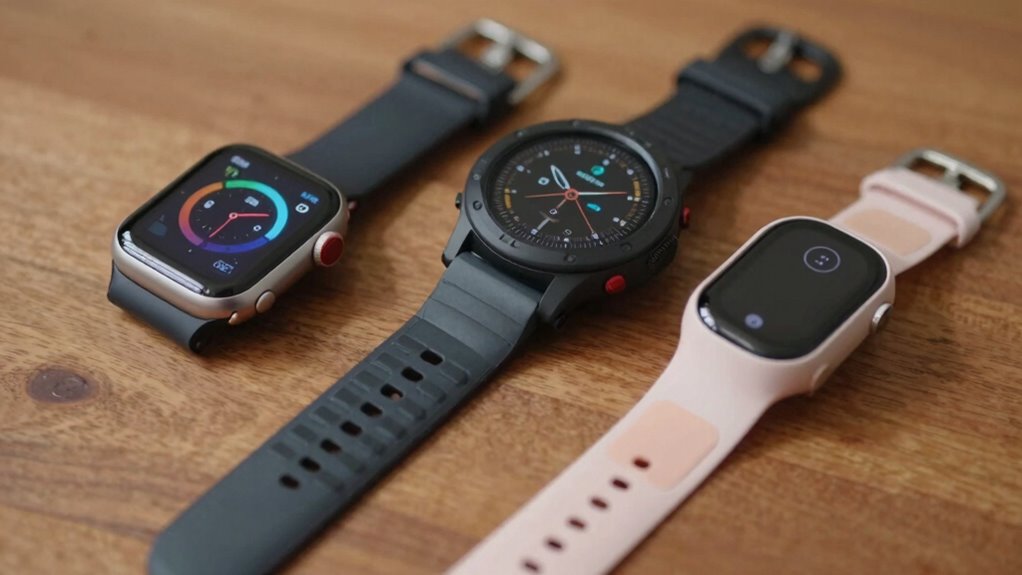

Smartwatches, GPS watches, and medical wearables each serve unique purposes. Smartwatches keep you connected, track fitness, and offer customizable styles but often need daily charging. GPS watches focus on outdoor activities, providing long battery life and precise tracking, with rugged designs. Medical wearables monitor health conditions with high accuracy, used under medical supervision and often functioning days or weeks between charges. To understand how their features differ and which is best for you, explore further.

Get the latest gadgets delivered free with Prime
- Fast, free delivery on millions of items
- Prime Video, Amazon Music and more included
- Member-only deals all year
Key Takeaways
- Smartwatches combine connectivity, fitness tracking, and style, while GPS watches focus on outdoor activity metrics and durability.
- Medical wearables prioritize health data accuracy and reliability for medical monitoring, unlike the entertainment focus of smartwatches.
- GPS watches typically have longer battery life and rugged designs suitable for outdoor use, unlike the often daily-charged smartwatches.
- Medical wearables are specialized for health conditions with advanced sensors, whereas smartwatches serve general fitness and communication needs.
- Each device type targets different user needs: casual, active, or medical, reflecting their distinct functionalities and design priorities.
In today’s fast-paced world, wearable technology has become an essential part of daily life, seamlessly blending health, fitness, and connectivity. When you look at the variety of devices available, it’s easy to assume that all wearables serve similar purposes, but that’s not quite the case. Smartwatches, GPS watches, and medical wearables each have distinct features, designed for different needs and uses. Understanding these differences helps you choose the right device for your lifestyle.
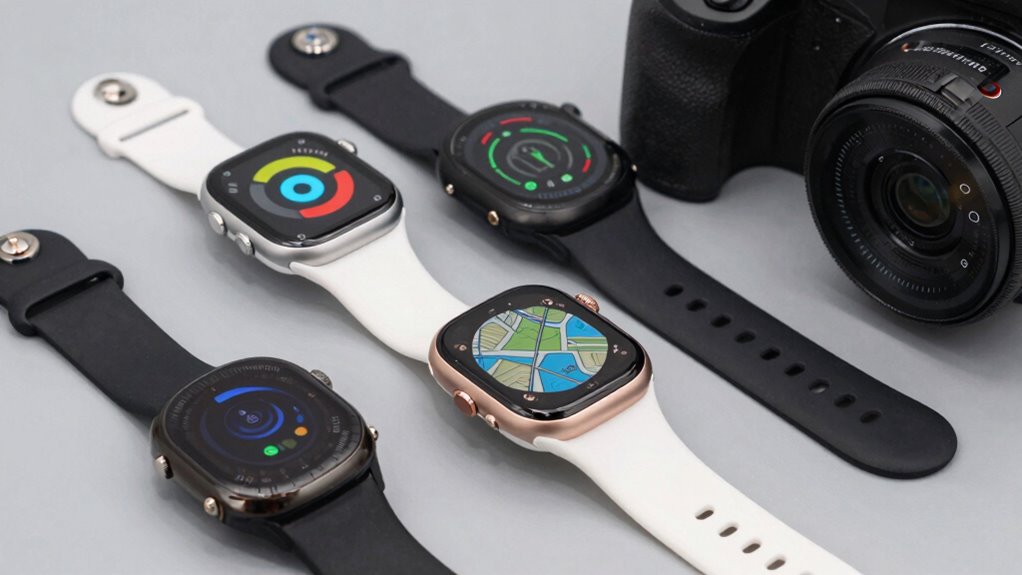
Smartwatches are the most versatile of the group. They’re built to keep you connected—receiving notifications, calls, and messages right on your wrist. Besides that, they often include fitness tracking features like step counters, heart rate monitors, and sleep analysis. Fashion trends heavily influence smartwatches, with sleek designs and customizable watch faces making them more than just tech gadgets—they’re also style statements. However, their battery life is a common concern. Because smartwatches pack in so many features, they typically need daily or every-other-day charging. If you’re someone who values a device that can last through a long day or while traveling, this could be a *crucial* drawback. The technology in these devices is constantly evolving to improve battery efficiency and functionality.
Smartwatches combine connectivity, fitness features, and style, but often require daily charging due to their many functions.
GPS watches, on the other hand, are primarily designed for outdoor activities and sports. Their core strength lies in accurate location tracking, making them ideal for runners, hikers, and cyclists. You focus on precise distance, pace, and route data, which helps improve your performance. They tend to have longer battery life than smartwatches, often lasting several days or even weeks on a single charge, making them more suitable for extended outdoor adventures. Fashion isn’t their main concern; instead, their rugged build and specialized features appeal to active users. The trade-off is that GPS watches usually lack the extensive communication and app integration that smartwatches offer. They’re more focused on performance metrics than on staying connected.
Medical wearables are specialized devices designed to monitor specific health conditions or gather medical data. These are often used under medical supervision, providing critical insights into chronic illnesses, cardiac health, or *vital* signs. Unlike smartwatches and GPS watches, medical wearables prioritize accuracy and reliability over style or entertainment. The technology in these devices is more advanced, with features like continuous glucose monitoring or ECG capabilities. Battery life varies depending on the device, but many are designed to operate for days or weeks without needing frequent recharges. These devices aren’t meant for casual use; they serve a *crucial* role in healthcare, helping you track health metrics that can inform treatment and lifestyle adjustments. Additionally, advancements in medical wearable technology continue to enhance their precision and usability in real-world medical settings.
best smartwatch for fitness and notifications
As an affiliate, we earn on qualifying purchases.
As an affiliate, we earn on qualifying purchases.
Frequently Asked Questions
How Do Medical Wearables Ensure Patient Data Privacy?
Medical wearables guarantee your data privacy by using strong data encryption to protect your sensitive information from unauthorized access. They also comply with strict privacy regulations, such as HIPAA, to safeguard your rights. These devices regularly update security protocols and limit data sharing, giving you confidence that your health data stays confidential. By prioritizing encryption and regulations, they help keep your personal health information secure and private.
Can GPS Watches Be Used for Indoor Navigation?
Yes, GPS watches can be used for indoor guidance, but with limitations. They rely on indoor mapping and often face challenges with signal accuracy due to interference from walls and structures. While they’re effective outdoors, indoors, the signals weaken, causing potential inaccuracies. So, if you’re guiding through complex indoor spaces, don’t solely rely on GPS watches — consider other tech designed specifically for indoor positioning.
Are Smartwatches Compatible With All Smartphone Brands?
Smartwatches aren’t compatible with all smartphone brands. Your compatibility depends on the watch’s brand and its app integration features. For example, Apple Watches work seamlessly with iPhones, while Samsung Galaxy watches are designed for Android devices. Always check the specific smartwatch’s brand compatibility to guarantee smooth app integration and features. This way, you can enjoy full functionality without frustrations or limitations.
What Are the Battery Life Differences Among These Devices?
Battery life varies among these devices due to different power consumption levels and battery optimization. Smartwatches typically last 1-2 days because they constantly sync and display notifications, while GPS watches often last longer, around 10-20 hours, thanks to focused power consumption during workouts. Medical wearables usually have longer battery life, sometimes weeks, because they’re designed for minimal power use and optimized battery management.
How Accurate Are Medical Wearables in Monitoring Health Metrics?
Medical wearables generally offer high sensor accuracy, making their health metric readings quite reliable. You can trust these devices to monitor vital signs like heart rate, blood oxygen, and glucose levels effectively. However, data reliability can vary depending on the device quality and calibration. For critical health monitoring, it’s crucial to select reputable wearables that prioritize precise sensor accuracy to guarantee your health data is trustworthy.
rugged GPS running watch with long battery life
As an affiliate, we earn on qualifying purchases.
As an affiliate, we earn on qualifying purchases.
Conclusion
Now that you understand the differences, imagine what’s next. Could your wearable do more than just track steps or monitor your heart? The line between everyday gadgets and medical devices is blurring fast. Stay curious—there’s a future where your wearable might save your life or transform how you manage health. Are you ready to see what’s coming? The next breakthrough might be just around the corner, waiting to surprise you.
medical wearable for health monitoring
As an affiliate, we earn on qualifying purchases.
As an affiliate, we earn on qualifying purchases.
smartwatch with customizable watch faces
As an affiliate, we earn on qualifying purchases.
As an affiliate, we earn on qualifying purchases.
Fall Picks
fall essentials
As an affiliate, we earn on qualifying purchases.