
Proper battery maintenance guarantees your personal safety devices work reliably when you need them most. Weak or dead batteries can prevent these devices from activating in emergencies, putting you at risk. Regular checks, following charging protocols, and storing batteries correctly help prolong their lifespan and prevent unexpected failures. By staying proactive, you can assure your devices are always ready. Keep going to discover more essential tips to keep your safety devices functioning at their best in critical situations.

Get the latest gadgets delivered free with Prime
- Fast, free delivery on millions of items
- Prime Video, Amazon Music and more included
- Member-only deals all year
Key Takeaways
- Regular battery checks ensure safety devices function properly during emergencies.
- Replacing degraded batteries prevents device failure when needed most.
- Proper maintenance extends battery lifespan, ensuring long-term reliability.
- Correct storage conditions protect batteries from environmental damage and deterioration.
- Monitoring battery health guarantees personal safety devices remain operational when critical.

Ensuring your safety devices function properly depends heavily on regular battery maintenance. These devices, whether smoke alarms, personal emergency alarms, or medical alert systems, rely on batteries to operate when you need them most. If the batteries are weak or dead, your safety could be compromised. To prevent this, it’s essential to understand how to extend battery lifespan and follow proper charging protocols. Regular checks and maintenance ensure your devices stay ready for use, giving you peace of mind in emergencies.
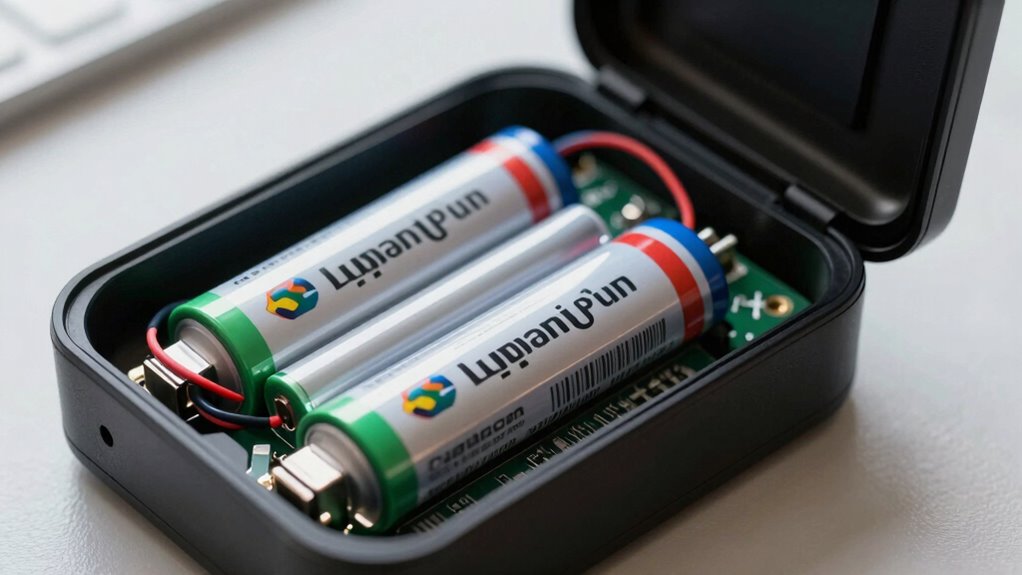
Battery lifespan varies depending on the type of battery and usage patterns. Over time, batteries naturally lose their ability to hold a charge, so replacing them before they fail is critical. Ignoring signs of battery degradation can leave your safety devices useless when an emergency arises. To maximize lifespan, always use the recommended batteries specified by the manufacturer. Additionally, store spare batteries in a cool, dry place to prevent premature degradation. Keeping a schedule to test your devices monthly helps you catch any signs of weak batteries early, so you can replace them promptly. Proper storage conditions are vital for maintaining battery health over time.
Charging protocols play a key role in maintaining the health of rechargeable batteries. If your safety devices use rechargeable batteries, it’s essential to follow proper charging procedures. Overcharging can damage the battery, shortening its lifespan and reducing its effectiveness. Conversely, undercharging or leaving batteries completely drained can also harm their longevity. Always use the charger provided or recommended by the manufacturer, and avoid charging batteries beyond the suggested time frame. Properly maintaining charging routines ensures batteries stay in excellent condition, so your safety devices are ready when needed.
Another important aspect is avoiding extreme temperatures, which can accelerate battery wear. High heat can cause batteries to deteriorate faster, while cold conditions may reduce their ability to hold a charge temporarily. Keep your safety devices in environments within the recommended temperature range to preserve battery health. Regularly inspecting your devices for corrosion or damage on battery contacts also helps guarantee reliable operation. Being aware of battery health and environmental factors is essential for maintaining optimal performance of your safety devices. Additionally, understanding the influence of environmental conditions can help you better protect your batteries from damage.
battery replacement for smoke alarms
As an affiliate, we earn on qualifying purchases.
As an affiliate, we earn on qualifying purchases.
Frequently Asked Questions
How Often Should I Replace Batteries in Personal Safety Devices?
You should replace batteries in personal safety devices every 6 to 12 months, depending on the device’s battery lifespan and usage. Check the manufacturer’s recommendations for specific replacement frequency, as some devices may require more frequent changes. Regularly testing your device ensures it functions properly, and replacing batteries promptly helps maintain safety. Don’t wait until the device fails—keep track of battery life and replace them as needed for reliable protection.
Can Improper Battery Maintenance Cause Device Malfunctions?
Neglecting proper battery care can indeed lead to device hiccups. Poor charging habits and battery corrosion can cause your safety device to act up when you need it most. Over time, corrosion builds up, and inconsistent charging weakens the connection, risking malfunction. Regularly checking for corrosion and following recommended charging routines keep your device reliable, ensuring it’s ready to protect you whenever necessary.
Are There Specific Storage Conditions to Prolong Battery Life?
To prolong battery life, store your personal safety devices in a cool, dry place, avoiding temperature sensitivity issues. Keep batteries at room temperature, away from direct sunlight or heat sources. Additionally, guarantee corrosion prevention by inspecting and cleaning contacts regularly. Store devices with batteries removed if not in use for long periods. Proper storage conditions help maintain battery performance, ensuring your safety devices work reliably when needed most.
What Are Signs of a Failing or Degraded Battery?
You’ll notice signs of a failing battery through a shortened battery lifespan and a noticeable voltage decline. If your device’s battery drains faster than usual, struggles to hold a charge, or the voltage drops quickly under load, these are clear indicators of degradation. Regularly check the device’s performance, and if you see these signs, it’s time to replace or service the battery to guarantee safety and reliability.
Do Different Safety Devices Require Different Battery Types or Maintenance?
You might think all safety devices use the same batteries, but that’s an exaggeration—each device demands its own perfect match! Different safety devices require specific battery types for peak performance and safety. To stay ahead, you need to check battery compatibility and follow maintenance schedules diligently. Regular maintenance ensures your devices work when you need them most, preventing costly mistakes and keeping you safe in emergencies.
rechargeable emergency alarm batteries
As an affiliate, we earn on qualifying purchases.
As an affiliate, we earn on qualifying purchases.
Conclusion
Think of your safety devices like loyal sentinels guarding your well-being. When you neglect their batteries, it’s like leaving them asleep on the job, vulnerable and unready. Regular maintenance keeps their energy alive and sparks their readiness, so they stand tall when you need them most. Stay vigilant and keep their power charged—your safety depends on it. After all, a well-maintained device is your steadfast guardian, never letting you down when it matters most.
battery tester for safety devices
As an affiliate, we earn on qualifying purchases.
As an affiliate, we earn on qualifying purchases.
battery storage cases for safety devices
As an affiliate, we earn on qualifying purchases.
As an affiliate, we earn on qualifying purchases.
Fall Picks
fall essentials
As an affiliate, we earn on qualifying purchases.