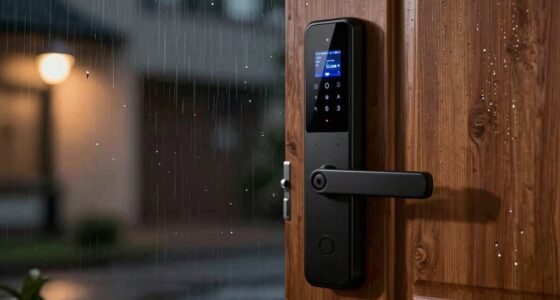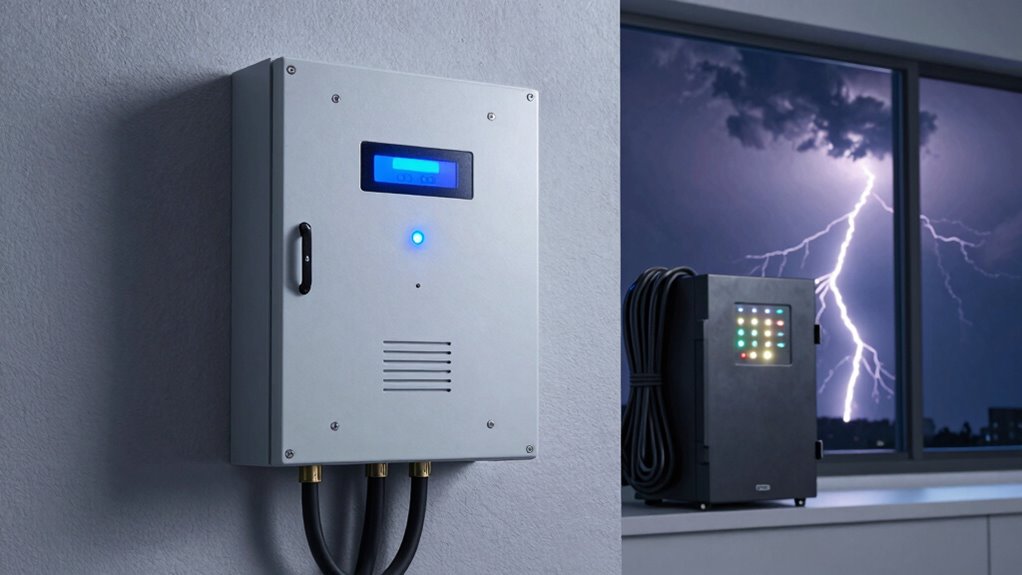
A reliable security system during power outages relies on backup power sources like batteries, solar, or generators to keep sensors and cameras active. Cellular connectivity ensures your system stays connected even if internet or mains power fail. Local storage alongside cloud backup protects your data from damage or theft, while regular testing and maintenance confirm everything works when needed. To keep your system resilient, understanding these features is essential—more insights await if you continue exploring.
Key Takeaways
- Equipped with backup power sources like batteries, solar panels, or generators to maintain operation during outages.
- Features self-sufficient sensors and cameras that operate independently of mains power through built-in batteries.
- Utilizes cellular communication with independent power at cell towers, ensuring continuous connectivity during outages.
- Incorporates regular testing and maintenance routines to verify backup systems function properly when needed.
- Combines local and cloud data storage for reliable access to footage and logs despite internet or power disruptions.
What Features Make a Security System Power-Resilient?
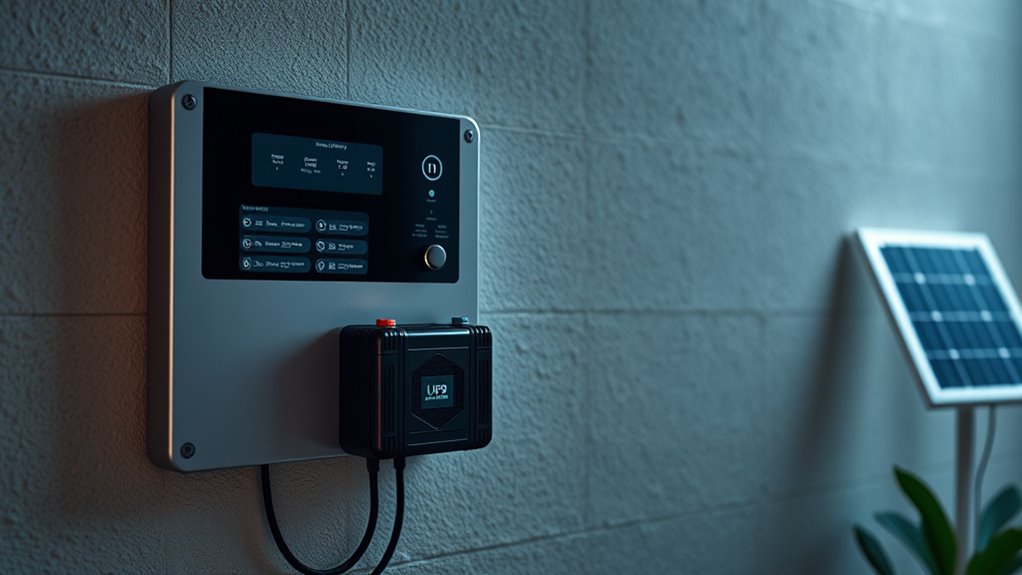
To guarantee your security system remains operational during a power outage, it needs specific features that boost its resilience. Essential among these are reliable intrusion detection and video surveillance capabilities. Intrusion detection sensors, like motion detectors and door/window contacts, should operate independently of main power, often via backup batteries, to alert you of unauthorized access even when the power’s out. Video surveillance cameras, especially those with built-in batteries or solar power options, continue recording and streaming footage during outages, providing critical visual evidence. These features ensure your security remains intact, allowing you to monitor your property continuously. Additionally, integrating local automation capabilities can help coordinate backup power sources and alerts during outages. Incorporating smart home integration can further enhance your system’s ability to respond automatically during power disruptions, keeping your property secure. Investing in systems with these resilient components helps maintain safety and peace of mind, regardless of power disruptions. Moreover, selecting systems with power management features can optimize backup operations and prolong battery life during extended outages. Understanding power supply considerations is crucial for choosing a system that can sustain functionality when the main power fails. Properly configuring backup power sources can make a significant difference in maintaining security during outages.
Essential Backup Power Options for Continuous Security
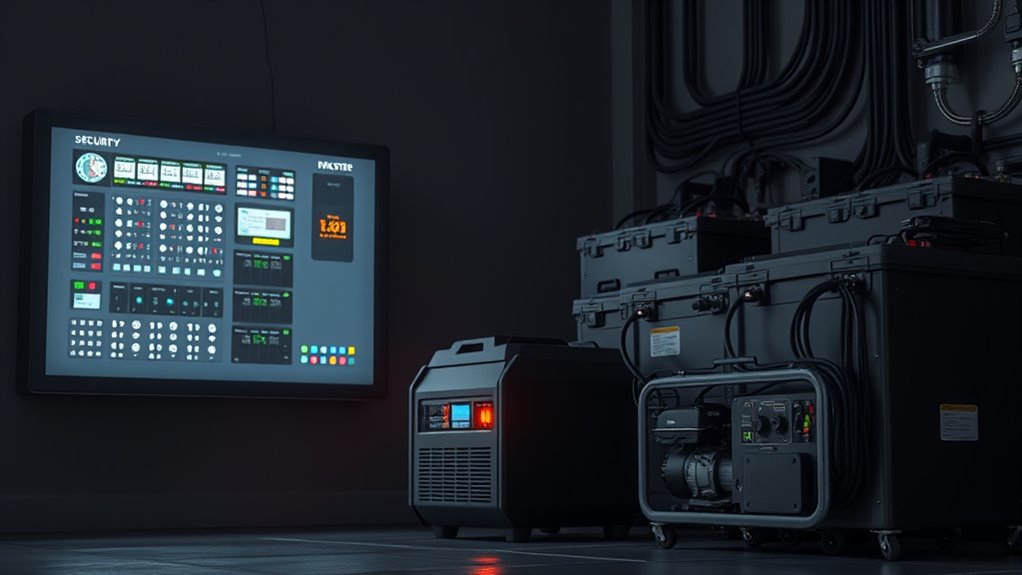
Maintaining security during power outages requires reliable backup power sources that keep your system running seamlessly. Solar power is an excellent option, especially when paired with batteries, providing renewable energy that can sustain your security system during extended outages. It’s quiet, eco-friendly, and cost-effective over time. Generator backup is another dependable choice, capable of delivering immediate power when the grid fails. Portable or standby generators ensure your cameras, alarms, and monitoring remain operational without interruption. Combining solar power with a generator backup offers a thorough solution, giving you flexibility and continued protection regardless of outage duration. Incorporating backup power sources is crucial for maintaining security during outages. Utilizing uninterruptible power supplies can also enhance system reliability by providing instant backup during brief power fluctuations. Additionally, power management strategies can help optimize energy use and extend the life of your backup systems. Staying informed about emergency power solutions can help you plan more effectively for unexpected outages. By investing in these backup options, you assure your security system stays active, giving you peace of mind during even the most unpredictable power disruptions. Properly system maintenance and regular testing are essential to ensure your backup solutions function correctly when needed.
Are Cellular Connections More Reliable During Power Outages?
Cellular connections often remain active during power outages because cell towers have their own power sources, making them more independent. However, battery backups at the tower and your location’s signal interference risks can still affect reliability. Understanding these factors helps you determine if cellular is the best option for your security system. Additionally, modern communication methods continue to evolve, enhancing their resilience in emergency situations. Advances in energy-efficient infrastructure are also contributing to more reliable cellular service during outages, especially in rural or underserved areas. Moreover, ongoing technological innovations are further improving the overall robustness of cellular networks during power disruptions. For instance, improvements in network redundancy help ensure continuous coverage even during outages.
Cell Tower Independence
During power outages, cellular connections often prove more reliable than traditional landline or internet-based systems because cell towers typically have backup power sources. This cell tower independence means they can operate independently of the main power grid, ensuring continuous service even when local power fails. Most cell towers are equipped with generators or batteries that kick in automatically, maintaining network coverage. This setup minimizes the risk of communication disruptions during outages, making cellular connections a dependable option for security systems. Unlike landlines that rely on local infrastructure, cellular towers are designed to stay operational under adverse conditions, providing critical communication links when you need it most. Additionally, power backup systems at cell towers enhance their resilience, ensuring they remain functional during extended outages, which is vital for maintaining security and emergency communication when you need it most. In fact, backup power systems are a key factor in the reliability of cellular networks during emergencies, and their widespread deployment underscores their importance in security system reliability during outages. Furthermore, the robust infrastructure supporting cellular networks is continually upgraded to adapt to increasing demand and challenges posed by severe weather events.
Battery Backup Options
Cell towers are equipped with backup power sources like generators and batteries that activate automatically when the main power fails, helping keep the network online. For your security system, battery backup options are vital. You might consider solar panels paired with battery storage to guarantee continuous power, especially in prolonged outages. Generator integration can also provide dependable backup, automatically kicking in when needed. These options help maintain cellular connections, making your system more trustworthy. To understand their benefits better, see the table below:
| Backup Power Type | Advantages | Limitations |
|---|---|---|
| Solar Panels | Renewable, eco-friendly | Weather dependent |
| Batteries | Immediate backup | Limited capacity |
| Generator | Long-lasting, powerful | Noise, fuel needs |
| Solar + Batteries | Sustainable, reliable | Initial cost |
| Generator + Solar | Redundant, versatile | Maintenance required |
Additionally, ensuring your security system has a reliable power source is essential to prevent downtime during outages. Having an uninterrupted power supply can significantly enhance the dependability of your security setup. Recognizing the importance of backup power options helps you make informed decisions to keep your system operational during unforeseen outages. Incorporating backup power solutions can further improve overall system resilience and reliability.
Signal Interference Risks
Are cellular connections truly more reliable during power outages, or do they face their own risks of interference? Signal interference can disrupt wireless signals, leading to potential communication failures during emergencies. Factors like dense urban environments, thick walls, or overlapping signals from other devices can cause wireless disruptions, making cellular connections less dependable at critical moments. Unlike wired systems, which are immune to electromagnetic interference, cellular signals rely on stable transmission channels that can be affected by external interference sources. To ensure your security system remains reliable during power outages, consider signal strength and potential interference risks. Regularly testing your cellular connection and avoiding crowded networks can help minimize disruptions and maintain a consistent, dependable alert system when you need it most. Additionally, understanding Gold IRA Markets can help you evaluate alternative investment options for long-term security and stability.
How Local Storage and Cloud Backup Protect Your Data
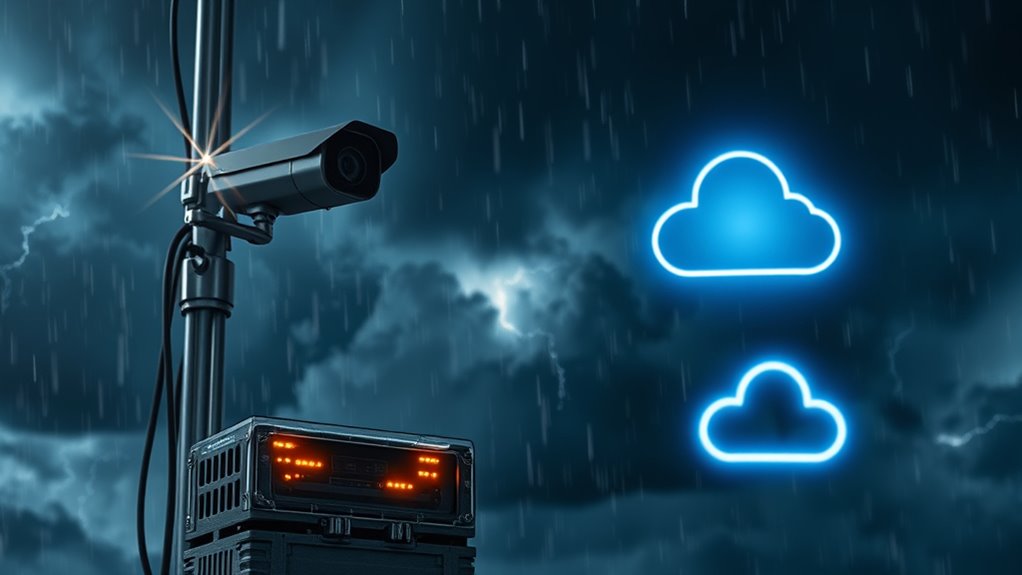
When a power outage strikes, your security system’s ability to protect your data depends heavily on how it’s stored. Using local storage guarantees that footage and logs are saved directly on a device within your property, making data accessible even if the internet goes down. Cloud backup, on the other hand, securely transmits copies of your data to remote servers, safeguarding it from physical damage or theft. Combining these methods gives you a reliable safety net. Key benefits include:
- Immediate access to local storage for quick review
- Continuous data protection via cloud backup
- Redundancy that prevents data loss during outages
- Reliable backup systems ensure your data remains protected under all circumstances
How to Test and Monitor Your Security System’s Power Backup
To guarantee your security system stays reliable during outages, you need to regularly test your backup power. Keep an eye on power levels and perform system drills to spot issues early. Consistent monitoring helps you stay confident that your system will protect you when it matters most. Regularly checking pilot shirts for men aviator can also ensure your system’s components remain in top condition and ready for unexpected power failures. Additionally, understanding the importance of system maintenance can help extend the lifespan of your security features and prevent unexpected malfunctions.
Regular Backup Testing
Regularly testing your security system’s power backup is essential to guarantee it functions properly when the main power fails. This helps ensure your backup battery remains in good condition and your system’s backup duration is sufficient during outages. To do this effectively, you should:
- Perform periodic power outage simulations to verify system response.
- Check battery maintenance routines, like cleaning terminals and replacing aging batteries.
- Monitor backup duration to confirm the system stays operational as long as needed.
Regular testing identifies potential issues early, preventing failures during real outages. Keeping your backup battery in top shape and understanding its capacity ensures your security system stays reliable when it matters most. Consistent checks give you confidence in your setup’s resilience.
Monitor Power Levels
How can you effectively test and monitor your security system’s power backup? You should regularly check the battery health and monitor power levels to guarantee reliable operation during outages. Many security systems have built-in indicators or apps that display battery status; use these tools to keep track of remaining power. Periodically perform manual tests by unplugging the system from main power to see if it switches seamlessly to backup power. Pay attention to any warning lights or alerts about low battery levels. Maintaining excellent battery health is vital—replace batteries that show signs of deterioration or fail to hold a charge. Consistent monitoring helps you identify potential issues early, ensuring your security system remains operational when you need it most.
Perform System Drills
Performing system drills is an effective way to verify that your security system’s power backup functions correctly during an outage. Regular drills help you identify potential issues with your emergency protocols and ensure your system responds as expected. When conducting drills, follow clear procedures to simulate power loss, such as unplugging backup power sources or disabling main power. This helps you observe how the system reacts and whether alarms or alerts activate properly. To maximize effectiveness, consider these key steps:
- Test all components during simulated outages
- Verify backup power sources engage automatically
- Review and update drill procedures regularly
How to Choose a Reliable Security System for Power Outages
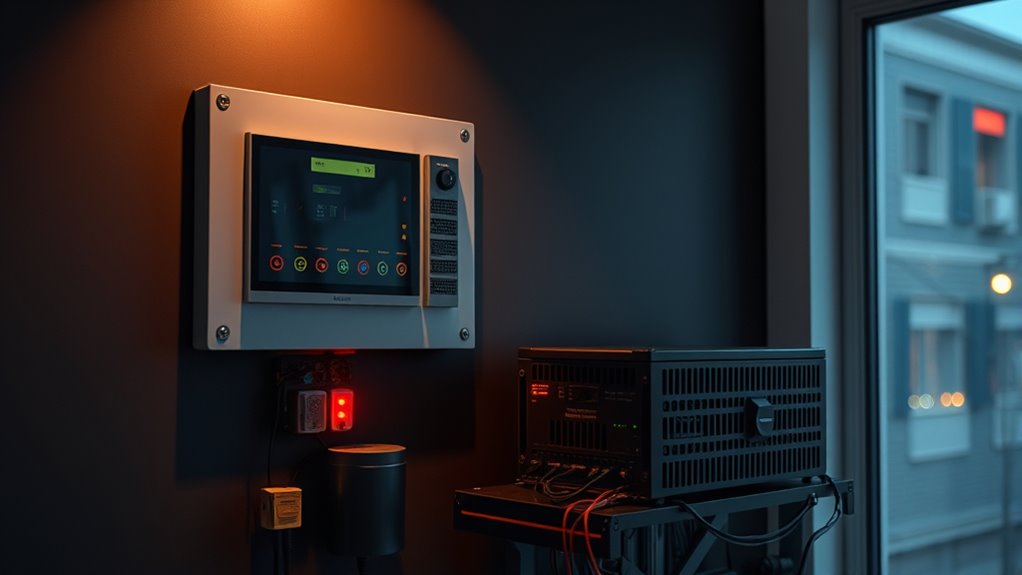
When selecting a security system that remains dependable during power outages, it is vital to prioritize systems with built-in backup power sources. Look for systems with long-lasting batteries to guarantee they stay operational during extended outages. Battery longevity directly impacts your security, so choose options with efficient power consumption and easy replacement. Signal stability is equally important; a reliable system maintains strong communication with monitoring centers or mobile apps even when mains power is down. Wireless systems with cellular backup or hybrid setups often provide better signal stability during outages. Avoid systems that rely solely on internet or mains power. By focusing on these features, you guarantee your security system remains active, responsive, and trustworthy when you need it most.
Frequently Asked Questions
How Long Does a Typical Security System Backup Last During Outages?
A typical security system backup lasts between 4 to 24 hours, depending on the battery lifespan and backup duration. You can usually expect your system to stay operational during power outages within this timeframe. To guarantee continuous protection, consider systems with longer-lasting batteries or add backup power sources. Regularly check and maintain your backup batteries so they perform reliably when you need them most.
Can Solar-Powered Security Systems Operate Effectively Without Grid Power?
You might think solar-powered security systems can’t operate without grid power, but they actually can if maintained properly. Regular solar panel maintenance guarantees maximum efficiency, while a healthy battery lifespan keeps your system running during outages. With proper upkeep, these systems harness sunlight effectively and store enough energy to protect your home even when the power’s out. Don’t underestimate the power of a well-maintained solar system for reliable security.
What Are Signs of Potential Failure in a Security System’s Power Backup?
You should watch for signs of potential failure in your security system’s power backup, like battery degradation, which causes shorter backup times, or power fluctuation, leading to system resets or false alarms. If your backup battery seems to hold less charge or if power surges occur frequently, it’s a clear sign you need to replace the battery or check your system’s wiring. Regular maintenance guarantees your system stays reliable during outages.
Do Security Systems With Backup Batteries Need Regular Replacement?
Think of your backup battery as the heart of your security system’s power during outages. You need to perform regular battery maintenance to guarantee its health. Over time, the backup battery lifespan shortens, making replacements necessary. Ignoring this can leave your system vulnerable when power fails. So, stay vigilant, check the battery’s condition periodically, and replace it as recommended to keep your security system dependable and ready for any blackout.
How Does Temperature Affect Backup Power Performance in Security Systems?
Temperature effects can substantially impact backup performance in your security system. Cold temperatures may cause batteries to lose capacity faster, reducing their ability to power your system during outages. Conversely, excessive heat can degrade battery life over time. To guarantee reliable performance, keep backup batteries within the manufacturer’s recommended temperature range, and consider installing temperature controls or choosing batteries designed for extreme conditions. Proper management maintains your system’s readiness when you need it most.
Conclusion
When selecting a security system, don’t overlook its power resilience. With features like backup batteries, cellular connections, and local storage, you can stay protected even when the power’s out. Regularly testing your system guarantees everything works seamlessly. After all, isn’t peace of mind worth the effort? By choosing a reliable system designed for outages, you’ll keep your home safe no matter what. Isn’t that the kind of security you deserve?