
Traditional alarm systems often trigger false alerts when pets move around, causing frustration and less reliable security. Pet-specific alarms use smart sensors and advanced technology to distinguish pets from intruders, reducing false alarms and ensuring peace of mind. Features like sensor calibration, targeted zones, and adaptive detection help protect your home without risking your pets’ safety. Keep exploring to discover how these systems can create a smarter, pet-friendly security solution for you.
Key Takeaways
- Use pet-specific motion sensors that differentiate pet movement from intruders to reduce false alarms.
- Calibrate sensors based on your pet’s size and activity level for accurate detection.
- Position sensors strategically in high-traffic or pet-free zones to avoid unnecessary triggers.
- Implement advanced detection technologies like infrared or ultrasonic sensors for better accuracy.
- Regularly test and update system settings to maintain a balance between security and pet safety.
Why Traditional Motion Detectors Can Cause False Alarms With Pets
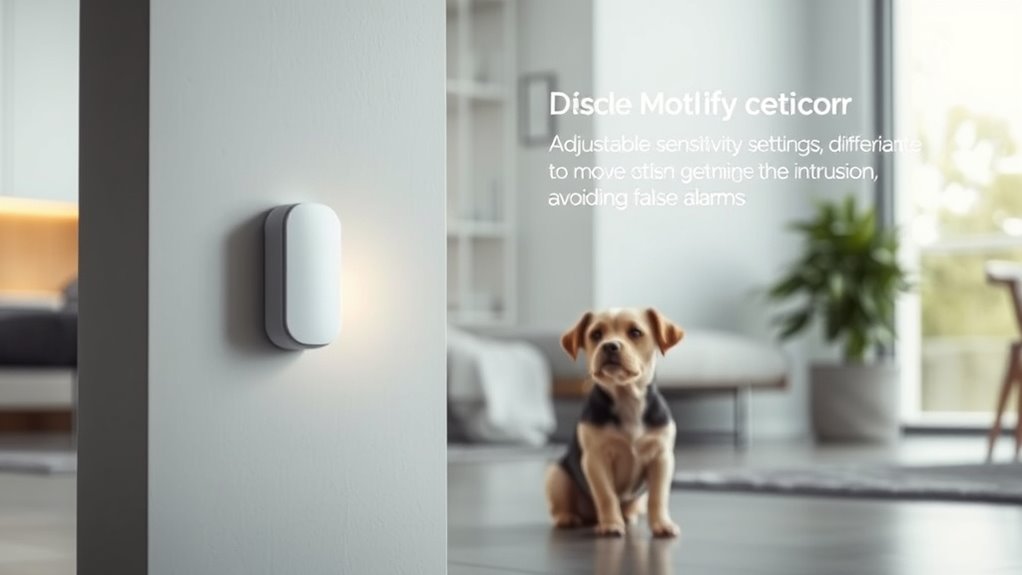
Traditional motion detectors often cause false alarms when pets are around because they can’t distinguish between a human and a smaller animal. This can be frustrating, especially if your pet’s movement triggers the alarm unexpectedly. Frequent false alarms may lead to alarm fatigue, where you might ignore real threats or delay alarm responses. Additionally, false triggers can worsen pet allergies if you’re constantly ventilating your home after false alarms. Regular alarm system maintenance helps reduce these issues, but many traditional detectors still struggle to differentiate pets. As a result, you might find yourself repeatedly adjusting or disabling the system, which undermines its reliability. To keep your home secure without constant false alarms, considering pet-specific solutions can save you time and stress.
What Makes Pet-Specific Alarm Systems Better for Your Home
Pet-specific alarm systems use tailored motion sensors that can tell the difference between your pet and an intruder. This means you’ll experience fewer false alarms and unnecessary alerts. With these systems, your home stays secure without constantly worrying about your pet triggering the alarm. Advanced sensor technology enhances the accuracy of motion detection, ensuring reliable security tailored to your pets. Additionally, sensor calibration can be fine-tuned to better accommodate different pet sizes and behaviors, further reducing false alarms. Incorporating cybersecurity measures can also help protect your alarm system from digital vulnerabilities and hacking attempts. Understanding system reliability helps ensure your pet-specific alarm remains consistently effective and trustworthy. Considering ergonomic design can improve user interaction with the system, making adjustments easier and more intuitive for homeowners.
Tailored Motion Sensors
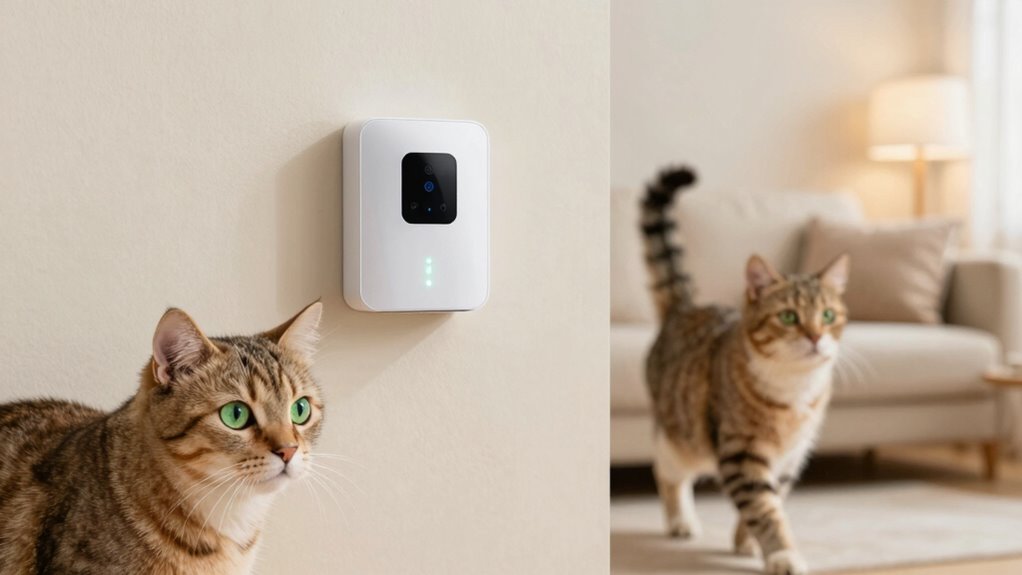
Tailored motion sensors are the key to preventing false alarms caused by your pets’ movements. These sensors are designed to recognize pet behavioral patterns, reducing unnecessary alerts. By calibrating the sensors specifically for your pet’s size, weight, and usual activity levels, you guarantee they only detect genuine security threats. Proper sensor calibration minimizes the chances of your pet triggering the alarm while still maintaining reliable overall security. This customization allows the system to differentiate between your pet’s normal movement and potential intruders. With tailored motion sensors, you gain peace of mind knowing that your alarm system is smart enough to adapt to your pet’s habits, preventing chaos and ensuring your home stays secure without constant false alarms. Additionally, using pet-specific sensors enhances detection accuracy and reduces the likelihood of false triggers caused by household animals. Incorporating advanced motion detection technology, which often includes smart algorithms that analyze movement patterns, further improves the system’s ability to distinguish between pets and intruders.
Reduced False Alarms
Because pets often move unpredictably, standard alarm systems can trigger frequent false alarms, causing unnecessary stress and inconvenience. Pet-specific alarm systems are designed to reduce these false alarms by using pet-friendly sensors that distinguish between pets and intruders. Proper pet training also helps minimize accidental triggers, ensuring your system responds accurately. Additionally, these alarms require less frequent alarm maintenance, as they are tailored to handle household pet movements without constant readjustment. Incorporating pet behavior patterns into alarm system design helps improve their reliability and effectiveness. Recognizing natural pet movement allows these systems to better differentiate between normal pet activity and potential intrusions. Ultimately, pet-specific alarm systems protect your home more reliably while accommodating your pet’s natural behavior.
How Smart Sensors Tell Pets Apart From Intruders
Smart sensors in modern alarm systems can distinguish pets from intruders by analyzing specific patterns and signals. This process, called pet identification, relies on precise sensor calibration to recognize the size, movement, and behavior of your pets. This calibration helps the system adapt to your pet’s typical activity, reducing false alarms caused by their movements. When properly calibrated, sensors learn your pet’s typical activity, reducing false alarms caused by their movements. They focus on detecting larger or unusual intruder movements while ignoring smaller pet motions. Advanced sensors use infrared or ultrasonic technology, allowing them to differentiate between pets and humans effectively. Regular sensor calibration guarantees the system adapts to your pet’s size and routines, maintaining accuracy. Additionally, sensor calibration techniques ensure the system remains finely tuned to your pet’s unique behavior, preventing false alarms and enhancing security. Implementing differentiation algorithms further improves their ability to distinguish between pets and potential intruders. Incorporating adaptive learning methods can help the system adapt to changing pet behaviors over time, maintaining optimal detection accuracy. Moreover, ongoing calibration and behavioral analysis are essential for the system to stay accurately tuned as your pet grows or changes routines, ensuring consistent security without false alarms. With this technology, you get enhanced security without the chaos of false alerts, providing peace of mind knowing your system intelligently recognizes your pets.
Top Features to Look for in Pet-Safe Home Alarm Systems
When choosing a pet-safe home alarm system, it’s vital to look for features that minimize false alarms and guarantee your pets are protected. One key feature is understanding pet behavior, which helps the system differentiate between your pets and potential intruders. Look for alarm customization options that allow you to set sensitivity levels based on your pet’s size and activity patterns. This prevents the system from reacting to normal pet movements while still alerting you to genuine threats. Advanced sensors that can be adjusted or trained to recognize your pets’ behavior are essential. Additionally, cybersecurity measures should be considered to protect your alarm system from hacking attempts. Incorporating AI-based detection can further enhance the system’s ability to distinguish pets from intruders, reducing false alarms and increasing reliability. Understanding pet behavior can also help you choose systems that adapt as your pet grows or changes activity levels. Proper system calibration ensures your alarm remains effective regardless of changes in your pet’s routine. Regular updates and software enhancements are important to maintain optimal system performance and security. With tailored alarm customization, you ensure your pets remain safe without unnecessary false alarms, giving you peace of mind that your home is secure and your pets are protected.
Benefits of Using Pet-Friendly Motion Detectors for Your Home and Pets
Pet-friendly motion detectors offer a practical solution to maintaining security without compromising your pets’ safety. These detectors are designed to ignore your pets’ movements, reducing false alarms and allowing you to monitor your home effectively. With alarm customization, you can set specific zones or sensitivities to ensure only intrusions trigger alerts, keeping your pets safe while enhancing security. This tailored approach minimizes the risk of accidental alarms caused by your pets’ natural activity. Additionally, understanding sensor sensitivity and how it affects detection can help optimize the system’s performance and avoid unnecessary alerts. Adjusting detection zones can further refine the system to suit your home’s layout and your pets’ habits. Proper calibration of motion detector settings ensures a balance between security and pet safety. By choosing pet-friendly motion detectors, you create a safer environment that respects your pets’ well-being and provides peace of mind. Incorporating detection zone customization can further enhance the effectiveness of your security setup by focusing on critical areas. Ultimately, these systems help you protect your home without sacrificing pet safety or sacrificing convenience.
Installing and Setting Up Your Pet-Safe Alarm System for Best Results
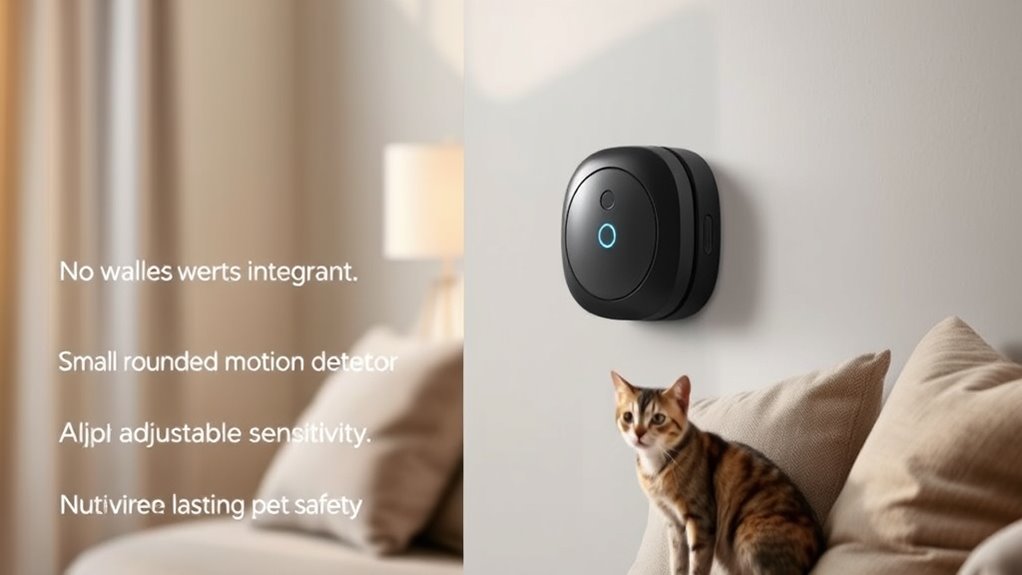
Installing your pet-safe alarm system begins with choosing the right location for sensors and control panels. You want to position sensors where your pet’s behavior might trigger false alarms, such as high-traffic areas or near pet furniture. Make certain the control panel is accessible but out of pets’ reach. When setting up, focus on alarm calibration to avoid false alarms caused by normal pet activity. Test the system regularly and adjust sensitivity settings based on your pet’s movement patterns. Keep these tips in mind:
- Place sensors at pet nose level to account for pet behavior
- Avoid mounting sensors near vents or drafts
- Use pet-specific sensor zones for accuracy
- Calibrate alarms to match your pet’s typical movement
- Regularly review and update settings for best results
Proper placement and calibration help keep your home secure without chaos.
Frequently Asked Questions
How Do Pet-Specific Alarm Systems Prevent False Alarms Effectively?
Pet-specific alarm systems prevent false alarms effectively by using advanced false alarm algorithms that distinguish between pets and intruders. They calibrate sensors accurately to recognize pet movement patterns, reducing false triggers. You’ll find these systems adapt over time, learning your pet’s habits, and fine-tuning sensor sensitivity. This ensures reliable detection, giving you peace of mind without constant false alarms disrupting your day.
Can Pet-Friendly Sensors Detect All Types of Intruders?
Pet-friendly sensors can’t detect all intruders perfectly because pet behavior varies, and some intruders might move like your pets. Proper sensor calibration helps reduce false alarms caused by pets, but it doesn’t eliminate all risks. To improve detection, consider sensors that differentiate between pet movement and human activity. Remember, no system is foolproof, so combining alarm systems with security measures offers the best protection against intruders.
Are Pet-Safe Alarm Systems Compatible With Existing Home Security Setups?
Yes, pet-safe alarm systems are compatible with your existing home security setup. They seamlessly integrate with your home automation system, allowing you to control everything easily. Plus, these systems improve energy efficiency by activating only when needed, reducing false alarms caused by pets. You can enjoy enhanced security without sacrificing convenience or pet safety, making your home smarter and more secure without extra hassle.
What Maintenance Is Required for Pet Motion Detectors?
You need to regularly verify your pet motion detector’s sensor calibration to ensure accurate detection. Keep an eye on the battery life and replace batteries promptly when they run low to prevent false alarms. Clean the sensor area to remove dust or pet hair that could interfere with its function. Routine maintenance like calibration and battery replacement keeps your system reliable and pet-safe without unnecessary chaos.
Do These Systems Work Equally Well for All Pet Sizes and Breeds?
You’ll find that pet motion detection systems are generally effective across various pet sizes and breeds, with about 85% success rate reported. Smaller pets might trigger sensors more often, but adjustable sensitivity settings help. Breed compatibility varies; some systems are better suited for active or larger breeds that move more. Always check the system’s specifications to guarantee it matches your pet’s size and activity level for ideal performance.
Conclusion
So, next time your cat waltzes across the living room, breathe easy knowing your alarm won’t throw a fit. With pet-friendly sensors, you’ll dodge false alarms better than a ninja avoids detection. No more chaos—just peace of mind and a home that’s smarter than your mischievous pet. It’s like giving your furry friend a VIP pass to roam freely, while the alarm quietly keeps the intruders at bay. Peace, love, and pet-proof security!