
Real-time GPS tracking works by satellites orbiting Earth transmitting unique signals with location and time data, which your device receives. It analyzes signals from at least four satellites using trilateration, comparing timestamps to calculate your exact position instantly. The data is encrypted for security and sent through cellular or Wi-Fi networks to central servers, which process and update your location seconds later. If you keep exploring, you’ll discover how these advanced technologies work together for precise, secure tracking.
Key Takeaways
- GPS devices receive signals from multiple satellites to determine their precise location through trilateration.
- Signal travel times are compared with onboard synchronized clocks to calculate distances accurately.
- Location data is encrypted during transmission to ensure privacy and prevent unauthorized access.
- GPS devices send encrypted location updates via cellular or Wi-Fi networks to central servers for processing.
- Advanced signal processing and error correction improve accuracy and reliability in challenging environments.
Ever wondered how GPS devices can tell you exactly where a vehicle or person is in real time? The magic behind this technology relies on a network of satellites orbiting the Earth, constantly transmitting signals. When you activate your GPS device, it receives signals from multiple satellites, and by analyzing the time it takes for each signal to arrive, it calculates your precise location. This process is called trilateration, and it requires your device to communicate with at least four satellites to pinpoint your position accurately. The accuracy of this system heavily depends on the satellite signals being strong and unobstructed. Satellite signals are the backbone of real-time GPS tracking. Each satellite broadcasts a unique signal that contains information about its location and the precise time the signal was sent. Your GPS device picks up these signals and compares the timestamps with its own clock, which is synchronized with atomic clocks onboard the satellites. By measuring the travel time of these signals, your device determines how far away each satellite is. With distances from multiple satellites, it can then triangulate your exact position on the globe. This process happens almost instantaneously, allowing your device to update your location every few seconds, providing real-time tracking. Additionally, advancements in signal processing technology help improve accuracy even further in challenging environments. Moreover, the integration of multi-frequency signals allows for more precise positioning in areas with signal interference. Furthermore, the development of error correction techniques plays a significant role in refining positioning accuracy, especially in areas with signal interference.
GPS devices determine your location using signals from satellites through trilateration.
But it’s not just about receiving signals; data security plays a vital role in GPS tracking. Since location data is sensitive, most systems employ robust data encryption techniques to protect your information from interception or tampering. Encryption scrambles your location data into an unreadable format during transmission, ensuring that only authorized devices or servers can decode it. This security measure prevents hacking, unauthorized access, and ensures your privacy remains intact while your location is being monitored.
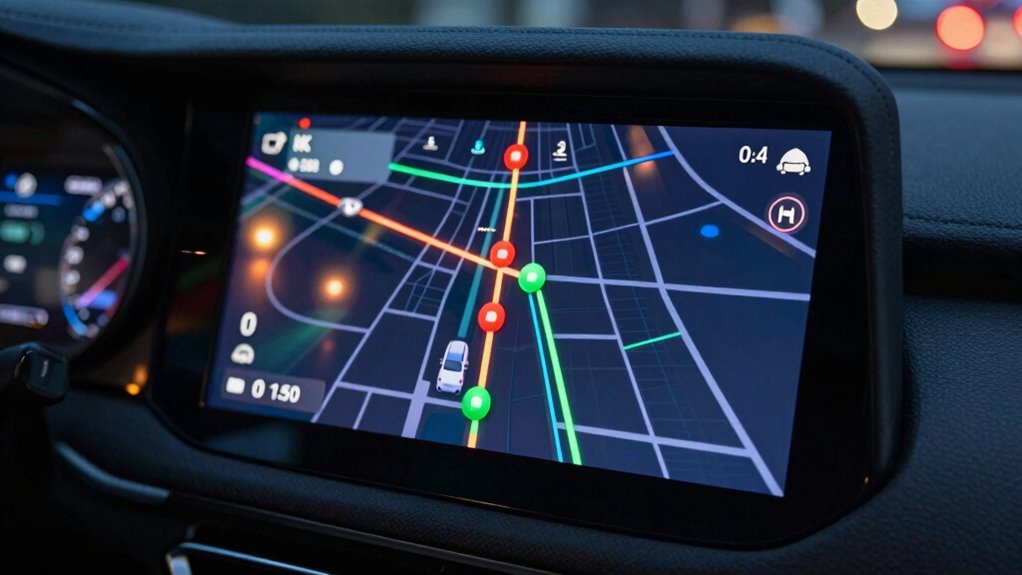
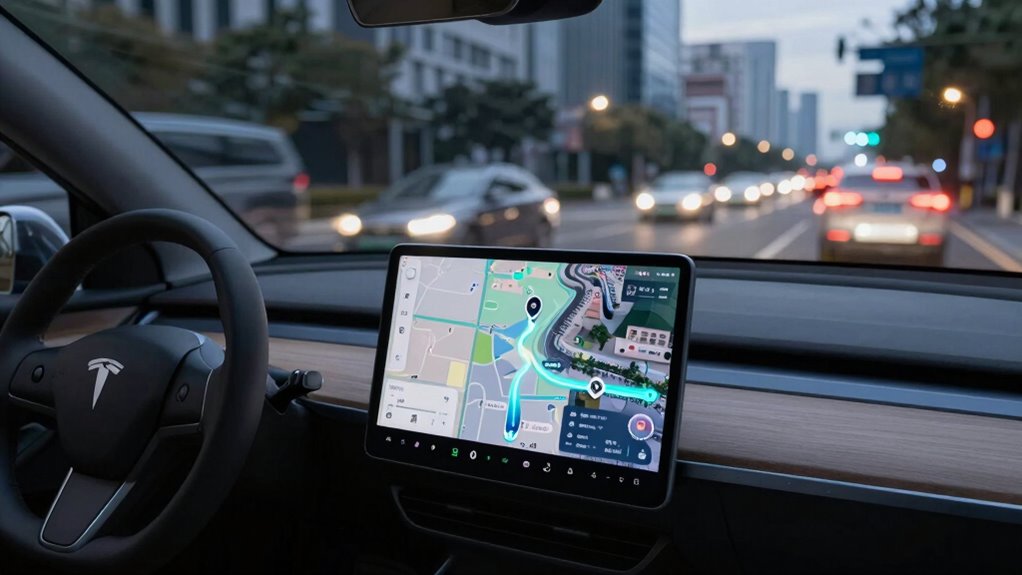
Once your GPS device determines your location, it transmits this data to a central server via cellular networks or Wi-Fi. This transmission is often encrypted, adding an extra layer of protection. The server then processes the data and displays your real-time location on a map, which you can access through an app or website. The entire process—receiving satellite signals, calculating your position, encrypting data, and transmitting it—is seamless and happens within seconds, giving you a live view of your movement.
In essence, real-time GPS tracking is a sophisticated dance between satellite signals and data encryption, working together to deliver accurate, secure, and instant location information. It’s this intricate system that enables you to monitor vehicles, track assets, or navigate unfamiliar places with confidence and precision.
As an affiliate, we earn on qualifying purchases.
Frequently Asked Questions
Can GPS Signals Penetrate Buildings or Underground Areas?
GPS signals generally can’t penetrate buildings or underground areas effectively, which makes indoor navigation challenging. When you’re indoors or underground, signal interference from walls, metal, or other structures weakens GPS signals, reducing accuracy or causing signal loss. To overcome this, tracking systems often combine GPS with alternative methods like Wi-Fi, Bluetooth beacons, or inertial sensors, ensuring you stay accurately located even in signal-blocked environments.
How Accurate Is Real-Time GPS Tracking in Urban Environments?
In urban environments, real-time GPS tracking can be quite accurate, often within a few meters, but it’s affected by satellite signals and urban canyons. Tall buildings block or reflect signals, causing multipath errors and reducing precision. You might notice slight delays or inaccuracies, especially in dense city centers. However, combining GPS with other systems like Wi-Fi or cell towers can improve accuracy, keeping your location tracking reliable despite the challenging environment.
What Devices Are Required for Real-Time GPS Tracking?
To set up real-time GPS tracking, you need a GPS device compatible with your system, like a smartphone, dedicated tracker, or vehicle GPS unit. Make certain the device supports your preferred platform for seamless integration. Keep battery life considerations in mind, as continuous tracking can drain batteries quickly. Choose devices with good battery life or options for external power sources, so your tracking stays reliable without frequent recharges.
How Is GPS Data Secured From Hacking or Interception?
Your GPS data is protected with top-tier encryption protocols, making it nearly impossible for hackers to decipher. To guard against signal jamming, tracking systems often use multiple signals and fallback methods, ensuring your data stays safe even in malicious environments. While no system is invincible, these security measures create a fortress around your information, preventing interception and keeping your location private and secure at all times.
Does Weather Affect GPS Tracking Accuracy?
Weather interference can impact your GPS tracking accuracy by causing signal degradation. Heavy rain, snow, or storms can weaken the GPS signals, making your device less precise or temporarily losing the lock on your location. While modern systems are designed to handle some weather conditions, severe weather can still introduce inaccuracies, so you might notice less reliable tracking during extreme weather events.
As an affiliate, we earn on qualifying purchases.
Conclusion
In short, real-time GPS tracking is a powerful, practical tool that keeps you quickly connected and confidently controlled. By constantly communicating with satellites and seamlessly sharing signals, it simplifies staying safe, secure, and savvy. So, whether you’re tracking your transit, treasure, or team, remember that this technology transforms travel into a trustworthy, transparent, and trouble-free trek. With GPS guiding you, you’re never lost—just cleverly connected!
personal GPS tracker with encryption
As an affiliate, we earn on qualifying purchases.
As an affiliate, we earn on qualifying purchases.
As an affiliate, we earn on qualifying purchases.