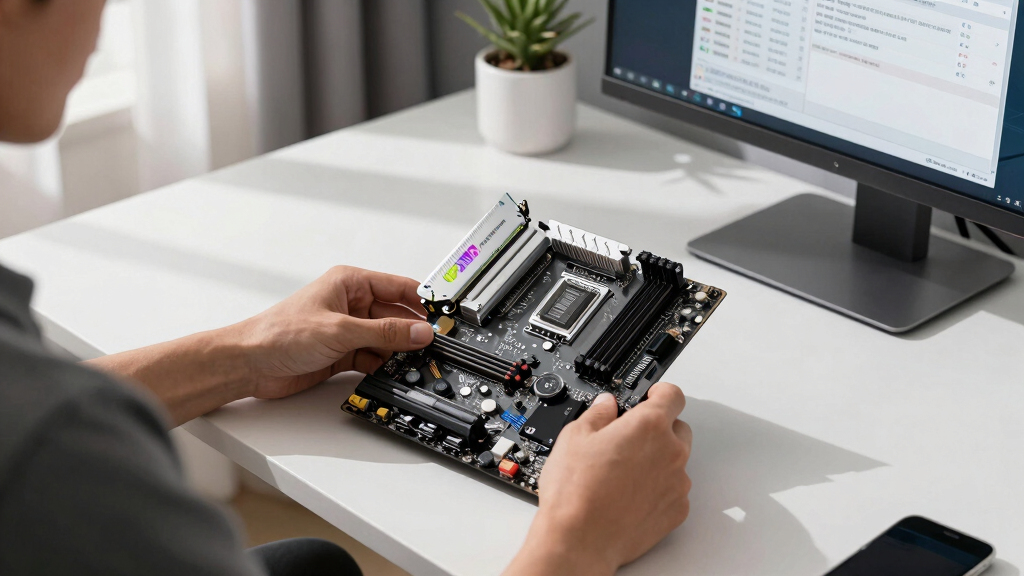

📊 Full opportunity report: DDR5 Now, DDR6 Soon: A Buyer’s Field Guide on ThorstenMeyerAI.com — validation score, market gap, and execution plan.

Get the latest gadgets delivered free with Prime
- Fast, free delivery on millions of items
- Prime Video, Amazon Music and more included
- Member-only deals all year
TL;DR
DDR5 remains the recommended memory standard in 2026, with DDR6 still in development and not yet suitable for mainstream purchases. Prices for DDR5 are high, but waiting for DDR6 is not advisable for most users.
DDR5 memory remains the recommended choice for most PC builds in 2026, with current prices high but stable, while DDR6 is still in development and not ready for mainstream adoption. This guidance helps buyers avoid overpaying or delaying upgrades unnecessarily.
Market forecasts indicate that DDR5 prices will not significantly decrease before 2028, and the next quarter is likely to see prices remain stable or rise. DDR6, which promises higher bandwidth and new form factors, is not yet available for consumers and will not be mainstream before 2027. It requires new CPUs, chipsets, and modules, with initial availability limited to enterprise and high-end platforms.
For typical users, the best value remains DDR5-6000 with CL30 timings, which balances speed and cost. Buying capacity should match current workload needs—32GB for general use, 64GB for heavy multitasking—avoiding the temptation to purchase excessive capacity at inflated prices. DDR4 is no longer advisable for new builds, as it is nearing end-of-life and offers no future upgrade path. DDR6 is not recommended for most buyers in 2026, except for specialized workloads or long-term workstations, due to its staged rollout and high cost.
DDR5 now, DDR6 soon
A buyer’s field guide. The 20-year instinct — wait for prices to drop, or wait for the next generation — is broken this cycle. Buy the DDR5 you actually need now; don’t wait for DDR6. Here’s the reasoning.
Driven to end-of-life, production slashed. Same money, dead-end socket. Leave a working DDR4 box alone — but never start a new build on DDR4 to “save.”
A framework, not a gamble. Buy the DDR5 you need now, at the sweet spot, in the capacity you’ll actually use — don’t buy DDR4, don’t wait for DDR6. The two costliest mistakes in this market are the ones that feel prudent: waiting for a price drop that isn’t coming, and waiting for a next-gen part that launches dearer than what’s on the shelf. Next: The SSD Squeeze.
Why Immediate DDR5 Purchase Is Advisable in 2026
Choosing DDR5 now prevents overpaying for obsolete technology or waiting years for DDR6, which is not yet commercially available. For most users, investing in current DDR5 hardware ensures better performance, compatibility, and value, especially as prices are unlikely to drop soon. Delaying upgrades for DDR6 could result in missing out on platform improvements and incurring higher costs later, since DDR6 will arrive at a premium and require entirely new systems.
As an affiliate, we earn on qualifying purchases.
2026 Memory Market and the Outlook for DDR6
Memory prices surged in recent years due to supply shortages, leading to high costs for DDR5 modules. While DDR5 has become the standard for new builds, its prices remain elevated, with forecasts indicating stabilization only around 2028. DDR6, announced by JEDEC, is positioned as the next-generation standard, promising higher bandwidth and efficiency, but it is still in development and will not be available for mainstream consumers until at least 2027. Its phased rollout will initially target enterprise servers and high-end workstations before reaching consumer desktops and laptops, with full adoption not expected until 2030.
Manufacturers emphasize that DDR6 will require new hardware, including CPUs and motherboards, making it a significant upgrade over DDR5. Early adoption will involve higher costs and potential stability issues, discouraging most buyers from waiting for DDR6 at this stage.
“DDR6 will offer significant performance improvements but will require new systems and platforms, with broad adoption not expected before 2030.”
— JEDEC standards committee representative
As an affiliate, we earn on qualifying purchases.
Uncertainties Surrounding DDR6 Adoption and Pricing
It is still unclear how quickly DDR6 modules will become affordable and widely available once launched, or how early-generation DDR6 products will perform in real-world scenarios. The exact timing of mainstream adoption and the impact on DDR5 pricing remain uncertain, as market dynamics and technological developments continue to evolve.
high-performance DDR5 desktop memory
As an affiliate, we earn on qualifying purchases.
As an affiliate, we earn on qualifying purchases.
Next Steps for Buyers Considering Memory Upgrades in 2026
Consumers should focus on purchasing DDR5 modules that meet their current needs, particularly DDR5-6000 CL30 kits, and avoid waiting for DDR6. Monitoring JEDEC standard approvals and motherboard compatibility lists will be key to tracking DDR6 progress. For those with long-term plans or specialized workloads, planning for a DDR6 upgrade around 2027–28 may be appropriate, but for most, immediate investment in DDR5 remains the best choice.
As an affiliate, we earn on qualifying purchases.
Key Questions
Should I buy DDR4 memory in 2026?
No. DDR4 is nearing end-of-life, and new builds should prioritize DDR5 for future compatibility and performance.
When will DDR6 be available for mainstream consumers?
DDR6 is expected to reach mainstream desktops around 2027, but full adoption may not occur until 2030, and early modules will be expensive and limited in capacity.
Is it worth waiting for DDR6 to save money?
Generally no, unless you need a workstation with high bandwidth for AI, scientific computing, or long-term investment. For most users, DDR5 offers better value now.
Will DDR6 be significantly faster than DDR5?
Yes, DDR6 promises higher speeds—starting around 8,800 MT/s and potentially reaching 17,600 MT/s—doubling or tripling effective bandwidth, but these benefits are mainly relevant for specialized workloads.
Source: ThorstenMeyerAI.com
Fall Picks
fall essentials
As an affiliate, we earn on qualifying purchases.