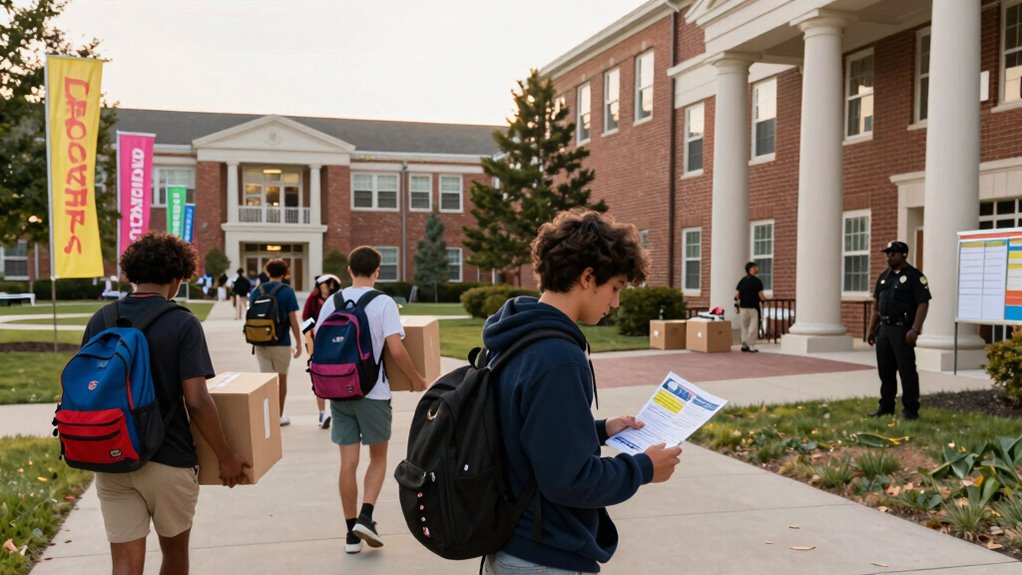

Before move-in day, talk with campus staff or student groups about security measures like patrols, emergency stations, and access policies. Familiarize yourself with safety protocols, emergency plans, and communication channels such as alerts and campus apps. Learn about resources like self-defense classes or escort services to boost your confidence. Being proactive and aware of your surroundings helps you stay safe and comfortable. Keep exploring how these strategies can help you feel prepared and confident on your new campus.

Get the latest gadgets delivered free — and shop member deals
- Fast, free delivery on millions of items
- Access to Prime Big Deal Days deals on October 6–7
- Prime Video, Amazon Music and more included
Key Takeaways
- Discuss campus security measures, including patrols, surveillance, and safety protocols, to build awareness and confidence.
- Review emergency procedures, communication channels, and safety resources available during college orientation.
- Encourage sharing personal safety habits like buddy systems, safety apps, and situational awareness practices.
- Explain available support services, such as safety escorts, self-defense classes, and campus security contacts.
- Foster open conversations about safety concerns to empower students to stay vigilant and proactive.

Talking about college safety might feel uncomfortable, but it’s an essential conversation for students and parents alike. Moving into a new environment can be exciting, but it also comes with concerns about campus security and how well the school handles emergencies. Addressing these topics upfront helps you feel more prepared and confident as you start this new chapter. Start by asking about the campus security measures in place. Find out if the campus has a visible security presence, such as security patrols and emergency call stations. Knowing that there are trained personnel and clear protocols can ease your worries and give you peace of mind. It’s also helpful to inquire about policies related to personal safety, like how the school manages visitor access and whether there are systems for reporting suspicious activity. These details give you a clearer picture of how seriously the campus takes security and how protected your student will be.
Emergency preparedness is another critical aspect to discuss. Ask about the school’s plans for natural disasters, medical emergencies, or other unexpected events. Find out if there are regular drills, safety workshops, or orientation sessions that teach students what to do during an emergency. Encourage your student to familiarize themselves with the campus map, emergency exits, and designated safe zones before move-in day. This proactive approach guarantees they won’t be overwhelmed if something occurs. It’s also wise to review the communication channels used during emergencies, whether through text alerts, emails, or campus apps. Make sure your student knows how to access these alerts quickly and what steps to follow when alerted. Additionally, understanding the security infrastructure can help students feel more confident about their safety on campus. Developing a safety mindset is equally important, as it encourages students to stay vigilant and proactive about their well-being. A security policy that is clearly communicated can empower students to understand their rights and responsibilities during emergencies. Taking time to learn about the security policies and procedures can help students navigate emergency situations more effectively. Furthermore, understanding how the campus handles security technology, such as surveillance cameras or emergency communication systems, can give added reassurance.
You should also talk about personal safety habits and resources available on campus. Discuss the importance of staying aware of surroundings, avoiding risky situations, and using safety apps or buddy systems. Many campuses offer resources like self-defense classes or safety escort services—explore these options together and encourage your student to take advantage of them. By openly discussing campus security and emergency preparedness, you help your student develop a safety mindset that will serve them well throughout their college experience. It’s about empowering them to take responsibility for their safety while knowing they’re supported by the school’s measures and resources. This conversation can feel overwhelming, but it’s a vital step in ensuring a smooth and secure transition into college life.
personal safety alarm for students
As an affiliate, we earn on qualifying purchases.
As an affiliate, we earn on qualifying purchases.
Frequently Asked Questions
How Can Students Stay Safe During Late-Night Study Sessions?
During late-night study sessions, you can stay safe by choosing well-lit areas on campus with good campus lighting. Always have your phone charged and handy, and keep emergency contacts easily accessible. Avoid isolated spots and trust your instincts—if something feels off, leave immediately. Consider studying with a friend or in a designated campus late-night study zone for added security. Staying aware and prepared helps guarantee your safety during late-night hours.
What Safety Apps Are Recommended for College Students?
You need to download top safety apps that are as powerful as a fortress. For campus emergencies, apps like LiveSafe or Rave Guardian connect you instantly to campus safety and emergency services. For digital security, consider apps like Norton Mobile Security or Lookout, which protect your devices from threats. These tools guarantee you’re always prepared, whether you’re walking home late or safeguarding your personal info, making safety a seamless part of your daily routine.
How Should Parents Discuss Personal Safety Without Causing Anxiety?
You should balance reassurance with fostering independence by emphasizing your trust in their judgment while discussing safety tips. Encourage open conversations about their plans and feelings, making sure they know you’re available if needed. Avoid overloading them with fears; instead, focus on practical advice like using safety apps and staying aware of their surroundings. This approach helps them feel supported without unnecessary anxiety, empowering them to handle safety confidently.
What Are Common Safety Concerns for International Students?
You’ll want to address common safety concerns for international students by discussing cultural differences that might impact daily interactions and safety perceptions. Emphasize the importance of emergency preparedness, such as knowing local emergency numbers and university resources. Encourage them to stay vigilant, communicate regularly with campus support, and trust their instincts. This proactive approach helps them navigate unfamiliar environments confidently and safely, easing their adaptation into college life.
How Can Students Protect Their Belongings in Shared Dorms?
To protect your personal belongings in shared dorms, prioritize dorm security by locking your door whenever you’re out and using a secure lock on your closet or storage areas. Keep valuables like electronics, jewelry, and important documents in a discreet, locked container. Avoid sharing your keys or access codes, and be aware of your surroundings. These steps help guarantee your personal belongings stay safe and secure in a shared living space.
As an affiliate, we earn on qualifying purchases.
Conclusion
As you stand on the cusp of this new chapter, picture your future dorm glowing softly under the evening sky, a place where safety is your shield and peace of mind your foundation. Talking openly about safety now guarantees you’ll walk through those doors confident and prepared, ready to embrace every moment. Remember, your careful steps today create a secure path tomorrow—so speak up, stay alert, and trust yourself to make this college journey a safe and memorable adventure.
self-defense classes for college students
As an affiliate, we earn on qualifying purchases.
As an affiliate, we earn on qualifying purchases.
As an affiliate, we earn on qualifying purchases.
Halloween Picks
halloween
As an affiliate, we earn on qualifying purchases.