
To stay safe while walking across campus at night, plan your route carefully. Choose well-lit, populated pathways and avoid secluded, poorly lit areas like alleys and hidden corners. Use campus maps or apps to identify familiar landmarks and well-maintained lighting. Walk confidently, stay alert, and consider walking with friends or using campus escort services. Carry safety tools like a flashlight or personal alarms. Keep essential safety tips in mind to guarantee a safer, more comfortable walk—there’s more to learn for your security.

Get the latest gadgets delivered free with Prime
- Fast, free delivery on millions of items
- Prime Video, Amazon Music and more included
- Member-only deals all year
Key Takeaways
- Prioritize well-lit, familiar pathways and avoid secluded or poorly lit areas to enhance safety.
- Use campus maps, signage, and real-time updates to plan and follow safe routes.
- Walk confidently, stay alert, and avoid distractions like headphones or phone use.
- Carry personal safety devices such as flashlights, alarms, or pepper spray for added protection.
- Walk with others or request campus escort services in unfamiliar or low-visibility areas.
As an affiliate, we earn on qualifying purchases.
Why Planning Your Route Is Key to Nighttime Campus Safety

Planning your route before heading out at night is essential for staying safe on campus. When you prioritize lighting awareness, you can identify well-lit areas, which are safer for walking. Route planning helps you avoid dark, isolated spots that could pose risks. By mapping out your path in advance, you ensure you stay within familiar, brightly lit corridors and avoid shortcuts through poorly lit sections. This proactive approach reduces the chances of accidents or encounters with unsafe individuals. Remember, knowing where you’re going and choosing routes with good lighting keeps you alert and confident. Taking a moment to plan your route before leaving makes a significant difference in your safety during nighttime campus walks.
As an affiliate, we earn on qualifying purchases.
How to Identify Well-Lit, Public Pathways on Campus
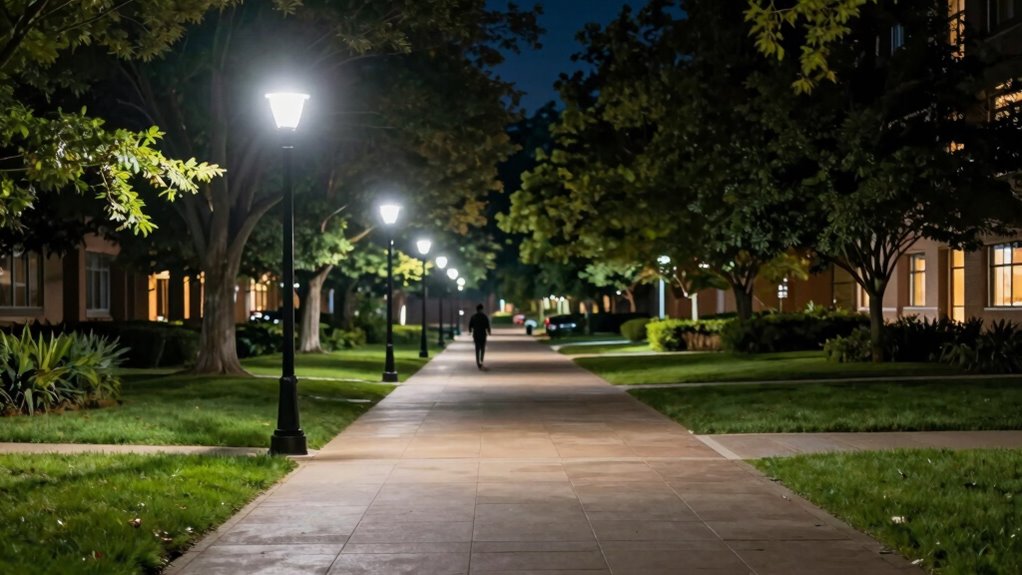
When walking at night, look for pathways that are brightly lit to stay visible and safe. Stick to busy, open areas where others are around, reducing your risk of encountering trouble. These simple signs help you pick the safest routes across campus after dark. Additionally, paying attention to well-designed outdoor lighting can significantly improve your visibility and safety during nighttime walks. Incorporating auditory cues such as sounds from nearby activity can further enhance your awareness of your surroundings. Being familiar with security escort programs can also provide an extra layer of safety if needed. Recognizing lighting technology can help you better understand which pathways are most illuminated and secure. Furthermore, understanding energy-efficient lighting innovations can help you identify well-maintained, sustainable lighting systems that promote safety while conserving resources.
Look for Bright Lighting
Bright lighting is one of the easiest ways to identify safe, well-maintained pathways on campus. When walking at night, look for areas that are brightly illuminated, as they indicate well lit pathways designed for safety and visibility. Well-lit routes help you see potential obstacles, other people, and any suspicious activity, reducing the risk of accidents or encounters with troublemakers. Pay attention to streetlights, lamps, and overhead lighting fixtures that evenly distribute light along the path. Avoid dark or poorly lit areas, which can hide hazards or make you feel vulnerable. Bright lighting not only improves your visibility but also signals that the area is active and monitored, making it a safer choice for nighttime walking. Additionally, well-maintained lighting fixtures contribute to overall campus safety by discouraging criminal activity and fostering a sense of security. Proper lighting also enhances visibility, helping you stay alert and aware of your surroundings. Incorporating energetic alignment by choosing well-lit paths can further promote a sense of calm and confidence during your walk. Using well-lit routes also supports personal safety by reducing the likelihood of dangerous encounters and making you feel more secure. Ensuring that pathways are clear of obstructions and well-maintained further enhances your safety awareness, allowing for smoother navigation in low-light conditions.
Choose Busy, Open Areas
Opting for busy, open areas on campus can considerably enhance your safety when walking at night. Well-lit pathways and open spaces make it easier to see your surroundings and be seen by others. Avoid shortcuts through dark, secluded areas that might tempt distracted walking or make you less aware of potential hazards. When you’re dressed in casual attire, it’s especially important to stick to populated routes that are clearly visible and frequently traveled. These areas tend to have more foot traffic, which naturally deters potential threats. Keep your focus on your surroundings, rather than distractions like your phone, and choose routes that are busy and open to maximize your safety. Staying alert and on well-traveled paths is key to a safer night walk. Trusted businesses and resources nearby can also provide additional safety options if needed. Being aware of campus safety resources can further enhance your security during late-night walks. Additionally, understanding market dynamics can help you stay informed about potential risks and opportunities in your environment. Maintaining awareness of environmental lighting can further improve your visibility and safety during nighttime walks.
As an affiliate, we earn on qualifying purchases.
What Are Common Secluded Spots to Avoid After Dark?
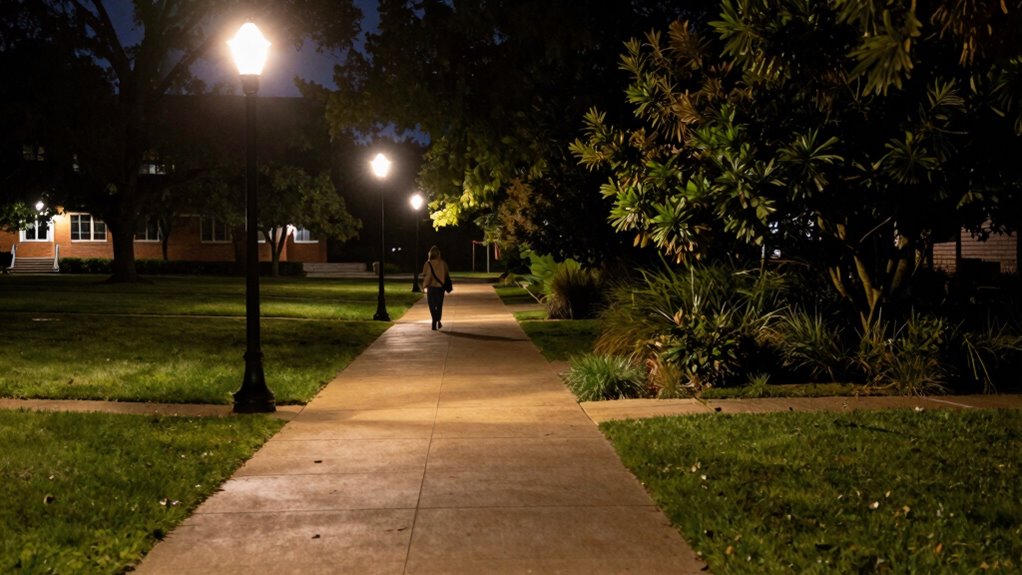
You should be cautious around hidden pathways and alleyways that aren’t well-lit, as they can be unsafe after dark. Isolated park areas may seem peaceful but can pose risks when no one else is around. Unlit parking lots are another spot to avoid, since poor visibility makes it easier for trouble to happen. Additionally, character development in some stories shows how being aware of your surroundings can help prevent dangerous situations. Recognizing environmental hazards can enhance your safety during late-night walks. Being familiar with lighting conditions can help you choose safer routes and avoid unexpectedly dark areas. Paying attention to electric bike features such as lights and speed capabilities can further improve your safety at night.
Hidden Pathways and Alleys
Hidden pathways and alleys often seem inviting during the day, but after dark, they can become dangerous and best avoided. These secluded spots hide potential threats and make you vulnerable. Be cautious of:
- Narrow alleys with limited visibility, where someone could hide.
- Overgrown hidden pathways that obscure your view and hide suspicious activity.
- Shadowy corners in alleys that can conceal unwelcome visitors.
- Unlit routes that leave you blind to your surroundings.
- Poorly maintained lighting can further increase risks, so stick to well-lit areas whenever possible. Maintaining proper lighting is crucial because it enhances overall public safety and discourages illicit activity. Adequate lighting not only helps you see better but also signals that an area is monitored and less likely to be dangerous. Ensuring that outdoor lighting is regularly checked and functioning properly can make a significant difference in kitchen safety by preventing accidents and deterring crime. Avoid these areas because they increase your risk of encountering trouble. Trust your instincts and stick to well-lit, populated routes. Remember, even familiar alleys can turn unsafe at night. Stay alert, and prioritize your safety over shortcuts.
Isolated Park Areas
Even well-maintained parks can become risky after dark if you venture into secluded areas away from the crowds. Look out for isolated spots with few park benches or hidden corners where people rarely gather. These areas often lack visibility and may have limited lighting, making them attractive targets for trouble. Pay attention to trail signs, which can help you stay on well-lit, populated paths. Avoid wandering into dense thickets or behind structures that block your view. If you notice an area that feels deserted or eerily quiet, it’s best to turn back or choose a more populated route. Recognizing hidden corners or poorly lit areas can help you avoid dangerous spots before entering them. Being aware of isolated park areas and their typical features is key to maintaining safety during late-night walks. Staying alert and sticking to well-traveled paths helps guarantee your safety when walking through park areas late at night.
Unlit Parking Lots
Unlit parking lots often become secluded spots that pose risks after dark. These unlit areas can compromise your parking lot safety and make you vulnerable. Avoid these common secluded spots:
- Corners of large parking lots with minimal lighting
- Rows far from entrances and exits
- Behind parked vehicles where visibility is low
- Under isolated light poles with broken or flickering lights
These unlit areas attract unwanted attention and increase your chances of danger. Always choose well-lit, busy spots when parking or walking through campus at night. Staying aware of your surroundings and avoiding secluded parking lot areas can make all the difference in staying safe. Remember, well-lit areas are your best defense against potential threats after dark.
As an affiliate, we earn on qualifying purchases.
How to Use Campus Maps and Apps to Map Your Safer Route

Using campus maps and mobile apps can markedly enhance your safety when walking across campus at night. Start by reviewing the campus map to identify well-lit routes that pass familiar campus landmarks, like the main library or student center. Many apps allow you to customize your route, avoiding areas with limited lighting or known hazards. Check if the app provides real-time updates on construction or incidents. Make sure to save emergency contacts within the app or your phone, so help is easily accessible if needed. Some campus-specific apps include safety features like emergency call buttons or route sharing options. Planning your route ahead of time helps you stay alert and confident as you navigate campus at night, minimizing risks and keeping your safety a priority.
When to Consider Walking in Groups or Using Campus Escort Services

You should consider walking in groups or using campus escort services when it’s late or the area feels unsafe. If you’re alone and the route is poorly lit or unfamiliar, it’s a good idea to prioritize your safety. Taking these precautions can help you arrive safely and feel more secure during nighttime walks.
When to Walk in Groups
Walking in groups or using campus escort services is a smart choice when you’re heading out late at night, especially if the area feels unfamiliar or less populated. When considering personal safety, walking with others can make you less vulnerable and more aware of your surroundings. Use these signs to decide when to walk in groups:
- The route is poorly lit or secluded.
- You’re unfamiliar with the area.
- You’re carrying valuables or expensive equipment.
- You feel uneasy or anxious about your surroundings.
Group walking helps with route planning, ensuring you stay on well-lit, populated paths. It also boosts your confidence and reduces the risk of potential threats, making your late-night walk safer and more secure.
Campus Escort Service Use
Ever wonder if it’s better to call a campus escort service instead of walking alone late at night? If you’re heading to campus parking or running nighttime errands, consider prioritizing safety. Using an escort service can be a smart choice when visibility is low or you’re feeling uneasy.
| Situation | Best Option |
|---|---|
| Late at night | Call campus escort service for a ride |
| Unfamiliar areas | Use escort service for reassurance |
| After classes | Walk in groups or request escort |
| Campus parking | Use escort service to avoid dark spots |
| Nighttime errands | Opt for escort service for safety |
Choosing the escort service adds an extra layer of security, especially when walking alone isn’t ideal. Trust your instincts and prioritize your safety.
What Personal Safety Tools Can Enhance Your Night Walks?

To stay safe during your night walks across campus, carrying personal safety tools can make a significant difference. These tools empower you to defend yourself and attract help if needed. Consider these essential items:
Carrying personal safety tools enhances security during night campus walks and boosts confidence.
- A reliable personal alarm that emits a loud sound, startling an attacker and alerting others.
- Compact self-defense techniques, like pepper spray or a tactical whistle, for immediate protection.
- A sturdy flashlight to illuminate dark areas and deter potential threats.
- A wearable safety device that connects to your phone, allowing quick access to emergency services.
Using these tools boosts your confidence and readiness. They’re simple yet effective ways to enhance your safety and help you feel more secure during night walks.
How to Stay Alert and Minimize Distractions During Your Walk
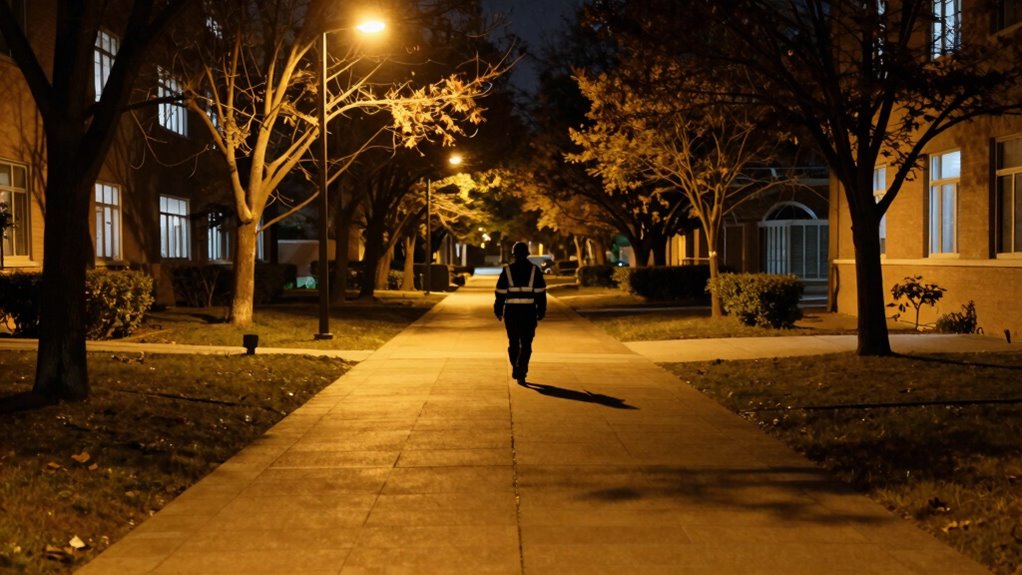
Staying alert during your night walks is essential for your safety, especially when distractions can easily divert your attention. To achieve distraction reduction, keep your focus on your surroundings and avoid using headphones or looking at your phone. Instead, practice alertness techniques like scanning ahead, listening for unusual sounds, and maintaining steady eye contact with your path. Remove any unnecessary distractions that can divert your attention from potential hazards, such as adjusting your backpack or fiddling with gadgets. Staying mindful of your environment helps you notice approaching people or obstacles early. By consciously reducing distractions and using alertness techniques, you stay more aware of your surroundings, making your walk safer and more confident.
What Behavioral Strategies Help Reduce Risk While Walking at Night?
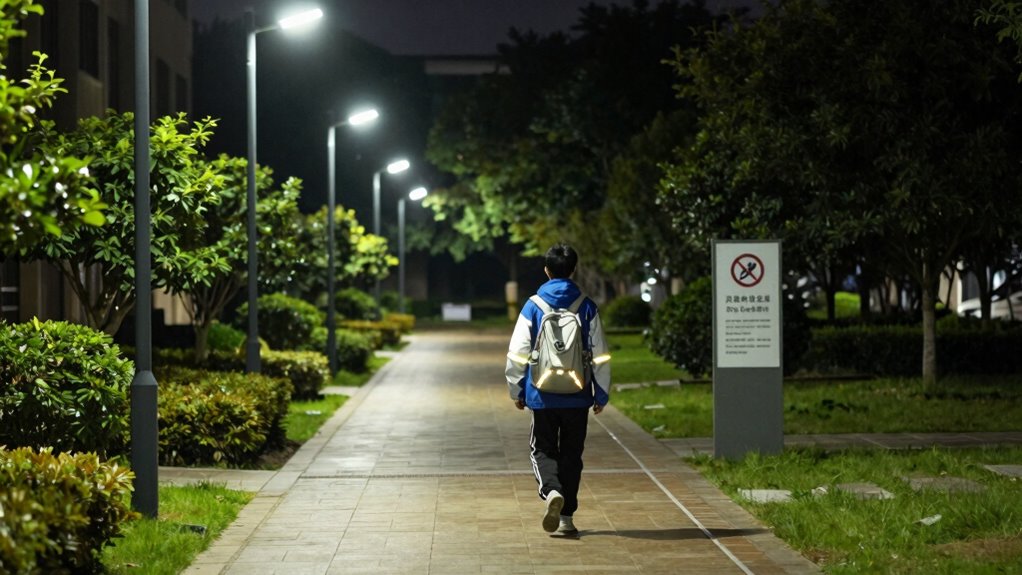
Implementing specific behavioral strategies can substantially reduce your risk while walking at night. Your personal safety depends on smart choices and awareness. Here are four actions to help with risk reduction:
- Avoid shortcuts through poorly lit or secluded areas, which can increase vulnerability.
- Keep your phone accessible but avoid distractions, so you stay aware of your surroundings.
- Walk confidently with purpose, signaling you’re alert and less likely to be targeted.
- Trust your instincts—if something feels off, don’t hesitate to change your route or seek help.
How to Respond if You Feel Unsafe During Your Campus Walk
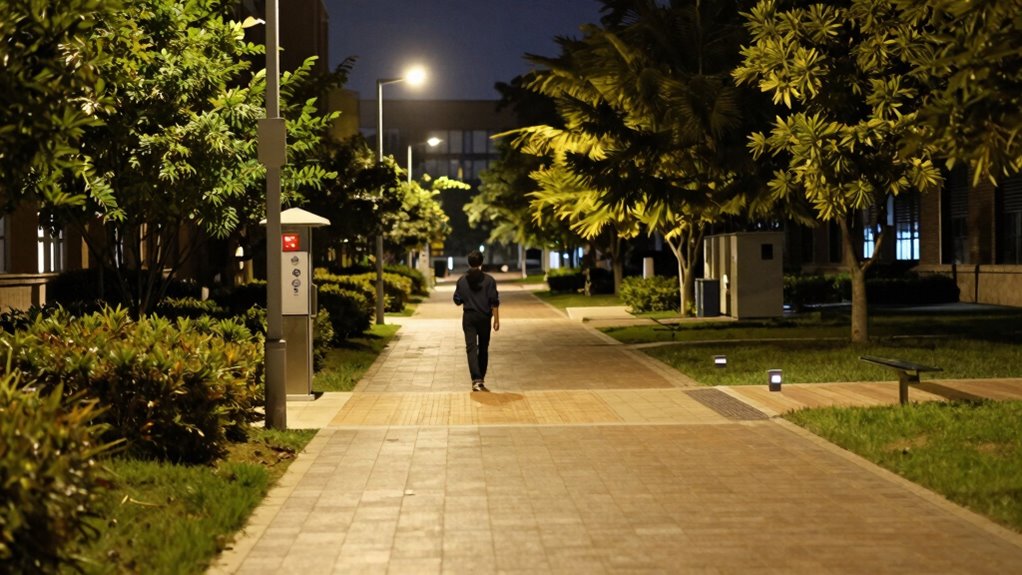
If you start to feel unsafe during your walk, trust your instincts and act promptly. Move toward well-lit areas with good urban lighting, which can deter potential threats and help you feel more secure. Keep your phone accessible, and consider activating your personal alarm to draw attention if needed. Avoid isolated spots and stay in sight of other pedestrians or security cameras. If someone makes you uncomfortable, don’t hesitate to change direction or seek a nearby store, building, or campus security point. Remember, your safety comes first—staying alert and prepared can make a significant difference. Using urban lighting and personal alarms effectively can help you respond quickly and confidently, ensuring you reach your destination safely.
Tips for Making Nighttime Campus Walking Safer and More Comfortable
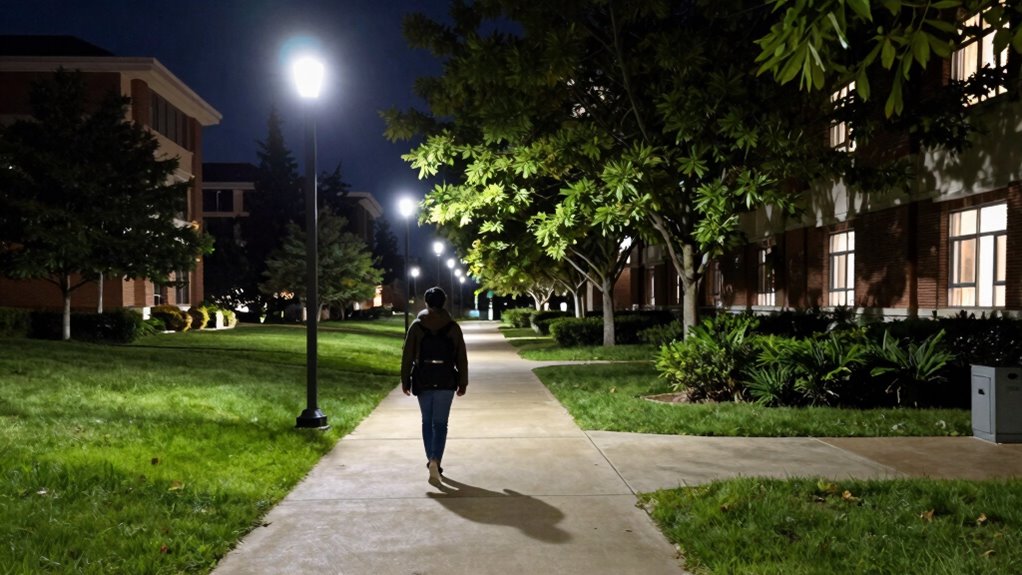
Walking across campus at night can be more comfortable and secure when you take simple steps to improve your experience. First, always stick to well-lit paths with good campus lighting—these areas are designed to keep you visible and safe. Next, pay attention to pedestrian signage; they guide you along the safest routes and alert you to potential hazards. Third, walk confidently and stay alert—your awareness can deter trouble. Fourth, consider carrying a flashlight or using your phone’s flashlight feature to brighten your path if needed. By following these tips, you’ll minimize risks and feel more at ease during your nighttime walks. Prioritizing campus lighting and pedestrian signage helps create a safer, more comfortable environment for everyone.
Frequently Asked Questions
How Can I Recognize if a Route Is Truly Safe at Night?
You can recognize if a route is truly safe at night by checking the lighting conditions; well-lit paths reduce your risk of accidents and deter potential threats. Look for areas with visible security patrols, as their presence increases safety and provides quick assistance if needed. Trust your instincts—avoid dark, deserted spots, and stick to routes that feel secure and are frequently monitored, ensuring a safer walk across campus.
Are There Specific Times When Campus Walking Is Riskier?
At the dead of night, campus becomes a danger zone, almost like a haunted movie set. The risk spikes late at night, especially when campus lighting dims and night security patrols are fewer. You’re more vulnerable between midnight and 3 a.m., so avoid these hours if you want to stay safe. Stick to well-lit paths and walk where security patrols are frequent to minimize your chances of trouble.
What Should I Do if I Lose My Way on Campus at Night?
If you lose your way on campus at night, stay calm and find a well-lit area with good campus lighting. Use your phone to check your location or maps. Call emergency contacts if you feel unsafe, and don’t hesitate to ask campus security for help. Remember, staying visible and alert makes a big difference, so stick to lit paths and keep your phone handy until you’re safely back on track.
How Can I Discreetly Alert Others if I Feel Unsafe?
If you feel unsafe, you can discreetly alert others by using personal safety apps or discreet signaling devices. Activate your app’s emergency feature or silently send your location to trusted contacts. You might also carry a small signaling device that emits a loud noise or flashing light, helping you attract attention without drawing suspicion. Always familiarize yourself with these tools beforehand, so you can use them quickly when needed.
Are There Recommended Safety Tips for Walking Alone at Night?
To enhance your personal safety when walking alone at night, plan your route carefully and stick to well-lit, busy areas. Carry a fully charged phone, and consider using safety apps or discreetly alerting friends if needed. Stay aware of your surroundings, avoid distractions, and trust your instincts. Good travel planning and staying alert help prevent trouble and ensure you reach your destination securely.
Conclusion
By planning your route and staying alert, you’re steering clear of potential dangers like a lighthouse guiding ships through fog. Trust your instincts, walk in well-lit areas, and consider walking with friends or using campus services when needed. Remember, your safety depends on proactive choices. When you take control of your path, you turn the dark campus into a familiar road, where confidence shines brighter than any streetlamp.
Fall Picks
fall essentials
As an affiliate, we earn on qualifying purchases.