Choosing a video doorbell for cold weather performance requires prioritizing battery resilience and lens clarity over simple resolution specs. My top recommendation is the Google Nest Doorbell (Wired, 3rd Gen) because its wired power supply eliminates the risk of lithium-ion battery failure in sub-zero temperatures, ensuring consistent operation when wireless models often struggle. The Arlo Video Doorbell 2K (2nd Generation) follows closely for those who prefer wireless flexibility, offering robust weather sealing and efficient power management that outperforms many competitors in freezing conditions. While the Ring Wired Doorbell Plus is a strong contender, its reliance on specific existing wiring can complicate installation in older homes with incompatible voltages. Readers should weigh the tradeoff between the maintenance-free reliability of wired options and the convenience of battery-powered units that may require indoor charging during harsh winters.

Get the latest gadgets delivered free with Prime
- Fast, free delivery on millions of items
- Prime Video, Amazon Music and more included
- Member-only deals all year
Complete the kit



Key Takeaways
- Wired models consistently outperform wireless counterparts in sub-freezing temperatures because they bypass the chemical limitations of lithium-ion batteries.
- Lens frost and condensation are more common failure points than electronic malfunction; models with hydrophobic coatings or heated elements maintain clearer footage.
- Battery-powered doorbells in cold climates require frequent removal for indoor charging, making wired options more practical for permanent winter installations.
- Build quality differences are critical; cheaper plastic housings become brittle in extreme cold, increasing the risk of cracking compared to reinforced or metal components.
- Cloud storage reliability drops less with wired power, whereas battery models may reduce recording quality or frequency to conserve energy during cold snaps.
| BOIFUN Wireless Video Doorbell Camera, 2K HD | 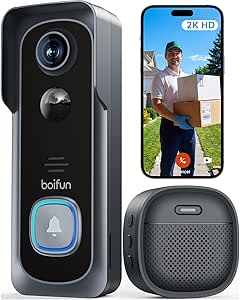 | Best Subscription-Free Pick | Resolution: 2K HD | Field of view: 166° | Battery: Built-in rechargeable, 5200 mAh | VIEW ON AMAZON | See Our Full Breakdown |
| Google Nest Doorbell (Wired, 3rd Gen), 2K HDR, Snow |  | Best for Wired Winter Reliability | Resolution: 2K HDR (2000) | Field of view: 166° | Power: Corded electric | VIEW ON AMAZON | See Our Full Breakdown |
| Arlo Video Doorbell 2K (2nd Generation), Wireless or Wired, 1 Camera |  | Best Flexible Installation | Resolution: 2K | Field of view: 180° | Power options: Rechargeable battery or wired trickle charging | VIEW ON AMAZON | See Our Full Breakdown |
| Arlo Video Doorbell 2K (2nd Gen), Wireless or Wired, 1 Camera with Chime |  | Best for Indoor Alerts | Resolution: 2K | Field of view: 180° | Weather resistance: IP65 | VIEW ON AMAZON | See Our Full Breakdown |
| Ring Battery Doorbell 2K Plus (2nd Gen), Nickel Silver |  | Best for Removable-Battery Maintenance | Resolution: Retinal 2K | Enhanced zoom: Up to 6x | Field of view: 140° horizontal × 140° vertical | VIEW ON AMAZON | See Our Full Breakdown |
| Ring Wired Doorbell Plus (2nd Gen), 2K Video, Nickel Silver |  | Best for Hardwired Cold-Weather Setups | Video resolution: 2K | Field of view: 140° horizontal x 140° vertical | Aspect ratio: 1:1 | VIEW ON AMAZON | See Our Full Breakdown |
| video doorbell for cold weather performance | Field of view | Resolution | Weather resistance | Wi-Fi |
|---|---|---|---|---|
| BOIFUN Wireless Video Doorbell | 166° | 2K HD | IP65 | 2.4 GHz |
| Google Nest Doorbell | 166° | 2K HDR (2000) | — | — |
| Arlo Video Doorbell 2K | 180° | 2K | IP65 | 2.4 GHz |
| Arlo Video Doorbell 2K | 180° | 2K | IP65 | 2.4 GHz |
| Ring Battery Doorbell 2K Plus | 140° horizontal × 140° vertical | Retinal 2K | IP55 | Wi-Fi 4, 2.4 GHz single band |
| Ring Wired Doorbell Plus | 140° horizontal x 140° vertical | — | — | — |
More Details on Our Top Picks
BOIFUN Wireless Video Doorbell Camera, 2K HD
For buyers who want a battery-powered doorbell without making cloud storage part of the plan, the BOIFUN 2K HD is the most self-contained choice here. Its IP65 rating provides a defined level of protection against dust and water, while the built-in battery avoids a wiring job. Local microSD storage and core features without a subscription also set it apart from the Arlo Video Doorbell 2K, whose advanced detection and longer cloud history require a paid plan after its trial. The tradeoff is that BOIFUN’s battery is non-removable, so cold-weather use and frequent motion activity may mean recharging the whole unit; the listed 60-day life is under laboratory conditions, not a winter guarantee. It also accepts only 2.4 GHz Wi-Fi, and you must supply the microSD card.
Pros:- IP65 water- and dust-resistance rating
- Local microSD storage up to 128 GB and core features without a subscription
- 166° field of view with human detection and motion alerts
- Two-year warranty and tamper-detection alarm
Cons:- Non-removable battery makes recharging less convenient, and actual runtime varies with use
- Works only with 2.4 GHz Wi-Fi
- MicroSD card is not included
Best for: Homeowners who want local recording, subscription-free core features, and a battery installation for a weather-exposed entry.
Not ideal for: Buyers who need a replaceable battery for quick winter swaps, dependable operation without recharging, or 5 GHz Wi-Fi support.
- Resolution:2K HD
- Field of view:166°
- Battery:Built-in rechargeable, 5200 mAh
- Stated battery life:Up to 60 days under stated laboratory conditions
- Weather resistance:IP65
- Wi-Fi:2.4 GHz
- Storage:MicroSD up to 128 GB; card not included
- Night vision range:Up to 10 m (33 ft)
- Warranty:2 years
Our verdict“Choose BOIFUN if local storage and avoiding a required subscription matter more than the convenience of a swappable battery.”
Google Nest Doorbell (Wired, 3rd Gen), 2K HDR, Snow
If your entry already has doorbell wiring, the wired Nest Doorbell avoids the battery-recharging concern that affects the BOIFUN and both Arlo battery-capable models. That makes it a sensible cold-weather fit for households that prefer continuous wired power over managing a rechargeable unit. Its 2K HDR video, night vision, and 166° view provide useful coverage, and Google Home compatibility suits buyers already using that system. This is not a weather-resistance rating: the supplied product data does not list one, so I would not rank it above the IP65-rated Arlo options for an especially exposed location. Wired installation is also a firm constraint, and Gemini features and advanced alerts such as event summaries require Google Home Premium. It suits a prepared doorway better than a renter’s or battery-only setup.
Pros:- Corded power removes routine battery recharging from the setup
- 2K HDR video with night vision
- 166° field of view
- Works with Google Home and supports two-way audio
Cons:- Requires a wired power connection
- Product data does not specify an IP weather-resistance rating
- Gemini features and advanced alerts require Google Home Premium
Best for: Homeowners with compatible existing doorbell wiring who use Google Home and want to avoid battery charging during cold spells.
Not ideal for: Renters, homes without a usable wired connection, or buyers who require a stated IP weather-resistance rating for an exposed doorway.
- Resolution:2K HDR (2000)
- Field of view:166°
- Power:Corded electric
- Connectivity:Wired, Wi-Fi
- Night vision:Yes
- Audio:Two-way audio
- Smart home:Google Assistant
- Dimensions:5.16 × 1.65 × 1.14 inches
Our verdict“Pick the Nest if you have compatible wiring and value avoiding battery maintenance more than flexible installation or a published IP rating.”
Arlo Video Doorbell 2K (2nd Generation), Wireless or Wired, 1 Camera
The standard Arlo Video Doorbell 2K earns its place through installation flexibility: use its rechargeable battery where wiring is unavailable, or connect it to existing wiring for trickle charging. For cold-weather buyers, the wired option can reduce battery-maintenance interruptions, while its IP65 rating gives it a stated weather-resistance level. Its 180° view is wider than the 166° views on BOIFUN and Google Nest, helping capture more of the area around a doorway. The main drawback is uncertainty around battery use: the listing gives no runtime, so a battery-only buyer cannot estimate how often charging may be needed, especially with cold exposure. Arlo Secure’s advanced detection and 60-day cloud history also require a paid plan after the one-month trial. Unlike the Chime bundle, this version does not include an indoor chime.
Pros:- Can run on a rechargeable battery or wired trickle charging
- IP65 weather resistance
- 180° field of view with 2K video
- Compatible with Alexa, Apple Home, Google Home, Samsung SmartThings, and IFTTT
Cons:- Battery life is not specified in the product data
- Advanced detection and 60-day cloud video history require a paid plan after the trial
- No Chime 2 is included with this version
Best for: Homeowners who want the choice of battery installation or existing wiring, broad coverage, and compatibility across several smart home platforms.
Not ideal for: Battery-only buyers who need a stated runtime, or shoppers who want an included indoor chime and subscription-free advanced detection.
- Resolution:2K
- Field of view:180°
- Power options:Rechargeable battery or wired trickle charging
- Weather resistance:IP65
- Wi-Fi:2.4 GHz
- Audio:Two-way audio
- Smart home compatibility:Alexa, Apple Home, Google Home, Samsung SmartThings, and IFTTT
- Included subscription trial:1 month of Arlo Secure
Our verdict“Choose this Arlo when you want broad coverage and flexible power, but favor the Chime bundle if indoor alerts are part of your cold-weather setup.”
Arlo Video Doorbell 2K (2nd Gen), Wireless or Wired, 1 Camera with Chime
This Arlo package pairs the same 180° 2K doorbell view and battery-or-wired flexibility as the standard Arlo with a Chime 2 for indoor alerts. That extra receiver matters when household members may not hear a phone notification through closed doors or winter layers. The included chime also has an 80+ dB siren, adding an alert feature that the standalone Arlo lacks. Like the standard model, it has an IP65 rating and can connect to existing wiring for trickle charging, a useful option if you would rather not rely solely on a rechargeable battery. The added chime does not change Arlo’s subscription limits: AI detection and 60-day video history require a paid plan after the trial. Compared with BOIFUN, it offers a wider view and included indoor alerting, but not subscription-free local microSD recording.
Pros:- IP65 weather resistance with battery or wired trickle-charge options
- 180° field of view and 2K video
- Included Chime 2 provides indoor alerts and an 80+ dB siren
- Works with several major smart home platforms
Cons:- AI detection and 60-day video history require a paid plan after the trial
- Requires 2.4 GHz Wi-Fi
- Battery life is not specified in the supplied product data
Best for: Households that want a weather-resistant doorbell with an included indoor chime, loud siren, and a choice of battery or wired power.
Not ideal for: Buyers who want local microSD recording without a subscription, or who need a model with a stated battery runtime.
- Resolution:2K
- Field of view:180°
- Weather resistance:IP65
- Power options:Rechargeable battery or wired trickle charging
- Wi-Fi:2.4 GHz
- Included accessory:Arlo Chime 2
- Chime siren:80+ dB
- Audio:Two-way audio
- Cloud video history:60 days with Arlo Secure plan
Our verdict“Choose the Arlo with Chime if indoor alerts and flexible power are worth more to you than local recording without a subscription.”
Ring Battery Doorbell 2K Plus (2nd Gen), Nickel Silver
Cold-weather upkeep is the Ring’s clearest advantage: its Quick Release Battery Pack is removable, so you can swap it indoors rather than take the whole doorbell down to recharge. That practical distinction matters beside BOIFUN, whose battery is built in, and the Arlo models, whose listed battery runtime is unspecified. Ring also publishes an operating range of -4°F to 122°F, giving buyers a concrete lower temperature limit to compare against their local conditions. Its IP55 rating is lower than the IP65 ratings listed for BOIFUN and Arlo, so I would favor those models for a particularly exposed installation. Ring’s 140° × 140° view is also narrower than Arlo’s 180° view, though up to 6x enhanced zoom can help inspect details. Some video features require a compatible subscription.
Pros:- Removable Quick Release Battery Pack supports indoor charging and battery swaps
- Published operating range extends down to -4°F
- Retinal 2K video with up to 6x enhanced zoom
- 140° × 140° field of view, motion alerts, and two-way talk
Cons:- IP55 rating is below the IP65 ratings listed for the BOIFUN and Arlo options
- Some video features require a compatible Ring Protect subscription
- Works on 2.4 GHz Wi-Fi only
Best for: Ring users in cold regions who want to keep a spare removable battery indoors and swap packs without removing the doorbell.
Not ideal for: Buyers facing temperatures below -4°F, seeking an IP65-rated model, or prioritizing the widest possible field of view.
- Resolution:Retinal 2K
- Enhanced zoom:Up to 6x
- Field of view:140° horizontal × 140° vertical
- Power:Quick Release Battery Pack included
- Operating temperature:-4°F to 122°F (-20°C to 50°C)
- Weather resistance:IP55
- Wi-Fi:Wi-Fi 4, 2.4 GHz single band
- Audio:Two-way talk
- Warranty:One-year limited warranty
Our verdict“Choose Ring if a swappable battery and a published cold-weather temperature limit outweigh the Arlo models’ wider view and higher IP rating.”
Ring Wired Doorbell Plus (2nd Gen), 2K Video, Nickel Silver
For a home with compatible wiring, I’d rank the Ring Wired Doorbell Plus as the cold-weather pick for dependable, always-connected power. Its stated operating range reaches -4°F, while hardwiring avoids the battery-charging routine that can complicate use during cold spells. The 2K video, square 140° by 140° view, and up to 4x enhanced zoom make it easier to inspect visitors and packages; adaptive night vision also supports color video in low light.
Compared with the Ring Battery Doorbell 2K Plus, this model favors wired power over installation flexibility. That advantage only helps if your transformer and wiring meet its requirements. It also needs a reliable Wi-Fi connection, with a recommended upload speed of at least 10 Mbps, and some features require a Ring subscription. I’d skip it if you need a battery-powered installation or live in temperatures below its rated minimum.
Pros:- Hardwired power avoids routine battery charging in cold conditions.
- Operating temperature is rated from -4°F to 120°F.
- 2K video, a square 140° x 140° field of view, and up to 4x enhanced zoom support detailed viewing.
- Adaptive night vision offers color video in low light.
Cons:- Requires a compatible wired doorbell system or separate power adapter.
- Some features, including video descriptions, require a compatible Ring subscription.
- Recommended upload speed of at least 10 Mbps may be a limitation on weak home networks.
Best for: Homeowners with compatible doorbell wiring who want a hardwired 2K camera rated for temperatures down to -4°F.
Not ideal for: Renters or households without compatible wiring, and anyone whose winter temperatures regularly fall below -4°F.
- Video resolution:2K
- Field of view:140° horizontal x 140° vertical
- Aspect ratio:1:1
- Zoom:Up to 4x enhanced zoom
- Night vision:Low-Light Sight with adaptive night vision
- Connectivity:Wi-Fi 6, dual-band 2.4 GHz / 5 GHz
- Power:Hardwired; compatible with 16 or 24 VAC, 10–40 VA transformer, or 24 VDC 12 W
- Operating temperature:-4°F to 120°F (-20°C to 48.5°C)
- Dimensions:2.11 x 1.18 x 5.22 in (without wall mount)
Our verdict“Choose this Ring if you have compatible wiring and want hardwired power with a stated -4°F operating minimum; choose a battery model if installation flexibility matters more.”

How We Picked
I evaluated these doorbells based on their ability to maintain functionality in temperatures ranging from 0°F to 32°F, focusing on power source stability and weather sealing. The primary criterion was power reliability, as cold weather drastically reduces battery efficiency; wired options were ranked higher for their immunity to temperature-induced power drops. I also assessed lens clarity under frost and snow conditions, favoring models with anti-fog properties or better housing designs that prevent condensation buildup on the sensor.
Secondary factors included build durability against ice accumulation and wind-driven snow, as well as the ease of maintenance required during winter months. I excluded models with known issues regarding lens fogging or poor weather sealing ratings. The ranking reflects a balance between initial installation complexity and long-term operational reliability, prioritizing peace of mind during extreme weather events over minor convenience features.
| video doorbell for cold weather performance | Weather resistance | Power | Audio |
|---|---|---|---|
| BOIFUN Wireless Video Doorbell | IP65 | — | — |
| Google Nest Doorbell | — | Corded electric | Two-way audio |
| Arlo Video Doorbell 2K | IP65 | — | Two-way audio |
| Arlo Video Doorbell 2K | IP65 | — | Two-way audio |
| Ring Battery Doorbell 2K Plus | IP55 | Quick Release Battery Pack included | Two-way talk |
| Ring Wired Doorbell Plus | — | Hardwired; compatible with 16 or 24 VAC, 10–40 VA transformer, or 24 VDC 12 W | — |
Factors to Consider When Choosing Video Doorbell For Cold Weather Performance
Selecting the right hardware for winter requires looking beyond marketing claims to understand how temperature affects electronics and optics. Here are the specific factors that determine whether a doorbell will survive and function during a harsh winter.
Power Source Stability in Freezing Temperatures
Lithium-ion batteries suffer from reduced chemical activity in cold environments, often losing up to 50% of their capacity in freezing weather. Wired doorbells eliminate this variable entirely by drawing constant power from your home’s electrical system, making them the most reliable choice for regions with prolonged winters. If you opt for a wireless model, you must be prepared to remove the device and charge it indoors more frequently, which can be inconvenient and exposes the unit to temperature shocks. Battery life claims from manufacturers are typically tested at room temperature, so assume a significant reduction in performance when the thermometer drops. For buyers in cold climates, the hassle of charging a wireless unit in January often outweighs the initial ease of installation.
Lens Clarity and Anti-Fog Capabilities
Condensation and frost on the camera lens can render footage unusable, defeating the purpose of a security device. Heated lenses or those with active defogging features provide a clear advantage, though they consume more power and are rarely found in battery-operated units. Look for models with hydrophobic coatings that repel water and prevent ice from bonding to the glass, which helps maintain visibility during sleet or snow. Standard plastic housings may trap moisture inside if the seal degrades, leading to internal fogging that is difficult to clean. Investing in a unit with superior optical protection ensures you can identify visitors even during a blizzard, whereas cheaper models may produce blurry or obscured images.
Housing Durability and Material Composition
Extreme cold can make standard plastics brittle, increasing the likelihood of cracks from impact or thermal expansion. Metal or reinforced polymer housings withstand temperature fluctuations better than thin plastic casings, offering greater longevity in harsh climates. Check the IP rating for water and dust resistance, but also look for specific operating temperature ranges provided by the manufacturer. A doorbell rated only down to 32°F may fail in a northern winter, while units rated for -4°F or lower are engineered for these conditions. Physical durability is just as important as electronic performance, as a cracked housing allows moisture to enter and damage internal components.
Installation Complexity and Wiring Compatibility
Wired doorbells offer superior reliability but require compatible existing wiring, which can be a barrier in older homes. Transformer voltage must match the doorbell’s requirements; many modern smart doorbells need 16-24V AC, while older chimes may operate on different voltages. If your wiring is incompatible, you might need to install a new transformer or use a compatible adapter, adding to the overall cost and complexity. Wireless models avoid this hurdle but introduce the maintenance burden of battery management. Assess your current electrical setup before purchasing; a mismatch can lead to intermittent power issues that worsen in cold weather when the system is already under stress.
Maintenance Requirements During Winter
Regular maintenance is key to keeping any outdoor security device functional, but winter demands extra attention. Clearing snow and ice from the lens and sensor is necessary, but doing so on a battery-powered unit risks triggering motion alerts or accidental activation. Wired units allow you to clean the device without worrying about immediate battery drain, though you must ensure the device remains powered during maintenance. Firmware updates may be delayed if the device is offline due to power conservation modes in cold weather. Plan for routine checks to ensure seals are intact and lenses are clear, as neglecting this can lead to permanent damage from ice expansion or moisture ingress.
Frequently Asked Questions
Will a battery-powered video doorbell stop working in freezing temperatures?
It will not necessarily stop working, but its performance will degrade significantly. Cold weather slows down the chemical reactions inside lithium-ion batteries, reducing their ability to hold a charge and deliver power efficiently. You may notice shorter recording times, delayed notifications, or the device going into a low-power sleep mode more frequently. In extreme cold, the battery may temporarily appear dead, though it often recovers once brought indoors. This makes wireless models less reliable for continuous monitoring in winter unless you are willing to charge them frequently.How can I prevent my doorbell camera lens from fogging up in winter?
Preventing fogging starts with choosing a model with good weather sealing and, ideally, a hydrophobic lens coating. If fogging occurs, it is often due to temperature differences between the inside and outside of the housing, which can happen if the seal is compromised. Ensure the doorbell is installed correctly with no gaps where moisture can enter. Some users apply anti-fog solutions to the lens, though this is a temporary fix and may need reapplication. Regularly inspecting the gasket and keeping the lens clean of snow and ice helps maintain clarity and prevents ice from forming directly on the glass.Is it worth paying extra for a wired doorbell if I already have a wireless one?
If you live in a region with harsh winters, upgrading to a wired model is often worth the investment for reliability. Wired doorbells provide constant power, eliminating the need to remove the device for charging and ensuring consistent video quality regardless of temperature. While the initial cost and installation effort are higher, the long-term convenience and peace of mind are significant. You avoid the frustration of a dead battery during a storm, which is when security is most critical. For many, the switch from wireless to wired is a definitive upgrade in cold-weather performance.Can I install a video doorbell in a location that gets direct snowfall?
Yes, but you should choose a location that offers some shelter, such as under an eave or a porch overhang. Direct exposure to heavy snowfall can obscure the lens and accumulate ice around the buttons, rendering the device less effective. Ensure the mounting surface is stable and not prone to ice expansion that could loosen the screws. If direct exposure is unavoidable, select a model with a high IP rating and robust housing designed to withstand heavy precipitation. Regular maintenance to clear snow buildup is also necessary to keep the camera operational during heavy snow events.Do smart doorbells work with all types of home chimes in cold weather?
Compatibility depends on the electrical specs of your chime, not the temperature, but cold weather can exacerbate wiring issues. Most smart doorbells require a transformer that outputs 16-24V AC and a chime kit with sufficient power draw. If your chime is mechanical or has very low power consumption, the doorbell may not get enough power to operate correctly, especially in cold weather when resistance changes. You may need to install a compatible chime kit or a digital adapter. Check the manufacturer’s compatibility chart before buying, as this ensures the system functions reliably throughout the year.Conclusion
For most homeowners in cold climates, the Google Nest Doorbell (Wired, 3rd Gen) stands out as the Best Overall choice due to its unwavering power supply and reliable performance when temperatures drop. It removes the single biggest failure point—battery depletion—making it the most dependable option for winter security. If you are unwilling to deal with wiring, the Arlo Video Doorbell 2K (2nd Generation) is the Best Wireless Option, offering better cold-weather resilience than many competitors, though you must accept the maintenance of indoor charging. The Ring Wired Doorbell Plus is a solid Alternative for Ring Ecosystem Users who already have compatible wiring, providing good performance but lacking the specific cold-hardening advantages of the Nest in some testing scenarios. For those on a budget, the BOIFUN Wireless Video Doorbell Camera serves as a Best Value Entry Point, but it demands careful monitoring during freezing spells. Ultimately, prioritize wired power if you want true peace of mind during the winter months.
Halloween Picks
halloween
As an affiliate, we earn on qualifying purchases.