
🔍 Read the full analysis: Which Llama.cpp Results Can You Find For Ryzen And Radeon? on ThorstenMeyerAI.com

Get the latest gadgets delivered free with Prime
- Fast, free delivery on millions of items
- Prime Video, Amazon Music and more included
- Member-only deals all year
TL;DR
Hugging Face has made a public dashboard available for llama.cpp inference benchmarks on two AMD devices: Radeon 8060S and Radeon AI Pro R9700S. It offers comparisons across selected models, quantizations and builds, while exposing the underlying results and benchmark workflow. The published description gives no performance figures, so it does not establish which device or configuration is fastest.
Hugging Face has made a public llama.cpp benchmark dashboard available for inference results on selected AMD Ryzen and Radeon hardware, giving developers a way to compare prompt processing and text generation across recorded models, quantizations and software builds, as described in the original dashboard analysis. The release matters because the benchmark data and workflow are open for inspection, although the published material does not provide results showing which device or configuration performs best.
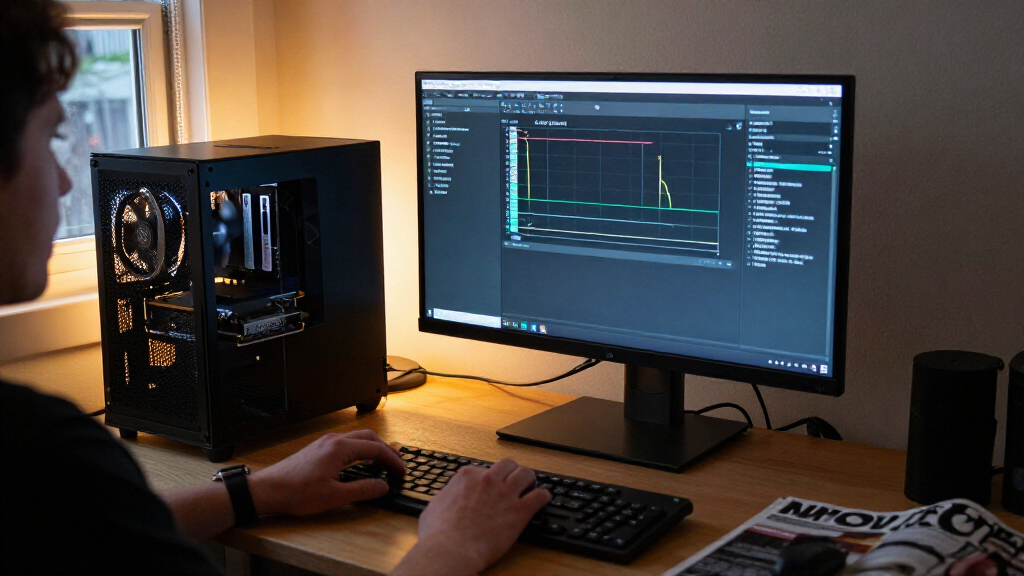
The dashboard currently lists two devices: Radeon 8060S (gfx1151) and Radeon AI Pro R9700S (gfx1201). Users choose hardware, a model and a llama.cpp build in a configuration panel. An Overview tab compares quantizations for that selection, while a Build history view follows results across recorded builds. A separate context-scaling view shows generation throughput as the existing context grows.
The Overview includes two workloads, both reported in tokens per second. PP512 measures processing 512 input tokens without generating output; TG128 measures generation of 128 tokens with no pre-existing context. Both begin at context depth zero, and the plotted value is mean throughput, labeled avg_ts. These are defined reference workloads, not a direct measure of every application’s performance.
Hugging Face says the tests use prebuilt binaries distributed through llama-install.sh and run with llama-bench. The public workflows for gfx1151 and gfx1201 are scheduled weekly, with Flash Attention enabled and disabled and 10 repetitions per configuration. The current model selection includes Inkling 2 Mini, Qwen, Gemma, gpt-oss and LFM models; listed GGUF formats include Q4_K_M, Q8_0, BF16 and F16.
AMD llama.cpp benchmarks open for inspection
Hugging Face’s public dashboard compares inference results across selected AMD hardware, models, quantizations and builds.
Hardware in the dashboard
The current options cover two AMD devices.
Radeon 8060S
Listed as gfx1151.
Radeon AI Pro R9700S
Listed as gfx1201.
Two reference workloads
Both report mean throughput in tokens per second at context depth zero.
- Processes 512 input tokens
- Generates no output
- Generates 128 tokens
- Starts without existing context
Explore and compare
Choose hardware, model and build in the configuration sidebar.
The Overview tab compares formats for the selected configuration.
See results across recorded builds and inspect the public data files.
Explore generation throughput as existing context grows.
Coverage and caveats
The evolving model set includes Inkling 2 Mini, Qwen, Gemma, gpt-oss and LFM models, with formats from Q4_K_M and Q8_0 to BF16 and F16.
A Public Record of AMD Inference Runs
For developers choosing local inference configurations, the dashboard provides a shared reference point for checking how selected models and quantizations perform on the listed AMD hardware. Its build-history view may help users see whether results change as llama.cpp builds evolve, rather than drawing conclusions from one isolated run.
Public result files also let readers inspect the measurements, create their own charts or compare a dashboard result with a local test. That transparency makes the data more useful for independent evaluation. It does not, by itself, show how a particular application will perform: the workloads, devices and settings are limited, and real-world results can vary with a user’s model, context length, software and hardware configuration.
Products Worth Considering

DJI Mic 2 Wireless Microphone System (2 Transmitters, 1 Receiver, Charging Case)

DJI Mic 3 Wireless Microphone Kit (2 Transmitters, 1 Receiver, Charging Case)

LG UltraGear 32-inch QHD Curved Gaming Monitor, 180Hz, 1ms, AMD FreeSync
As an affiliate, we earn on qualifying purchases.
How the Dashboard Records Results
Hugging Face describes the dashboard as an explorer for results stored in the public ggml-org/install.sh-benches-data Storage Bucket on Hugging Face. A data-source link beside a chart title opens the folder associated with the selected build, hardware and model. Standard result files follow a build/hardware/model/quantization path and use a .jsonl filename; workload sweeps use a corresponding -tg.jsonl filename.
The benchmark binaries are distributed through llama-install.sh, the build and installation project behind llama.app, according to the source description. The model set includes dense and mixture-of-experts architectures, and Hugging Face says it is evolving. The dashboard therefore combines repeatable, specified workloads with a coverage list that may change over time.
Hugging Face said: “The benchmark workflow and underlying results are public, so you can also inspect how we benchmark inference performance.” That statement describes the project’s transparency; it is not a claim that the listed tests represent all AMD systems or workloads.
““The benchmark workflow and underlying results are public, so you can also inspect how we benchmark inference performance.””
— Hugging Face
Coverage and Comparisons Still Limited
The announcement does not state how many builds are currently recorded, when the first results were collected or whether every model and quantization is available for both devices. It also gives no benchmark figures, so the published description alone cannot establish which hardware, build or format is fastest; readers would need to inspect the dashboard data.
It remains unclear how closely the specified tests predict performance in individual applications, or how missing runs and changes to the evolving model list are represented in long-term comparisons. Ten repetitions are specified for each configuration, but the material does not describe how variability is displayed or interpreted. The results should therefore be treated as measurements for defined configurations, not a universal ranking of AMD inference performance.
Weekly Runs and Possible Additions
The gfx1151 and gfx1201 workflows are scheduled to run weekly, adding results to the build history as runs are recorded. Developers can open the linked data folder for a chart, inspect individual result files and compare them with tests on their own systems.
Hugging Face invites users to suggest models and workloads for possible inclusion. The source material names no confirmed additions or release dates, so the scope and timing of future coverage remain unsettled. As more runs accumulate, users will be able to assess whether performance patterns persist across builds, while keeping in mind that broader hardware and workload coverage would be needed for wider conclusions.
Key Questions
Which AMD devices are listed in the dashboard?
The current options are Radeon 8060S (gfx1151) and Radeon AI Pro R9700S (gfx1201).
What do PP512 and TG128 measure?
PP512 processes 512 input tokens without generating output. TG128 generates 128 tokens without a pre-existing context. Both start at context depth zero, with mean throughput shown in tokens per second.
How often are the benchmark workflows run?
Hugging Face says the workflows for gfx1151 and gfx1201 are scheduled weekly, with 10 repetitions per configuration.
Does the dashboard identify the fastest AMD device?
Not in the published description. It provides a way to compare results, but no performance figures are included there. A ranking would require examining the recorded dashboard data and accounting for the selected workload and configuration.
Can users inspect the underlying benchmark data?
Yes. Hugging Face says the workflow and result files are public, and data-source links open the folder for a selected build, device and model.
Primary source: Hugging Face · via ThorstenMeyerAI.com