
This checklist is for anyone refreshing a desk setup for work, calls, gaming, or content creation. It brings six different kinds of desk tech into one practical upgrade plan, with a focus on checking how each item fits your actual routine.

Get the latest gadgets delivered free with Prime
- Fast, free delivery on millions of items
- Prime Video, Amazon Music and more included
- Member-only deals all year
The sections move from connecting devices to typing, pointing, video, audio, and desk lighting. Each pick has its own role, so use the headings to find the parts of your setup that need attention most right now.
Before choosing, check your computer’s ports, operating system, workspace, and existing accessories against the product details. Treat the points below as a shopping checklist: confirm fit and compatibility with the manufacturer’s current specifications, especially where a product name alone leaves details unclear.
USB-C Docking Station
A dock can make a desk easier to use when you regularly connect several peripherals or displays. The Anker Prime DL7400 14-in-1 DisplayLink Docking Station is the pick in this slot; the product name identifies a 14-in-1 dock with DisplayLink, but it does not establish which ports, display combinations, or power features your particular setup can use. Check those details against your computer and the dock’s current specifications before buying.
A common mistake is counting ports without checking their types and capabilities. Make a list of the devices you plan to connect, then compare each connection with the dock’s port layout. Confirm whether your computer supports the required USB-C features and whether any DisplayLink software or operating-system requirements apply. Also verify supported display resolutions and refresh rates for your intended monitor arrangement. Compatibility depends on the full setup, including computer, operating system, cables, and displays.
Think about where the dock will sit and how its cable will reach your computer without crossing your workspace. If you use a laptop, check whether the connection and power arrangement suits how you work, rather than assuming all USB-C ports behave alike. Match the dock to the devices you own today and the displays you expect to use; don’t rely on the port count alone to predict a good fit.
What to look for:
- Check the complete port list against your peripherals.
- Confirm your computer supports the dock’s connection requirements.
- Verify DisplayLink software and operating-system compatibility.
- Match display support to your monitor resolution and refresh-rate needs.
- Check cable reach and the dock’s placement on your desk.
Anker Prime DL7400 14-in-1 DisplayLink Docking Station

This docking station connects up to three 4K displays and offers USB-C, USB-A, HDMI, DisplayPort, Ethernet, audio, and SD/TF card ports. It supports laptop charging up to 140W, with a built-in display and fan for monitoring and cooling.
Pros:
- Supports up to three 4K external displays
- Provides up to 140W laptop charging
- Broad selection of ports, including 2.5Gbps Ethernet
- Built-in smart display and fan cooling
Cons:
- Requires a DisplayLink driver for triple-display use
- DRM-protected streaming may show a black screen
- Front USB-C ports do not support video output
Best for: People who want to connect several desk devices through one dock.
Not ideal for: Shoppers who have not checked computer and display compatibility.
Bottom line: Choose this dock after confirming its ports and DisplayLink requirements match your computer, monitors, and peripherals.
Mechanical Keyboard
A keyboard shapes the feel of everyday typing, so consider how and where you use it before settling on a switch style. The Logitech MX Mechanical Wireless Illuminated Keyboard, Tactile Quiet, G is the named pick here, with tactile quiet in its product name. Confirm the exact model and layout in the listing, since the provided name ends with “G” and does not spell out every configuration detail.
One common buying mistake is choosing by appearance or a short product title without checking layout, key legends, and operating-system support. Compare the keyboard’s layout with your usual shortcuts and the language you type in. Check which devices it can pair with, how it connects, and whether switching between your work devices is supported in the way you expect. Confirm the exact configuration rather than assuming every listing for the MX Mechanical has identical features.
Consider whether the keyboard’s footprint works with your desk and mouse space. If you prefer a particular typing feel, see whether the listed switch type matches it; “tactile quiet” is a useful clue, but personal preference still matters. Review the keyboard’s dimensions and key arrangement against your workspace, and make sure its wireless connection and power approach suit your daily routine. For a shared space, think through typing sound in your actual environment instead of treating “quiet” as silent.
What to look for:
- Verify the full model name, layout, and key legends.
- Check compatibility with your computer and operating system.
- Confirm connection and device-switching details in the listing.
- Compare dimensions with your desk and mouse space.
- Review the listed switch type and consider your typing preference.
Logitech MX Mechanical Wireless Illuminated Keyboard, Tactile Quiet, Graphite
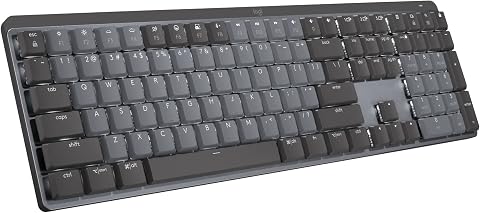
A full-size wireless mechanical keyboard with low-profile Tactile Quiet switches, smart backlighting, and support for pairing with up to three devices. It charges via USB-C and offers up to 15 days of battery life with backlighting enabled, or up to 10 months with it disabled.
Pros:
- Quiet tactile switches provide feedback with less typing noise
- Smart backlighting responds to nearby hands and changing light
- Pairs with up to three devices across multiple operating systems
- Long battery life and USB-C charging
Cons:
- Some customization features require Logi Options+ software on Windows or macOS
- Bluetooth may prevent password entry at startup on some FileVault-enabled Macs; the Logi Bolt receiver is suggested
Best for: People seeking a wireless keyboard with tactile quiet switches.
Not ideal for: Anyone who needs a specific layout that the listing does not confirm.
Bottom line: Check the exact layout, switch, and device support before adding this keyboard to your desk.
Wireless Gaming Mouse
A mouse should suit both the tasks you play and the way you hold and move it. The Logitech G604 Lightspeed Wireless Gaming Mouse is the pick for this checklist slot. Its product name identifies it as a wireless gaming mouse, but it does not provide enough detail to judge its shape, button arrangement, or compatibility with your particular system and games.
Before buying, check the current product specifications for connection options, controls, software requirements, and supported operating systems. A common mistake is assuming that a gaming mouse’s extra controls will help every player: consider whether the layout makes sense for the games and applications you actually use. Control placement matters, so look closely at product images and dimensions, and compare them with your preferred grip and hand size when those measurements are available.
Think through where and how you will use the mouse. Check whether its wireless connection works with your computer, whether any included receiver or cable arrangement suits your desk, and what power method it uses. If you intend to move between machines, verify the supported pairing or connection process rather than assuming it will transfer seamlessly. Match the mouse’s size and shape to your hand and available mouse space, and confirm any software features you expect are supported on your operating system.
What to look for:
- Check supported operating systems and required software.
- Confirm wireless connection options and included accessories.
- Review the button layout for your games and everyday tasks.
- Compare available dimensions with your hand and preferred grip.
- Check the power method and how it fits your usage.
Logitech G604 Lightspeed Wireless Gaming Mouse

The Logitech G604 Lightspeed is a wireless gaming mouse featuring 15 programmable controls, including six thumb buttons, ideal for battle royale, MMO, and MOBA games. It offers dual connectivity, toggling between Bluetooth and ultra-fast 1 ms LIGHTSPEED wireless technology.
Pros:
- 15 programmable controls including six thumb buttons
- Dual connectivity: Bluetooth and fast 1 ms LIGHTSPEED wireless
- High-precision HERO 25K sensor with 25,600 DPI and 1:1 tracking
- Excellent battery life — up to 240 hours on one AA battery
Cons:
- Uses a single AA battery rather than a rechargeable battery
- 15-button layout may feel overwhelming for casual users
Best for: Players who want a wireless mouse for gaming and desk use.
Not ideal for: Shoppers who need confirmed dimensions or controls before deciding.
Bottom line: Verify the mouse’s fit, controls, and system support against the games and devices you use.
4K Webcam
Video calls and content creation place different demands on a webcam, so start with the kind of footage you plan to make. The Razer Kiyo V2 Pro Webcam for Streaming and Content Creation, 4K 60 FPS is the named pick. Its title calls out 4K and 60 FPS, but your computer, connection, recording software, and chosen settings all affect what you can use in practice.
A common mistake is treating a headline resolution as a guarantee that every app will deliver that resolution and frame rate. Check the webcam’s current specifications, software support, and system requirements, then compare them with your computer and the applications you use. Confirm the mounting method and whether it works with your monitor or desk arrangement. Check the whole video chain, including lighting, camera placement, and the software that will capture or stream the image.
Think about framing and privacy as well as output quality. Review the webcam’s dimensions and mounting details, and make sure it can point where you need without obstructing your screen. If you plan to use it for streaming or content creation, check which settings and controls are available and whether they are supported by your preferred software. Don’t assume accessories or features beyond those listed; verify what comes in the box and what your setup must provide separately.
What to look for:
- Confirm the advertised resolution and frame rate requirements.
- Check computer, software, and streaming-app compatibility.
- Verify the mounting method and monitor fit.
- Review available camera controls and their software support.
- Check included accessories and plan your lighting and placement.
Razer Kiyo V2 Pro Webcam for Streaming and Content Creation, 4K 60 FPS

The Razer Kiyo V2 Pro delivers ultra‑sharp 4K video at 60 FPS with an 8.3MP Sony STARVIS 2 sensor, ideal for streamers, creators, and professional video calls. AI‑powered auto‑framing keeps you centered while low‑light enhancement and HDR provide clear, vibrant images in challenging lighting.
Pros:
- Ultra‑sharp 4K video at 60 FPS with reduced motion blur.
- AI‑powered auto‑framing and face tracking keep you centered during movement.
- One‑click low‑light enhancement and HDR deliver clear, vibrant images in dim or mixed lighting.
- Extensive manual controls via Razer Synapse for DSLR‑level customization.
Cons:
- No built‑in microphone; external audio is required.
- Relatively large footprint may not fit all monitor setups easily.
- Not water resistant, limiting use in humid environments.
Best for: Streamers and creators seeking a webcam listed for 4K 60 FPS.
Not ideal for: Buyers whose computer or apps do not support the desired settings.
Bottom line: Confirm your full recording setup can use the webcam’s listed video capabilities.
Desktop Microphone
Clear communication starts with choosing audio equipment that suits the way you take calls. The pick here is USB Speakerphone with Microphone for Home Office Calls – 360° Voice Pi. The supplied name describes a USB speakerphone with a microphone and 360° voice in the title, but it does not identify a brand or provide enough detail to confirm its pickup behavior, controls, or supported devices.
Read the complete listing before choosing, especially if you need a particular connection, operating-system support, or conferencing-app compatibility. A common mistake is assuming “360°” guarantees that every voice will be equally clear in every room. Placement, room noise, distance, and the speakerphone’s actual specifications matter. Check the product’s audio details, including how it connects, how calls are controlled, and what the manufacturer says about microphone pickup and speaker output.
Consider your desk and call habits. Check the unit’s dimensions and cable reach, and decide whether it can sit where everyone or everything it needs to capture is nearby. If you use headphones or other audio devices, verify how the speakerphone works alongside them and how your computer selects it for calls. Confirm whether any software or setup steps are required. Choose based on your room, meeting pattern, and connection needs, rather than relying on a partial product title.
What to look for:
- Find the complete product listing and confirm its brand and model.
- Verify USB connection and operating-system compatibility.
- Check microphone pickup and speaker details in the specifications.
- Review controls and support for your calling applications.
- Compare dimensions and cable reach with your desk and room.
USB Speakerphone with Microphone for Home Office Calls – 360° Voice Pickup, Nois
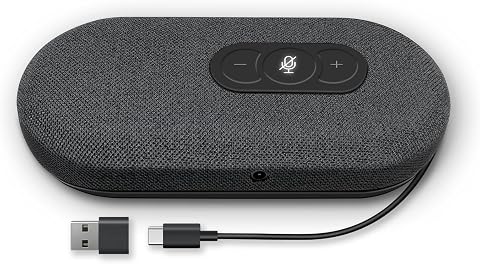
The RayBit USB speakerphone delivers crystal‑clear audio with two high‑sensitivity omnidirectional microphones that capture voices up to 3 m away. Built‑in echo cancellation and noise reduction eliminate background sounds like keyboard clicks and air‑conditioning noise.
Pros:
- High‑quality voice enhancement with echo cancellation and noise reduction.
- Two omnidirectional mics capture sound up to 3 m, ideal for group calls.
- Plug‑and‑play USB connection works with all major conferencing platforms.
- Compact, portable design with cable management pouch.
Cons:
- Limited range of 3 m may not pick up distant speakers.
- No Bluetooth or battery option – requires a wired USB connection.
Best for: Home-office users looking for a USB speakerphone with microphone.
Not ideal for: People who need confirmed brand, pickup, or app details from the title alone.
Bottom line: Confirm the complete model and audio specifications before relying on this speakerphone for calls.
Monitor Light Bar
Desk lighting can affect how comfortable your workspace feels, so check how a light bar will sit with your monitor and other equipment. The BenQ ScreenBar Halo 2 LED Monitor Light Bar with Wireless Controller a is the named pick. The supplied title identifies an LED monitor light bar and wireless controller, but it is truncated, so confirm the exact product version and included components in the full listing.
A common mistake is assuming a light bar fits every monitor or works well with every screen surface. Check the manufacturer’s mounting guidance and compare it with your monitor’s thickness, shape, and any attached camera or accessories. Review how the light is powered and controlled, and confirm the controller is included if you expect to use one. Monitor fit comes first; the title alone does not establish dimensions, compatibility, lighting controls, or power requirements.
Think about where you want the light directed and how it will affect your screen and desk. Review the product specifications for adjustment options and placement guidance, and compare its footprint with your monitor and nearby devices. Confirm what the box includes and whether your desk setup provides the required power connection. If you use a webcam, check that the bar and its mounting position will not interfere with your camera. Use the full listing to verify fit before choosing.
What to look for:
- Confirm the full product version and untruncated listing.
- Check mounting guidance against your monitor’s shape and thickness.
- Verify power requirements and what accessories are included.
- Review controller support and lighting adjustment options.
- Check clearance for your webcam and nearby desk equipment.
BenQ ScreenBar Halo 2 LED Monitor Light Bar with Wireless Controller and Motion

The BenQ ScreenBar Halo 2 is an adjustable LED monitor light designed to reduce eye strain with glare-free illumination and customizable color temperature. It features wireless control, automatic on/off, and fits curved monitors, making it ideal for work, study, and gaming environments.
Pros:
- Reduces eye fatigue with glare-free, balanced illumination
- Wireless controller allows easy adjustment of brightness and color temperature
- Fits a wide range of monitor sizes and curved screens without damage
- High color accuracy (CRI > 95) suitable for professional work
Cons:
- Requires USB power source, limiting placement options
- May be more expensive compared to basic monitor lights
- Some users might find the setup complex
Best for: People who want an LED light bar with a wireless controller.
Not ideal for: Anyone whose monitor fit or included controller cannot be confirmed.
Bottom line: Verify the complete model, mount fit, and included controller before choosing this light bar.
For a budget-first upgrade order, start with the item that solves a daily friction point: dependable connections, comfortable typing, or clearer calls. Next consider the webcam or mouse if video or gaming is central to your routine, then add lighting if it fits your monitor and workspace. Prioritize your real needs, and check compatibility before committing to any slot.
You do not need to replace every part of a desk at once. Use this checklist to confirm the details that matter for your devices, space, and habits, then make one thoughtful change at a time. A setup that fits how you work is a solid upgrade in its own right.