
📊 Full opportunity report: Build, Rent, Or Quantize: Cutting Your Memory Bill Without Cutting Capability on ThorstenMeyerAI.com — validation score, market gap, and execution plan.
TL;DR
A new framework for managing AI memory costs highlights three key strategies: building your own hardware, renting cloud resources, and quantizing models to shrink their memory footprint. Quantization emerges as the most underused and cost-effective lever, enabling significant savings without loss of capability.
Researchers and practitioners now have a third, often overlooked option for reducing AI memory costs: quantization. This approach shrinks model memory requirements with minimal quality loss, offering a cost-saving alternative that can be applied regardless of whether hardware is built or rented. The development is part of a broader effort to address the 2026 memory crunch, which has driven up costs across the board.
The core insight is that the traditional choices—building your own hardware or renting cloud resources—are not the only options. Building is optimal for steady, high-utilization workloads, offering long-term savings but requiring capital investment and stable needs. Renting provides flexibility for variable workloads but faces rising costs and the risk of price increases over time.
The third lever—quantization—allows users to shrink the memory footprint of models through techniques like weight quantization (reducing precision from 16-bit to 4-bit) and KV-cache compression (halving the size of key-value caches). Google’s TurboQuant, introduced in March 2026, exemplifies the cutting edge, compressing caches to around 3 bits with minimal accuracy loss. Currently, the typical setup combines Q4 weight quantization with FP8 KV-cache compression, enabling models that previously required 18GB to fit into 12GB, thus making lower-tier hardware viable and reducing cloud costs.
However, quantization is not a magic solution. Pushing weights below Q4 degrades quality, especially in reasoning and coding tasks. TurboQuant is validated but not yet integrated into major inference frameworks, meaning its full potential is still on the horizon. Additionally, techniques like Mixture-of-Experts (MoE) models improve speed but do not necessarily reduce memory footprint, serving capability rather than capacity.
Build, rent, or quantize
Memory got expensive everywhere — to buy and to rent. Most people argue build-vs-rent and miss the cheapest lever: shrink how much memory the work needs in the first place. Cut the bill without cutting capability.
For steady, high-utilization, private work. ~½ the lifetime cost of cloud. Right-size, used 3090s, or Apple unified memory. Capital up front.
For elastic, spiky, uncertain work. Can’t buy half a cluster for two weeks. But the bill creeps up — rent defensively: reserve, right-size, monitor.
Make the model need less memory — modern compression does it at little quality cost. The one move that lowers the bill in both venues.
★ the underused multiplierThe mistake the squeeze punishes hardest is solving a memory problem by buying more memory, when you could have needed less. Build when ownership pays, rent when flexibility pays — and quantize always, because shrinking the requirement is the only lever that makes both cheaper at once, and the only one that’s nearly free. The first question is never “build or rent” — it’s “how little memory can this take?” Next: when does cheap memory come back?
Impact of Quantization on AI Memory Management
This approach allows organizations to achieve higher capabilities at lower costs by making models fit on cheaper hardware or reducing cloud expenses. It shifts the market dynamic, enabling more affordable deployment of large models and easing the pressure caused by the 2026 memory shortage. For developers and companies, quantization offers a practical, scalable way to extend hardware resources and optimize budgets without sacrificing performance.

Bandai Hobby – Tools – Parts Separator Model Kit
- Brand: Bandai Hobby
- Product Type: Parts Separator Tool
- Compatibility: For Bandai Model Kits
As an affiliate, we earn on qualifying purchases.
As an affiliate, we earn on qualifying purchases.
2026 Memory Crunch and Industry Response
The ongoing memory crunch in 2026 has been driven by the rapid growth of large AI models, which demand increasingly vast memory resources. As cloud providers raise instance prices and hardware shortages persist, organizations face escalating costs for both building and renting AI infrastructure. Previous chapters in this series outlined the rising expenses and strategic choices, but the recent emergence of quantization techniques offers a new avenue for cost mitigation. Google’s March 2026 release of TurboQuant marks a milestone, validating the potential for significant compression with minimal quality impact.
“TurboQuant compresses caches to approximately 3 bits, enabling models to handle 100K-token contexts with minimal accuracy degradation.”
— Google AI team
As an affiliate, we earn on qualifying purchases.
Limitations and Practical Challenges of Quantization
While promising, quantization is not universally applicable. Pushing weights below Q4 causes noticeable quality degradation, especially in reasoning and coding tasks. TurboQuant is validated but not yet integrated into major frameworks, so widespread adoption may take time. Additionally, techniques like MoE improve speed but do not reduce memory, and the full impact of upcoming updates remains uncertain.
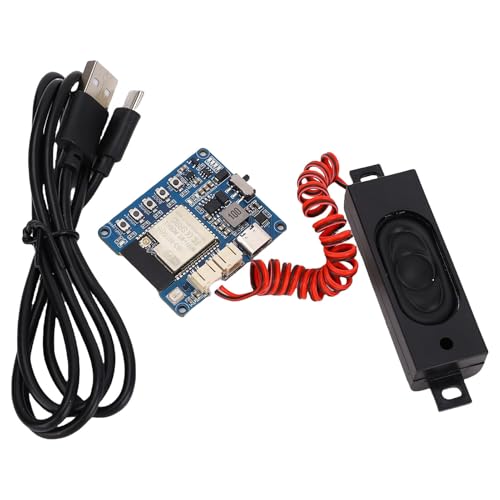
AI Voice Chat Module Type C Interface AI Large Model Support with Technology
- Interface Type: Type C interface for connectivity
- Battery Management: Built-in TP5400 battery management
- Integrated Components: Includes INMP441 microphone and amplifier
As an affiliate, we earn on qualifying purchases.
As an affiliate, we earn on qualifying purchases.
Adoption Timeline and Future Developments in Quantization
The immediate next step is the integration of TurboQuant into mainstream inference frameworks, expected later in 2026. Practitioners should monitor updates from Google and other developers, experiment with current quantization stacks, and prepare to adopt TurboQuant when available. Further research and development may extend quantization’s capabilities, making it a standard part of AI deployment strategies in the near future.

The Complete Cost Per Token Guide: A Practical Guide to Choosing AI Models on Price and Performance
As an affiliate, we earn on qualifying purchases.
As an affiliate, we earn on qualifying purchases.
Key Questions
How much can quantization reduce a model’s memory footprint?
Weight quantization (Q4) can reduce memory use by approximately 4×, and combined with cache compression, models can be shrunk further, often by half or more, enabling models to run on less expensive hardware.
Does quantization affect AI model performance?
In most cases, techniques like Q4 weight quantization and FP8 cache compression retain about 95% of the original model quality, with minimal impact on reasoning and coding tasks. Pushing below Q4 can cause noticeable quality loss.
When will TurboQuant be available for general use?
Google has announced TurboQuant will be integrated into inference frameworks later in 2026, but current community forks and prototypes are available for early testing.
Can quantization replace building or renting hardware entirely?
No, quantization is a leverage that reduces memory needs but does not eliminate the need for hardware or cloud resources. It is a cost-saving supplement, not a substitute.
Source: ThorstenMeyerAI.com