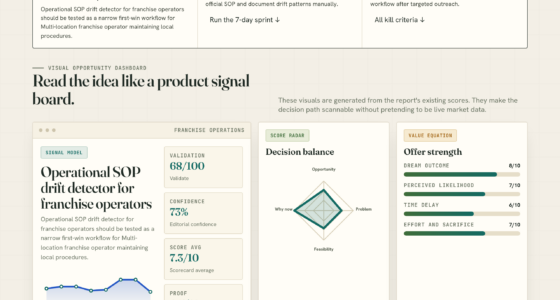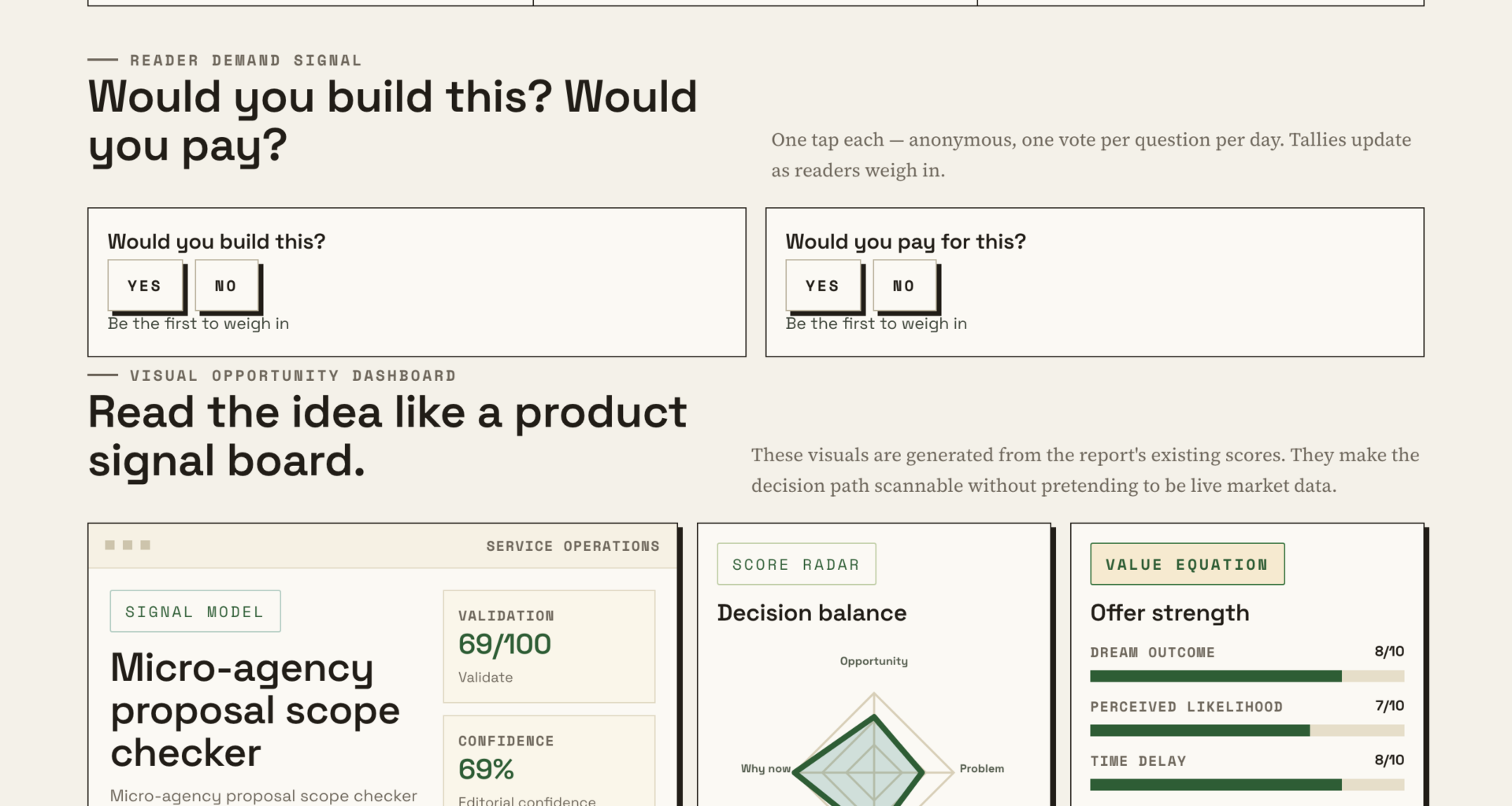

📊 Full opportunity report: Micro-agency Proposal Scope Checker on IdeaNavigator AI — validation score, market gap, and execution plan.

Get the latest gadgets delivered free with Prime
- Fast, free delivery on millions of items
- Prime Video, Amazon Music and more included
- Member-only deals all year
TL;DR
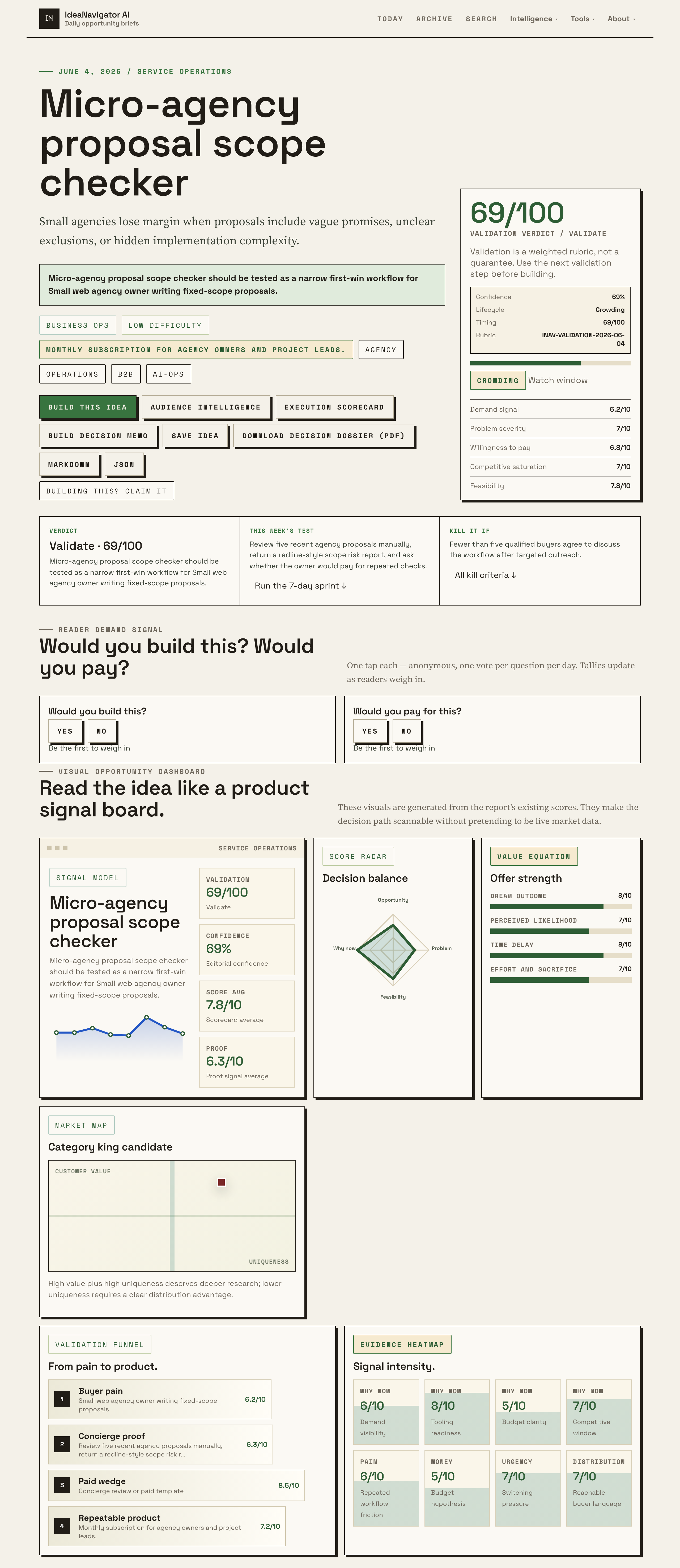
IdeaNavigator AI is testing a scope checker tool designed for small web agencies to identify vague deliverables and risky integrations in proposals. The tool aims to reduce scope creep and improve margins. The development is in early testing with a plan for a subscription-based service.
IdeaNavigator AI is testing a new proposal scope checker tool aimed at small web agencies. The tool is designed to help agency owners identify scope risks in fixed-scope proposals before they reach clients, addressing common issues like vague promises and hidden complexities. This development could streamline proposal workflows and help agencies protect margins.
The scope checker is a proposed workflow that compares draft proposals against reusable delivery checklists, highlighting potential scope issues such as vague deliverables, missing assumptions, risky integrations, and ambiguous exclusions. The initial MVP involves a proposal upload feature that generates a redline-style report indicating scope risks.
This testing phase is based on reviewing five recent agency proposals manually, then using the tool to generate reports and assessing whether agency owners would be willing to pay for repeated checks. The goal is to validate whether the tool effectively reduces scope ambiguities and whether there is market demand for a subscription service.
Potential Impact on Small Web Agencies’ Profitability
This tool could significantly improve the accuracy of proposals for small agencies, reducing scope creep and unprofitable work. By catching scope risks early, agencies can better protect margins and avoid disputes with clients. If successful, it may become a standard part of proposal workflows for small service providers, improving overall project profitability and client satisfaction.
Products Worth Considering

Logitech MX Mechanical Wireless Illuminated Keyboard, Tactile Quiet, Graphite

Bose S1 Pro+ Portable PA Speaker

Samsung 32-Inch Odyssey OLED G8 (G80SH) 4K Gaming Monitor
As an affiliate, we earn on qualifying purchases.
Growing Need for Proposal Clarity in Service Agencies
Many small web agencies face challenges with scope management, often leading to margin erosion due to vague promises or unforeseen complexities. Currently, agencies review proposals manually, which is time-consuming and prone to oversight. The rise of AI tools offers an opportunity to automate scope risk detection, but such tools are still in early stages of adoption. The proposed scope checker aims to fill this gap by providing a quick, repeatable review process tailored for small agencies.
“Automating scope risk detection could be a game-changer for small agencies, helping them maintain margins and reduce client disputes.”
— an anonymous researcher
Unconfirmed Effectiveness and Market Adoption
It is not yet clear how accurately the scope checker will identify all relevant scope risks or how willing small agency owners will be to adopt this new workflow. The effectiveness of the tool depends on the quality of the reusable checklists and AI’s ability to interpret proposal nuances. Market demand remains to be validated through further testing and user feedback.
Next Steps in Validation and Feature Expansion
Following initial testing, IdeaNavigator AI plans to refine the scope checker based on user feedback. The next milestones include expanding the review of proposals, integrating more detailed checklists, and launching a pilot subscription service. Success in these phases could lead to broader adoption among small agencies seeking to improve proposal accuracy and profitability.
Key Questions
How does the scope checker identify risks in proposals?
The tool compares draft proposals against predefined checklists, highlighting vague deliverables, missing assumptions, risky integrations, and ambiguous exclusions.
Who is the target user for this tool?
Small web agency owners and project leads who create fixed-scope proposals and want to reduce scope-related issues.
Is this tool currently available for use?
It is in the testing phase with initial pilot reviews; a commercial launch is planned after further validation.
What benefits does the scope checker offer over manual review?
It automates scope risk detection, saves time, and provides consistent, repeatable assessments to improve proposal quality and margins.
Will this tool be free or paid?
The plan is to offer it as a subscription service, with pricing likely based on the number of proposals reviewed per month.
Source: IdeaNavigator AI