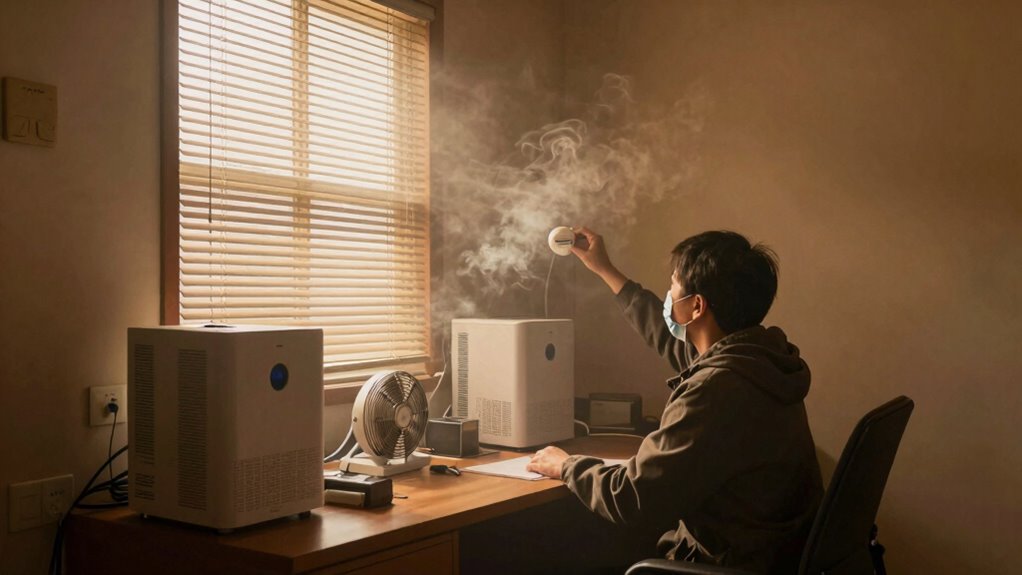

To plan effectively for wildfire smoke indoors, you should install HEPA filters or portable air purifiers in frequently used rooms and keep them running continuously. Seal gaps around doors, windows, and vents to prevent smoke from entering. Keep windows and exterior doors closed during smoky conditions and set ventilation systems to recirculate indoor air. Use real-time air quality data to decide when to open windows or increase filtration. Continue exploring for more tips on creating a safer indoor environment during wildfire events.
Key Takeaways
- Use HEPA filters and portable air purifiers in main living areas to remove smoke particles effectively.
- Seal gaps around doors, windows, and vents to prevent outdoor smoke infiltration.
- Keep windows and exterior doors closed during wildfire events, and set ventilation systems to recirculate indoor air.
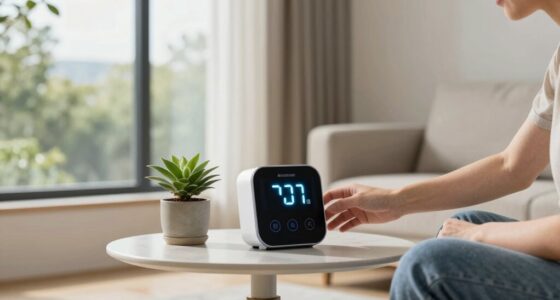
- Monitor indoor air quality with real-time reports to determine when to increase filtration or ventilation.
- Designate a safe room with enhanced filtration and sealing for severe smoke conditions.
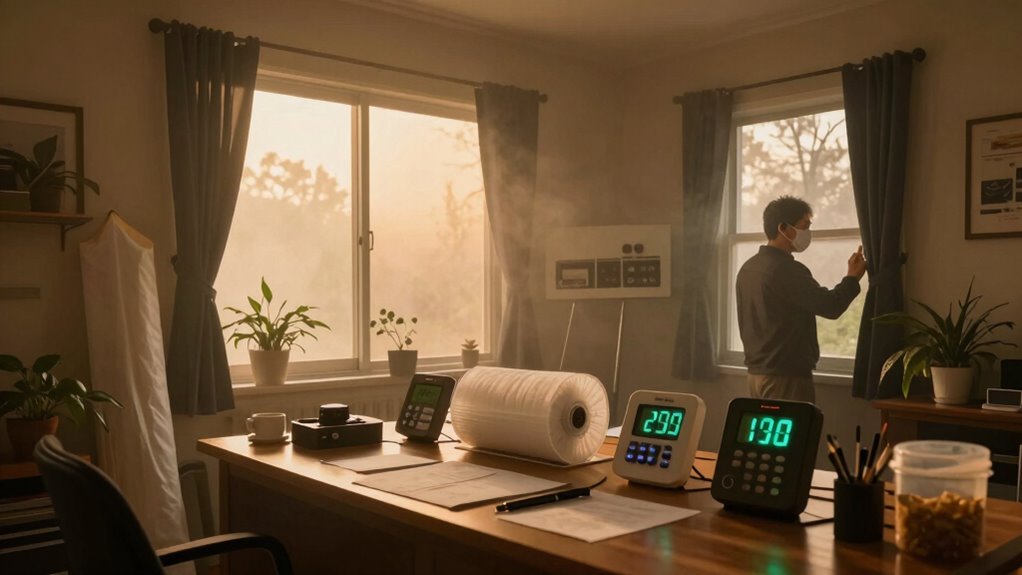
Have you ever wondered how to protect yourself from harmful wildfire smoke when staying indoors? When smoke fills the air outside, your first priority should be to minimize your exposure inside your home. The key to doing this effectively lies in understanding air filtration and ventilation strategies. These tools help you reduce the influx of smoky air while maintaining good airflow and air quality indoors.
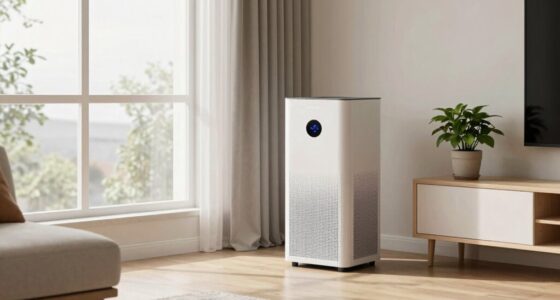
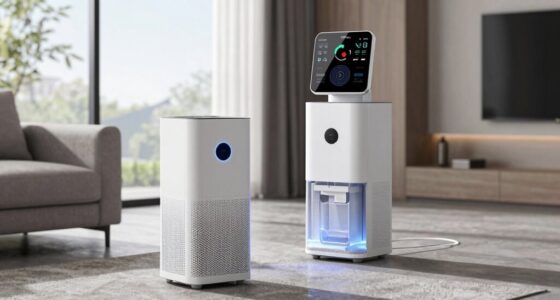
Air filtration is essential during wildfire events. Investing in high-efficiency particulate air (HEPA) filters can considerably improve indoor air quality by capturing tiny smoke particles that can cause health problems. Make sure your HVAC system is equipped with a HEPA filter or consider portable air purifiers designed for larger spaces. Position these units in frequently used rooms and keep them running continuously to guarantee a steady flow of clean air. Regularly replacing or cleaning filters is critical because clogged filters lose efficiency, allowing more smoke particles to circulate. If you don’t have an HVAC system, portable air purifiers become even more important. These devices can run independently and be moved to the rooms where you spend the most time, providing an extra layer of protection against airborne toxins. Incorporating air quality monitoring can help you better assess when to run these devices at optimal levels. Additionally, understanding indoor air quality factors can help you identify other sources of pollutants in your home that may exacerbate smoke-related health issues.
Use HEPA filters and portable purifiers to improve indoor air quality during wildfires.
Ventilation strategies also play a crucial role in wildfire smoke planning indoors. The goal is to prevent smoky outdoor air from entering your home while still allowing fresh air in when needed. During a wildfire, keep windows and exterior doors closed to block the influx of smoke. If your home has a mechanical ventilation system, set it to recirculate indoor air rather than drawing in outdoor air. This prevents contaminated air from entering. When outdoor air quality improves, typically after the smoke clears or as advised by local authorities, you can open windows briefly to ventilate your home and bring in fresh air. However, be cautious and monitor air quality reports before doing so. Using proper ventilation techniques can help maintain a healthy indoor environment during smoke events. Being aware of air quality reports and understanding their implications can further enhance your safety measures. Additionally, employing smart ventilation controls can optimize airflow based on real-time air quality data, providing better protection during wildfire seasons.
Additionally, creating a clean room or a designated safe space can help during the worst smoke events. Seal gaps around doors, windows, and vents with weather stripping or damp cloths to prevent smoke infiltration. Use your air filtration devices in these spaces for maximum protection. Combining air filtration with thoughtful ventilation strategies ensures you’re not just blocking smoke but actively improving your indoor air quality. Planning ahead by understanding and implementing these strategies helps you stay safe and comfortable during wildfire seasons. Remember, the right balance of filtration and ventilation is your best defense against the health impacts of wildfire smoke when you’re indoors.
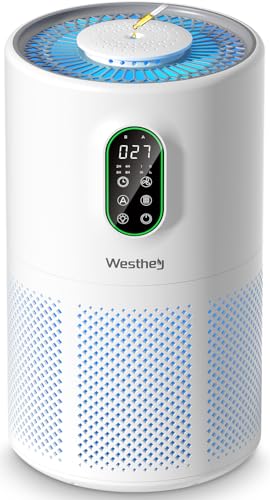
WESTHEY H13 HEPA Air Purifier for Home up to 1650 Sq Ft Washable Pre-Filter
- 360° Surround Air Intake: Covers up to 1650 sq ft efficiently
- High-Efficiency HEPA Filter: Captures 99.98% of 0.3-micron particles
- Effective Pollutant Removal: Filters pet dander, smoke, pollen, and odors
As an affiliate, we earn on qualifying purchases.
As an affiliate, we earn on qualifying purchases.
Frequently Asked Questions
How Often Should Air Filters Be Replaced During Wildfire Smoke Events?
During wildfire smoke events, you should replace your air filters every 1 to 2 months, or more often if you notice reduced airflow or increased dust. Regular air filter maintenance guarantees peak filtration efficiency, helping keep indoor air clean. Check manufacturer guidelines and your filter’s condition frequently. Upgrading to high-efficiency filters can also improve filtration performance, making sure you’re better protected from harmful smoke particles indoors.
Can Indoor Plants Help Improve Air Quality During Wildfires?
Indoor plants can help improve air quality during wildfires by providing some wildfire smoke filtration, thanks to their natural ability to absorb pollutants. The benefits of indoor plants include boosting humidity and reducing airborne toxins. While they aren’t a complete solution, adding houseplants like pothos or snake plants can complement other wildfire smoke filtration measures, making your indoor environment healthier and more comfortable during smoky conditions.
Are There Specific Household Materials That Trap Wildfire Smoke Particles?
You can use household materials like HEPA filters and activated charcoal to trap wildfire smoke particles effectively. Ventilation strategies, such as sealing gaps and using air purifiers, improve indoor air quality. Air purifier effectiveness depends on proper placement and filter quality, so choose one with a HEPA filter for best results. Regularly maintaining filters and minimizing outdoor air intake guarantees your indoor environment stays safer during wildfire events.
How Do I Know if My Indoor Air Quality Is Safe During a Wildfire?
Check your air quality with a reliable monitor—if levels spike, your indoor air isn’t safe. Breathe easier by employing ventilation strategies like opening windows during low-smoke times or running an air purifier benefits, which filters out harmful particles. Stay vigilant, stay safe—regularly monitor your indoor environment to guarantee it remains breathable, especially during wildfire season. Protect yourself, prioritize purity, and prevent pollution from overpowering your home.
What Are the Signs of Health Issues Caused by Wildfire Smoke Indoors?
If wildfire smoke affects your indoor air, you might notice symptoms like coughing, shortness of breath, or eye irritation. Pay close attention to changes in your respiratory health awareness. Indoor air purification can help reduce these issues, but if symptoms worsen or persist, seek medical advice. Staying vigilant and maintaining good ventilation are key to preventing health problems caused by indoor wildfire smoke exposure.

Air Purifier for Home Large Room up to 3000Ft², HEPA Air Purifier with Washable Double-Sided Filters, Smart WiFi, AQI Display, Air Cleaner for Pets, Allergies, Dust, Pollen, 15dB Sleep Mode, Fragrance
- High Airflow and Large Coverage: Covers up to 3000 sqft with dual intake
- Dual Filters and 3-Stage Filtration: Pre-filter, HEPA, activated carbon filters
- Washable Pre-Filter: Reusable and extends filter life
As an affiliate, we earn on qualifying purchases.
As an affiliate, we earn on qualifying purchases.
Conclusion
So, while you diligently close windows and turn on filters, it’s ironic that the very act of shielding yourself from wildfire smoke might make your home feel more like a sterile bunker than a sanctuary. Ironically, in trying to protect yourself from the invisible threat outside, you might find yourself cut off from fresh air altogether. Sometimes, the best plan is to accept a little discomfort—because in the end, no amount of indoor filtering can truly outsmart nature’s smoky chaos.

16 in 1 Air Quality Monitor Indoor 7" Wildfire CO2 Monitor, 9 AQI+7 Alerts
- 16-in-1 Air Quality Monitoring: Detects 9 key air parameters
- 7-inch Large LED Display: Clear, high-resolution air quality readings
- Multiple AQI Alerts: 7 alert buzzers for safety warnings
As an affiliate, we earn on qualifying purchases.
As an affiliate, we earn on qualifying purchases.

Grotheory 2 Pack Door Draft Stopper, Door Sweep, Weather Stripping Seal
- Premium Silicone Material: Flexible, durable, floor-safe silicone
- Triple Design for Noise Reduction: Reduces noise and dust entry
- Universal Fit for Various Doors: Suitable for interior, exterior, RV, and more
As an affiliate, we earn on qualifying purchases.
As an affiliate, we earn on qualifying purchases.