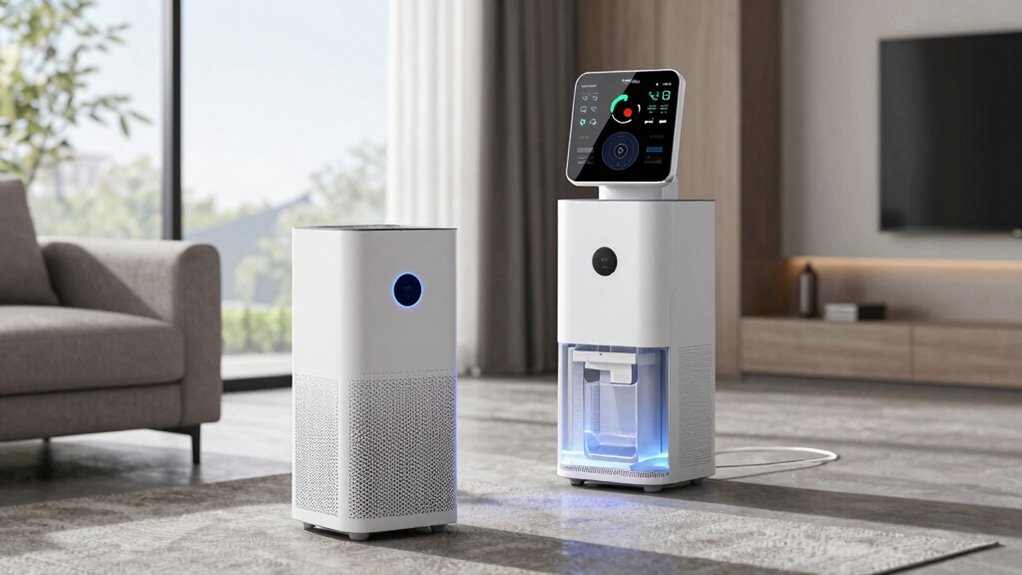

Air purifiers, dehumidifiers, and air monitors each tackle different indoor air issues. Air purifiers remove dust, pet dander, mold spores, bacteria, and viruses, helping with allergies and asthma. Dehumidifiers control excess humidity, preventing mold growth and musty odors. Air monitors track air quality, humidity, and pollutants, providing real-time data for better decisions. Using these devices together creates a healthier space. Keep going to discover how to use them effectively for your home.
Key Takeaways
- Air purifiers remove airborne contaminants like dust, allergens, and pathogens to improve indoor air quality.
- Dehumidifiers control excess humidity, preventing mold growth and reducing dust mites and odors.
- Air monitors measure indoor air factors such as particulate matter and VOCs to identify specific issues.
- Each device targets distinct problems: purifiers for pollutants, dehumidifiers for moisture, monitors for data-driven decisions.
- Combining these devices with proper ventilation and maintenance creates a comprehensive indoor air quality solution.
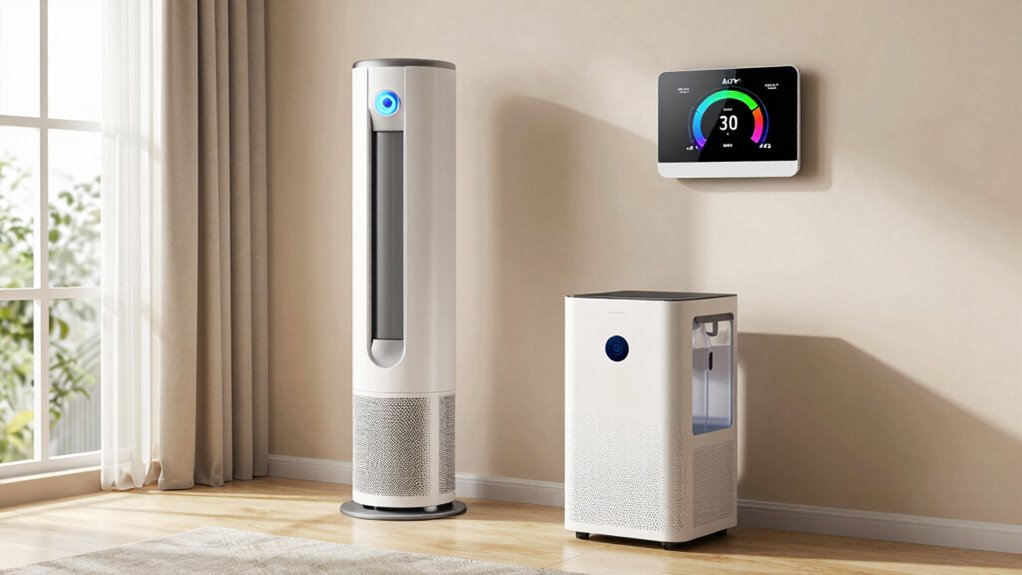
Ensuring clean indoor air is vital for your health and comfort, especially as pollutants, humidity levels, and airborne allergens can quickly compromise your environment. You might consider various devices to improve air quality, but it’s important to understand that air purifiers, dehumidifiers, and air monitors each serve distinct purposes. Knowing their roles helps you address specific problems effectively.
Air purifiers are designed to remove contaminants from the air, including dust, pet dander, mold spores, and even bacteria or viruses. If you suffer from allergies or asthma, investing in a good air purifier can greatly reduce symptoms. These devices often incorporate HEPA filters that trap tiny particles, making the air safer to breathe. While they improve air quality, it’s also beneficial to consider indoor plant benefits, as some houseplants can naturally filter air toxins and add humidity. However, they shouldn’t replace air purifiers but rather complement them. Regular HVAC system maintenance also plays a vital role here, making sure your heating and cooling system isn’t circulating dust or mold, which can exacerbate indoor air issues. Additionally, understanding indoor air quality factors can help you choose the right devices for your needs. Maintaining proper ventilation is also crucial for reducing indoor pollutants and ensuring fresh air circulation.
Air purifiers with HEPA filters help reduce allergens, dust, and bacteria for safer indoor air.
Dehumidifiers address a different issue: excess humidity. High humidity levels can lead to mold growth, musty odors, and even structural damage over time. If your home feels damp or you notice condensation on windows, a dehumidifier helps remove moisture from the air, creating a more comfortable and healthier environment. Maintaining proper humidity also supports HVAC system efficiency, preventing it from working harder to control indoor climate. It’s an effective way to reduce the risk of mold and dust mites, which thrive in moist conditions. Incorporating humidity control strategies can further enhance your indoor environment and prevent long-term problems.
Air monitors, meanwhile, are tools that help you track and understand your indoor air quality. They measure various factors such as particulate matter, humidity, and volatile organic compounds (VOCs). With an air monitor, you gain real-time insights into what’s happening in your environment, enabling you to take targeted actions. For example, if the monitor detects high VOC levels, you can increase ventilation or turn on your air purifier. Understanding your indoor air quality allows you to fine-tune your approach, combining devices like purifiers and dehumidifiers for best results. Additionally, regular HVAC maintenance ensures your entire system functions efficiently and doesn’t contribute to indoor air pollution. Proper placement of sensors can also help identify problem areas within your home for more effective air quality management.

LEVOIT Air Purifier for Home Allergies Pet Hair in Bedroom, Covers Up to 1073 ft² by 56W High Torque Motor, AHAM VERIFIDE, 3-in-1 Filter with HEPA Sleep Mode, Remove Dust Smoke Odor, Core300-P, White
WHY CHOOSE AHAM VERIFIDE AIR PURIFIERS: AHAM (Association of Home Appliance Manufacturers) is an ANSI-accredited organization that sets…
As an affiliate, we earn on qualifying purchases.
As an affiliate, we earn on qualifying purchases.
Frequently Asked Questions
How Often Should I Replace Filters in Air Purifiers?
You should replace your air purifier filters every 6 to 12 months, depending on usage and filter type. Regular filter maintenance is essential for peak performance. Check the manufacturer’s recommended replacement schedule, as some filters may need more frequent changes if you have allergies or pets. Keep an eye on filter discoloration or reduced airflow, which signals it’s time for a replacement for cleaner, healthier air.
Can Dehumidifiers Help With Mold Prevention?
Think of dehumidifiers as your home’s shield against mold growth. Yes, they help with humidity control, making the environment less inviting for mold to thrive. By reducing excess moisture, you prevent the damp conditions that mold loves. So, if you want to keep your space safe and mold-free, using a dehumidifier is a smart move. It actively fights mold growth by maintaining ideal humidity levels.
Do Air Monitors Detect All Types of Airborne Toxins?
Air monitors don’t detect all airborne toxins; their focus is mainly on indoor allergens and particles that impact air quality standards. While they can identify dust, pollen, and some chemicals, they might miss gases like carbon monoxide or volatile organic compounds (VOCs). For thorough safety, use air monitors alongside other devices designed to detect specific toxins, ensuring your indoor environment remains healthy and within recommended air quality standards.
Are Energy-Efficient Models Available for All Three Devices?
You’ll find energy-efficient models for all three devices, making it easier to enjoy energy savings. These options often feature device compatibility that guarantees smooth operation without extra power drain. While some models excel in conserving energy, others may offer advanced features. It’s wise to compare specifications to select the best fit for your needs, ensuring you get efficient performance while keeping electricity use minimal.
How Loud Are These Devices During Operation?
Device noise varies depending on the model and setting, but generally, you’ll find that air purifiers and dehumidifiers operate quietly at lower speeds, producing minimal operating volume. Higher speeds may generate more noticeable noise, but many modern units are designed to keep device noise levels comfortable for daily use. Air monitors tend to be very quiet, often almost silent, since their primary function is continuous monitoring without disrupting your environment.

Dehumidifier, 95OZ Dehumidifier for Home 1000 Sq.Ft – Quiet with Auto Shut Off & Relaxing 7 Color Ambient Light,Ideal for Livingroom, Bedroom, Basement(Black)
Semiconductor dehumidifiers use thermoelectric cooling to remove moisture from the air. They create a drier, more comfortable environment…
As an affiliate, we earn on qualifying purchases.
As an affiliate, we earn on qualifying purchases.
Conclusion
Understanding the differences between air purifiers, dehumidifiers, and air monitors helps you choose the right device for your needs. Each tackles a specific problem—cleaning air, controlling humidity, or monitoring quality. Isn’t it worth investing in the right tool to create a healthier home environment? By selecting the appropriate device, you guarantee your space remains comfortable and safe. So, why settle for a one-size-fits-all solution when tailored options exist?

Amazon Smart Air Quality Monitor – Know your air, Works with Alexa
Know your air – An Alexa air quality monitor that makes it easy to understand what’s in your…
As an affiliate, we earn on qualifying purchases.
As an affiliate, we earn on qualifying purchases.

WINIX 5510 Air Purifier (New Generation of 5500-2 with App Support) for Home Large Room Up to 1881 Ft² in 1 Hr, True HEPA, High Deodorization Carbon Filter and Auto Mode, Captures Pet Allergies, Smoke
𝐀𝐇𝐀𝐌 𝐕𝐞𝐫𝐢𝐟𝐢𝐝𝐞 𝐚𝐭 𝟑92 𝐬𝐪 𝐟𝐭.: Also cleans rooms up to 1,882 sq ft in 1 hour (941…
As an affiliate, we earn on qualifying purchases.
As an affiliate, we earn on qualifying purchases.