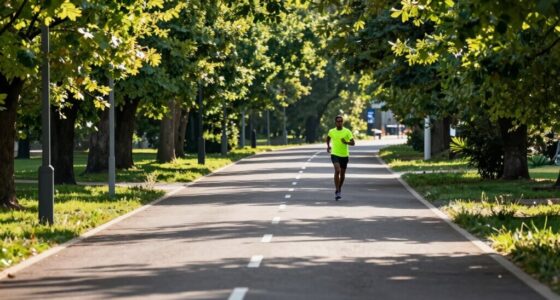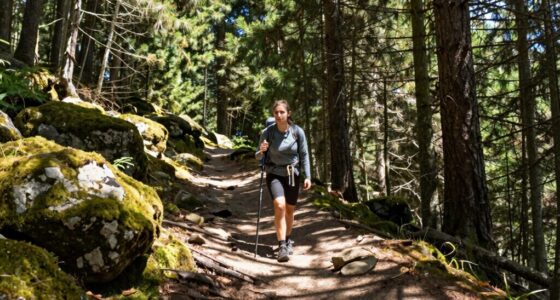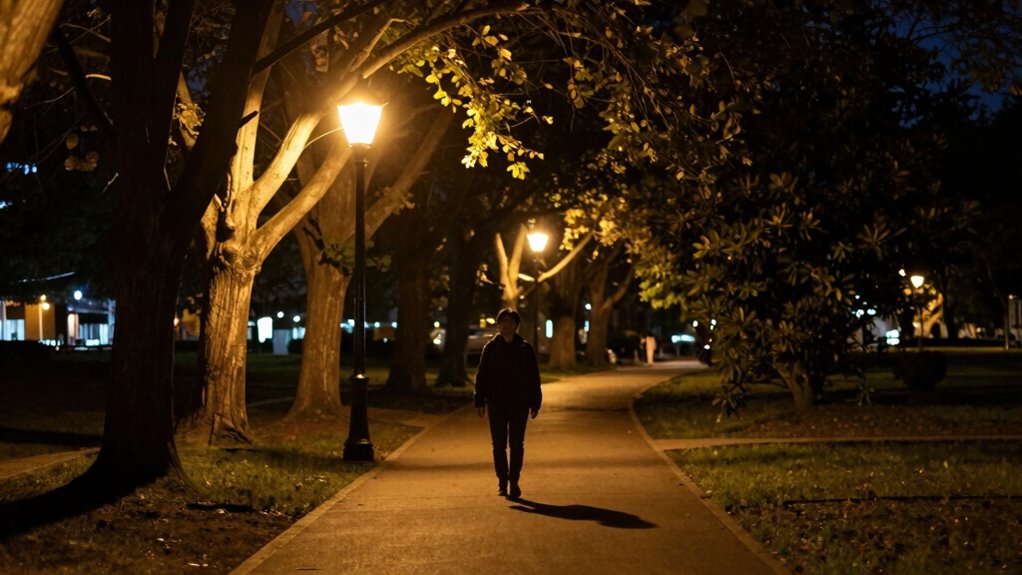

Adding mindful breathing to your late-night walks helps you stay focused and in control. By deliberately slowing your breaths and noticing your surroundings, you create a steady rhythm that calms your nervous system and keeps distractions at bay. Choosing scenic routes and reflecting on your purpose deepen this mindfulness, making each walk more intentional. Keep practicing this tiny habit, and you’ll find your walks become more peaceful and manageable over time. There’s much more to discover that can transform your experience even further.
Key Takeaways
- Practicing mindful breathing creates a calming anchor, enhancing control over your thoughts and surroundings during late-night walks.
- Choosing scenic routes and engaging your senses fosters focus, reducing aimlessness and increasing feelings of control.
- Setting gentle intentions and reflecting on mindfulness benefits boost motivation and purposeful walking.
- Establishing a rhythm by combining breath awareness with scenic observation promotes a controlled, restorative flow.
- Consistent small habits build long-term mastery, making late-night walks calmer, more intentional, and easier to manage.
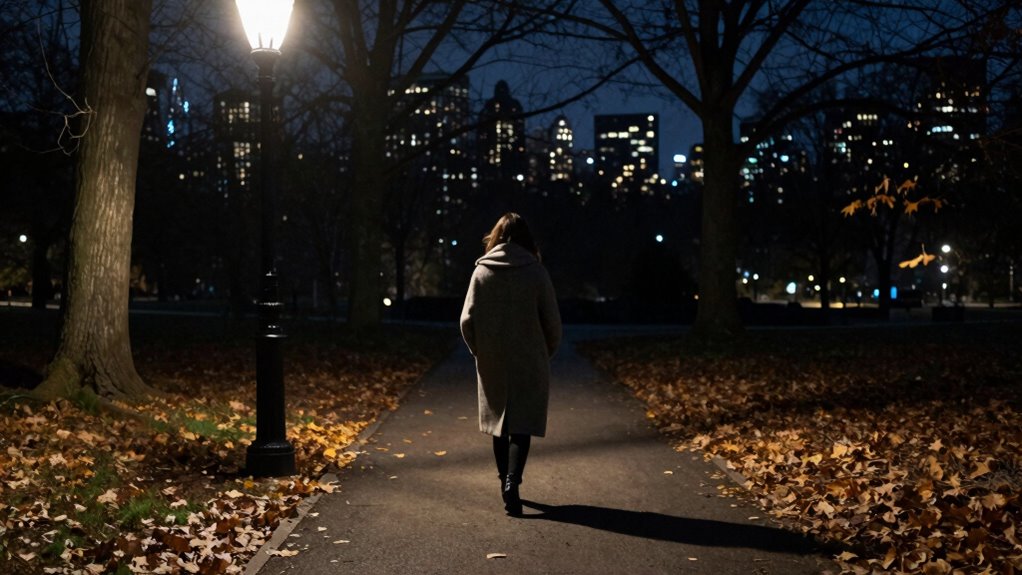
If you want to enjoy more peaceful and invigorating late-night walks, adopting a small, consistent habit can make all the difference. One of the simplest yet most effective ways to gain more control over your walks is to focus on mindful breathing. When you start to pay attention to your breath, you create a natural anchor that keeps you present and grounded. Instead of rushing or letting your mind wander, take slow, deliberate breaths—inhale deeply through your nose, hold for a second, then exhale slowly through your mouth. This practice calms your nervous system, reduces stress, and transforms your walk from a hurried activity into a mindful experience. It also helps you stay connected to the moment, making your late-night stroll feel more intentional and less aimless. Incorporating mindful breathing techniques into your routine can further deepen your sense of control and relaxation during these walks. Choosing scenic routes plays an essential role in making your walks more controlled and enjoyable. Look for paths with natural beauty—tree-lined streets, quiet parks, or quiet neighborhoods illuminated by soft streetlights. When your route is visually pleasing, it’s easier to stay engaged and avoid feelings of aimlessness or distraction. As you walk along scenic routes, you might notice details you’d otherwise overlook—rustling leaves, distant sounds, or the glow of a city skyline. These sights give your mind a sense of purpose, helping you stay focused and present. Engaging your senses more fully can also enhance the calming effect of your walk, making the experience more mindful and rewarding. Additionally, reflecting on the benefits of mindfulness can motivate you to stick with this practice and deepen your overall sense of well-being. Setting a gentle intention before each walk can serve as a guiding principle, helping you stay focused and purposeful throughout. Creating a sense of purpose during your walks can motivate you to stay attentive and engaged rather than letting your mind drift. The combination of mindful breathing and scenic routes creates a rhythm, a flow that makes each walk feel more controlled and restorative. You can further enhance this tiny habit by setting a gentle intention before each walk. For example, remind yourself to breathe intentionally and to observe your surroundings. As you walk, keep your attention on your breath, noticing the sensation of air filling your lungs and releasing. When your mind drifts, gently bring it back to your breath and the scenery around you. This simple act of steering your focus keeps your walk purposeful rather than passive. Over time, this tiny habit becomes second nature, empowering you to enjoy late-night walks with a sense of calm and mastery.

Breathing Exercise Device – Visual Airflow Trainer for Lung Fitness, Mindful Breathing, Relaxation, Focus, and Wellness Practice to Improve Airflow Awareness & Breathing Strength
- Deep Breathing Practice: Supports steady, controlled breathing
- Guided Visual Feedback: Visual airflow guides breathing rhythm
- Build Better Breathing Habits: Strengthens muscles and enhances endurance
As an affiliate, we earn on qualifying purchases.
As an affiliate, we earn on qualifying purchases.
Frequently Asked Questions
Can This Habit Be Adapted for Daytime Walks?
Yes, you can adapt this habit for daytime walks by incorporating daytime relaxation techniques and customizing your routine. During the day, focus on mindful breathing or gentle stretching to enhance your walk. Adjust the habit to fit your schedule, perhaps by setting specific goals or using different cues, making it more meaningful. Habit customization helps you stay consistent, whether you’re walking at night or during the bright hours.
Does the Habit Require Specific Equipment or Accessories?
No, the habit doesn’t require specialized gear or wearable devices. You can practice it simply by being mindful and intentional during your walks. However, if you want to enhance your experience or stay safe, small accessories like reflective gear or a fitness tracker might be helpful. These items can provide extra motivation or safety, but they aren’t necessary to successfully adopt the habit and enjoy your walks more mindfully.
How Long Does It Take to See Results?
You’ll start noticing the benefits of this mindfulness practice within a few days, but significant changes take about two to three weeks. By setting small, achievable goals, you’ll reinforce your habit and see steady progress. Consistently practicing during late-night walks helps you stay more in control and aware. Keep track of your goals, and with patience, you’ll experience a calmer, more focused walk each night.
Is This Habit Suitable for All Age Groups?
This habit is generally suitable for most age groups, but you should consider age appropriateness and safety concerns. For children and seniors, guarantee the activity matches their physical ability and provides a safe environment. Always supervise younger ones and advise seniors to walk in well-lit, familiar areas. If you have any health issues, consult a healthcare professional before starting. Adjust the habit as needed to keep it safe and enjoyable for everyone.
Can It Help With Overcoming Walk-Related Anxiety?
Yes, this tiny habit can help boost your walk confidence and reduce anxiety during late-night walks. By practicing small, calming routines beforehand, you’ll feel more in control and less overwhelmed. Consistent use of these techniques trains your mind to associate walking with safety and calmness. Over time, you’ll notice a decrease in walk-related anxiety, making your late-night strolls more enjoyable and less stressful.

CHARLESTON, SC TRAVEL GUIDE 2026: The Ultimate Tourists’ Guidebook with Local Insights, Historic Walks, Culinary Hotspots, Coastal Escapes, Scenic Routes, Smart Itineraries, and Interactive Maps.
As an affiliate, we earn on qualifying purchases.
As an affiliate, we earn on qualifying purchases.
Conclusion
So, next time you find yourself wandering late at night, remember that a tiny habit can give you the illusion of control. Ironically, the more you try to master these walks, the more they slip into chaos—yet, with just a small tweak, you might just feel a little calmer amid the unpredictability. Sometimes, it’s the tiniest change that makes the biggest difference—until it doesn’t. Embrace the unpredictability; it’s part of the walk.

The Long Road Turns to Joy: A Guide to Walking Meditation
- Condition: Used Book in Good Condition
As an affiliate, we earn on qualifying purchases.
As an affiliate, we earn on qualifying purchases.

MESMOS 366 Mindfulness Daily Flip Calendar, Undated Perpetual Calendar, Desk Decor for Men & Women, Inspirational Gifts, Self Care Quotes, Office Desk Accessories, Stress Anxiety Relief Items
- Daily Mindfulness Quotes: Start mornings calm and focused
- 366 Affirmations: Perpetual calendar with nature scenes
- Universal Gift: Gender-neutral, ready-to-gift packaging
As an affiliate, we earn on qualifying purchases.
As an affiliate, we earn on qualifying purchases.